Visual Perception Skills Geometry Worksheets for 6-Year-Olds
3 filtered results
-
From - To
Enhance your 6-year-old's understanding of geometry with our Visual Perception Skills Geometry Worksheets. These engaging worksheets are designed to develop your child's spatial awareness and ability to recognize patterns, shapes, and relationships between objects. Our expertly crafted activities combine educational fun with valuable skills that are fundamental in early math learning. Each worksheet provides a series of visually stimulating tasks that train young minds to observe, compare, and manipulate geometric figures, laying a strong foundation for future math success. Download our Visual Perception Skills Geometry Worksheets today to make learning an interactive and enjoyable experience for your child!
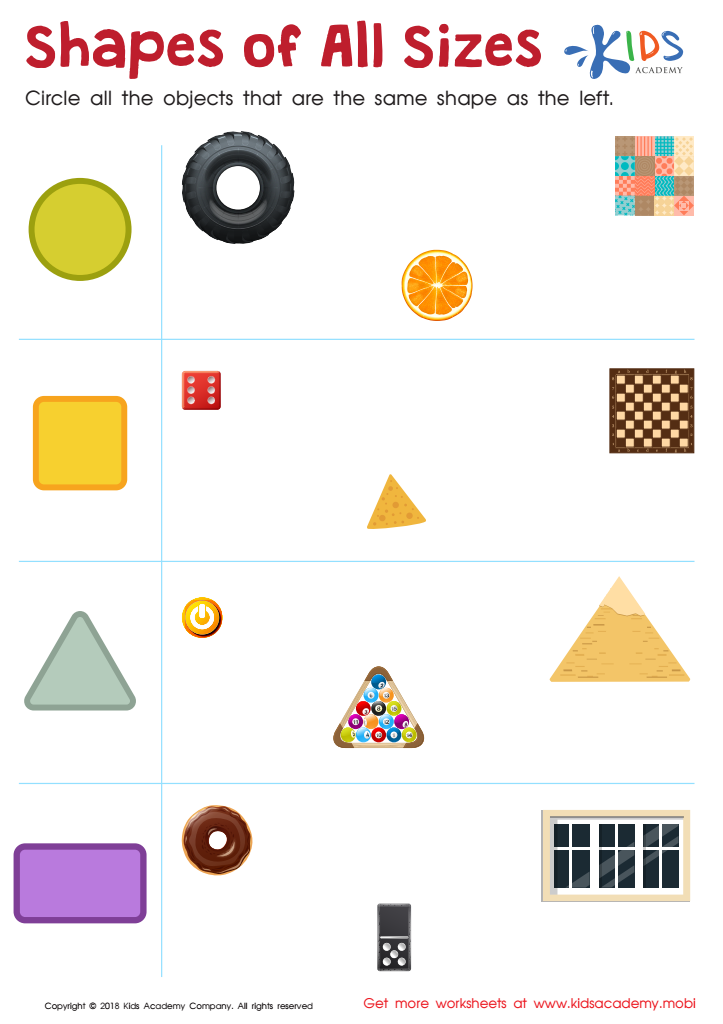
Shapes of All Sizes Worksheet
 Assign to My Students











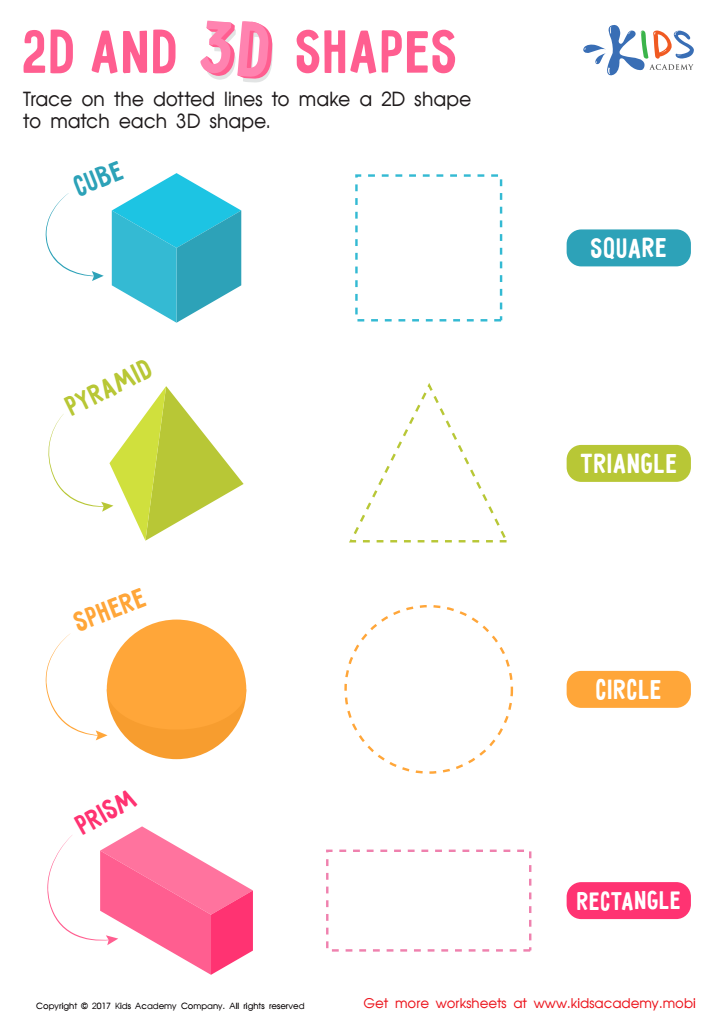
2D and 3D Shapes Worksheet
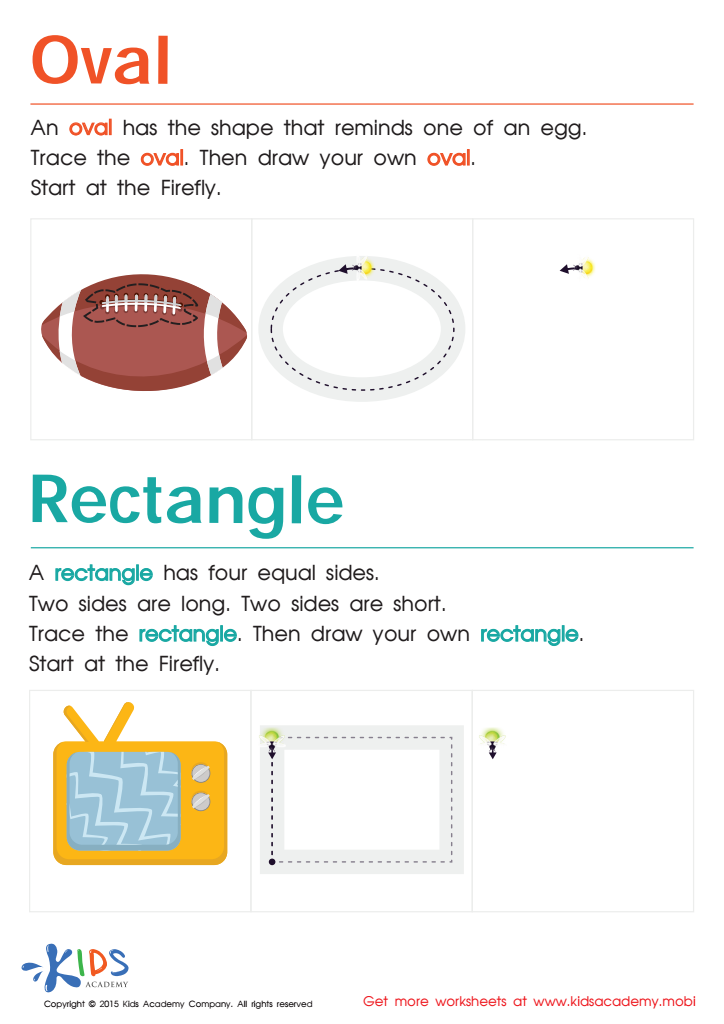
Easy Drawing of Ovals And Rectangles Worksheet








Visual perception skills are crucial for a child's overall development, and this is particularly true with geometry for 6-year-olds. These skills comprise the ability to interpret and understand visual information from the environment, which is foundational for academic success and daily activities.
At the age of six, children are rapidly developing their cognitive and motor skills. Geometry provides a structured way to enhance visual perception through shapes, spatial awareness, and patterns. Recognizing and understanding shapes like circles, squares, and triangles help youngsters in daily tasks, from navigating spaces to interpreting visual instructions.
Improving visual perception through geometry supports reading and math skills. For instance, distinguishing between different shapes and sizes aids in letter recognition, an essential skill for reading. Understanding spatial relationships is key for solving math problems, as it enables children to grasp concepts like symmetry, patterns, and proportions.
Enhanced visual perception skills also contribute to better hand-eye coordination, which is vital for writing and other fine motor activities. Furthermore, mastering these skills at an early age can boost a child's confidence and enthusiasm for learning.
In summary, nurturing visual perception skills through geometry at a young age lays a robust foundation for academic concepts, everyday functioning skills, and overall intellectual development. This makes it a priority for both parents and teachers to incorporate geometric learning into early childhood education.








