Filters

10 filtered results

Clear all filters
Favorites
With answer key
Interactive

10 filtered results

Difficulty Level

Grade


Boost your child's geometric vocabulary with our engaging Vocabulary Enhancement Geometry Worksheets designed specifically for 6-year-olds! Each worksheet is crafted to introduce young learners to essential geometric terms, shapes, and concepts in a fun and interactive way. Kids will enjoy activities such as matching shapes, fill-in-the-blanks, and drawing fun geometrical figures that reinforce learning. These worksheets not only support vocabulary building but also enhance problem-solving skills and spatial awareness. Perfect for homework, in-class assignments, or at-home enrichment, our resources make learning geometry enjoyable and effective. Start your child’s journey to geometric fluency today with our thoughtfully designed worksheets!

Check out this FREE Trial Lesson on Geometry for age 6!

Count Forward Starting From Any Number

Favorites
With answer key
Interactive
  • 6
  • Vocabulary enhancement
  • Geometry
Birthday 3D Shapes Worksheet

Birthday 3D Shapes Worksheet

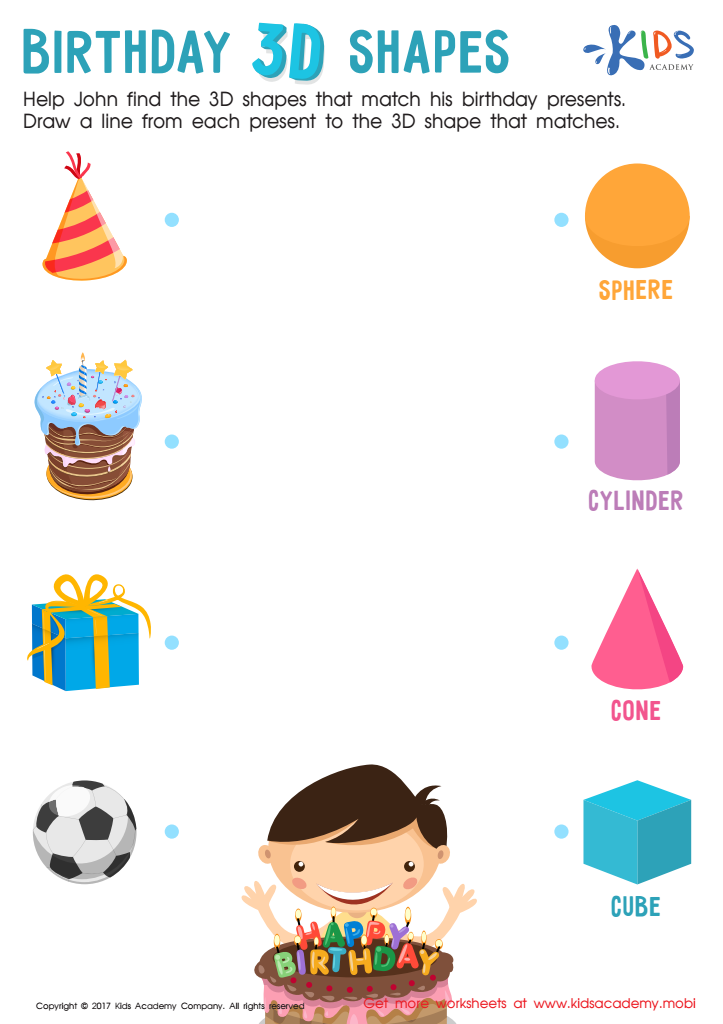
It's John's birthday and he needs your help. Ask your kids to draw a line from each present to the matching 3D shape. First, check they understand the difference between 2D and 3D shapes. Then, they can help John figure out which 3D shape matches each present.
Birthday 3D Shapes Worksheet
Worksheet
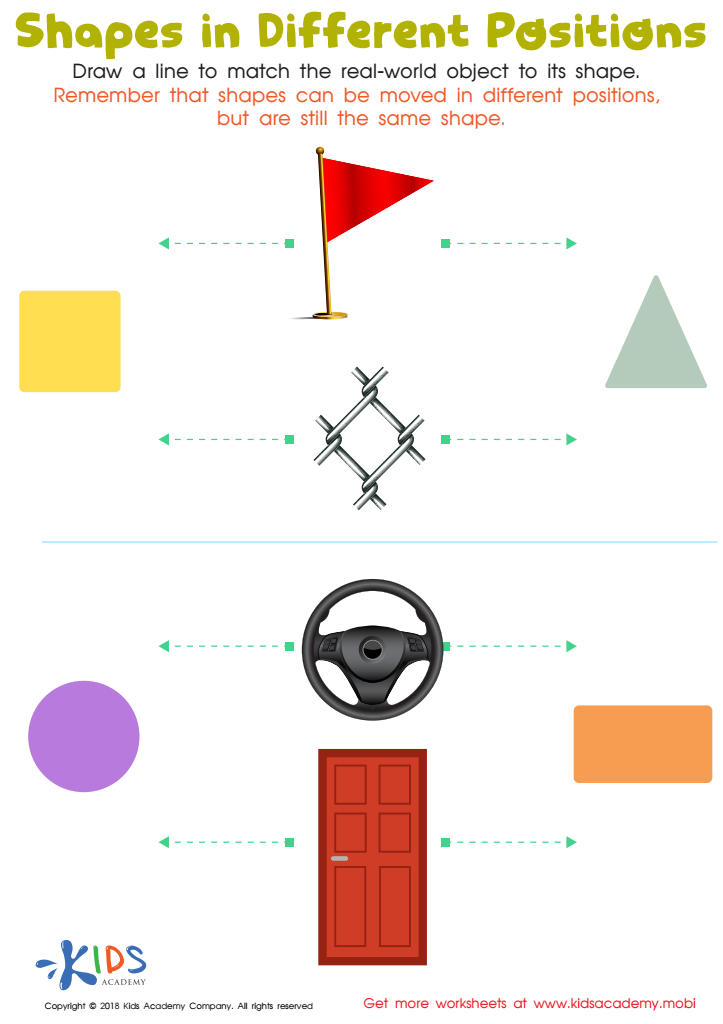
Shapes in Different Positions Worksheet

Shapes in Different Positions Worksheet

Children can practice and strengthen their visual-discernment, hand-eye coordination and neural connections by manipulating shapes in their minds and matching them with the right answer. This PDF with bright colors gives your kids the opportunity to do so.
Shapes in Different Positions Worksheet
Worksheet
Peter Pan Worksheet Preview

Peter Pan Worksheet

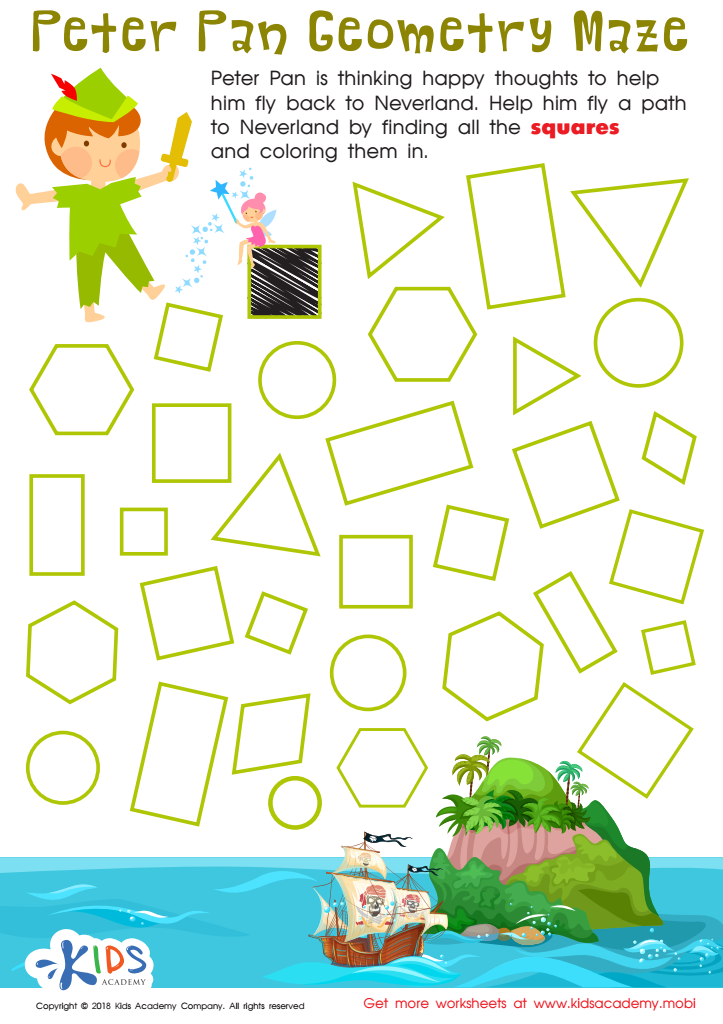
Kindergarteners can join Peter Pan on an adventure to Neverland! They can help him by coloring squares to create a path, strengthening their shape identification skills in a fun maze. Let the journey begin!
Peter Pan Worksheet
Worksheet
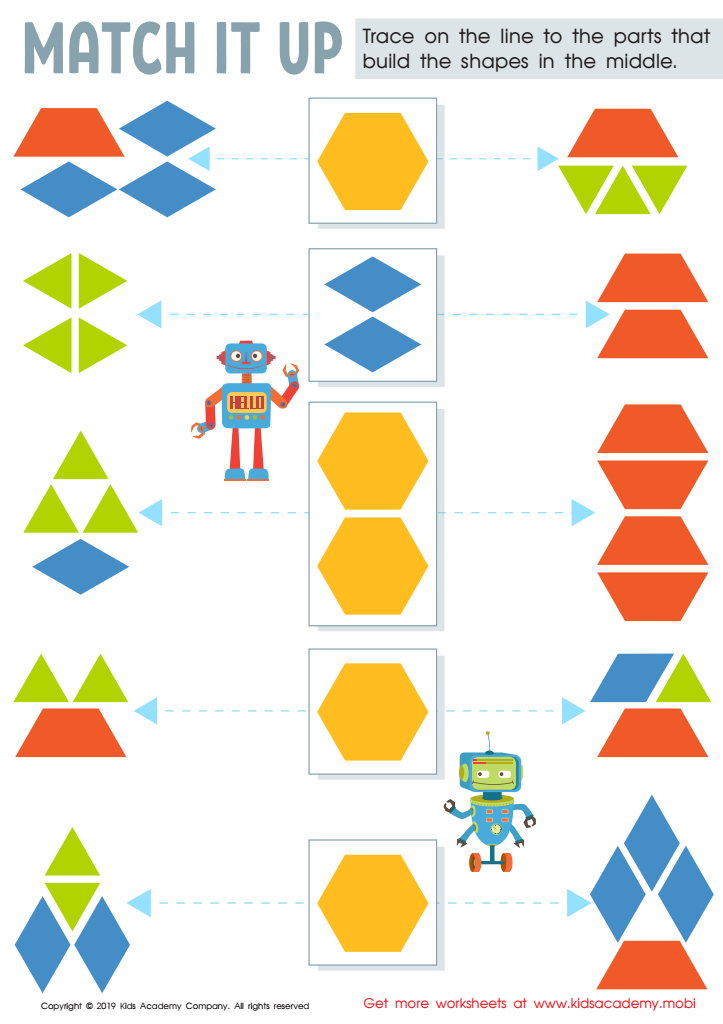
Match It up Worksheet

Match It up Worksheet

If your kids are into robots, they'll be thrilled to work on this worksheet. Ask them to name shapes they know, and help them draw and identify these shapes. Look at the shapes in the middle, and the sides. Finally, help your kids trace the lines to build the shapes in the middle.
Match It up Worksheet
Worksheet
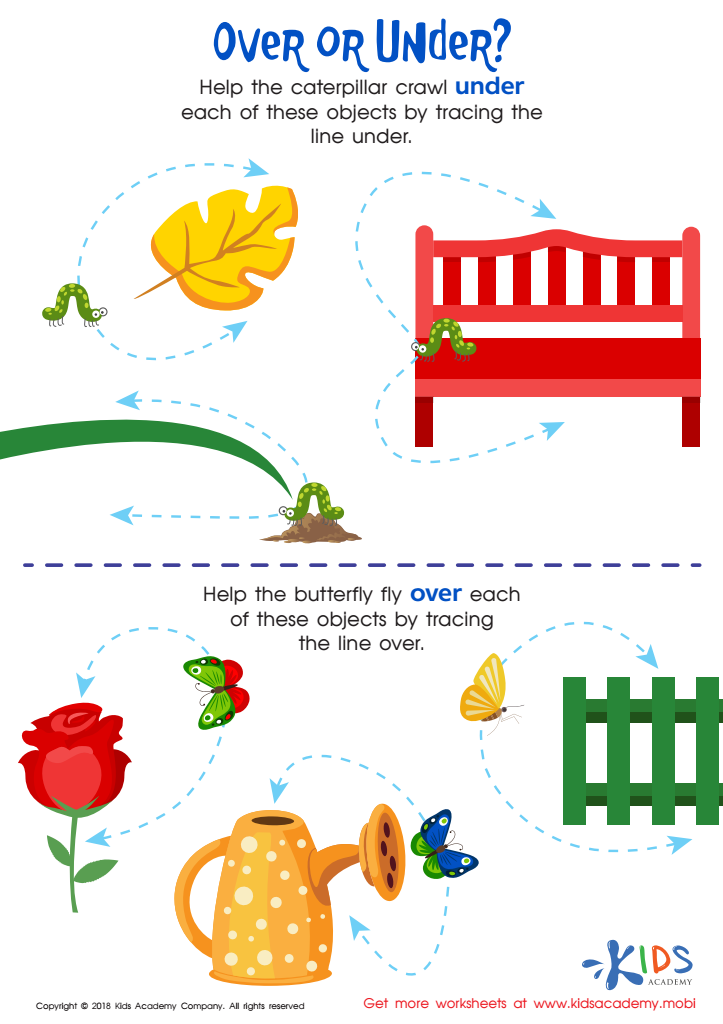
Over or Under? Worksheet

Over or Under? Worksheet

Math for young kids isn't just about numbers and counting, but also spatial concepts like geometry. This worksheet helps students learn "over" and "under" by tracing the movement of caterpillars and butterflies. Downloadable for free, it's an effective teaching tool for early learners.
Over or Under? Worksheet
Worksheet
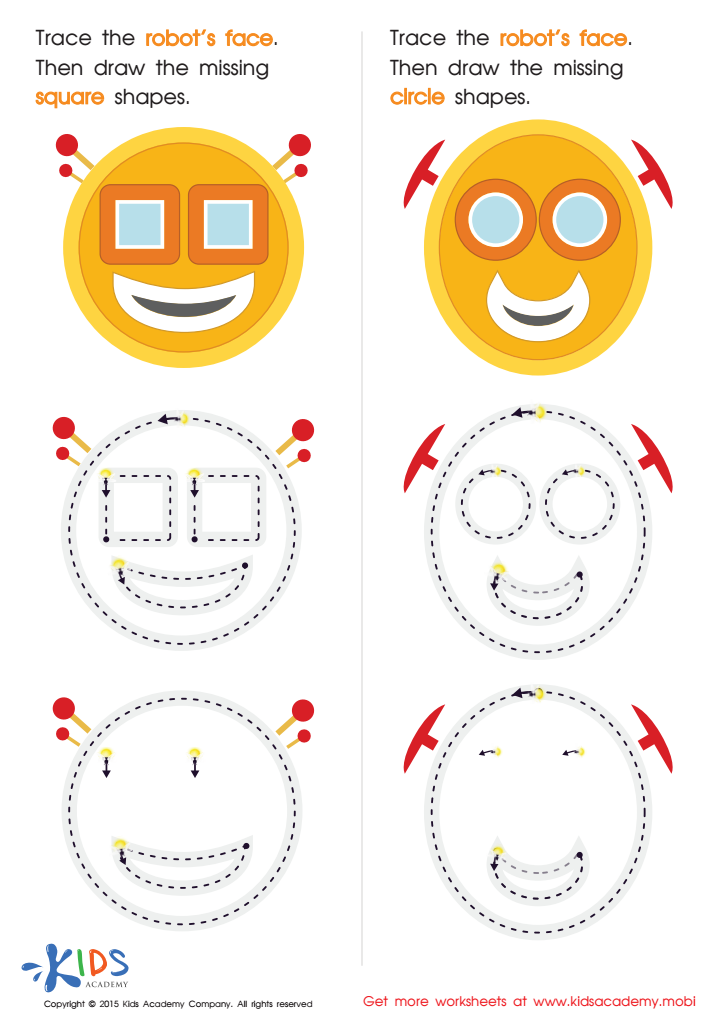
Geometric Shapes for Kids: Practicing to Draw Circles And Squares PDF

Practicing to Draw Circles And Squares Printable
Download our free printable geometry worksheets to learn shapes with your preschoolers. Trace Robot's face, draw the square parts and round shapes, remember the names for each one. Get more materials for kids at Kids Academy and make learning fun with our free printable geometry worksheets.
Practicing to Draw Circles And Squares Printable
Worksheet
Geometric Shapes for Kids: Draw a Rhombus And a Hexahedron PDF

Draw a Rhombus And a Hexahedron Printable
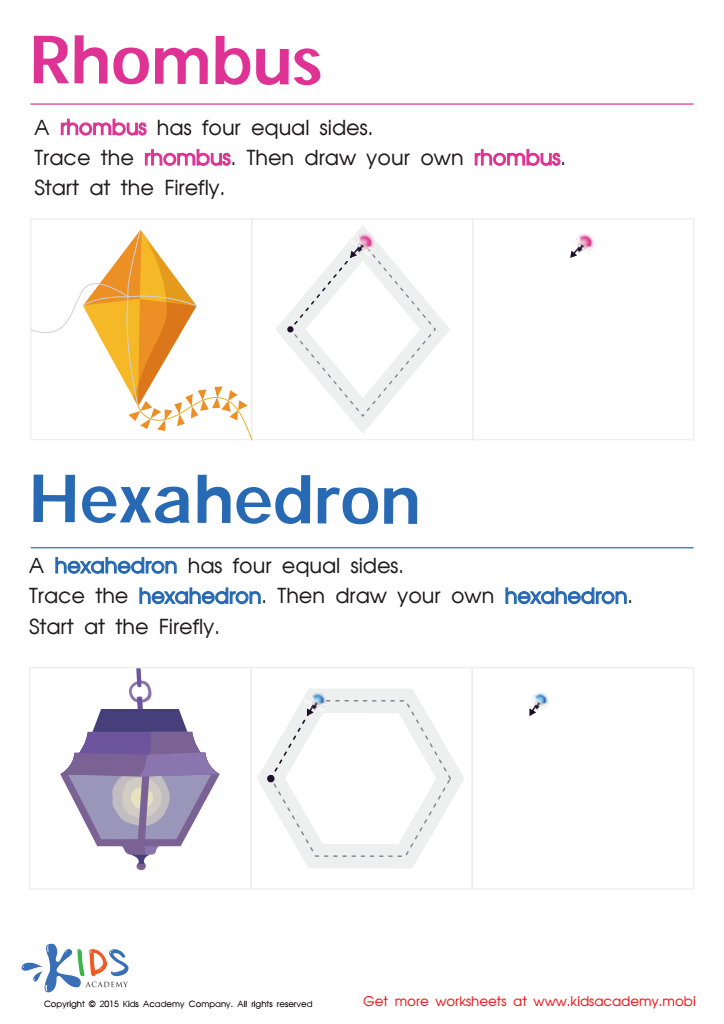
Trace, draw and recognize shapes like rhombus, hexahedron and more! Start with the firefly to trace a rhombus, then use the yellow kite to remember the shape. Use the light to trace and draw a hexahedron. Learn with the best!
Draw a Rhombus And a Hexahedron Printable
Worksheet
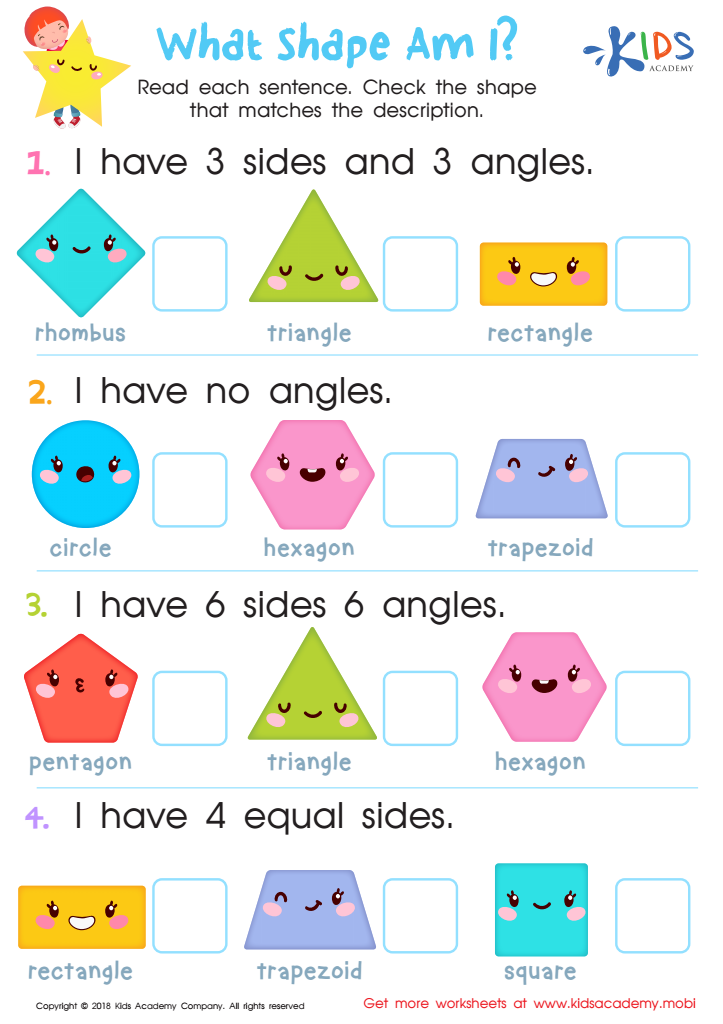
What Shape Am I? Worksheet

What Shape Am I? Worksheet

Help your child read each sentence in this colorful worksheet. Have them identify the shapes described and check the boxes. To prepare, ask simple questions like "How many sides does a triangle have?" and "Which shape has 4 equal sides?" Your child will become more skilled at shapes by the end of this activity.
What Shape Am I? Worksheet
Worksheet
In Front or Behind: Part 2 Worksheet

In Front or Behind: Part 2 Worksheet

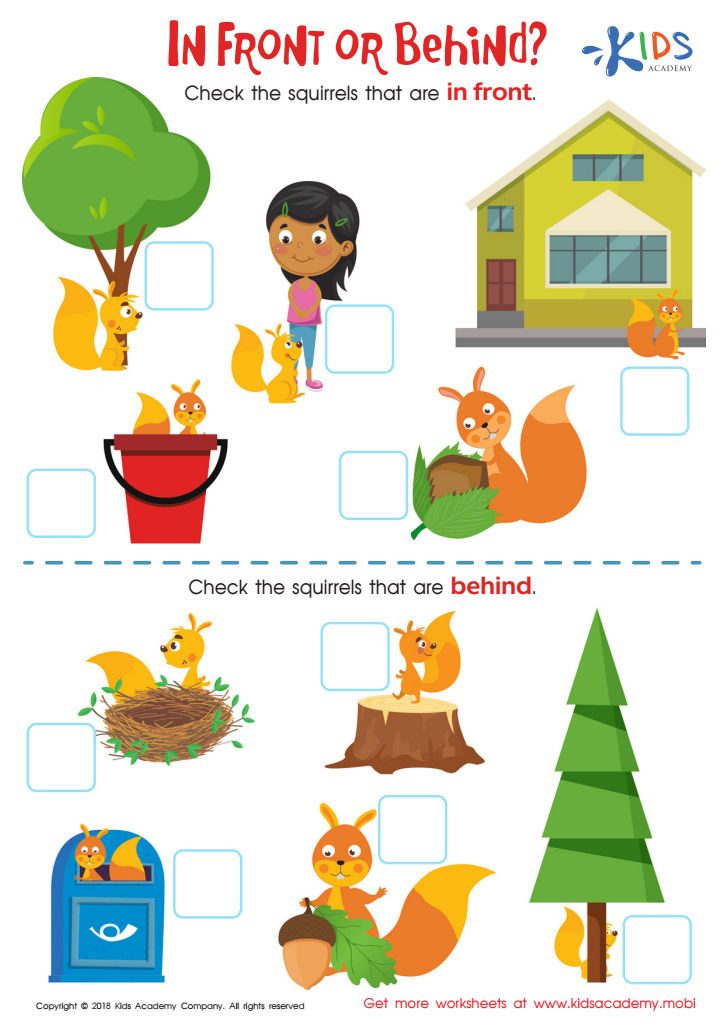
Teach positional words "front" and "behind" with this fun worksheet! Students identify where the squirrel is in relation to the object - in front or behind. It's a great exercise to practice early geometry skills and understanding object movement.
In Front or Behind: Part 2 Worksheet
Worksheet
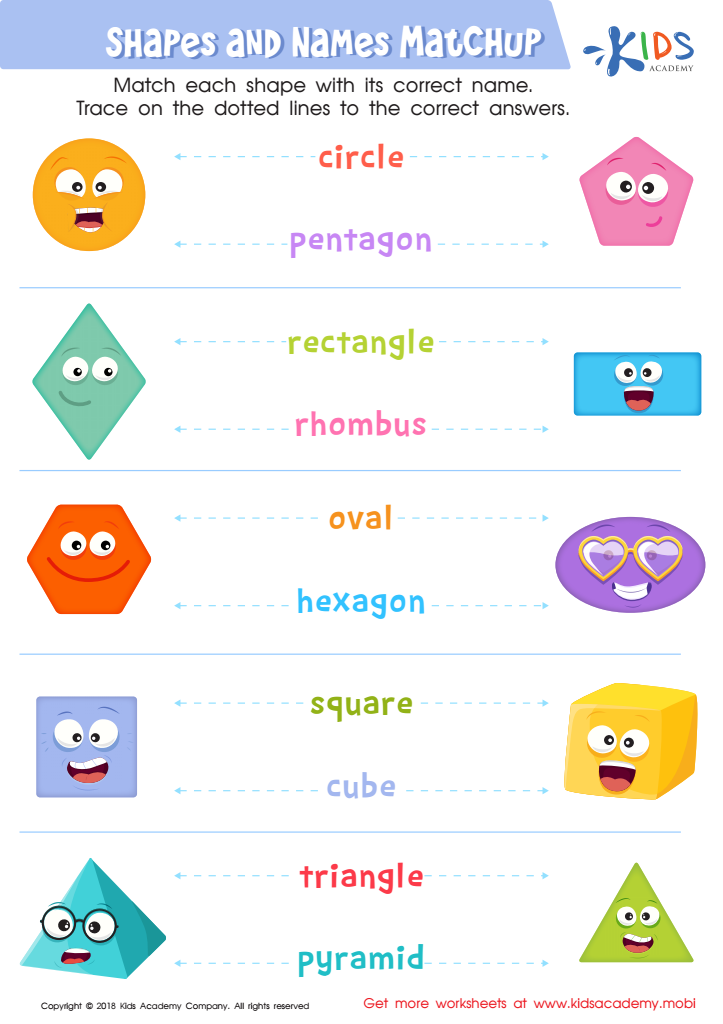
Shapes and Names Matchup Worksheet


Shapes and Names Matchup Worksheet

Introduce your students to shapes if they aren't familiar. Look at the sheet with them and ask them to identify shapes. Help them match each shape to its name, then trace the dotted lines to the answers. Even if they haven't seen shapes before, this exercise will be easy - with your help!
Shapes and Names Matchup Worksheet

Worksheet


Vocabulary enhancement in geometry for 6-year-olds is crucial for fostering a solid foundation in both mathematical skills and language development. At this age, children are naturally curious and eager to learn. By introducing geometric vocabulary, such as "triangle," "square," "circle," and "shape," we empower them to describe the world around them.

Understanding geometric terms helps children express their thoughts and articulate their understanding of spatial relationships, which is fundamental to problem-solving and critical thinking. Engaging with geometry vocabulary also supports cognitive development as children begin to categorize and differentiate between different shapes and sizes.

Moreover, enhanced vocabulary lays the groundwork for future math-related success. Mastery of geometric terms is integral when progressing to more complex concepts, creating a pathway for advanced mathematical learning in subsequent grades.

Parents and teachers should encourage exploration and discussion about shapes in everyday contexts—art, nature, and architecture—to make learning enjoyable and relevant. By investing in vocabulary enhancement now, we equip our children with the linguistic tools theyneed not only for mathematics but across all areas of their academic journey. Ultimately, a strong vocabulary fosters confidence and enthusiasm for learning, setting the stage for lifelong academic success.