Basic measurement concepts Math Worksheets for 6-Year-Olds
6 filtered results
-
From - To
Explore our engaging "Basic Measurement Concepts Math Worksheets for 6-Year-Olds" designed to introduce young learners to fundamental measuring skills. These resources cover essential concepts such as length, weight, and volume through fun, interactive activities that foster curiosity and a strong foundation in math. Our worksheets use colorful visuals and relatable scenarios to capture children's interest while encouraging them to practice measurement with hands-on exercises. Perfect for classroom use or at-home learning, these worksheets will help your child develop critical thinking and problem-solving abilities. Start their journey to becoming confident mathematicians with our easy-to-use, educational materials!
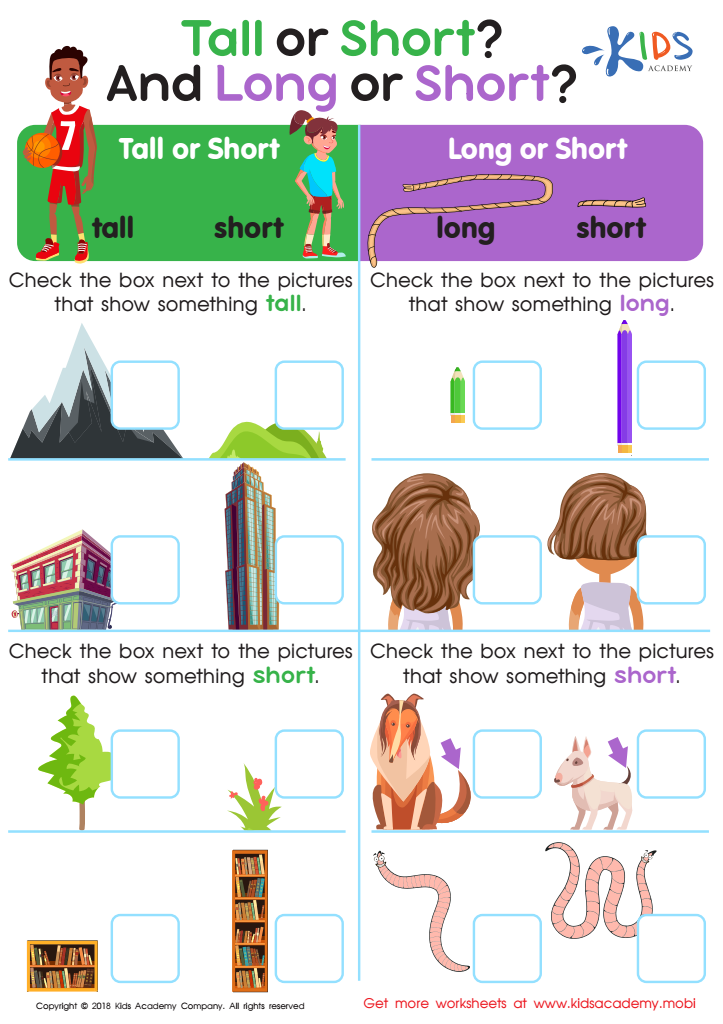
Tall or Short and Long or Short? Worksheet
 Assign to My Students
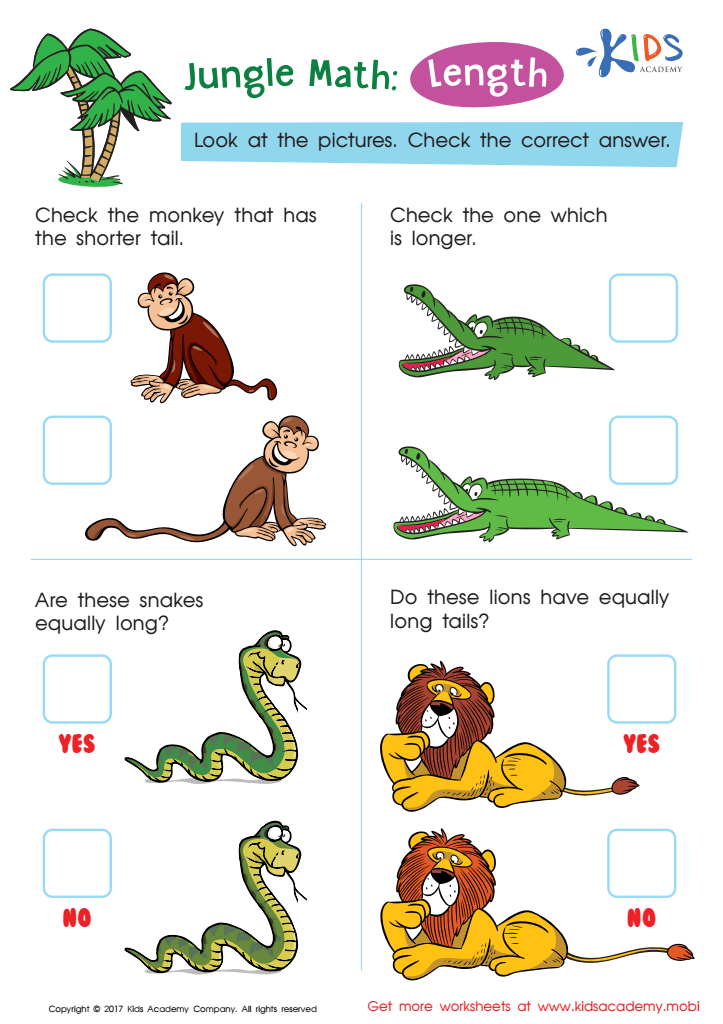
Which One Is Longer - Length Worksheet
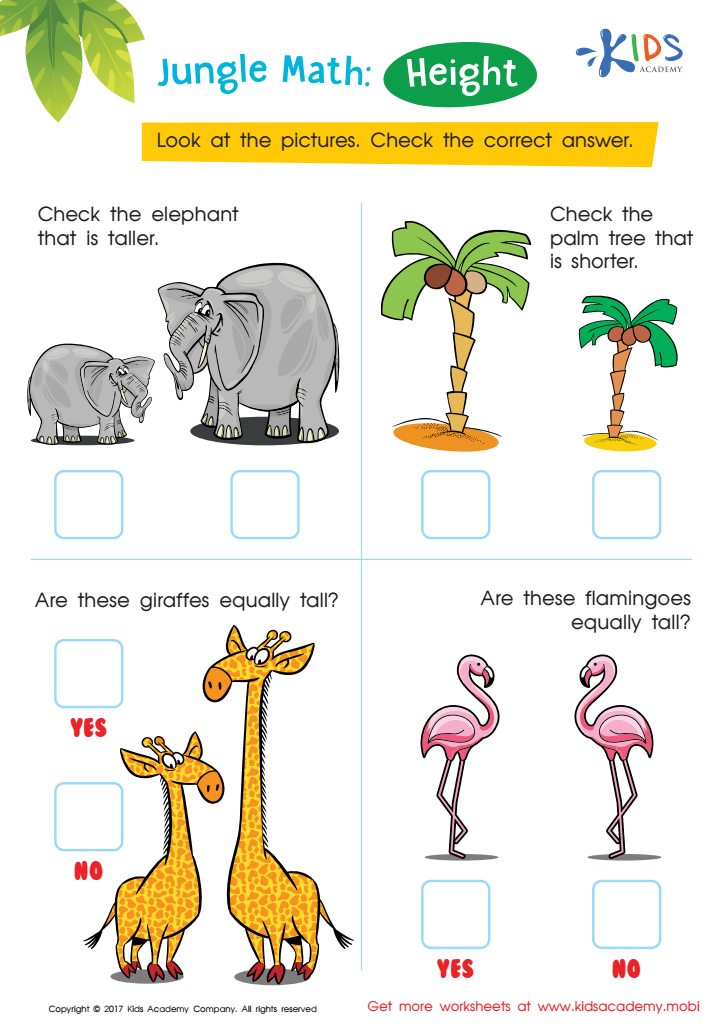
Which Is Taller Worksheet
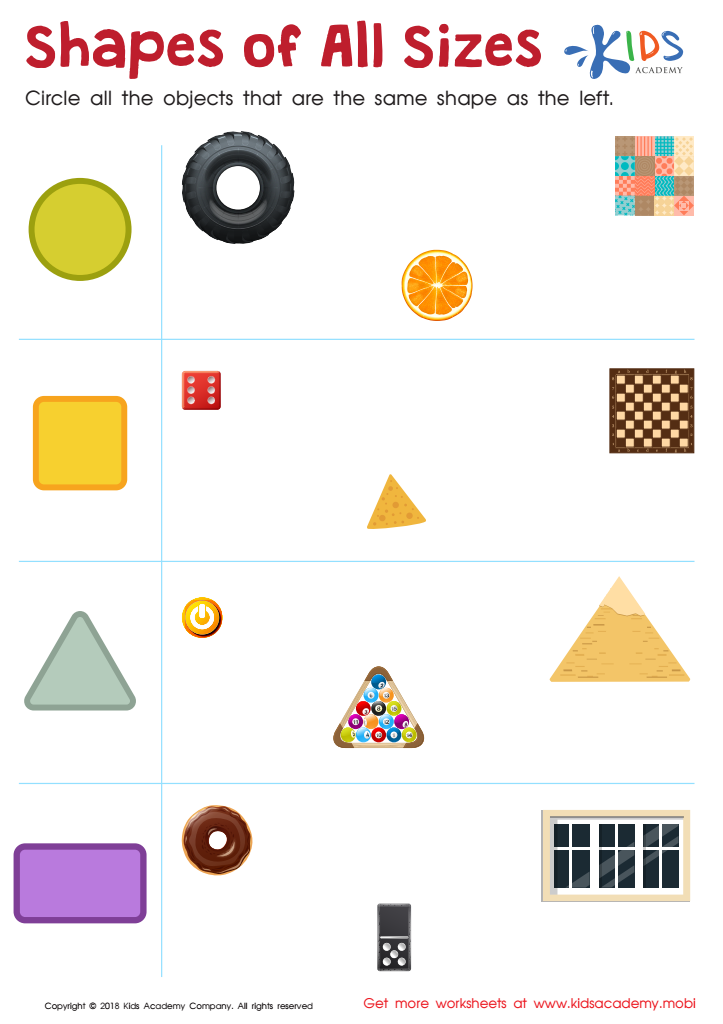
Shapes of All Sizes Worksheet
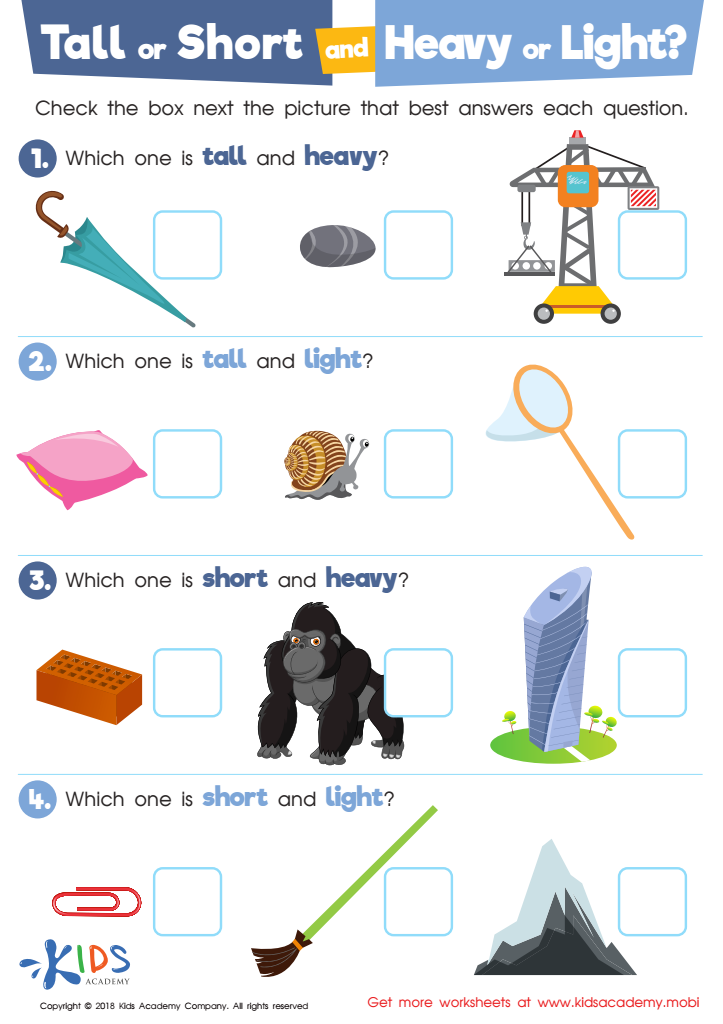
Tall or Short and Heavy or Light? Worksheet
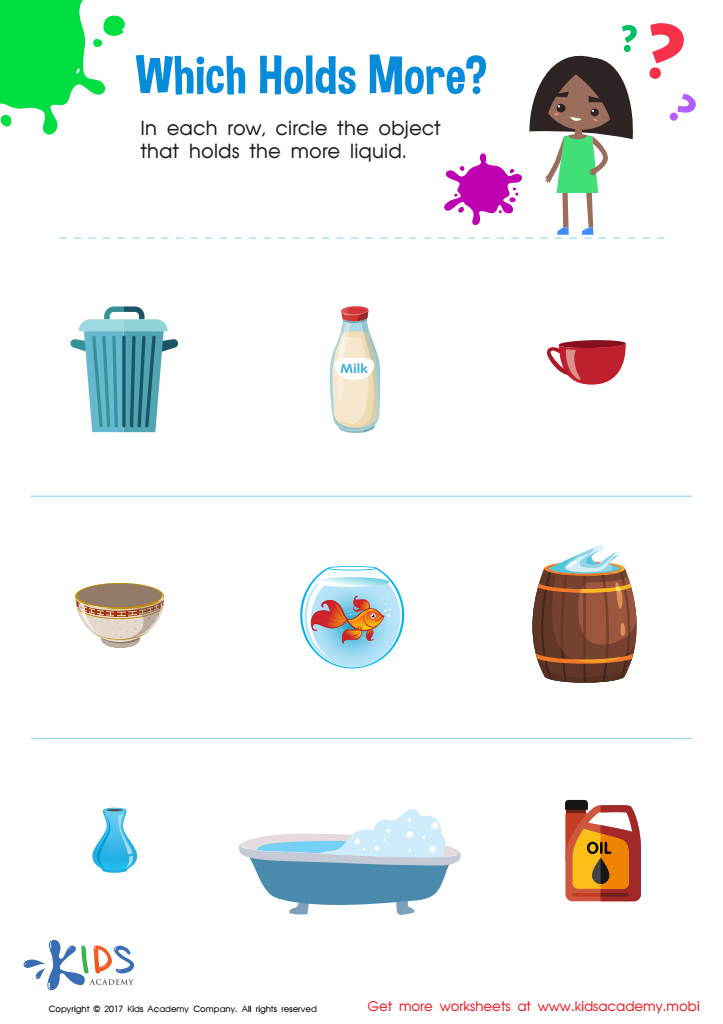
Which Holds More: Capacity Worksheet








Understanding basic measurement concepts is crucial for 6-year-olds, as it forms the foundation for essential mathematical skills. Parents and teachers should care about this topic because it plays a vital role in children's development of spatial reasoning, problem-solving abilities, and everyday practical skills.
At this age, children begin to comprehend length, weight, volume, and time, fostering their curiosity and encouraging exploration of the world around them. Engaging with measurement helps children make sense of their environment, sharpening their ability to compare, contrast, and categorize objects. For instance, when children measure ingredients for cooking, they learn not only about measurement but also about relationships and mathematics in real-life contexts.
Furthermore, mastering basic measurement lays the groundwork for future math success. Children who grasp these concepts early on are more likely to excel in more complex mathematical topics later in their education. It also helps boost their confidence in tackling mathematical problems, reducing math anxiety that can develop in later grades.
By prioritizing measurement education, parents and teachers contribute to holistic growth and a positive attitude toward learning, instilling an appreciation for mathematics that can last a lifetime. Encouraging discussions and hands-on activities around measurement can enrich children's understanding and make learning enjoyable.








