
Data interpretation Math Worksheets for 6-Year-Olds
6 filtered results
Difficulty Level
Grade
Age
-
From - To
Subject
Activity
Standards
Discover our engaging Data Interpretation Math Worksheets designed specifically for 6-year-olds! These worksheets help young learners develop essential skills in analyzing and interpreting data through fun, interactive activities. Children will explore visual representations like charts and graphs, allowing them to strengthen critical thinking and problem-solving abilities while building foundational math knowledge. Perfect for home or classroom use, our printable worksheets promote hands-on learning that keeps kids motivated. Whether it's sorting objects or analyzing simple data sets, your child will gain confidence in their math skills. Explore our curriculum-aligned resources and watch your child's data literacy flourish in an enjoyable way!
Favorites
With answer key
Interactive
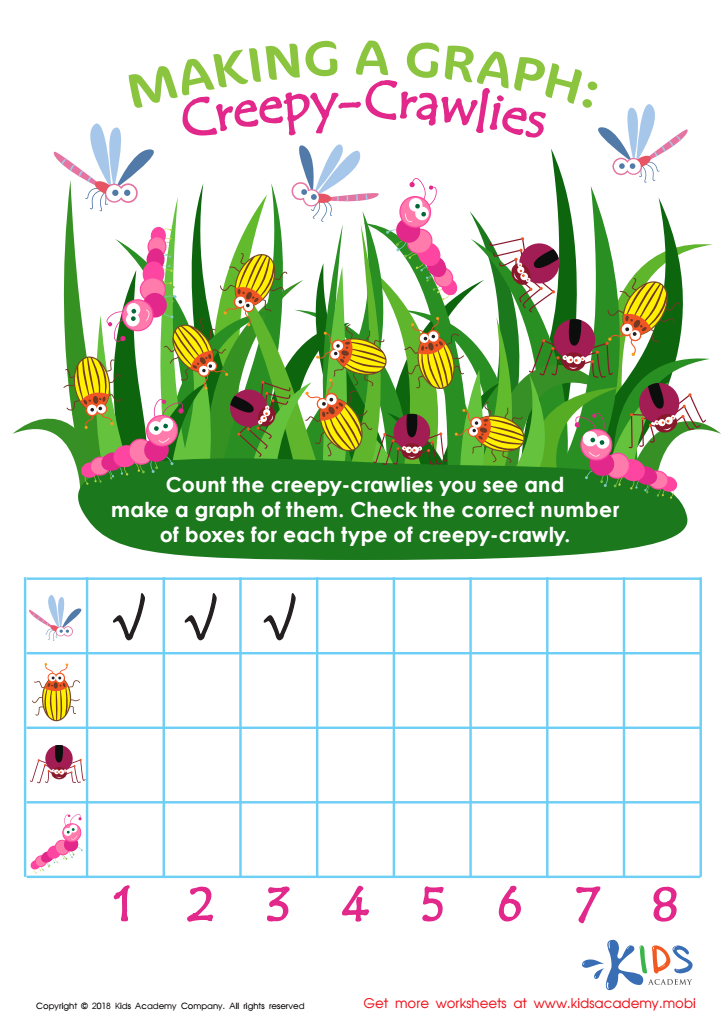
Making a Graph: Creepy Crawlies Worksheet
Let your little math whiz create a graph with this free PDF worksheet. They can count and sort the creepy-crawlies, checking off the correct number of boxes for each type. This engaging activity will help them hone their visual discrimination skills while efficiently organizing data.
 Assign to My Students
Making a Graph: Creepy Crawlies Worksheet
Worksheet
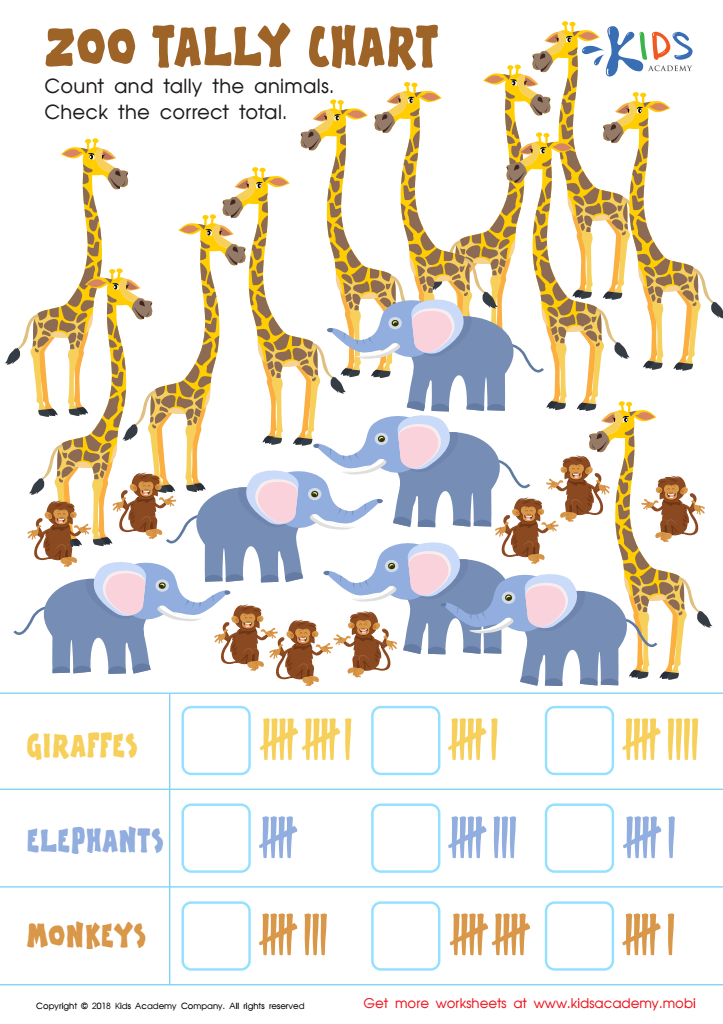
Zoo Tally Chart Worksheet
Your young mathematician will have fun counting and tallying zoo animals on this worksheet! Giraffes, elephants and monkeys - all accurately tallied at the bottom. They will assign values to each animal group to find the answer. It's math but they won't know it - it's a zoo out there!
Zoo Tally Chart Worksheet
Worksheet
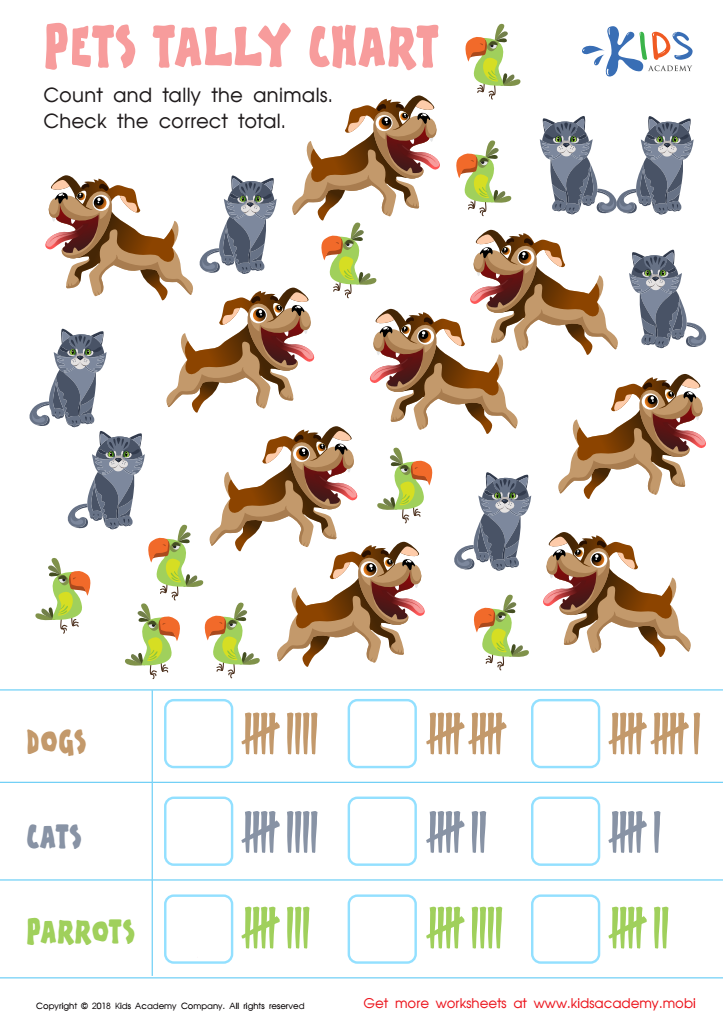
Pets Tally Chart Worksheet
Let your little mathematician count and tally the animals with this fun PDF worksheet. They'll assign value to each pet type and select the correct answer. It's a great way to practice number reasoning and learn how tallying helps keep math organized and efficient when solving equations.
Pets Tally Chart Worksheet
Worksheet
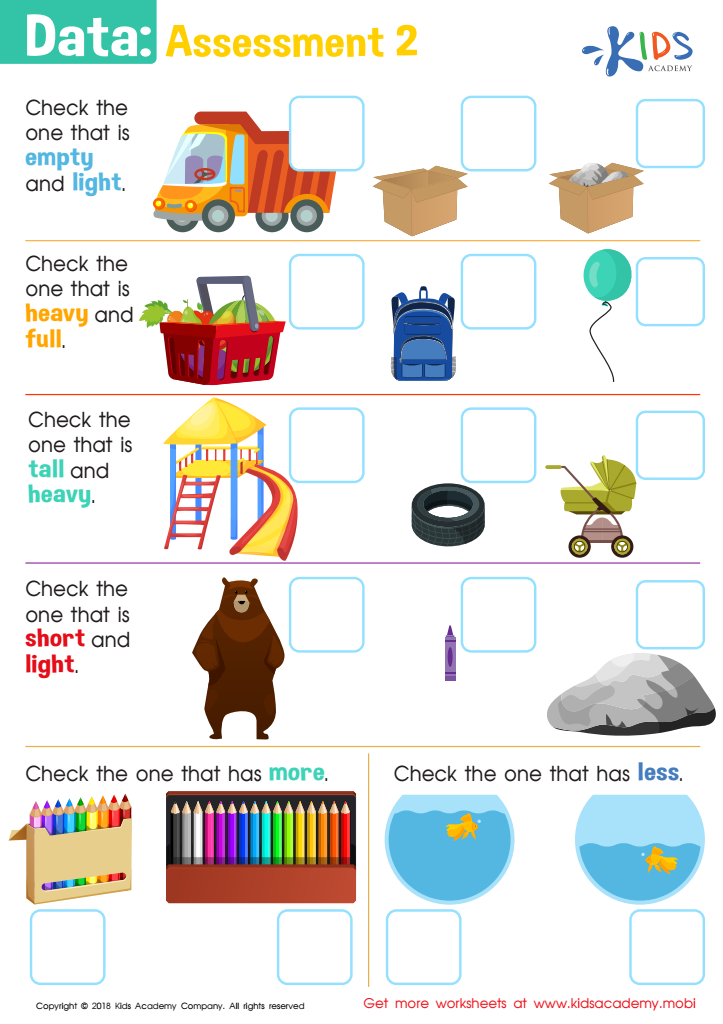
Data: Assessment 2 Worksheet
This PDF helps you assess your students' understanding of concepts like empty/light, full/heavy, tall/short, and more/less. With this worksheet, students use pictures to answer questions and check off the appropriate box. It's a fast, easy way to determine what concepts they have learned and which need more work.
Data: Assessment 2 Worksheet
Worksheet
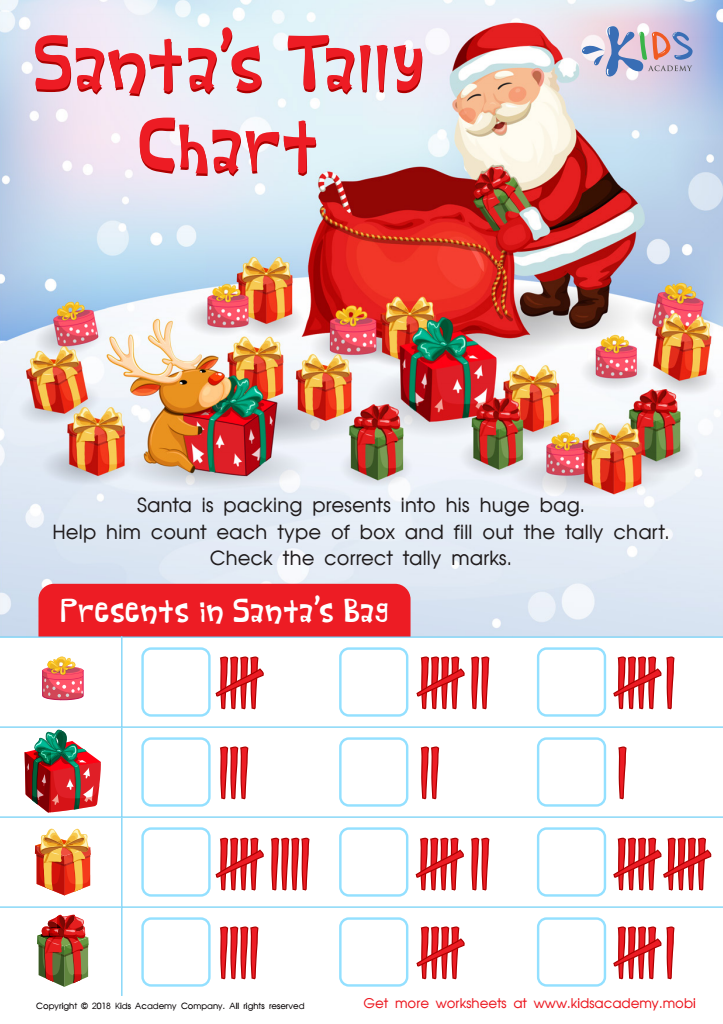
Santa Tally Chart Worksheet
Santa's got a big bag of gifts to count! Kids can help with this fun PDF worksheet, practicing visual recognition and representation skills while they sort and tally the presents. They'll also work on charting as they fill in the tally chart and send Santa off for a happy holiday. Ho, Ho, Ho!
Santa Tally Chart Worksheet
Worksheet
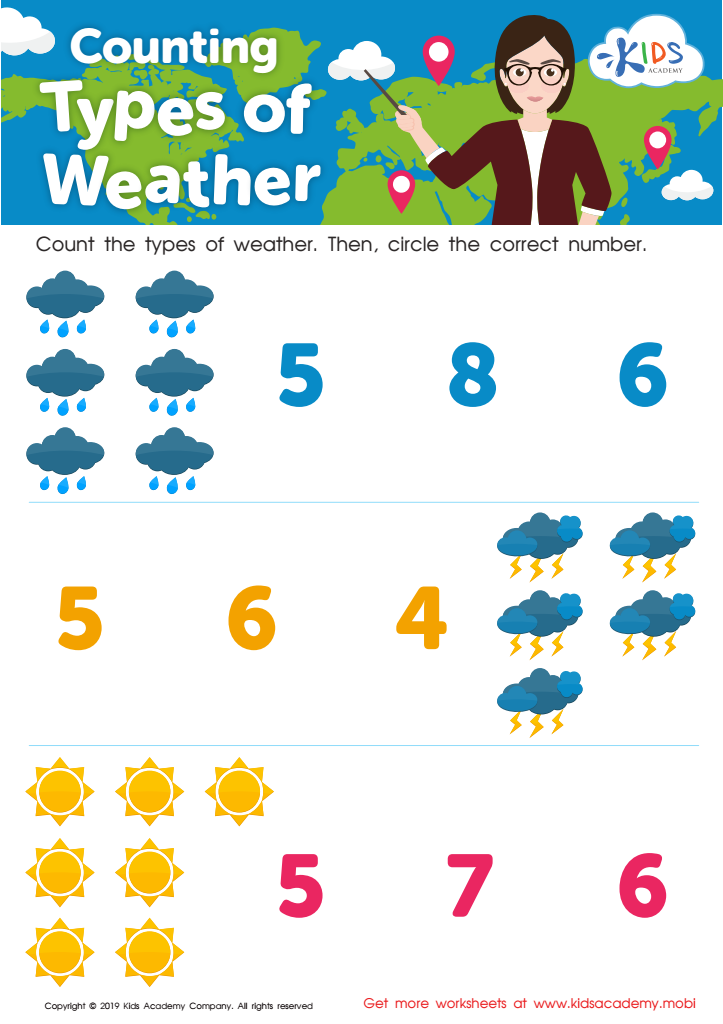
Counting Types of Weather Worksheet
Have your students look outside and tell you the weather today. Get kindergartners thinking by asking them to name different types of weather. Point to each one in the picture and get them to tell you what it is. Then, have them count the types and circle the number.
Counting Types of Weather Worksheet
Worksheet
Join Kids Academy for Free
Who is primarily going to use this learning content?







Data interpretation is a crucial skill for 6-year-olds as it lays the foundation for critical thinking and problem-solving in mathematics and everyday life. At this stage, children begin to understand how to collect, organize, and analyze information, concepts that are essential not just in math class, but in a wide range of subjects and real-world situations.
Parents and teachers should care about data interpretation because it enhances children's reasoning abilities. Learning to interpret data helps children make sense of their world, whether they are counting the number of apples in a basket or analyzing their favorite colors among friends. This foundational skill encourages enthusiasm for math through engaging activities such as creating charts or simple graphs.
Moreover, data interpretation fosters analytical skills that are increasingly important in today's information-driven society. Children learn how to evaluate information critically, discerning relevant data from noise. By instilling these skills early, educators and parents can prepare children for future academic challenges and instill a growth mindset, promoting confidence in their mathematical abilities. Ultimately, an understanding of data prepares young learners to navigate and contribute meaningfully to a world filled with information.








