Recognizing Patterns Math Worksheets for 6-Year-Olds
5 filtered results
-
From - To
Unlock a world of learning fun with our "Recognizing Patterns Math Worksheets for 6-Year-Olds." Designed specifically for first graders, these printable worksheets help young learners grasp the foundational concepts of patterns—essential for math mastery. Packed with vibrant, engaging activities, each worksheet guides kids through identifying, predicting, and creating sequences using shapes, colors, and numbers. Whether for classroom use or at-home practice, our expertly crafted sheets aim to build critical thinking and problem-solving skills. Start your child’s journey towards mathematical confidence and creativity with our exciting pattern recognition worksheets! Visit Kids Academy today to download and print.
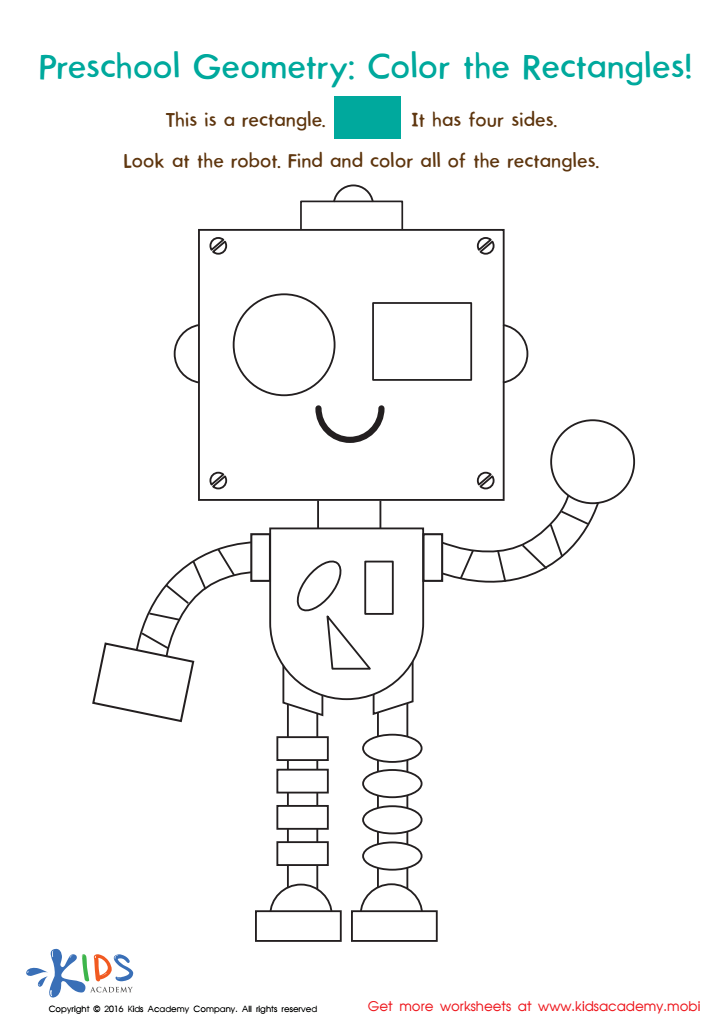
Geometry Worksheet
 Assign to My Students
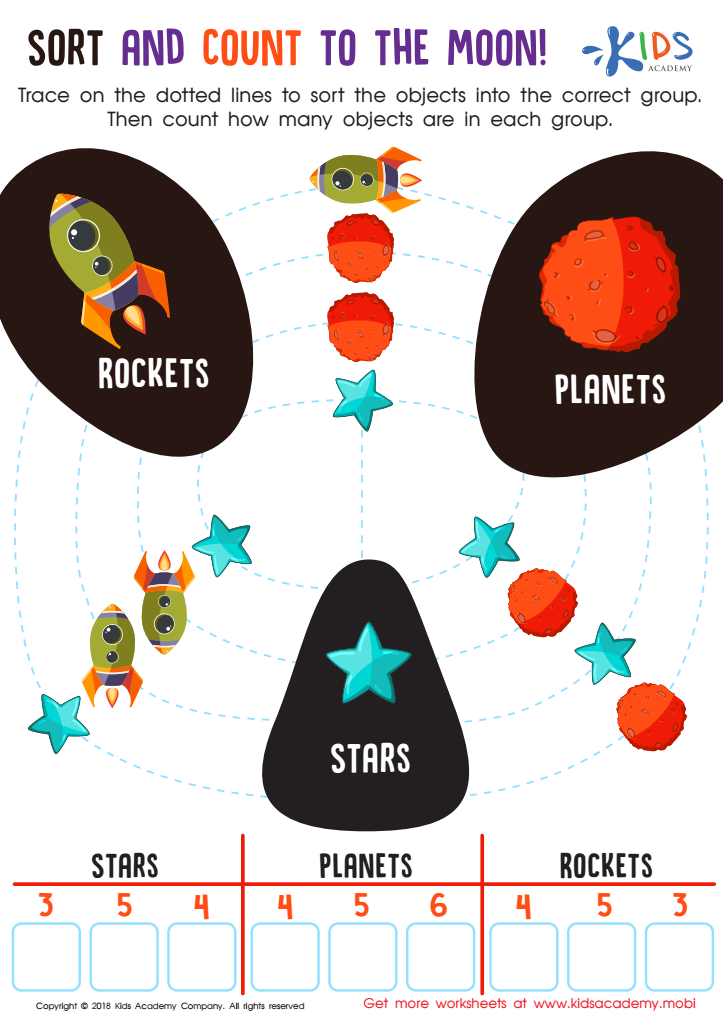
Sort and Count to the Moon Worksheet
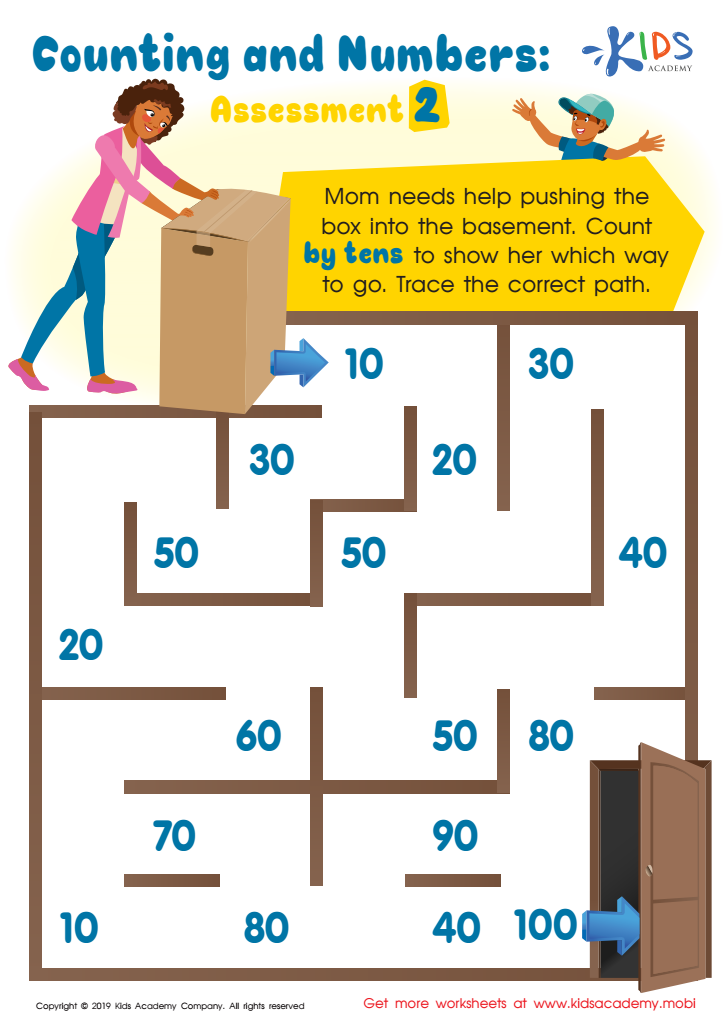
Counting and Numbers: Assessment 2 Worksheet
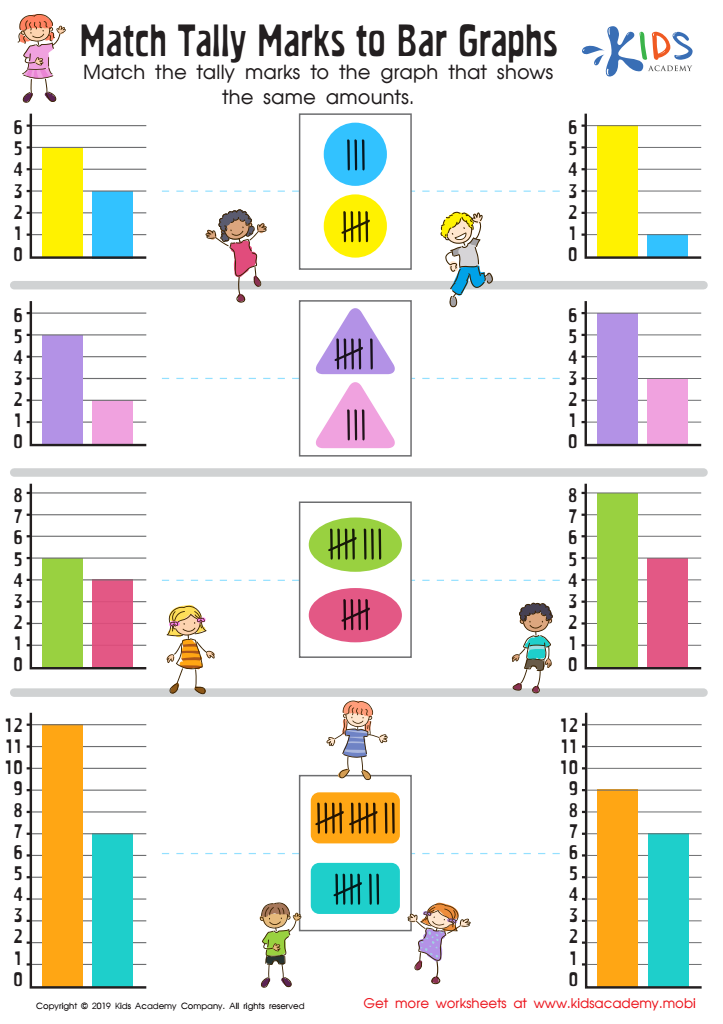
Match Tally Marks to Bar Graphs Worksheet
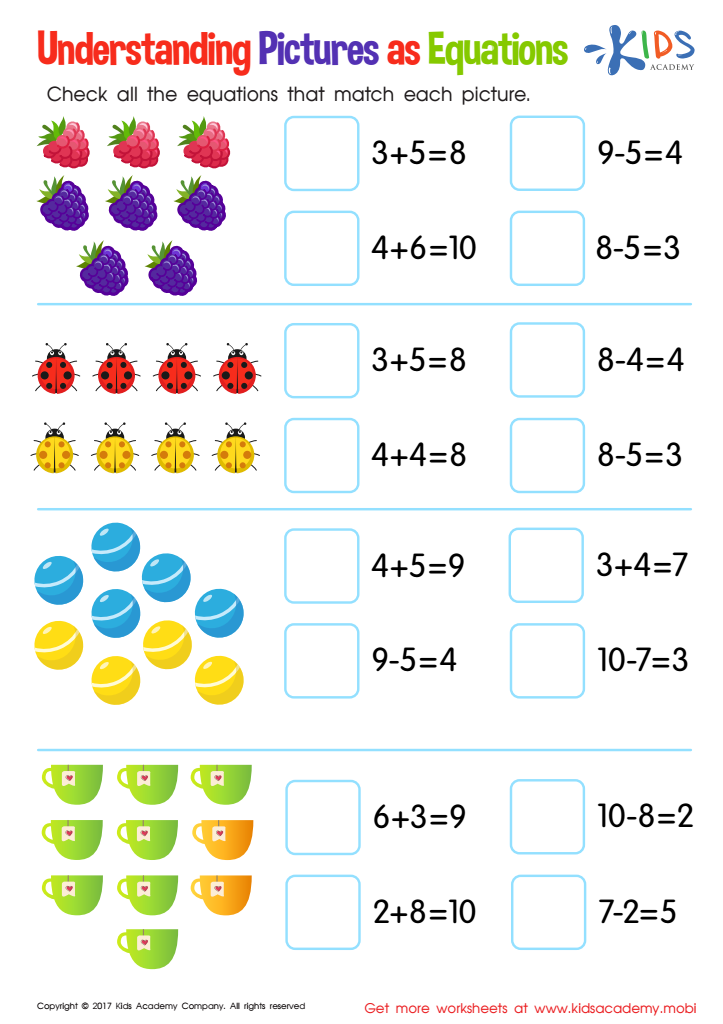
Understanding Pictures as Equations Worksheet







Recognizing patterns in math is a crucial foundational skill for 6-year-olds. At this developmental stage, children are naturally curious and ready to explore the world around them. By learning to recognize and understand patterns, young students can develop a range of cognitive skills that will benefit them throughout their academic journey and beyond.
Patterns are a fundamental aspect of math and are pervasive in daily life. They help children make predictions, understand sequences, and establish logical thinking processes. For instance, recognizing simple patterns in shapes, colors, or numbers lays the groundwork for more complex mathematical concepts such as algebra, geometry, and number theory.
Moreover, pattern recognition enhances problem-solving abilities and critical thinking. When children learn to identify patterns, they practice organizing and categorizing information, which boosts their analytical skills. These are essential competencies not only in math but also in other subjects and real-life scenarios.
Socially, mastering pattern-related tasks can boost confidence and encourage a growth mindset. Children who successfully recognize and replicate patterns often experience a sense of achievement, motivating them to tackle more challenging tasks. This positive reinforcement supports the development of resilience and perseverance.
Overall, by focusing on pattern recognition at an early age, parents and teachers can cultivate a robust mathematical foundation, setting the stage for future academic success and lifelong learning.








