Filters

11 filtered results

Clear all filters
Favorites
With answer key
Interactive

11 filtered results

Difficulty Level

Grade


Unlock your child's potential with our engaging Spatial Awareness Math Worksheets designed for 6-year-olds! These printable resources from Kids Academy are crafted to enhance young learners' understanding of shapes, space, and position. Our worksheets feature fun activities that promote critical thinking and problem-solving skills while keeping kids entertained. Perfect for kindergarten and first-grade students, they help build a solid foundation for math success. With our expertly designed materials, your child will develop essential spatial awareness competencies, setting them up for future academic achievements. Visit Kids Academy now to explore our exciting range of educational worksheets!

Check out this FREE Trial Lesson on Math for age 6!

Counting to 9

Favorites
With answer key
Interactive
  • 6
  • Spatial awareness
  • Math
Trace The Circles Worksheet

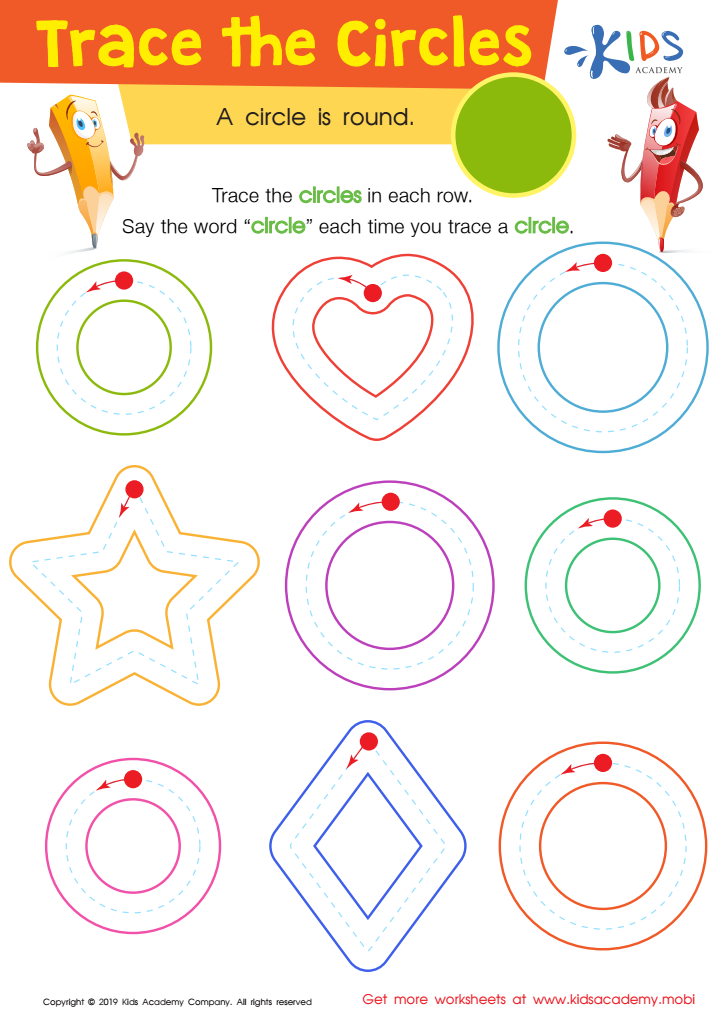
Trace The Circles Worksheet

Preschoolers and kindergarteners love learning shapes! This worksheet provides practice in naming and tracing circles. Students say "circle" each time they trace one. It's a fun way to help kids learn math vocabulary and develop fine motor skills. Enjoy this printable and get ready to master circles!
Trace The Circles Worksheet
Worksheet
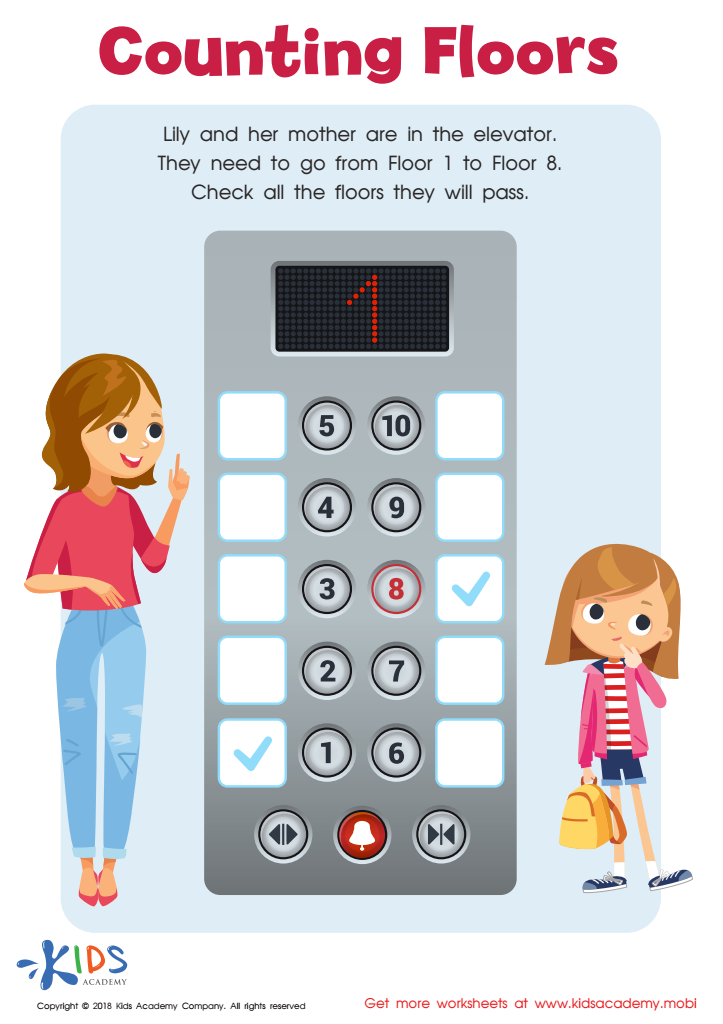
Counting Floors Worksheet

Counting Floors Worksheet

Take your kids on an elevator ride and have them help you. With this worksheet, little ones meet Lily and her mom. They're taking an elevator from Floor 1 to Floor 8. Ask them to check the floors they pass and help the two reach their destination.
Counting Floors Worksheet
Worksheet
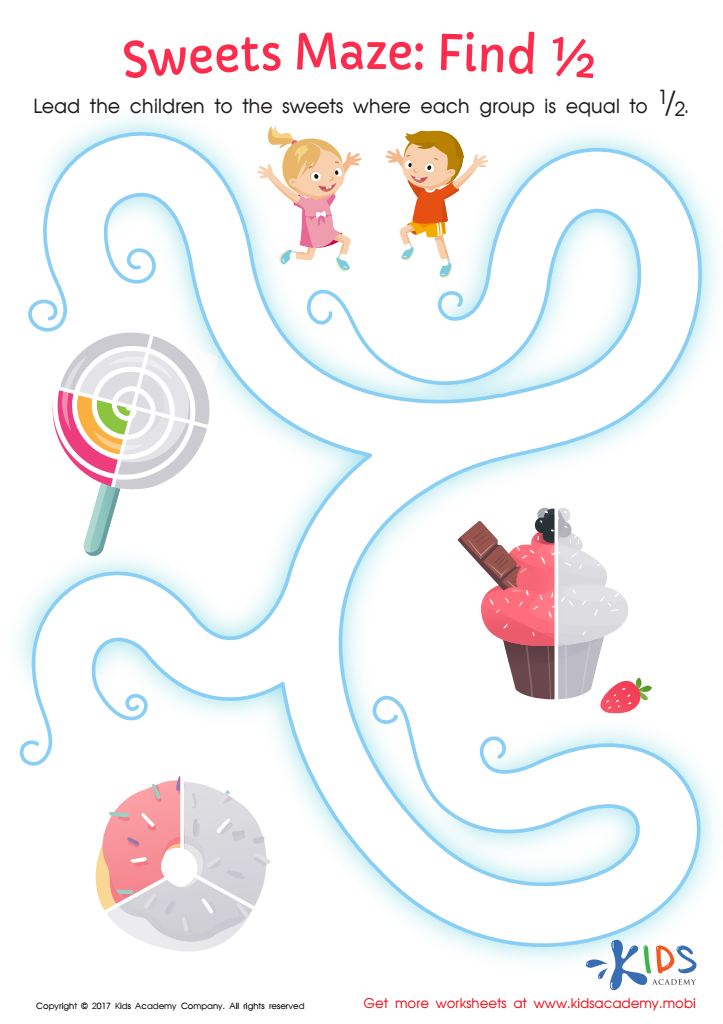
Sweets Maze Learn Fractions

Fractions: Sweets Maze Worksheet

Kids will enjoy mastering parts of a whole with this tantalizing maze featuring tasty treats. Visuals help them understand fractions and the fun theme will motivate them to learn! Get started now to help your child find and identify ½!
Fractions: Sweets Maze Worksheet
Worksheet
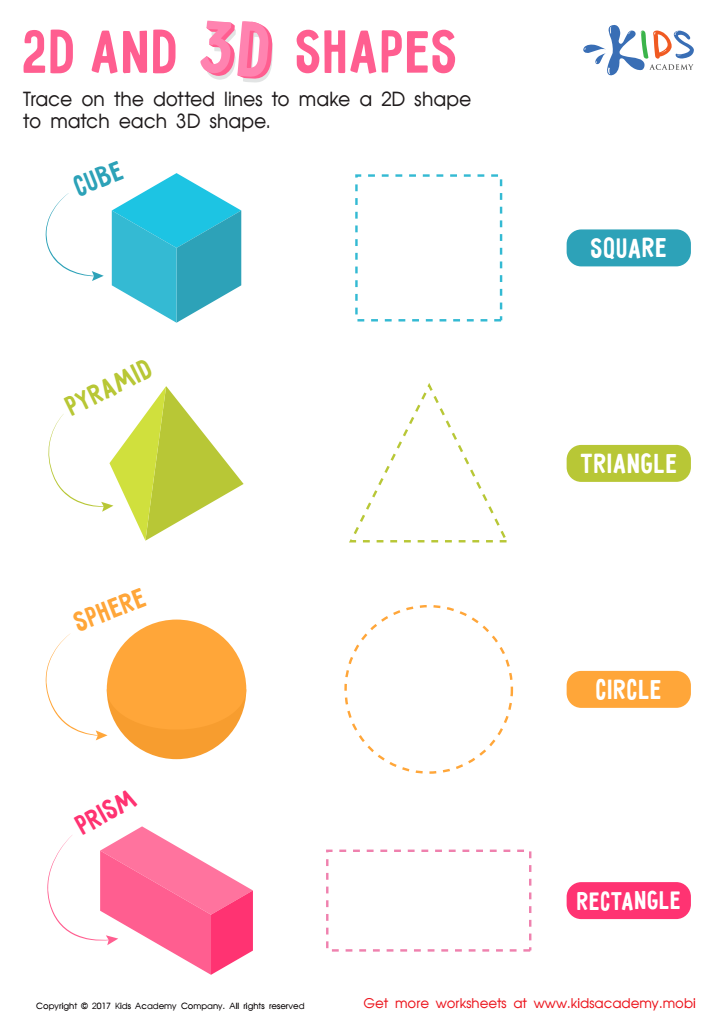
2D and 3D Shapes Worksheet

2D and 3D Shapes Worksheet

Introduce your child to 3D and 2D with this traceable worksheet. With dotted lines, help them trace and make a 2D shape for each 3D shape: square, triangle, rectangle, and circle. Show them there's more than one way to draw! You may have taken them to a 3D movie, or they've seen some fantastic 3D art. Now they can wonder no more.
2D and 3D Shapes Worksheet
Worksheet
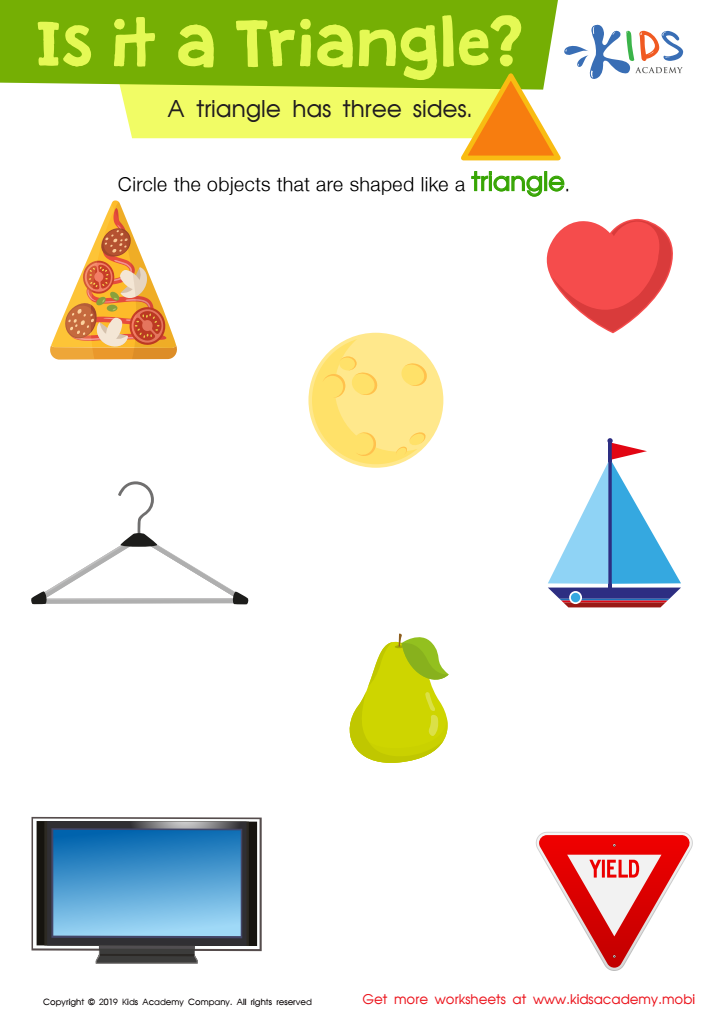
Is It a Triangle? Worksheet

Is It a Triangle? Worksheet

Young kids need to learn to identify basic shapes for math. Show them what a triangle looks like with this fun worksheet. They can look around their environment for everyday objects shaped like a triangle and circle them on the sheet. Download now and start learning what a triangle is!
Is It a Triangle? Worksheet
Worksheet
Where Is 3? Worksheet

Where Is 3? Worksheet

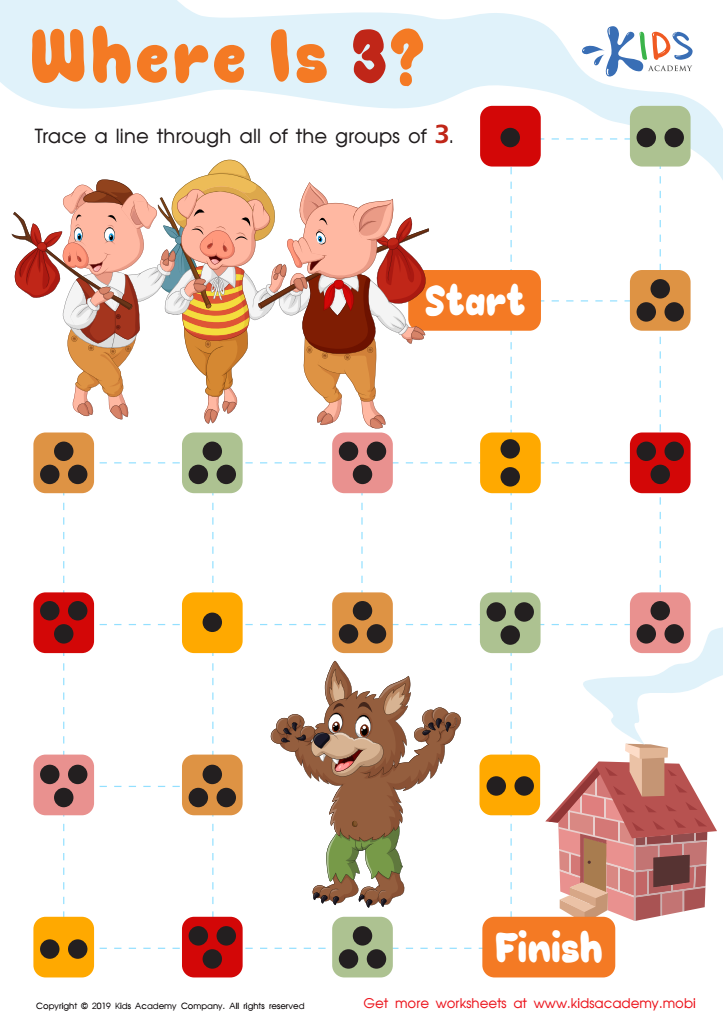
Let your little mathematician join the Three Little Pigs on an adventure! With this free worksheet, they'll guide the pigs through a maze of numbered bricks, using one-to-one representation to get to the sturdy house. Have fun helping the piggy friends past the wolf!
Where Is 3? Worksheet
Worksheet
3D Cylinder Printable

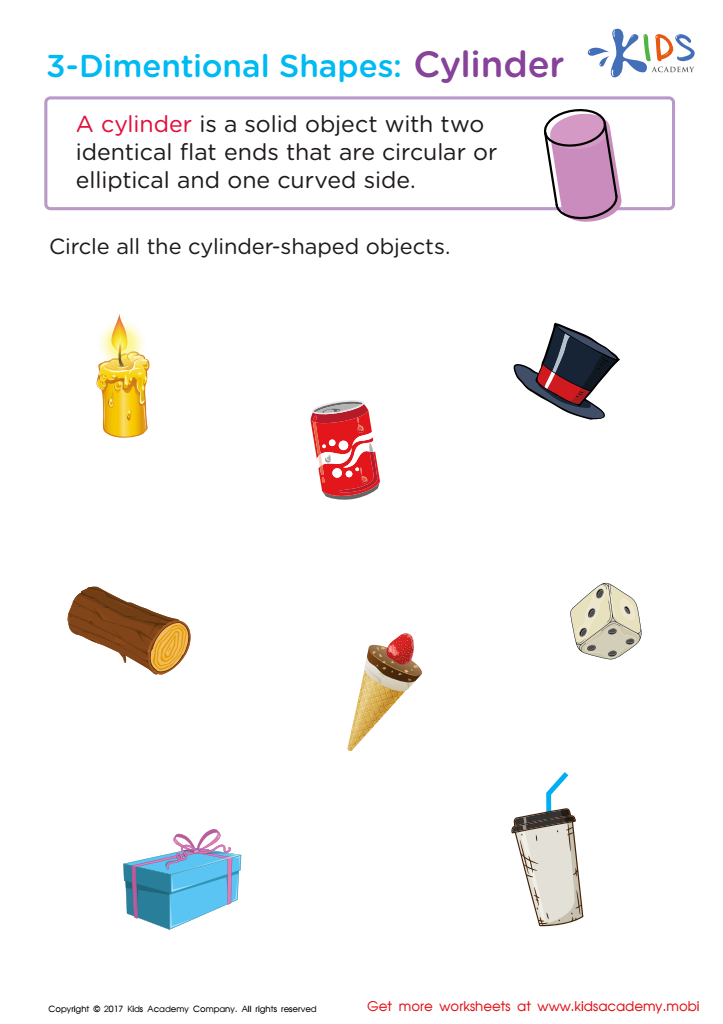
Three–Dimensional Shapes: Cylinder Worksheet
Introduce your toddler to geometry and 3D cylinders with this printable and watch their knowledge grow. It will help them recognize, define, and identify cylinders, as well as differentiate between 3D objects.
Three–Dimensional Shapes: Cylinder Worksheet
Worksheet
St. Patrick’s Day Worksheet: Leprechaun

Leprechaun Maze Printable

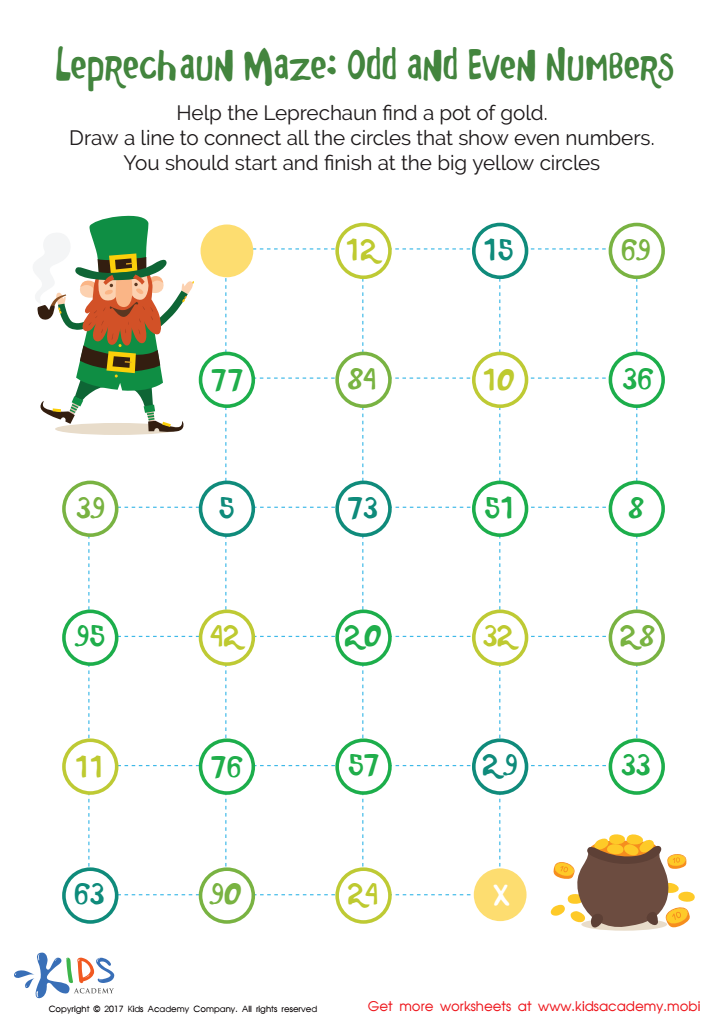
Help the leprechaun find his pot of gold! Challenge your learner with this St. Patrick's Day worksheet. Let them identify odd or even numbers in the maze and connect the dots. It will be a fun way to celebrate St. Patrick's Day!
Leprechaun Maze Printable
Worksheet
In Front or Behind: Part 2 Worksheet

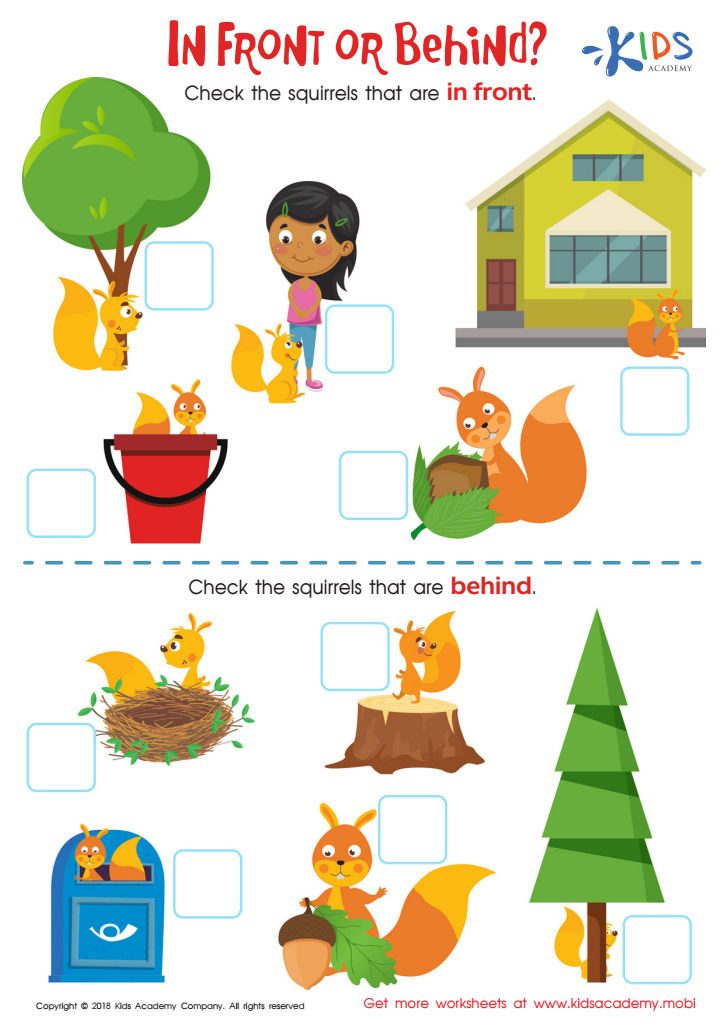
In Front or Behind: Part 2 Worksheet

Teach positional words "front" and "behind" with this fun worksheet! Students identify where the squirrel is in relation to the object - in front or behind. It's a great exercise to practice early geometry skills and understanding object movement.
In Front or Behind: Part 2 Worksheet
Worksheet
Underwater Adventure Worksheet

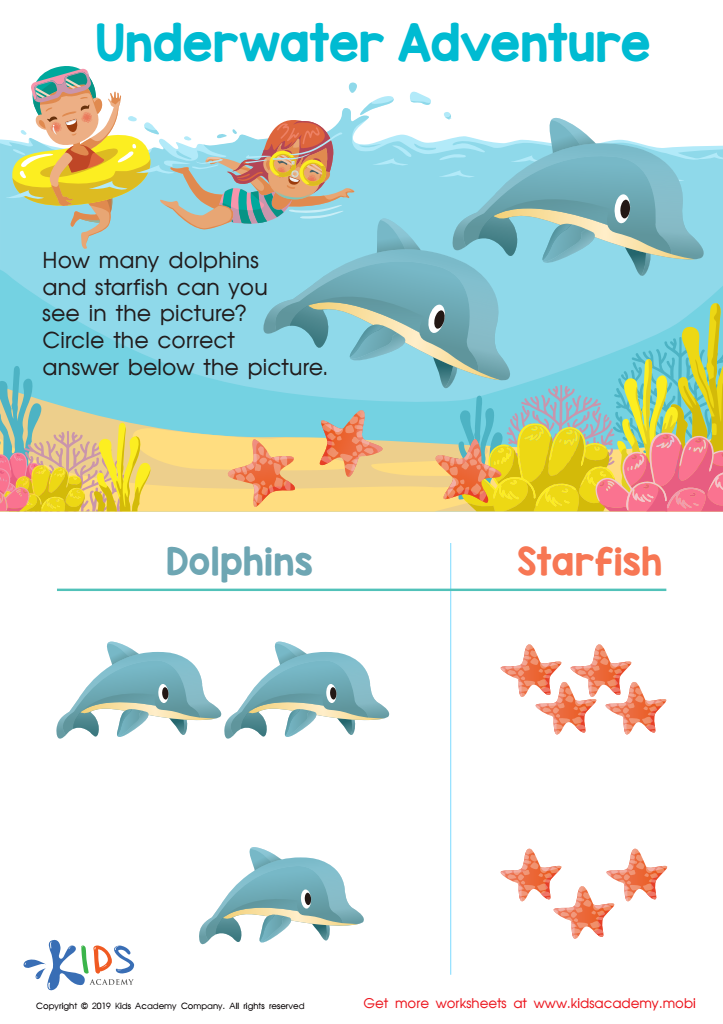
Underwater Adventure Worksheet

Kids can explore the ocean without realizing they're doing math! This free worksheet takes them on an underwater adventure with dolphins and starfish. They count using pictures and answer questions by circling the right images. Along the way, they'll have a blast!
Underwater Adventure Worksheet
Worksheet
Cutting in Halves Worksheet


Cutting in Halves Worksheet

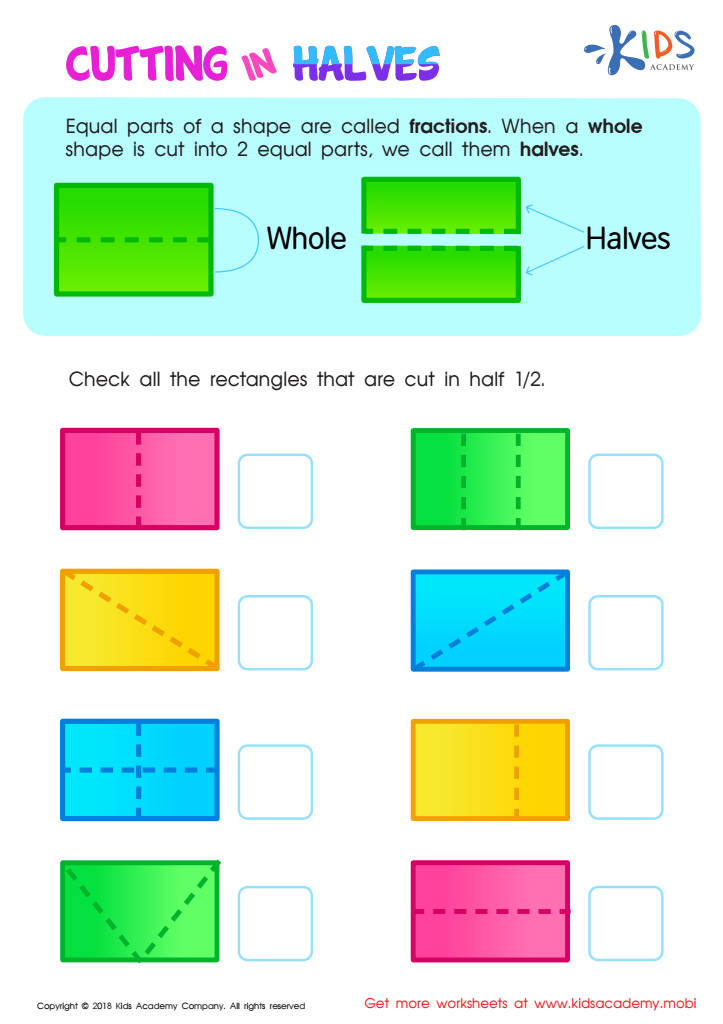
Show your child how to divide a whole shape, like a square, into smaller pieces to become fractions. Point out when a shape is divided into two equal parts, it's called a half. Look at the worksheet together, and identify all rectangles that are cut in half (½).
Cutting in Halves Worksheet
Worksheet


Spatial awareness in math is crucial for 6-year-olds because it forms a foundational skill set that supports their overall cognitive development and future learning in diverse subjects, particularly in STEM (Science, Technology, Engineering, and Mathematics) fields. For parents and teachers, understanding and nurturing this aspect ensures children can navigate, interpret, and interact with their physical world more effectively.

Spatial awareness involves recognizing shapes, sizes, patterns, and the relationships between objects in space. It impacts a child's ability to read and comprehend maps, understand geometry, and even influence their ability to grasp more abstract mathematical concepts later on. Improved spatial skills lead to better problem-solving abilities and logical reasoning, which are essential for academic success and everyday tasks, such as puzzle completion, understanding guides, and organizing their environment.

By engaging children in activities like building blocks, drawing maps, or playing games that involve directions and positioning, parents and teachers help strengthen these brain functions. This foundation not only makes learning math concepts more intuitive and less frustrating for young learners but also promotes creativity, critical thinking, and confidence in their abilities to understand and shape the world around them. Thus, investing in spatial awareness builds a critical framework for lifelong learning and adaptation.