Understanding opposites Math Worksheets for 6-Year-Olds
3 filtered results
-
From - To
Discover the joy of learning with our "Understanding Opposites Math Worksheets for 6-Year-Olds." Specifically designed for young learners, these engaging worksheets help children grasp fundamental math concepts through fun activities and playful exercises. Perfect for home or classroom use, our worksheets enhance skills such as addition, subtraction, and problem-solving while also introducing your child to the concept of opposites. Watch your child develop critical thinking abilities and a love for math as they explore numbers in a dynamic and enjoyable way. Boost their confidence and academic foundation with our expertly crafted math resources.
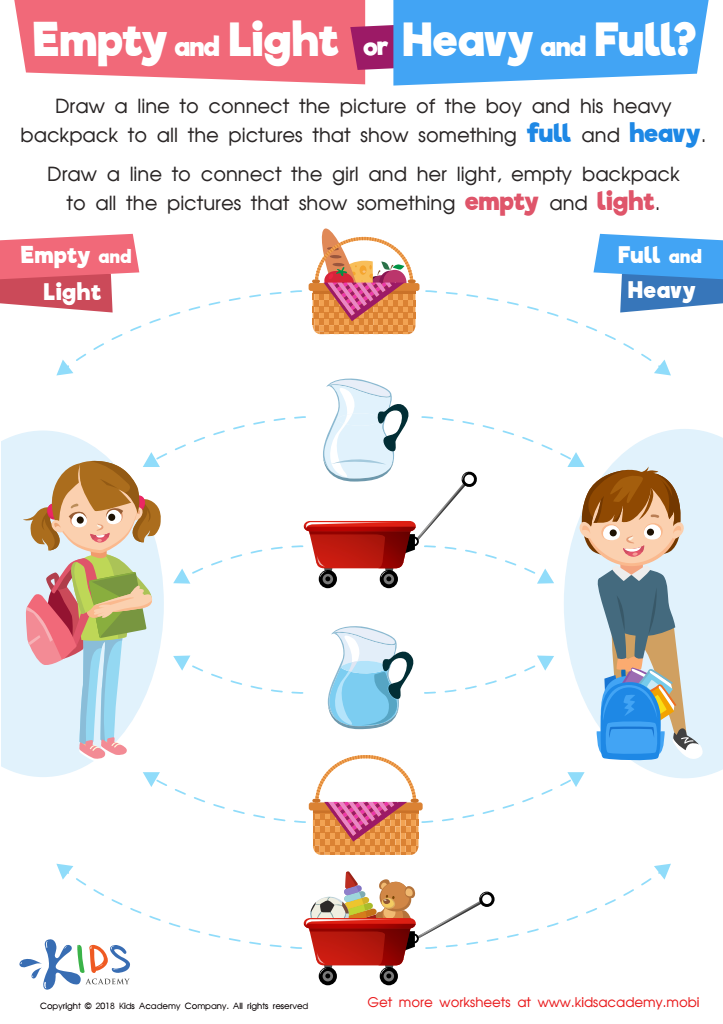
Empty and Light or Heavy and Full? Worksheet
 Assign to My Students
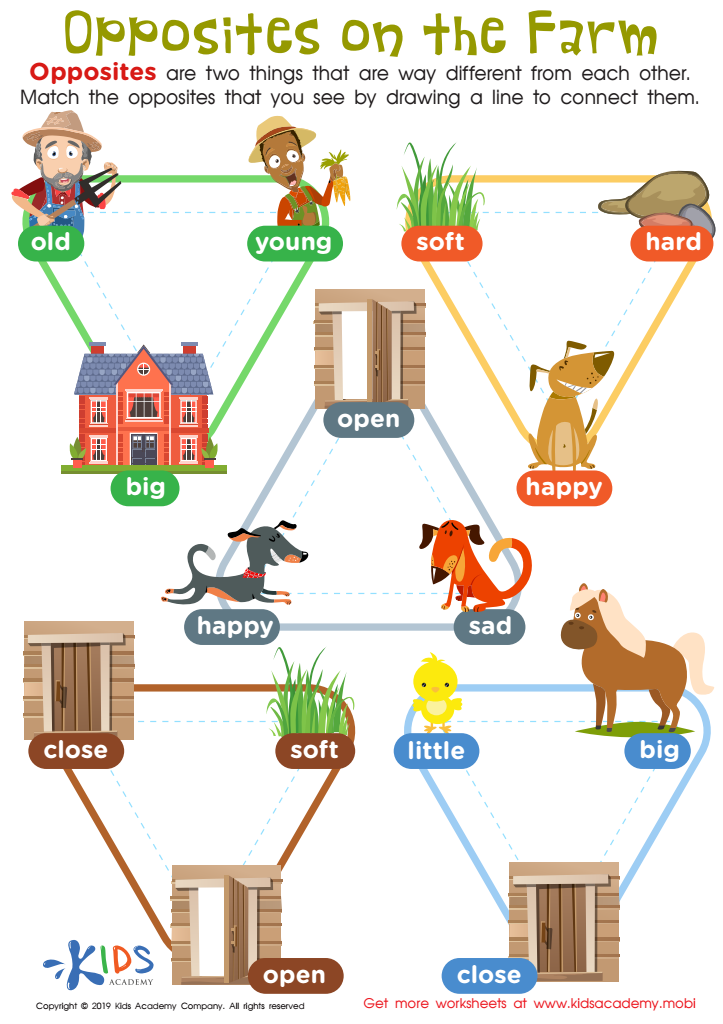
Opposites on the Farm Worksheet
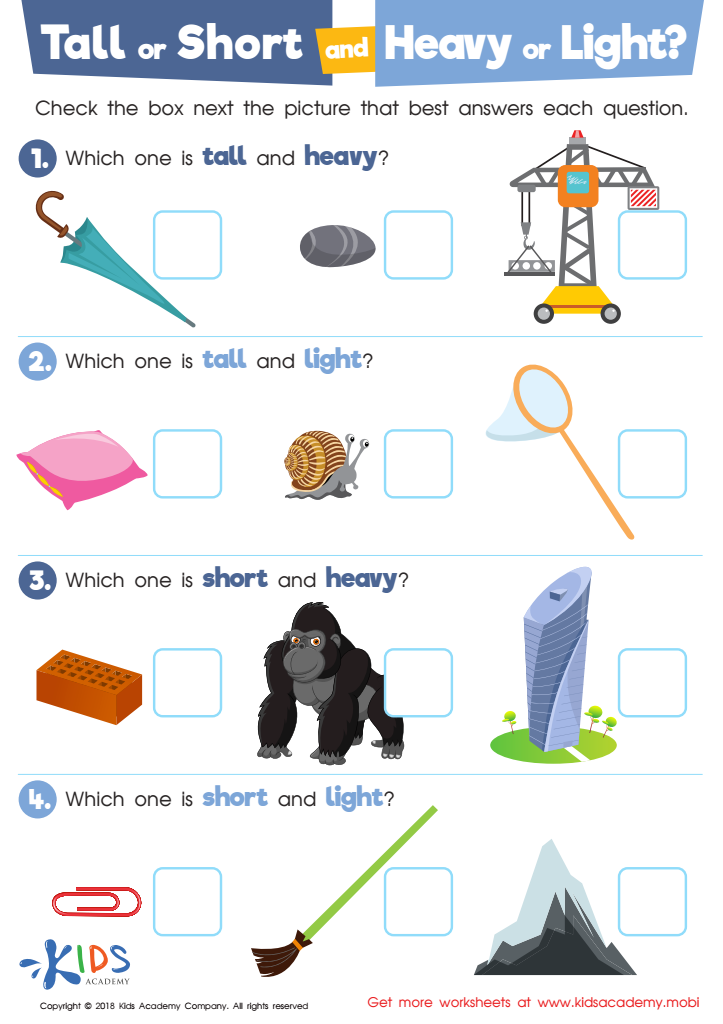
Tall or Short and Heavy or Light? Worksheet






.jpg)

Understanding opposites in math is crucial for 6-year-olds as it lays the groundwork for critical thinking and problem-solving skills essential for future academic success. When children grasp concepts such as "big vs. small," "heavy vs. light," or "short vs. tall," they begin to develop a sense of comparison and relativity. This awareness is not just limited to math but extends to real-world scenarios, helping children make sense of their surroundings more effectively.
Knowing opposites facilitates the understanding of number lines, positive and negative numbers, addition, and subtraction in later years. For example, differentiating between more and less prepares them for addition and subtraction by highlighting that these operations are opposites that undo each other.
Moreover, this awareness fosters language development, enhancing vocabulary and comprehension. Describing differences and opposites encourages precise communication, a key skill in collaborative settings and broader learning contexts.
Equipping children with this foundational knowledge boosts their confidence in tackling more complex topics. Parents and teachers who proactively teach these concepts are preparing children for more advanced stages of learning, ensuring they have a robust cognitive and mathematical foundation. Therefore, attention to understanding opposites isn't just an academic requirement; it's a pivotal stepping stone in a child's overall development.








