Matching skills Matching Worksheets for 6-Year-Olds
4 filtered results
-
From - To
Discover engaging matching skills worksheets designed specifically for 6-year-olds at Kids Academy! Our printable resources help young learners enhance their cognitive abilities while having fun. These worksheets incorporate colorful images, letters, shapes, and numbers, promoting visual recognition and reinforcing key concepts. Perfect for both classroom and home use, they provide children with the opportunity to practice essential matching skills in a playful, interactive way. Parents and educators can easily track progress and support developmental milestones. Encourage your child's love for learning while developing crucial skills with our engaging matching skills worksheets today! Explore our collection and watch them thrive!
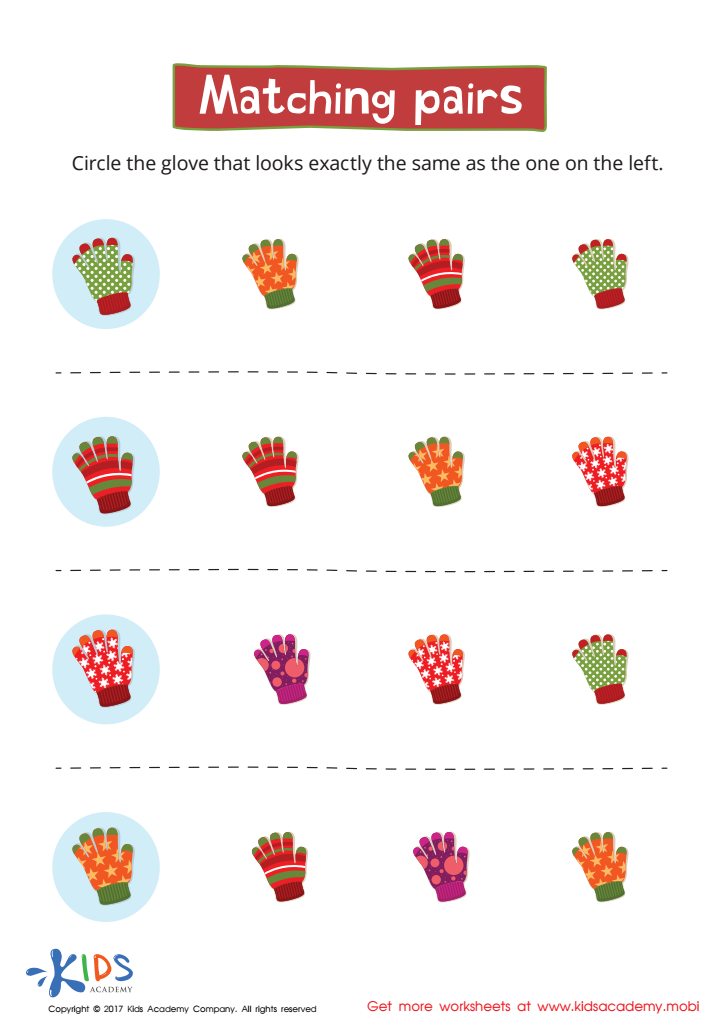
Matching: Matching Pairs Worksheet
 Assign to My Students
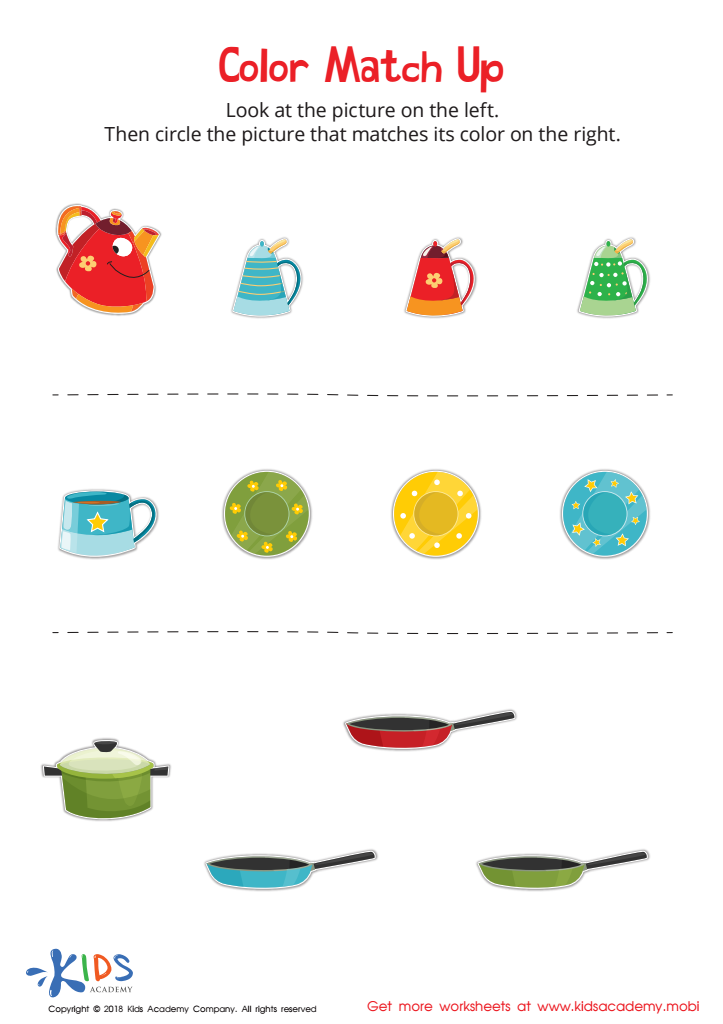
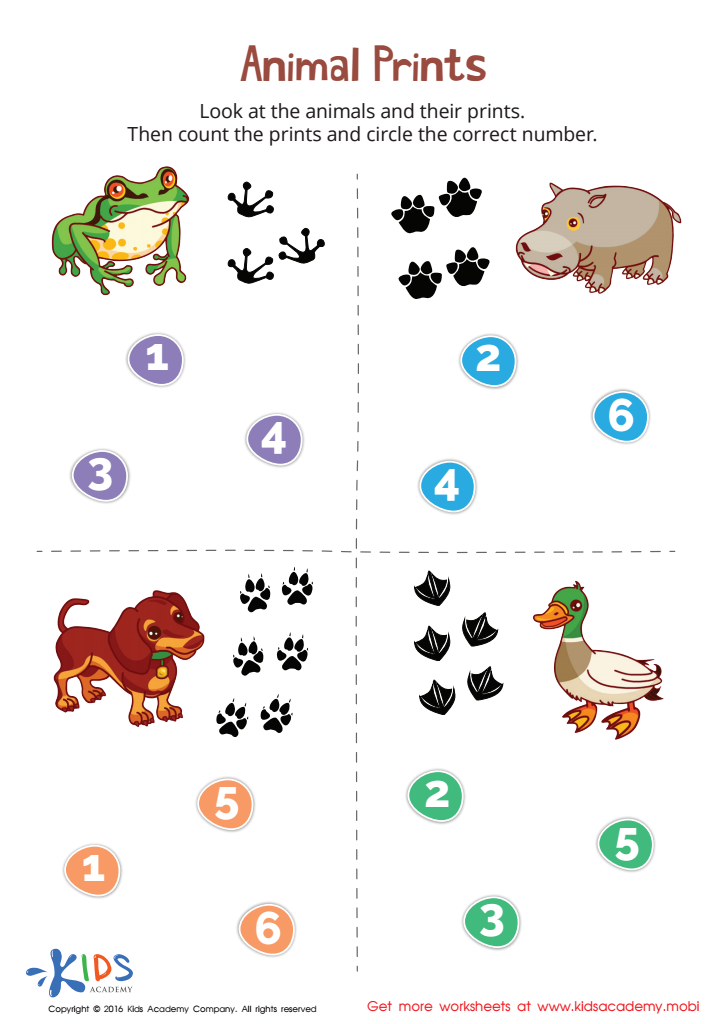
Animal Prints Match-Up Worksheet
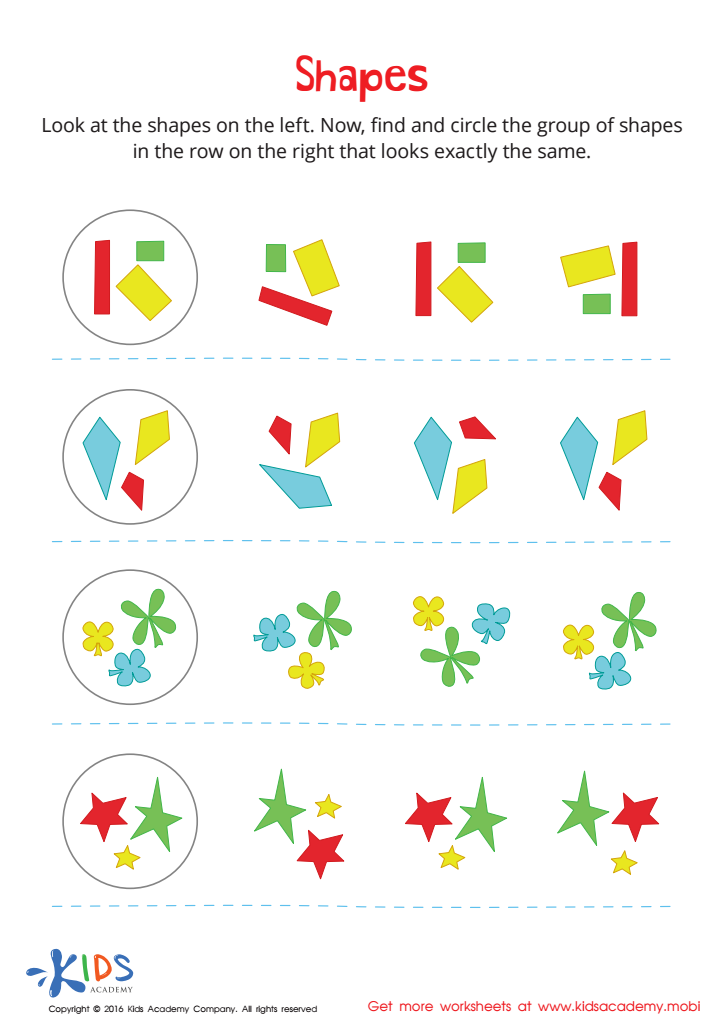
Shapes Worksheet







Matching skills are fundamental for 6-year-olds as they lay the groundwork for cognitive development and early learning in various areas. This skill helps children recognize relationships between objects, pictures, or sounds, thereby enhancing their critical thinking and problem-solving abilities. When children engage in matching activities, they practice categorization and rule application, essential skills in math and science.
Moreover, matching skills foster vocabulary development; as children identify and pair items, they encounter new terms and concepts, improving their language proficiency. For parents and teachers, nurturing these skills can support literacy by promoting letter recognition and phonological awareness.
Additionally, matching activities can boost social skills when children participate in group games, learning collaboration, communication, and patience. Developing matching skills also aids in building attention spans and improving memory, important for successful learning experiences.
In a competitive and rapidly changing world, strong foundational skills in matching contribute to academic success and lifelong learning. For these reasons, parents and teachers should prioritize matching skills, as they play an essential role not only in early education but also in preparing children for future challenges. The impact of early emphasis on these skills can lead to a more confident, capable, and well-rounded learner.








