Comparing numbers Measurement Worksheets for 6-Year-Olds
3 filtered results
-
From - To
Welcome to our "Comparing Numbers Measurement Worksheets" designed specifically for 6-year-olds! These engaging worksheets aim to build foundational math skills through fun activities that facilitate understanding of size, weight, and quantity. Young learners will enjoy comparing numbers in various contexts, helping them to develop critical thinking and reasoning abilities. With colorful illustrations and age-appropriate exercises, children will not only grasp the concept of measurement but also enhance their number recognition and comparison skills. Perfect for home or classroom use, these worksheets provide a dynamic learning experience that ensures kids grasp essential math concepts while having fun!
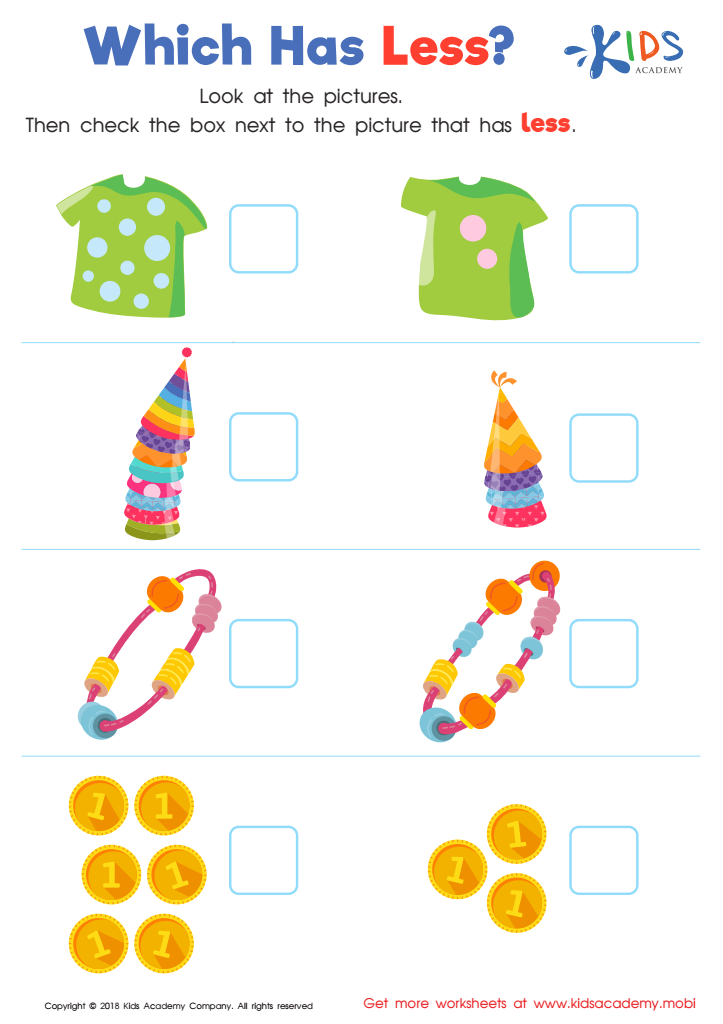
Which Has Less? Worksheet
 Assign to My Students
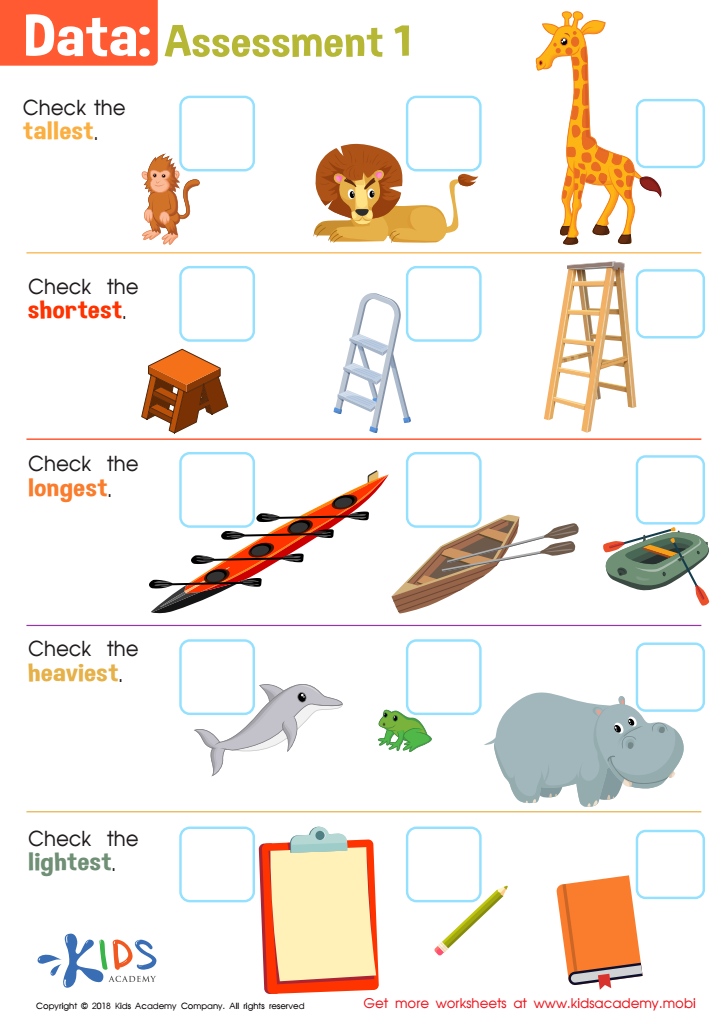
Data: Assessment 1 Worksheet
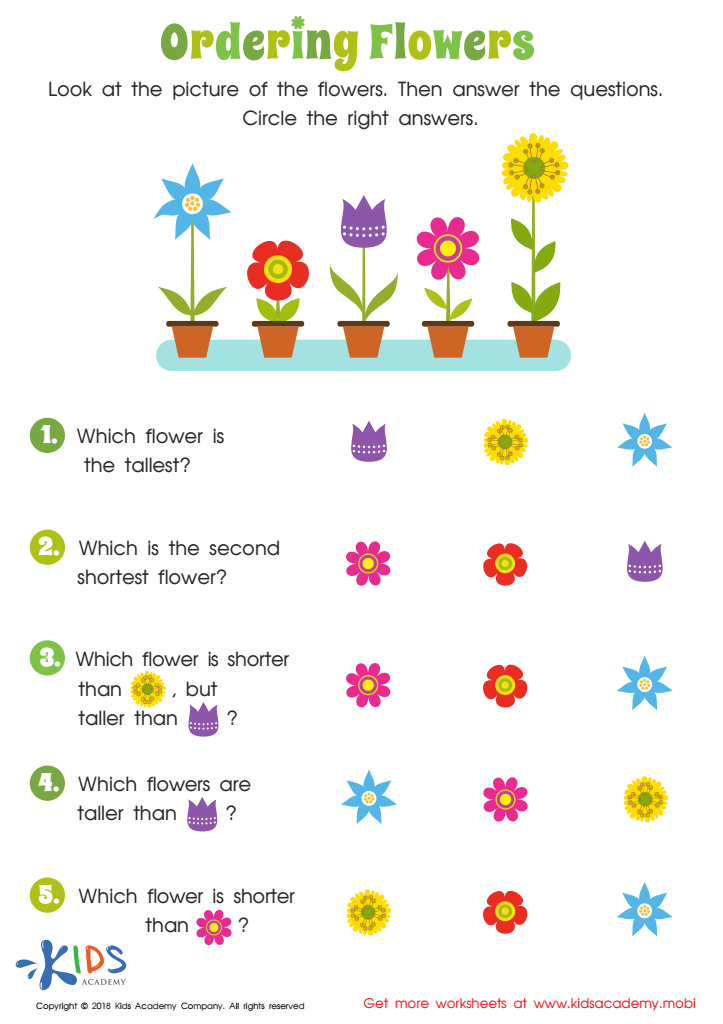
Ordering Flowers Worksheet








Parents and teachers should pay attention to comparing numbers and measurement for 6-year-olds because these concepts form the foundation of critical math skills that children will build upon throughout their education. Understanding how to compare numbers helps children develop their number sense, which allows them to make sense of quantities, understand size relationships, and apply this knowledge in everyday situations.
Moreover, incorporating measurement into young learners' experiences enhances their cognitive development, promoting logical reasoning and problem-solving skills. By engaging with activities that involve measuring length, weight, or volume using standard and non-standard units, children gain practical experience that builds confidence and encourages curiosity.
Comparing numbers and measurements also fosters communication skills, as kids learn to articulate their thinking and reasoning. Additionally, cooperative activities in this area can lead to teamwork and social skills, making for a richer learning environment.
Lastly, these foundational skills are essential for real-life applications, such as cooking, shopping, or organizing, promoting a sense of independence and functionality in their everyday lives. By emphasizing comparing numbers and measurement, parents and teachers equip children with essential tools for future academic success and everyday problem-solving.








