Hand-eye Coordination Numbers 11–20 Worksheets for 6-Year-Olds
3 filtered results
-
From - To
Enhance your child's hand-eye coordination while mastering numbers 11 to 20 with our engaging worksheets designed specifically for 6-year-olds. These activities seamlessly combine fun and education, allowing young learners to track, trace, and interact with numbers in a playful way. Each worksheet is crafted to reinforce counting skills and improve fine motor abilities, essential for developing handwriting and number recognition. The hands-on exercises encourage children to engage with math actively, making learning a delightful adventure. Perfect for homeschool settings or classroom use, our printable resources help foster a love for numbers and bolster critical cognitive skills. Jump into math fun today!
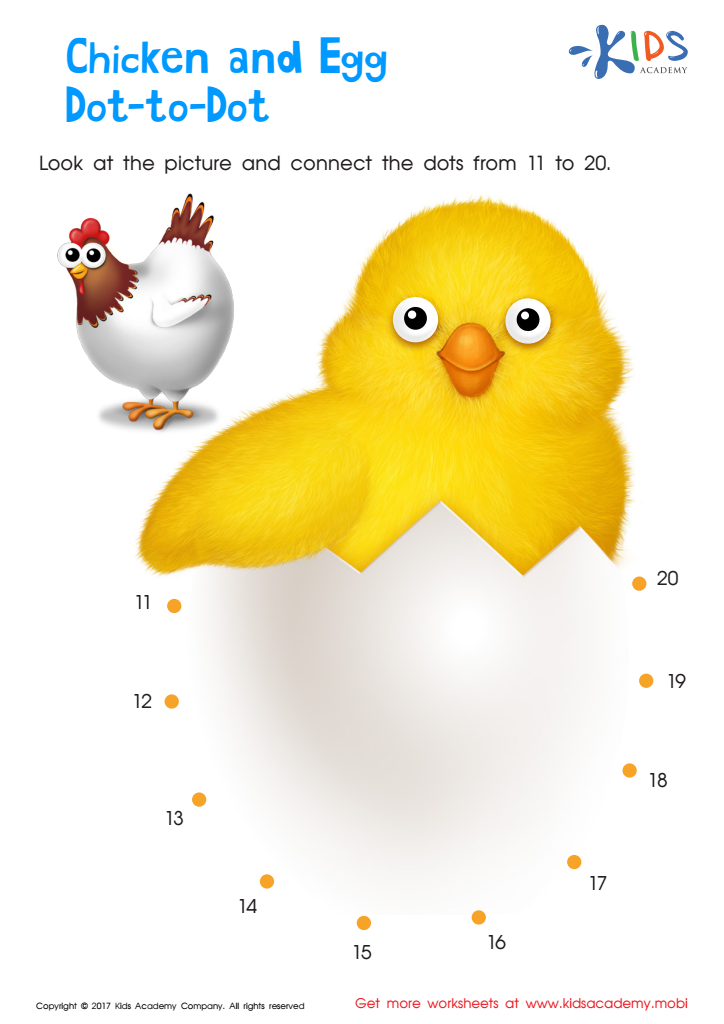
Ordering 11–20: Chicken & Egg Dot–to–dot Worksheet
 Assign to My Students
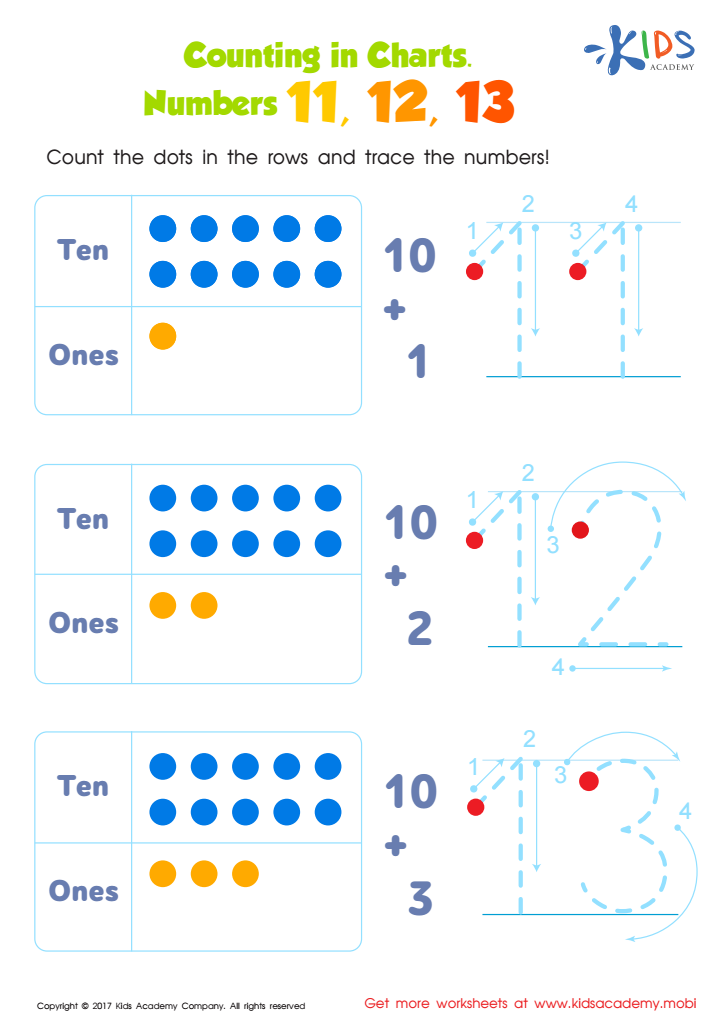
Number Tracing Worksheet For Kindergarten
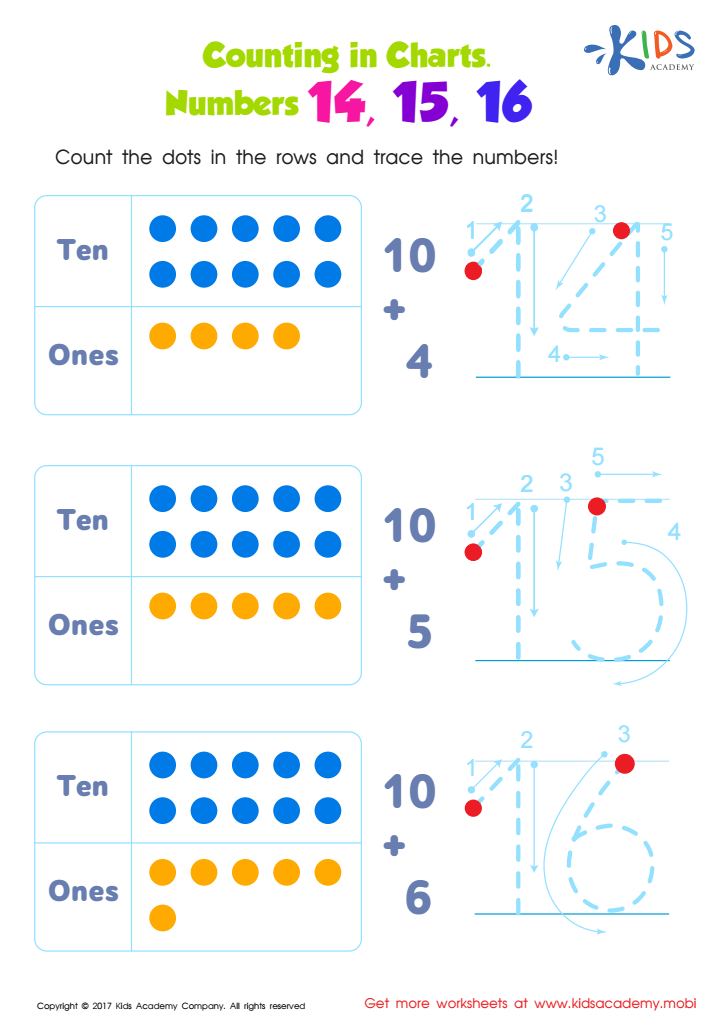
Number Tracing Worksheet



Hand-eye coordination is a crucial aspect of early childhood development, particularly for 6-year-olds learning numbers 11–20. This skill is important because it directly impacts children’s ability to engage in various tasks, from writing and drawing to playing sports and completing puzzles.
For parents and teachers, fostering hand-eye coordination aids in academic success. Mastering numbers often involves using manipulatives or drawing, where coordination helps children accurately place objects, track movements, and copy numbers. These skills not only enhance their mathematical understanding but also build confidence.
Moreover, developing hand-eye coordination helps support fine motor skills, which are essential for writing and other everyday activities like buttoning shirts or using utensils. This foundation is vital as children advance in their education, ensuring they can participate in more complex tasks effectively.
In addition, children with strong hand-eye coordination are often more engaged and enthusiastic learners. Activities that promote these skills can make number recognition fun and interactive, leading to a love for learning. Supporting hand-eye coordination ultimately enriches a child's educational experience, enabling them to thrive academically and socially. Parents and teachers play a vital role in this, making it essential to prioritize these activities in early education.