Number Recognition Skip Counting Worksheets for 6-Year-Olds
3 filtered results
-
From - To
Introduce your 6-year-old to the world of numbers with our engaging Number Recognition Skip Counting Worksheets! These worksheets provide a fun and interactive way for children to master skip counting, enhance their number recognition skills, and build a strong foundation in math. Perfectly tailored for young learners, these activities include colorful and themed exercises designed to keep kids entertained and motivated. From skip counting by 2s, 5s, and 10s, to identifying and writing numbers, each worksheet offers diverse methods to practice these critical skills. Visit our page for these creative resources and watch your child's confidence and competence in math grow!
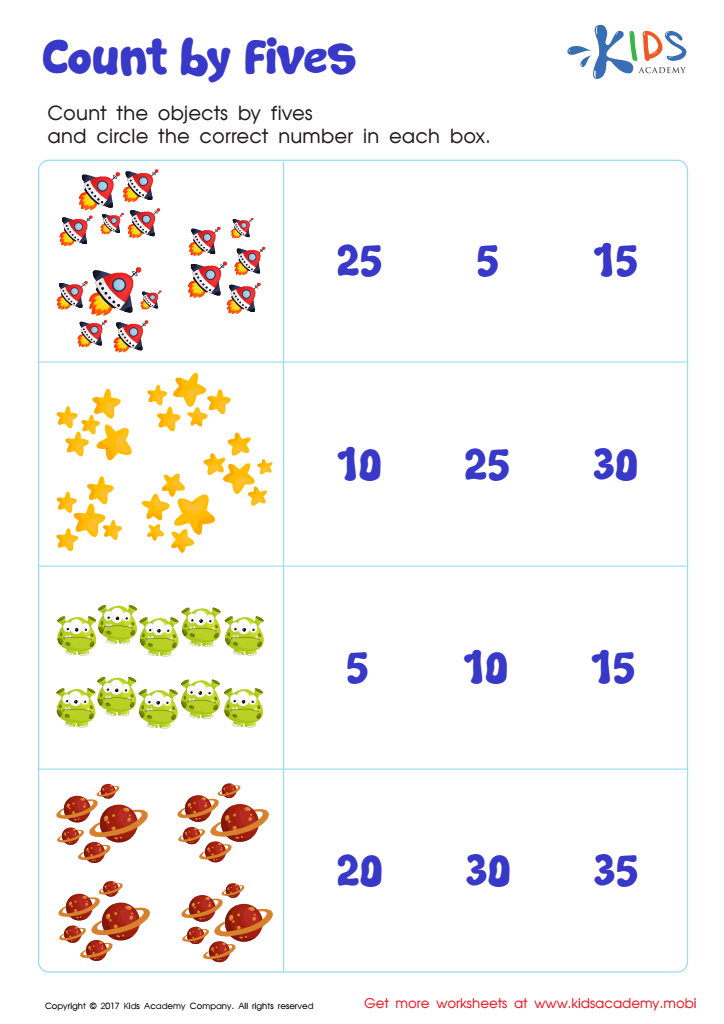
Skip Counting by 5s: Space Math Printable
 Assign to My Students
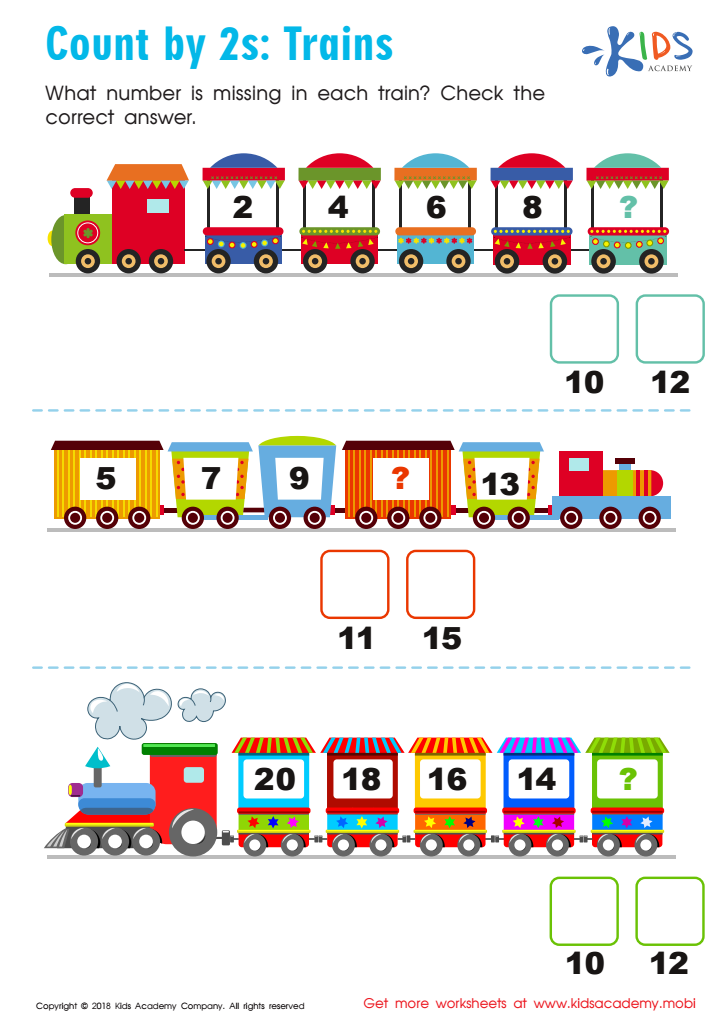
Count by 2's: Trains Worksheet
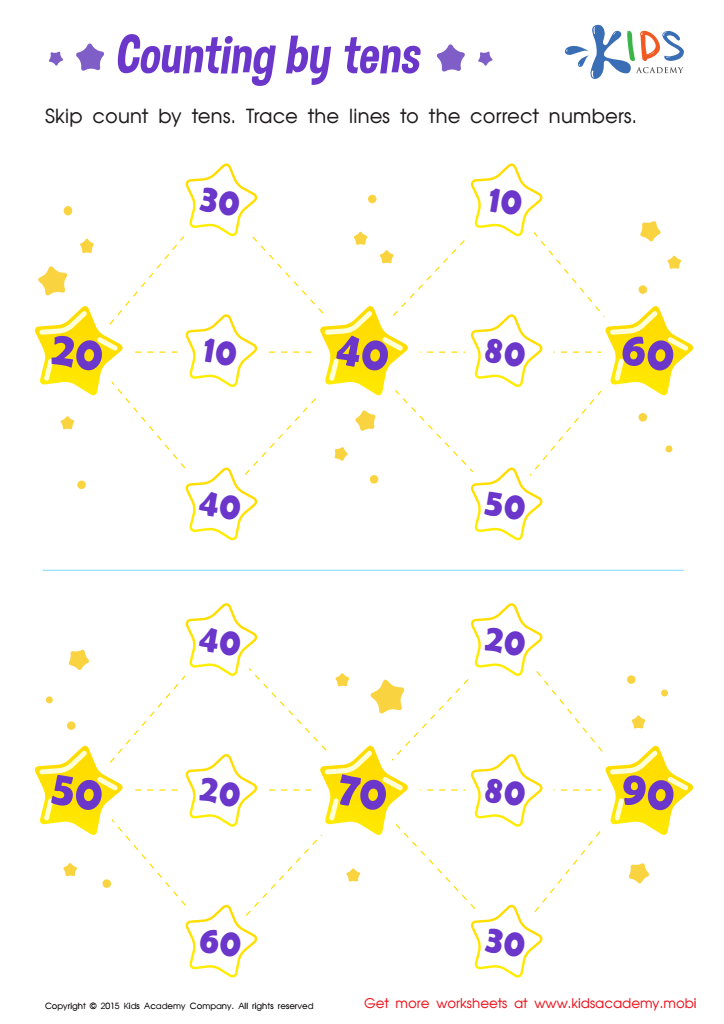
Learn Dozens: Counting by Tens Printable








Number recognition and skip counting are foundational skills that are crucial for six-year-olds as they begin their mathematical journey. At this age, children are in a critical period for cognitive development and are naturally inclined to learn through engaging, structured activities. For parents and teachers, emphasizing these skills can significantly impact a child's future academic success.
Number recognition involves the ability to identify and name numbers, which is essential for a host of everyday activities, from telling the time to using money. When children recognize numbers, they develop a sense of familiarity and comfort with them, setting the stage for more advanced arithmetic concepts.
Skip counting, or counting by numbers other than one (like by 2s, 5s, or 10s), builds on number recognition and prepares children for addition, subtraction, multiplication, and division. It’s a practical and fun way to teach patterns and sequences, enhancing a child's problem-solving and logical thinking skills. Additionally, skip counting lays the groundwork for learning how to count large quantities more efficiently, an essential aspect of lengthier mathematical operations.
Investing time and resources into activities that promote number recognition and skip counting can foster a positive attitude towards math, build confidence, and establish a robust foundation for future mathematical learning and everyday life skills.








