Cognitive Development Subtraction Worksheets for 6-Year-Olds
4 filtered results
-
From - To
Explore our engaging Cognitive Development Subtraction Worksheets designed specifically for 6-year-olds! These worksheets help young learners strengthen their subtraction skills while enhancing critical thinking and problem-solving abilities. Our resources feature fun, age-appropriate activities that encourage children to understand mathematical concepts and develop cognitive skills through interactive learning experiences. Perfect for home or classroom use, these worksheets foster a love for math by combining colorful visuals with engaging tasks. Watch your child gain confidence in their abilities as they tackle subtraction problems while enhancing their overall cognitive development. Start their mathematical journey today with our thoughtfully crafted subtraction worksheets!
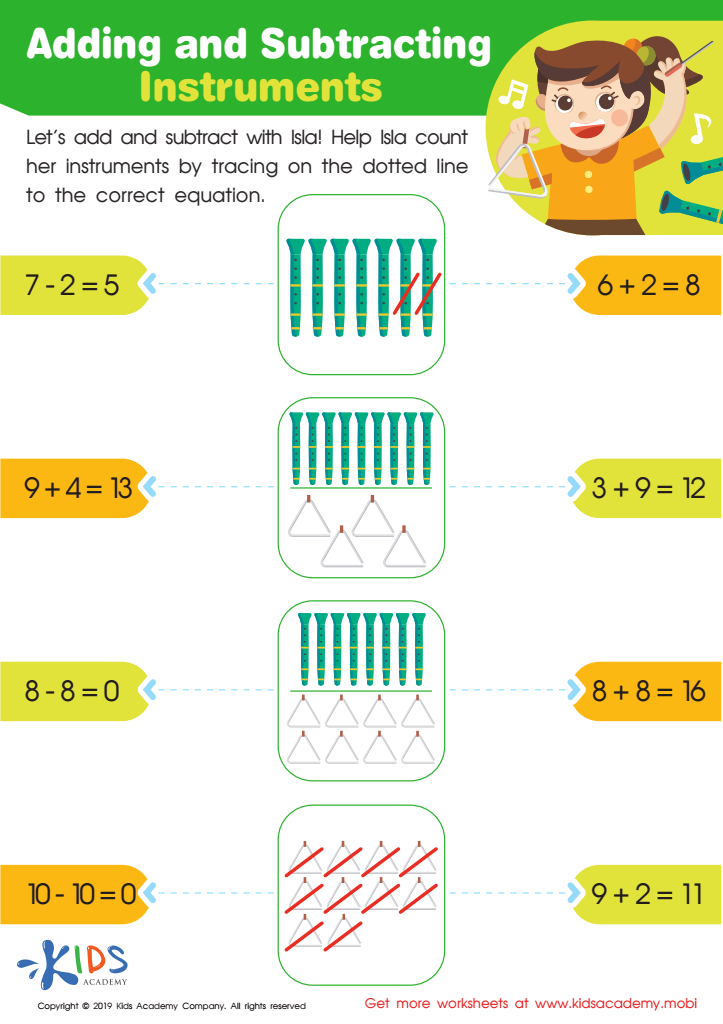
Adding and Subtracting: Instruments Worksheet
 Assign to My Students
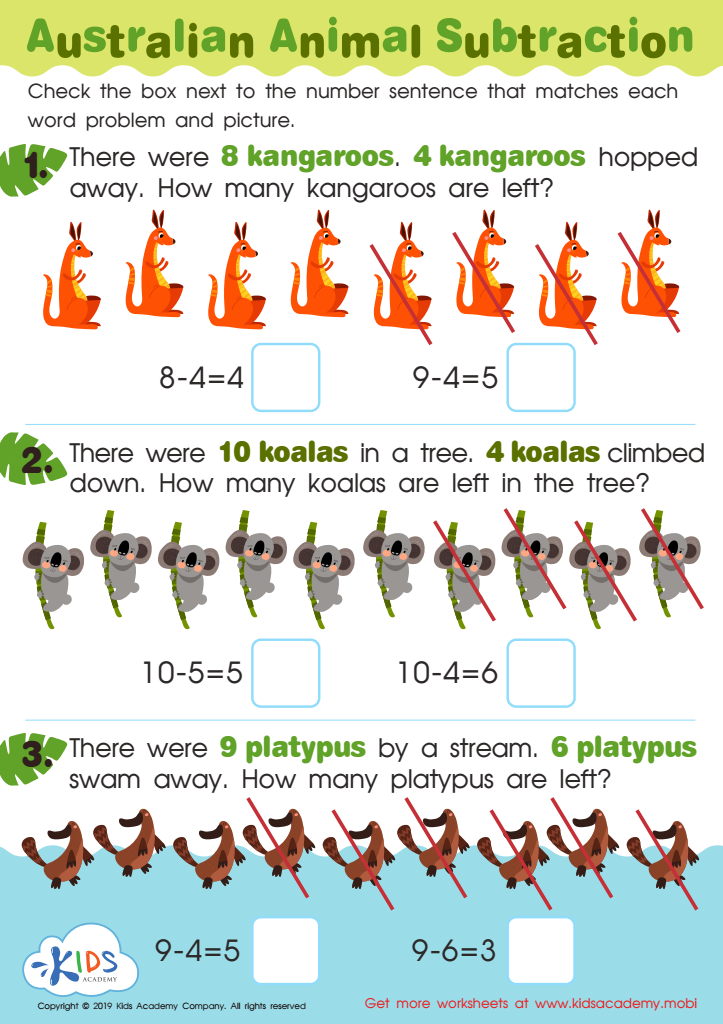
Australian Animal Subtraction Worksheet
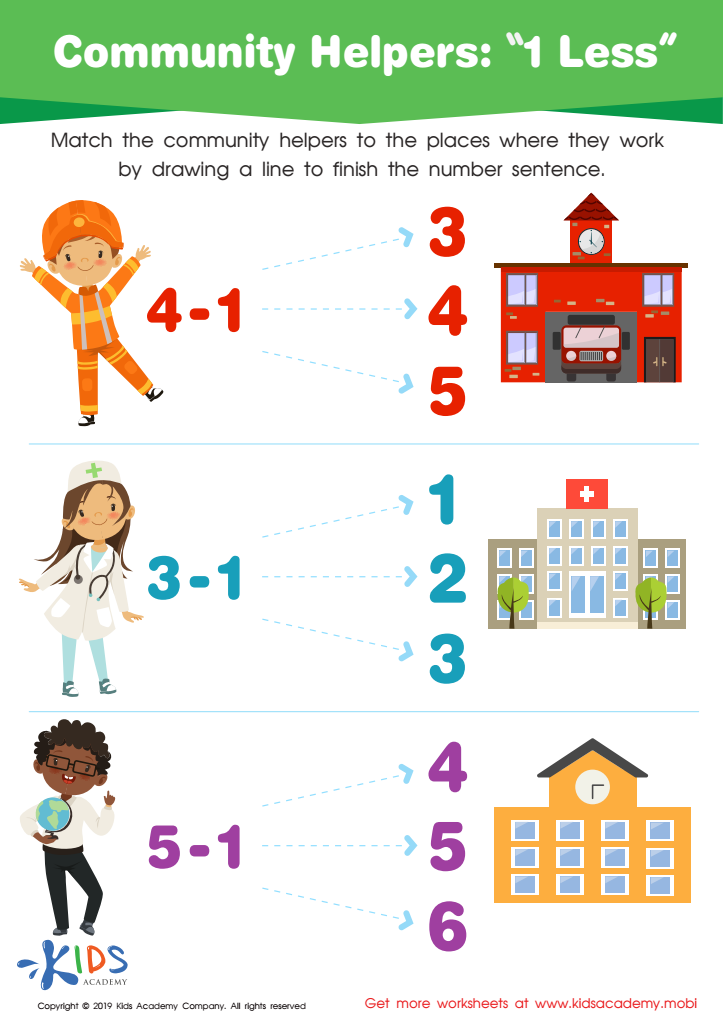
Community Helpers: 1 less Worksheet
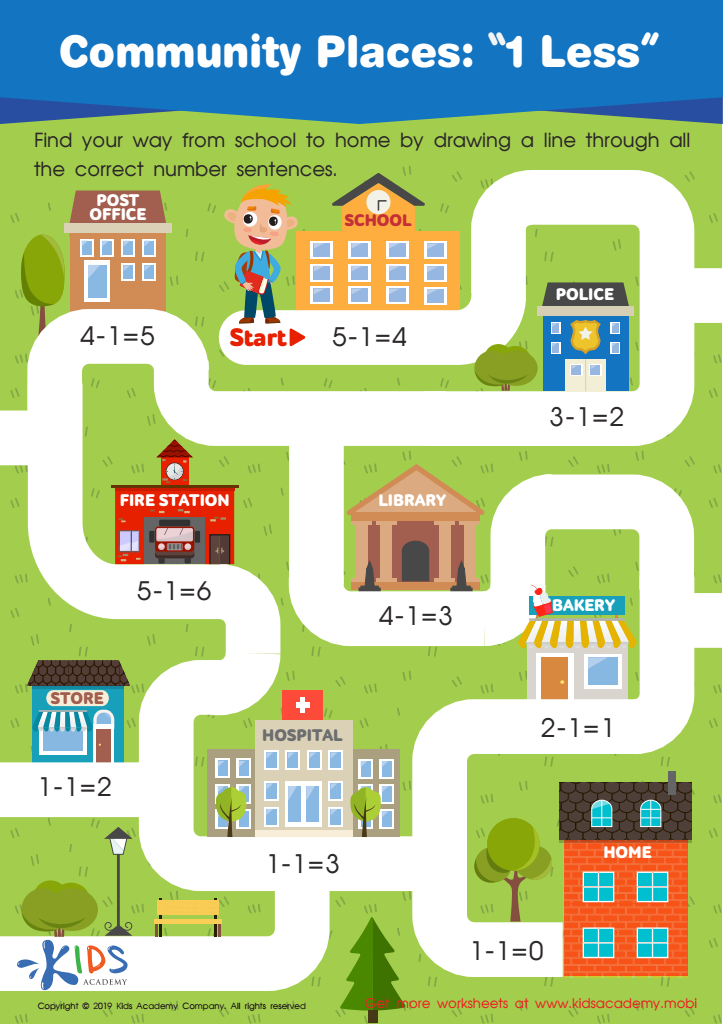
Community Places: 1 Less Worksheet








Cognitive development in early childhood, particularly in skills like subtraction, is crucial for a child's overall academic success and problem-solving abilities. For 6-year-olds, mastering subtraction is not merely about crunching numbers; it lays the groundwork for logical thinking and understanding complex concepts later in life. Parents and teachers should care because this is a period when children's brains develop rapidly and are highly receptive to learning new information.
Subtraction helps children grasp the concept of quantity and relation, which in turn enhances their spatial awareness and critical thinking. When children engage in subtraction, they develop metacognitive skills as they learn to approach problems methodically and explore different strategies. Effective instruction and engagement in this area encourage persistence and resilience.
Furthermore, these early math skills foster confidence, setting a positive tone for future learning. By investing time in activities that enhance subtraction, such as games and hands-on learning, adults can cultivate not only mathematical proficiency but also a love for learning. In summary, understanding and supporting cognitive development in subtraction for young learners is essential for laying a strong foundation in both mathematics and overall cognitive growth.








