Mathematical reasoning Subtraction Worksheets for 6-Year-Olds
6 filtered results
-
From - To
Welcome to our engaging collection of "Mathematical Reasoning Subtraction Worksheets for 6-Year-Olds"! Designed to cultivate critical thinking and problem-solving skills, these worksheets make learning subtraction fun and interactive. Through colorful visuals and relatable scenarios, children can practice subtraction in context, enhancing their understanding of numbers and relationships. Each worksheet encourages learners to apply mathematical reasoning, building confidence as they tackle age-appropriate challenges. Ideal for both classrooms and at-home learning, these worksheets serve as a valuable resource for young minds to develop essential math skills while having fun. Explore our user-friendly materials and watch your child thrive in mathematics!
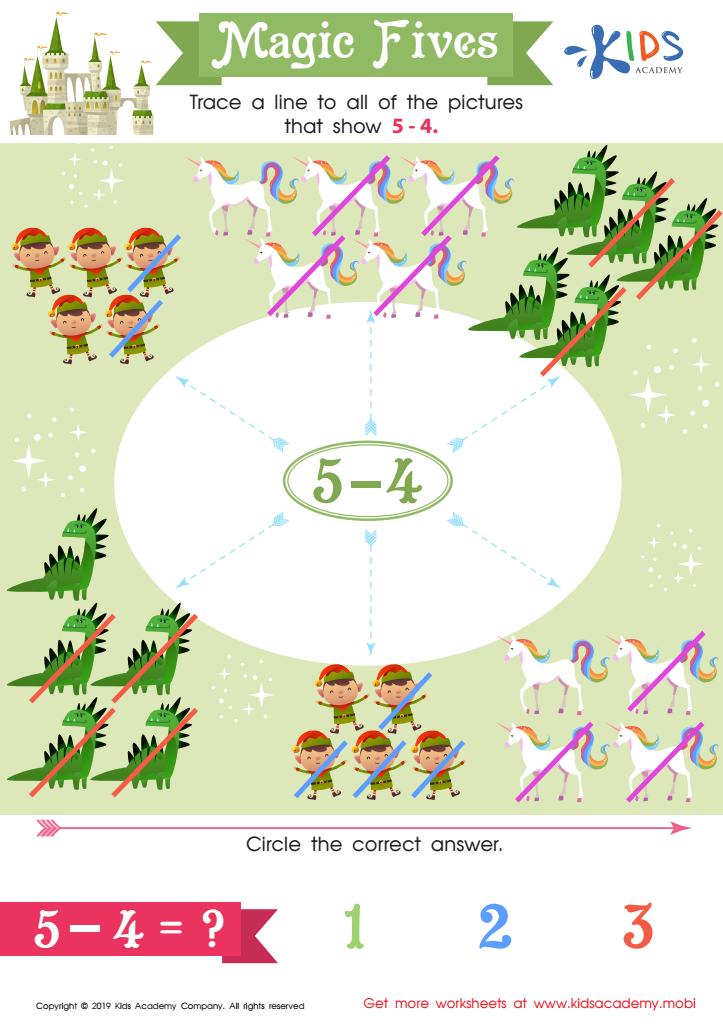
Magic Fives Worksheet
 Assign to My Students
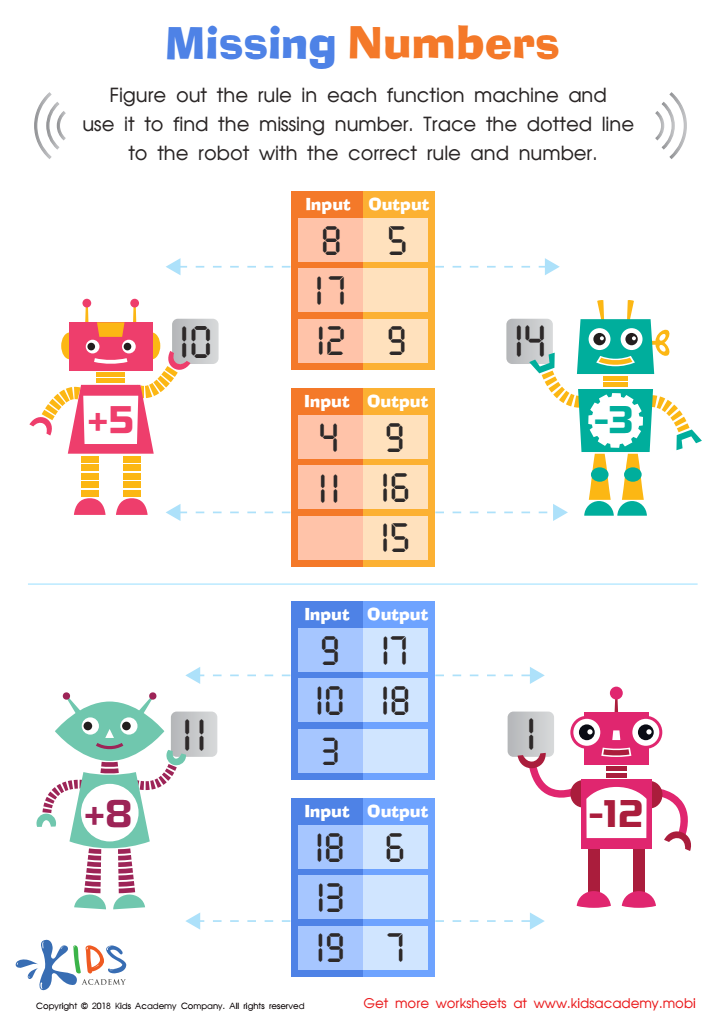
Missing Numbers Worksheet
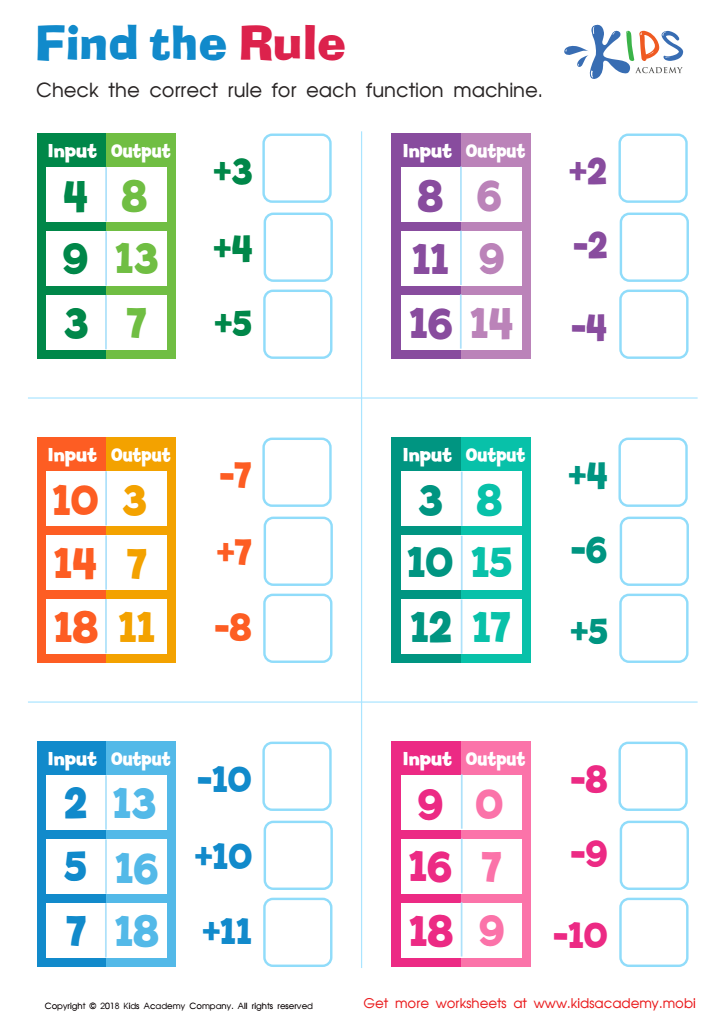
Find the Rule Worksheet
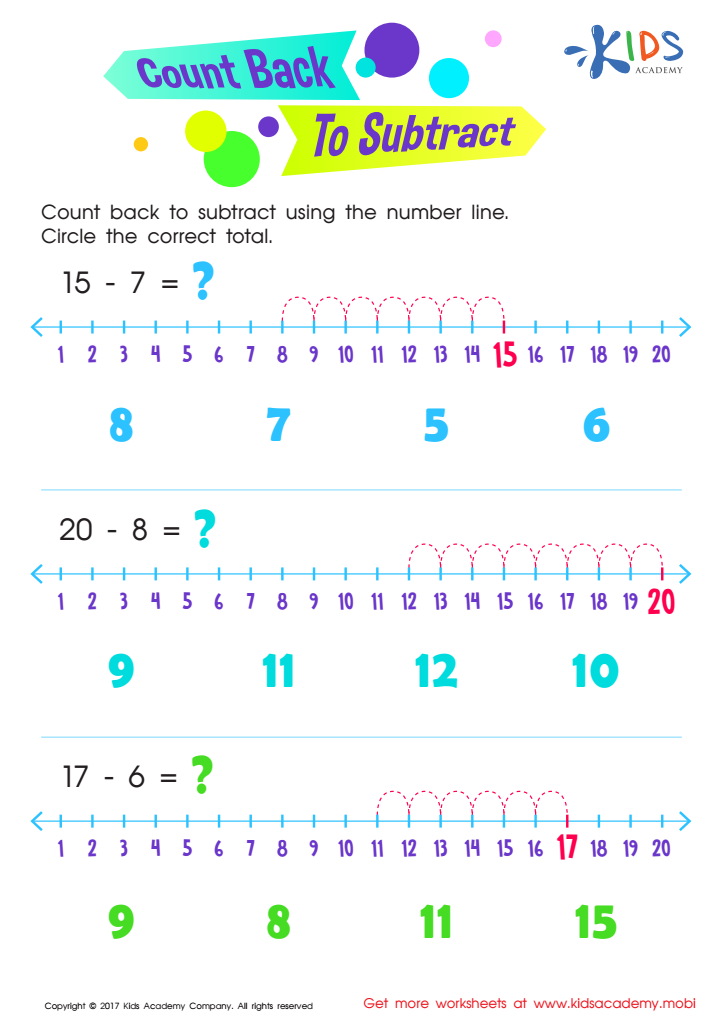
Count Back to Subtract Substraction Worksheet
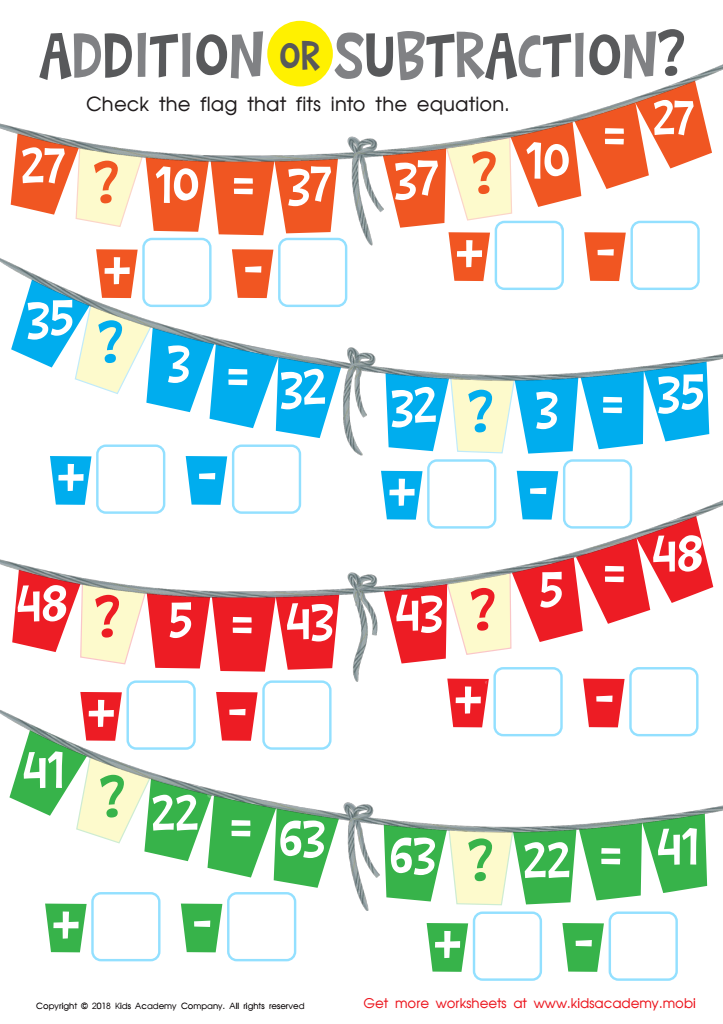
Addition or Subtraction? Worksheet
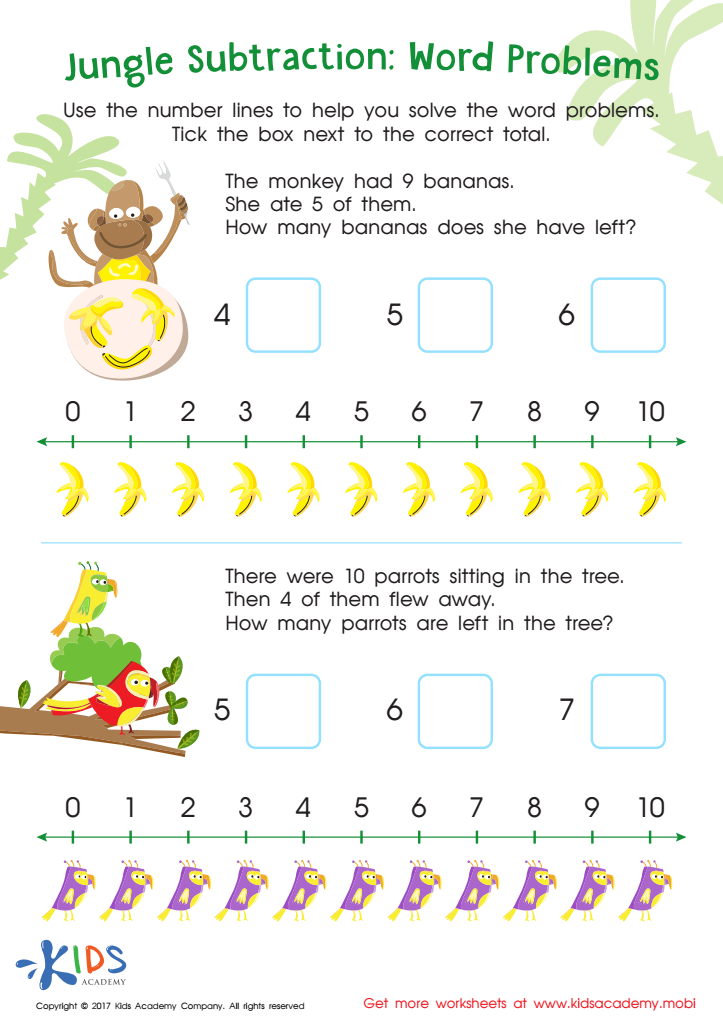
Jungle Subtraction Word Problems Substraction Worksheet








Mathematical reasoning, particularly in subtraction, is crucial for 6-year-olds as it lays the foundation for their overall cognitive development and problem-solving skills. At this age, children are transitioning from concrete to more abstract thinking, making it vital for them to understand not just how to subtract, but why and when to use it. Developing a solid grasp of subtraction helps children learn to analyze situations and make informed decisions.
Parents and teachers play a key role in reinforcing this understanding. When children engage with subtraction through logical reasoning, they build their confidence, improve their ability to tackle challenges, and enhance their critical thinking abilities. Moreover, fostering mathematical reasoning encourages a growth mindset, allowing children to embrace mistakes as opportunities for learning rather than failures.
In addition, strong subtraction skills are directly linked to later success in mathematics, affecting everything from basic arithmetic to more advanced concepts like algebra. Engaging children in fun, meaningful subtraction activities, such as games or real-world problem-solving scenarios, helps create positive associations with math and promotes a lifelong appreciation for learning. By investing in these skills early on, parents and teachers are not only supporting academic achievement but also nurturing well-rounded individuals equipped to face future challenges.








