Basic arithmetic skills Word Problems Worksheets for 6-Year-Olds
4 filtered results
-
From - To
Boost your 6-year-old's math abilities with our engaging Basic Arithmetic Skills Word Problems Worksheets! Designed specifically for young learners, these worksheets introduce fundamental math concepts through relatable, real-world scenarios that capture children's interest. Each problem involves simple addition and subtraction, helping kids develop their critical thinking and problem-solving skills in a fun way. Our age-appropriate challenges ensure that young students can build confidence and a solid math foundation while honing their comprehension skills. Perfect for classroom use or home learning, these worksheets provide an excellent resource to support early arithmetic learning. Explore our collection today and watch your child thrive in math!
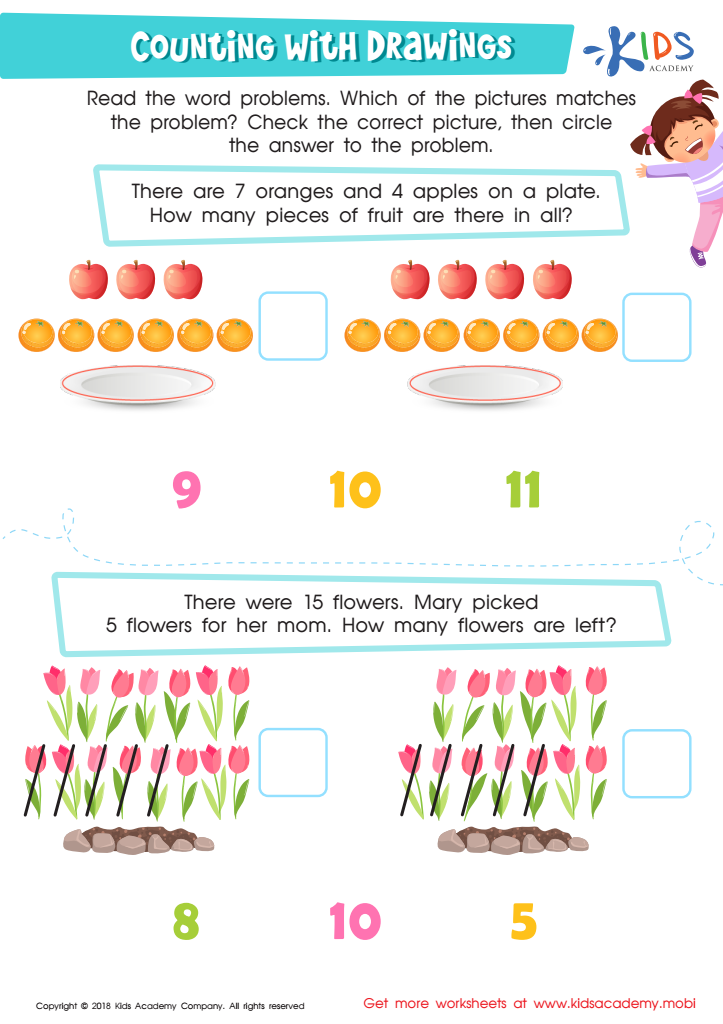
Counting with Drawings: Fruits & Chocolates Worksheet
 Assign to My Students
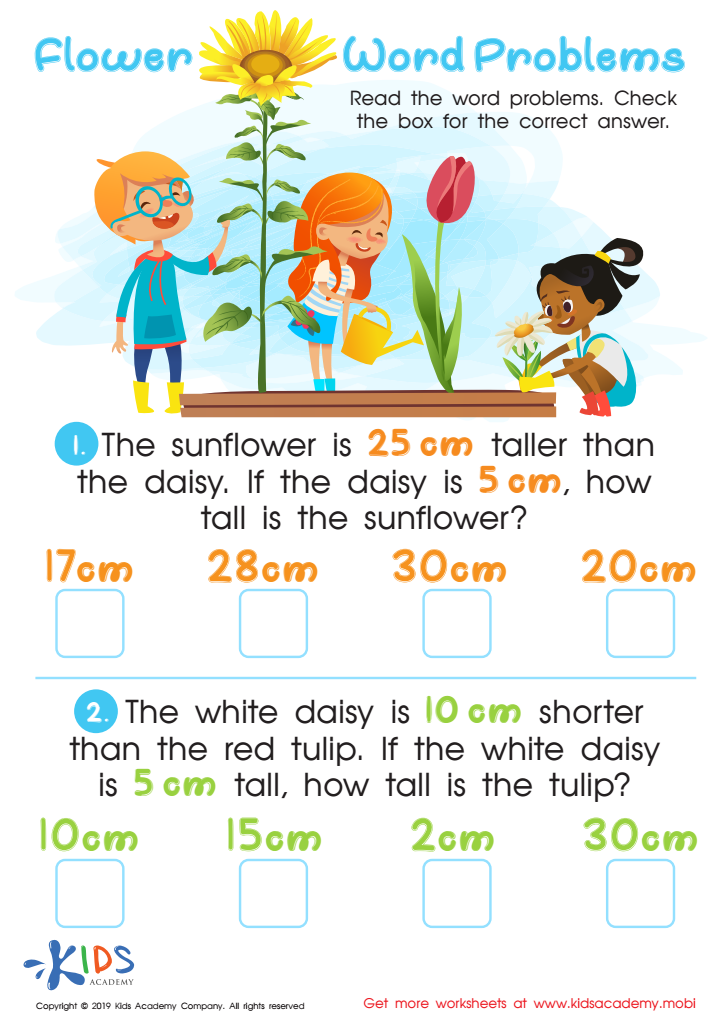
Flower Word Problems Worksheet
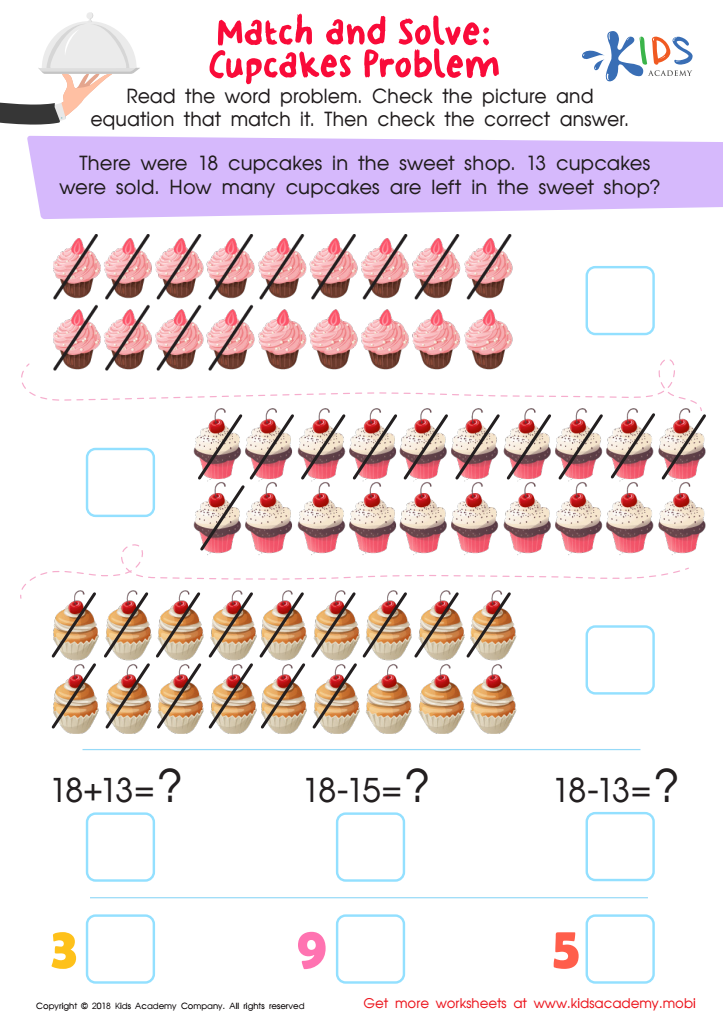
Match and Solve: Cupcakes Problem Worksheet
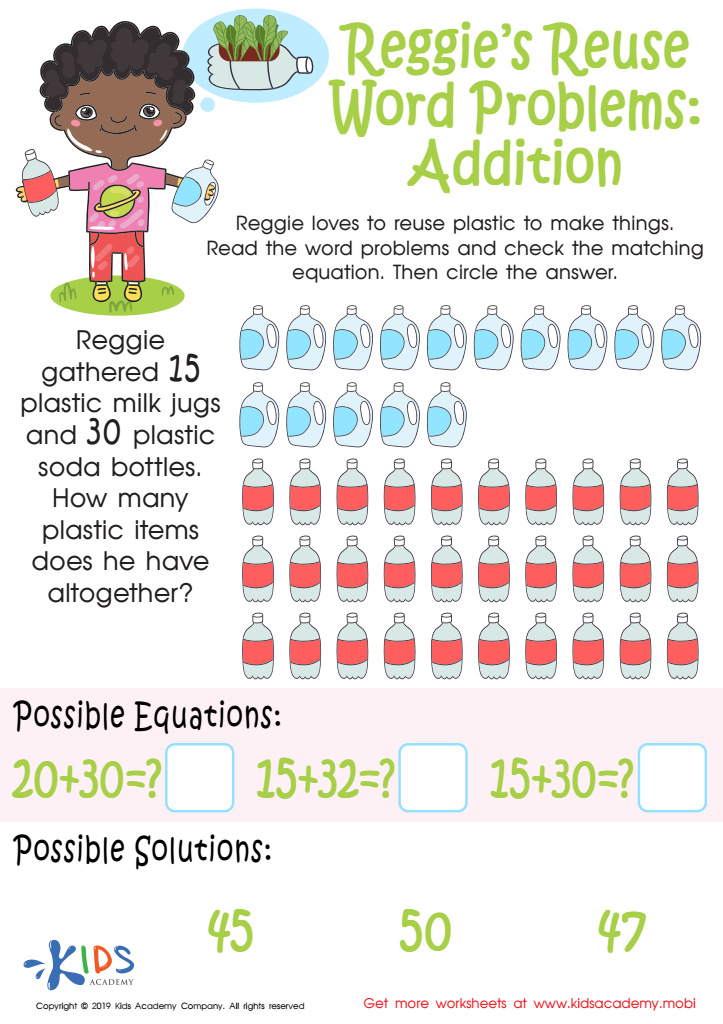
Reggie's Reuse Word Problems: Addition Worksheet



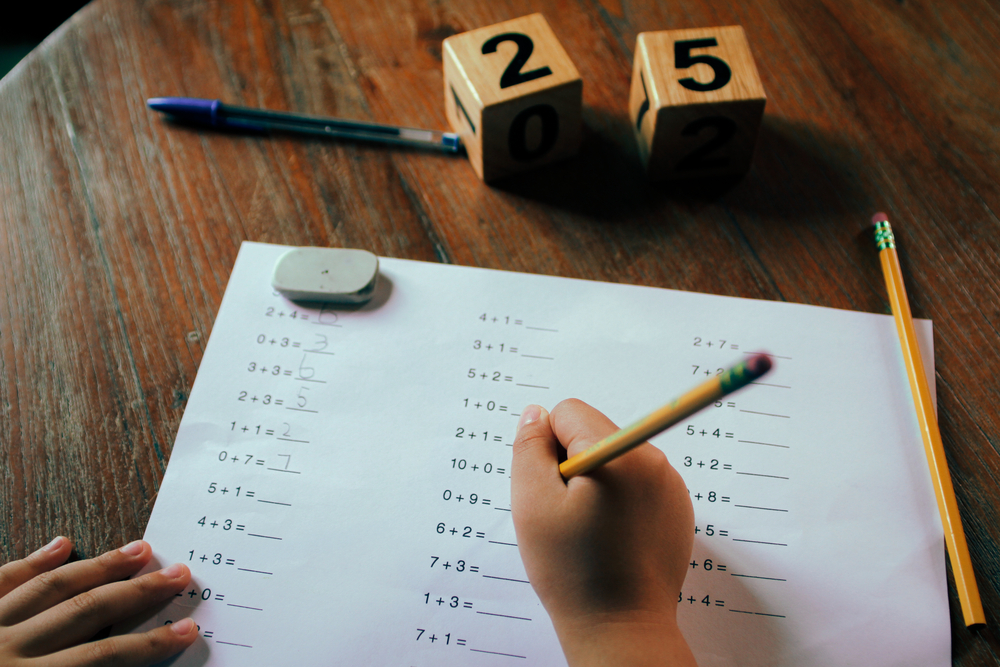




Basic arithmetic skills and word problems are essential for 6-year-olds as they lay the foundation for mathematical understanding and critical thinking. At this age, children begin to develop number sense, which is crucial for everyday problem-solving. Word problems, in particular, help children learn how to interpret and analyze situations, allowing them to relate mathematics to real-life scenarios. This connection fosters a greater appreciation for math as a useful tool rather than just abstract numbers.
Parents and teachers play a critical role in supporting this learning. By encouraging young learners to approach word problems, they promote analytical thinking and comprehension skills. This helps children develop reasoning strategies, as they must decipher the problem's language and determine which mathematical operations to apply.
Moreover, mastering basic arithmetic and word problems builds confidence in young learners. When students experience success in solving these problems, it motivates them to tackle more complex challenges in the future. Furthermore, these skills are interconnected with literacy, as understanding the language of math reinforces reading skills.
In essence, fostering basic arithmetic and word problem skills in young children not only cultivates mathematical proficiency but also enhances overall cognitive development, ensuring they are better prepared for future learning.








