Hand-eye Coordination Building Vocabulary Coloring Pages Worksheets for 6-Year-Olds
3 filtered results
-
From - To
Discover our engaging Hand-eye Coordination Building Vocabulary Coloring Pages designed specifically for 6-year-olds! These interactive worksheets combine fun coloring activities with vocabulary development to promote essential skills in young learners. Children will enhance their hand-eye coordination while exploring new words, encouraging not just creativity but also cognitive growth. Each page features captivating images paired with vocabulary words, capturing children's interest and making learning enjoyable. Perfect for both classroom settings and home practice, these worksheets help kids improve fine motor skills and language comprehension. Dive into this playful educational journey and watch your child's learning flourish while they color to success!
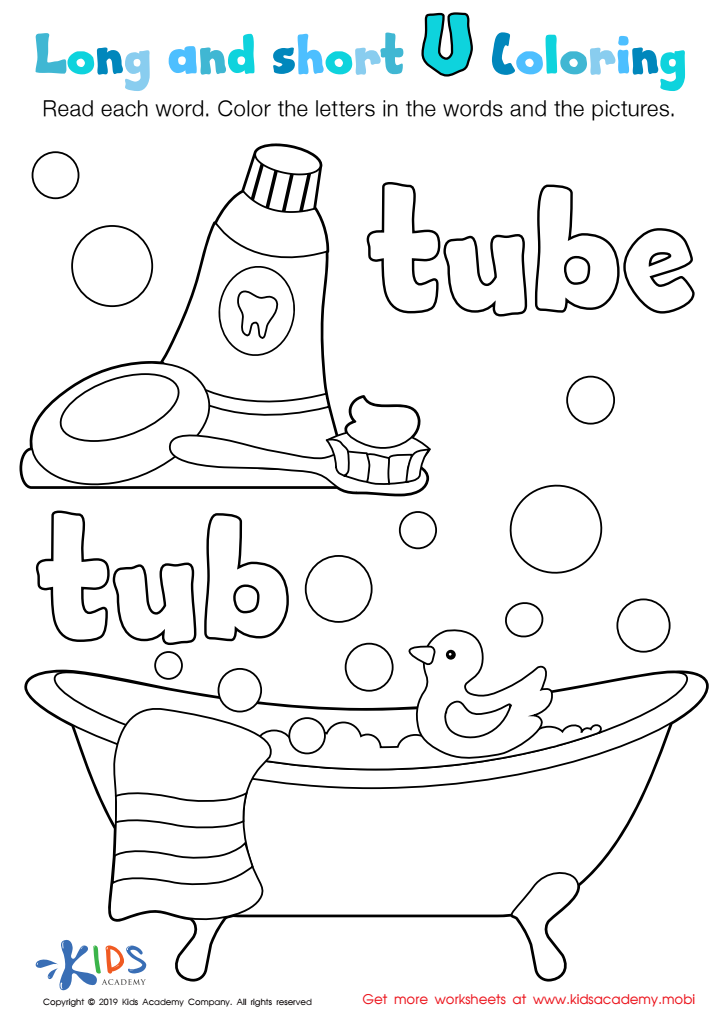
Long and Short U Worksheet
 Assign to My Students
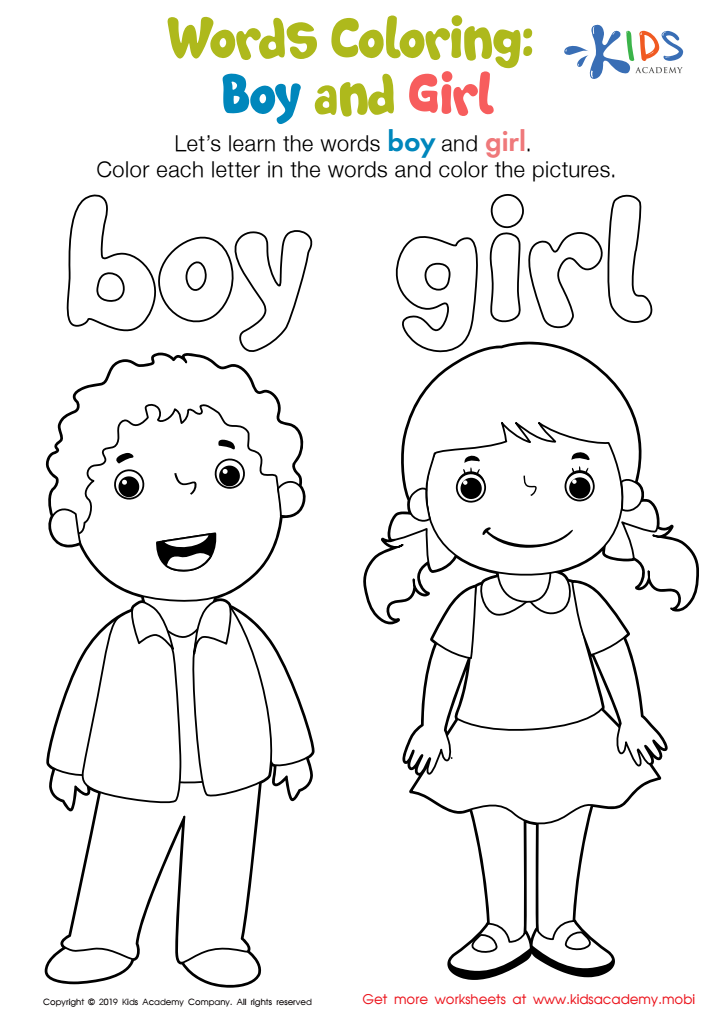
Boy and Girl Words Coloring Worksheet
Assign to My Students

Long and Short E Worksheet
Assign to My Students



Parents and teachers should care about Hand-eye Coordination Building Vocabulary Coloring Pages for 6-year-olds because these activities play a crucial role in early childhood development. Hand-eye coordination is foundational for children's physical and cognitive skills. By engaging in coloring activities, children practice control over their hand movements and develop fine motor skills, essential for tasks like writing and self-care.
Coloring pages that incorporate vocabulary building introduce children to new words in a fun and interactive way. As children color while discussing the images or words presented, they strengthen their language skills, expand their vocabulary, and enhance their ability to express themselves. This dual focus on motor skills and language comprehension promotes cognitive development, helping children think critically and communicate effectively.
Moreover, coloring fosters creativity and encourages self-expression. It allows children to explore their imagination while also learning about colors and shapes. This combination of skills contributes to overall emotional and social development, as children gain confidence in their abilities.
In summary, incorporating Hand-eye Coordination Building Vocabulary Coloring Pages into educational activities is vital. It supports children's holistic growth, equipping them with essential skills they will use throughout their lives. Parents and teachers who prioritize these activities contribute positively to children's development and future success.








