Color Identification Building Vocabulary Worksheets for 6-Year-Olds
4 filtered results
-
From - To
Discover our engaging "Color Identification Building Vocabulary Worksheets" specially designed for 6-year-olds! These interactive worksheets enhance children's understanding of colors while expanding their vocabulary. Through fun activities, young learners will identify, categorize, and articulate colors, promoting early literacy skills. Each worksheet includes vibrant visuals and captivating exercises, making learning enjoyable and effective. Perfect for homeschooling, classroom use, or supplemental education, these resources help children develop essential skills that lay the foundation for future learning. Empower your child’s language development with exciting color identification activities that make learning fun! Download now and inspire a love for learning in your little ones!
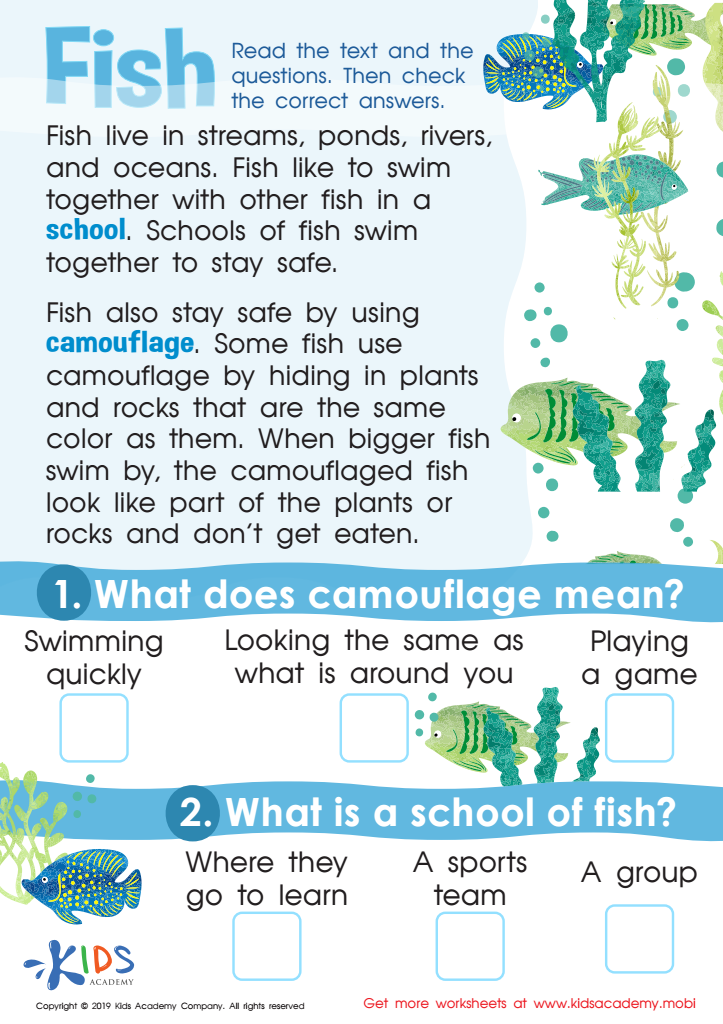
Fish Worksheet
 Assign to My Students











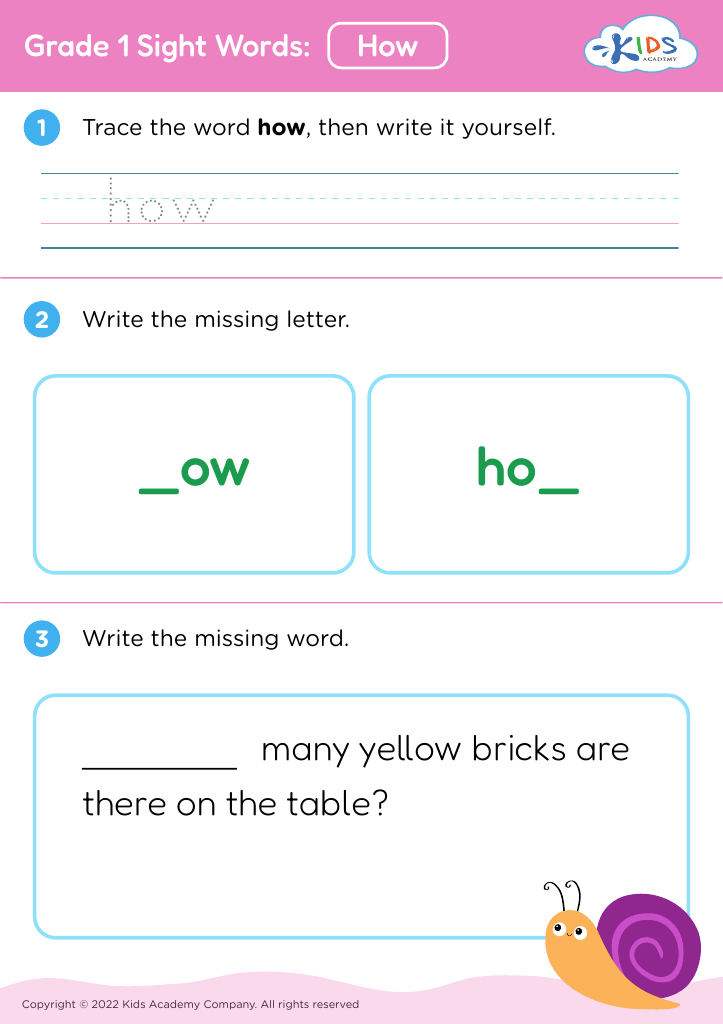
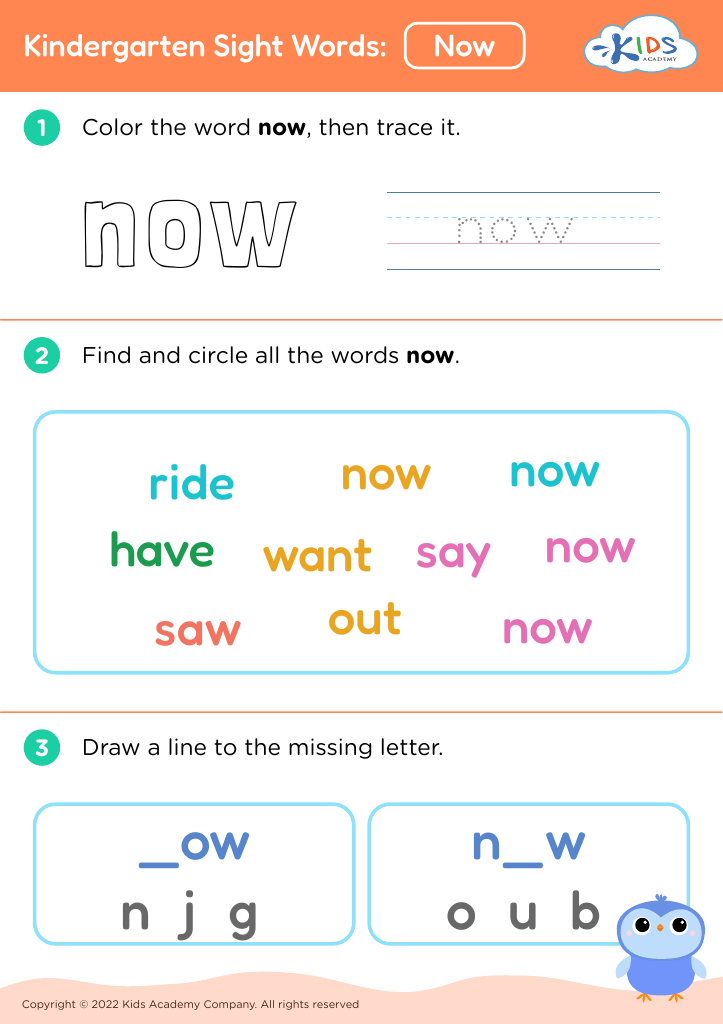
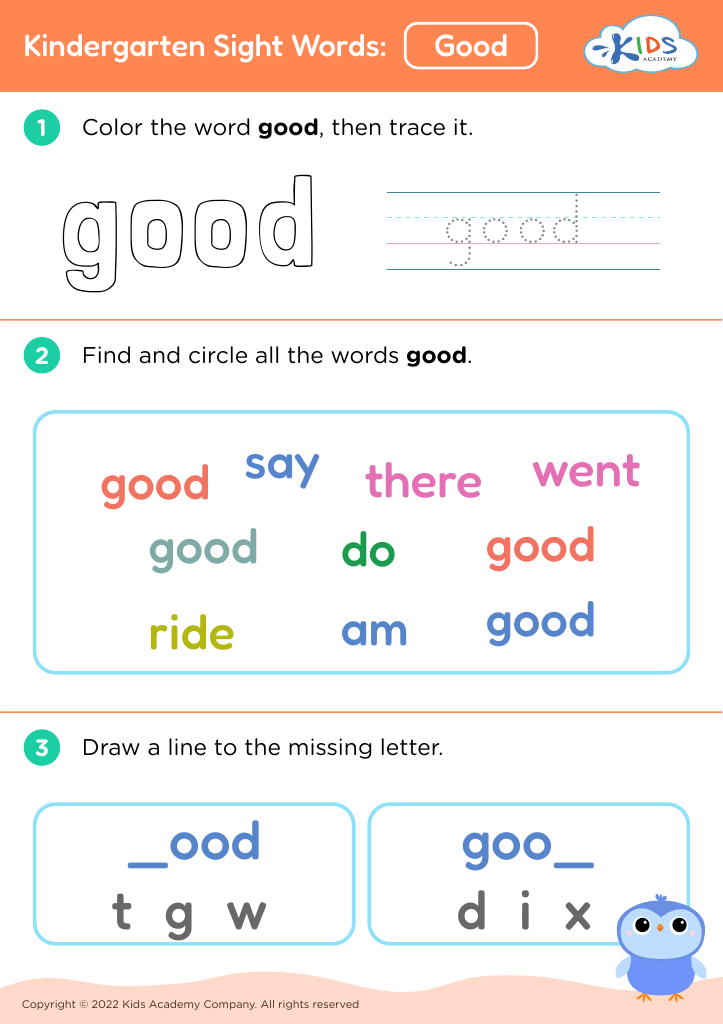








Color identification is a fundamental skill that significantly contributes to language development and cognitive growth in 6-year-olds. For parents and teachers, understanding the importance of building vocabulary around colors enhances a child’s learning experience in numerous ways.
Firstly, colors are one of the initial descriptive terms that children encounter; they naturally integrate color words into their daily conversations. By teaching children the names of colors and their associated vocabulary, educators can enhance communication skills, fostering expressive language development. This helps children articulate their thoughts, feelings, and interpretations of their surroundings.
Secondly, color identification supports cognitive skill development, including categorization and comparison. When children learn about colors, they start recognizing patterns and making connections between objects, enhancing their critical thinking capabilities. Moreover, using colors as a foundation, educators can introduce broader concepts in art, nature, and emotions, nurturing a more holistic learning approach.
Lastly, recognizing colors fosters creativity and imagination. It enables children to explore artistic expression through painting, storytelling, and play. Engaging in color-related activities strengthens memory retention and promotes social interaction, contributing to overall emotional and social maturation. Therefore, prioritizing color vocabulary is essential in nurturing young children’s comprehensive development.








