Counting practice Building Vocabulary Worksheets for 6-Year-Olds
4 filtered results
-
From - To
Boost your 6-year-old's counting skills and vocabulary with our engaging Counting Practice Building Vocabulary Worksheets! Designed to make learning fun, these printable worksheets integrate essential counting exercises with vocabulary enhancement activities. Each activity encourages children to recognize numbers while expanding their word recognition and comprehension. Perfect for home or classroom use, these worksheets combine visual aids and interactive tasks that keep young learners motivated. Watching your child grow in both numeracy and language will be rewarding, as they develop confidence and foundational skills that set the stage for future academic success. Explore our collection and watch your kid thrive in learning!
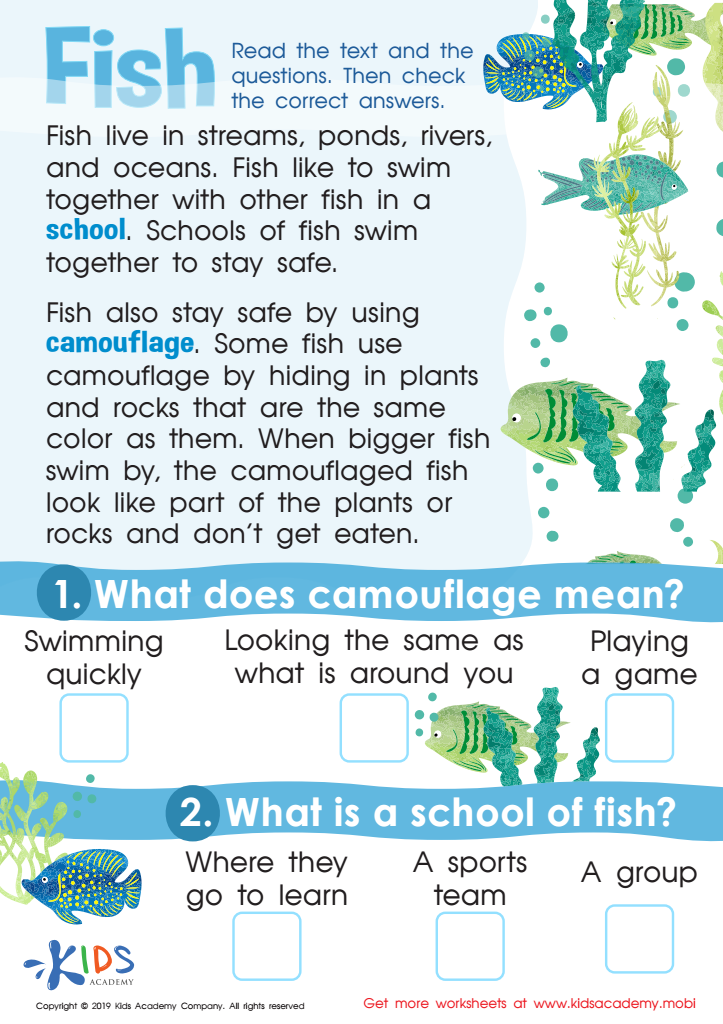
Fish Worksheet
 Assign to My Students
















.jpg)


Counting practice and vocabulary building are fundamental components of early childhood education, especially for 6-year-olds. At this stage, children are rapidly developing cognitive skills, making it crucial for parents and teachers to emphasize these areas.
Counting practice helps nurture numerical literacy, which is essential for everyday problem-solving and future math skills. By engaging in counting activities, children learn to recognize numbers, understand number sequences, and develop one-to-one correspondence. This solid foundation supports their comprehension of more complex mathematical concepts later on, promoting confidence and proficiency in math.
On the other hand, building vocabulary plays a pivotal role in language development and literacy. A rich vocabulary enhances a child's ability to express thoughts and emotions clearly, improving communication skills. Young learners who grasp a variety of words tend to understand stories better, which fosters a love for reading and learning. As they acquire new terms, they also gain insights into their environment, boosting their critical thinking abilities.
In essence, prioritizing counting practice and vocabulary building allows parents and teachers to equip children with essential skills that will serve them throughout their education and beyond, setting the stage for lifelong learning and personal growth.








