Sentence construction Building Vocabulary Worksheets for 6-Year-Olds
3 filtered results
-
From - To
Our Sentence Construction Building Vocabulary Worksheets for 6-Year-Olds are expertly designed to enhance early reading and writing skills. These engaging activities help young learners grasp sentence structure while expanding their vocabulary. By arranging words to form coherent sentences, children improve their comprehension and linguistic creativity. Each worksheet targets essential learning skills, ensuring children build a strong foundation in language arts. Perfect for both classroom use and home practice, our worksheets make learning playful and effective. Give your child the tools they need to excel in language with our dynamic sentence construction worksheets, specially crafted for 6-year-olds.
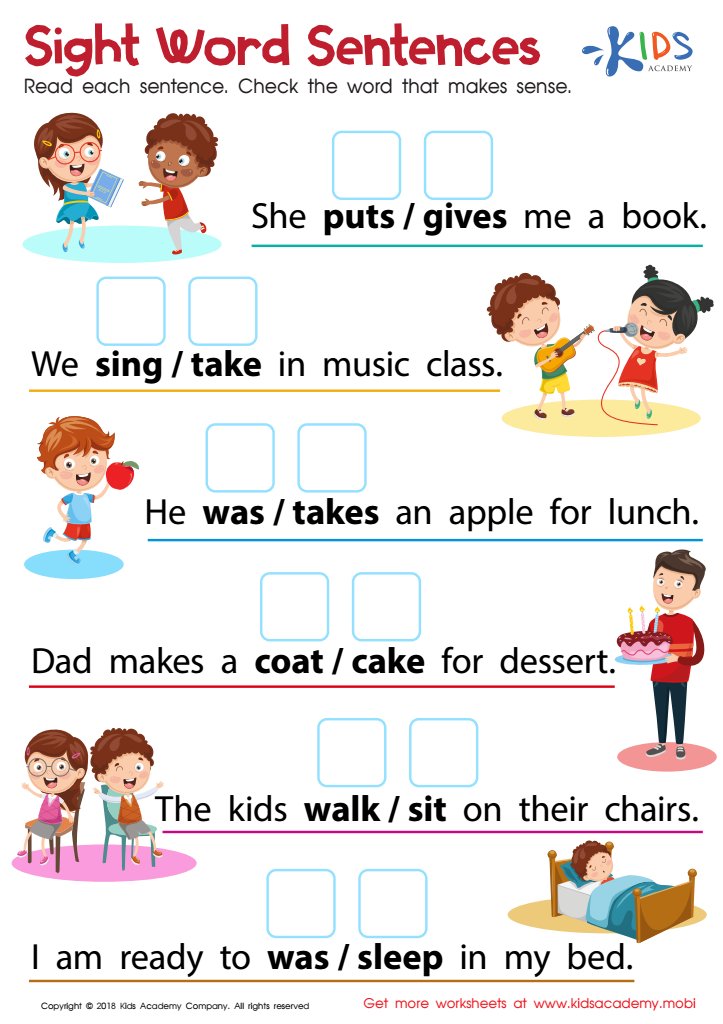
Sight Words Sentences Worksheet
 Assign to My Students











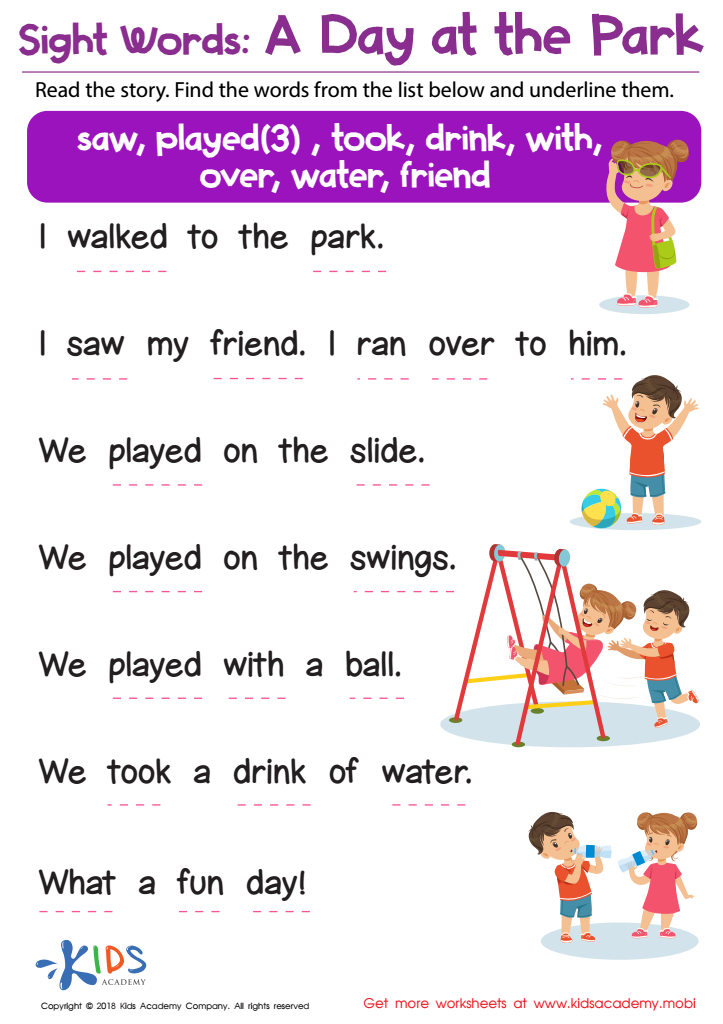
Sight Words: A Day at the Park Worksheet
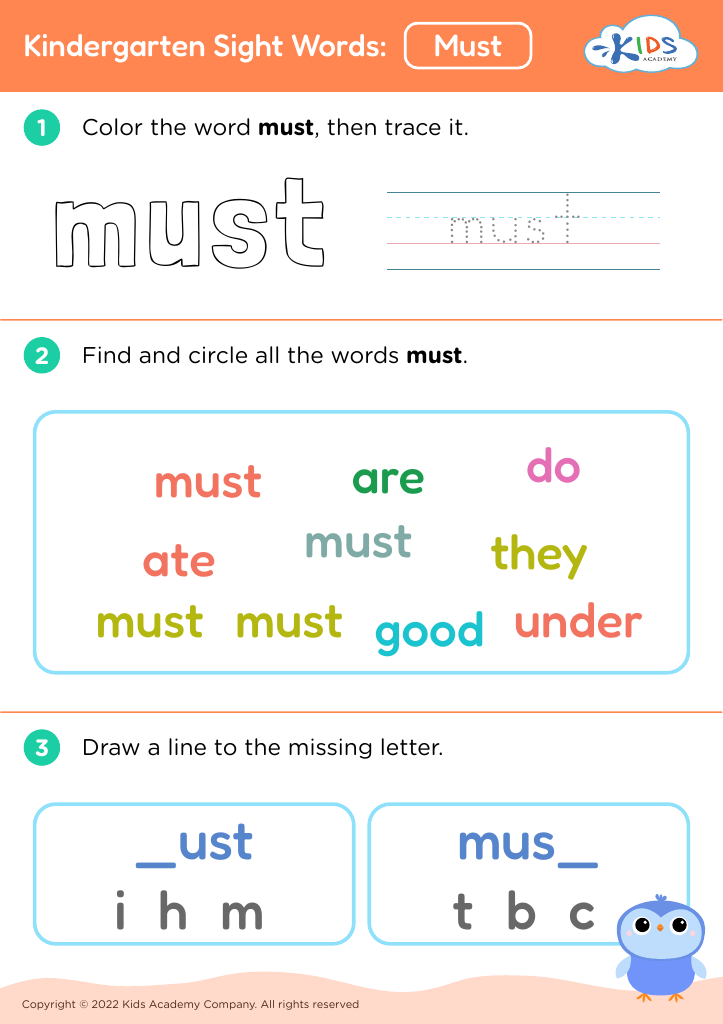




.jpg)



Building vocabulary and sentence construction skills in 6-year-olds is crucial for several reasons. Firstly, a robust vocabulary forms the foundation for effective communication. When children have a rich vocabulary, they can express their thoughts and feelings more clearly and accurately. This also helps them understand others better, fostering social interactions and building relationships.
Secondly, vocabulary development is closely tied to reading comprehension. As children grow, they will encounter increasingly complex texts. A strong vocabulary enables them to grasp the meaning of these texts, aiding in their academic success.
Additionally, good sentence construction is key to writing skills. Children who can construct clear and coherent sentences can better convey their ideas in writing, which will benefit them throughout their educational journey.
Moreover, a wide vocabulary and effective sentence construction boost critical thinking. When children know more words and how to use them, they can think more analytically and creatively.
Parents and teachers play a vital role in this developmental stage by reading to children, engaging in conversations, and providing diverse learning experiences. These activities help children encounter and practice new words in context, making learning both effective and enjoyable. Ultimately, these skills not only enhance academic performance but also enrich a child’s overall cognitive and social development.








