Understanding fractions Building Vocabulary Worksheets for 6-Year-Olds - Page 2
25 filtered results
-
From - To
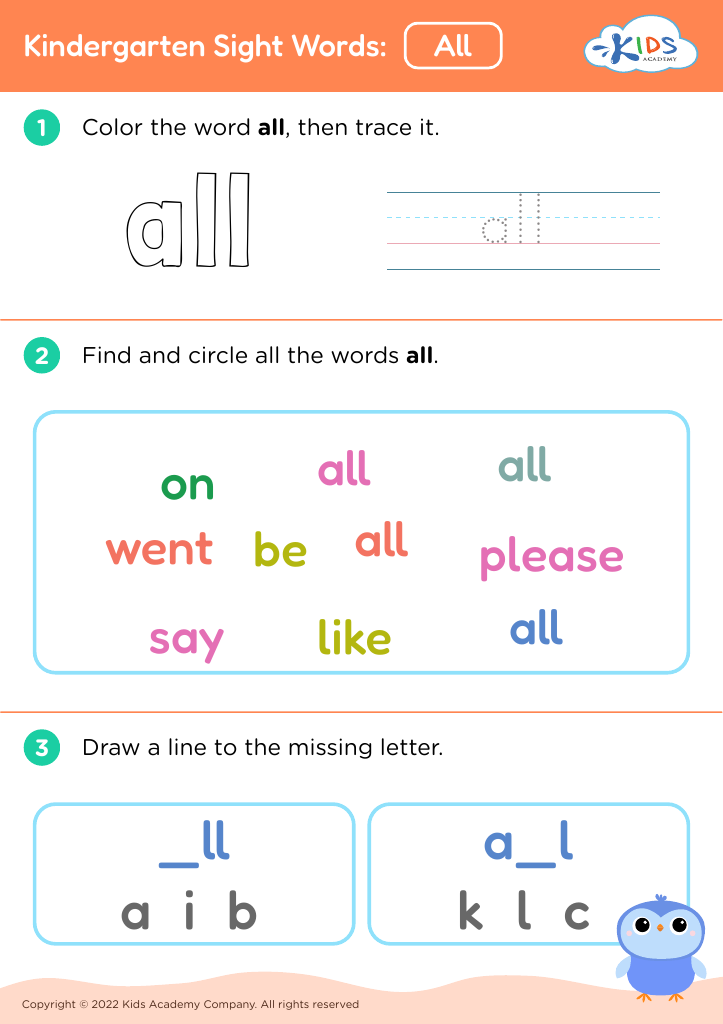


















Understanding fractions and building vocabulary at an early age are essential components of a child's education, particularly for 6-year-olds. At this developmental stage, children are naturally curious and receptive to new concepts. Introducing fractions helps them grasp foundational mathematical ideas, such as part-whole relationships, which is crucial for their future understanding of more complex math concepts.
Teaching fractions also enriches vocabulary. As children learn terms like "half," "quarter," and "numerator," they expand their expressive capabilities. Language development is closely related to cognitive growth; thus, a strong vocabulary supports better communication and comprehension skills across all subjects.
When parents and teachers collaboratively focus on these concepts, they create a holistic learning environment. This partnership helps children feel supported in their educational journey, leading to a more positive attitude towards learning. Additionally, understanding fractions can enhance real-life skills, such as cooking, sharing, and problem-solving, making math more relevant to everyday life.
By prioritizing the understanding of fractions and building vocabulary, parents and teachers lay the groundwork for a child’s academic success and lifelong learning. This not only bolsters mathematics skills but also develops critical thinking and effective communication abilities that are vital in all areas of life.








