Understanding suffixes Building Vocabulary Worksheets for 6-Year-Olds
3 filtered results
-
From - To
Help your 6-year-old enhance their vocabulary with our "Understanding Suffixes Building Vocabulary Worksheets!" Created by educational experts, these engaging worksheets make learning fun and interactive. Through a variety of activities, young learners will explore common suffixes like -ed, -ing, and -ful, understanding how they change word meanings and usage. By mastering suffixes, children will boost their reading and writing skills, enhancing overall language proficiency. Ideal for classroom use or at-home practice, these worksheets are perfect for building a strong vocabulary foundation. Make learning exciting and effective with our comprehensive worksheets designed specifically for 6-year-olds.
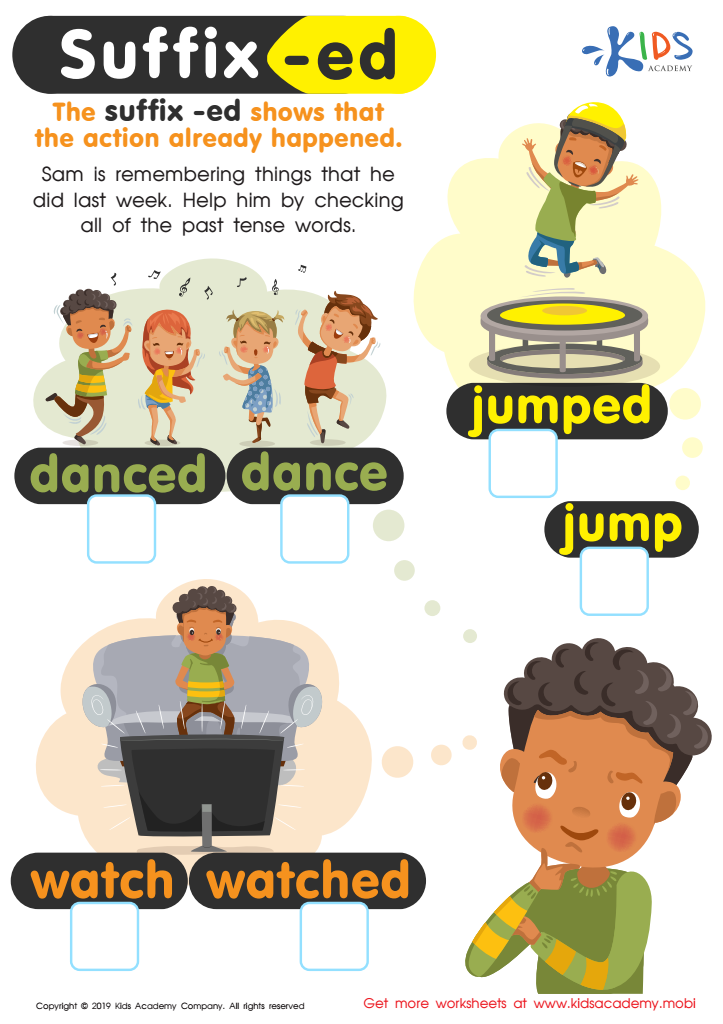
Suffix-ed Worksheet
 Assign to My Students











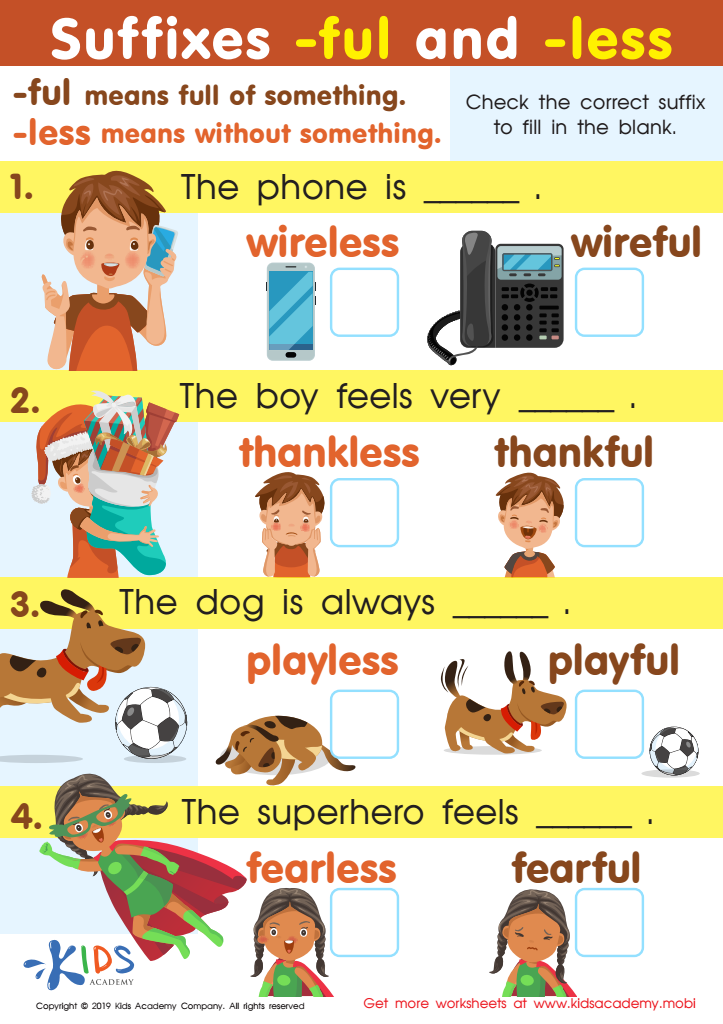
Suffixes –ful and –less Worksheet
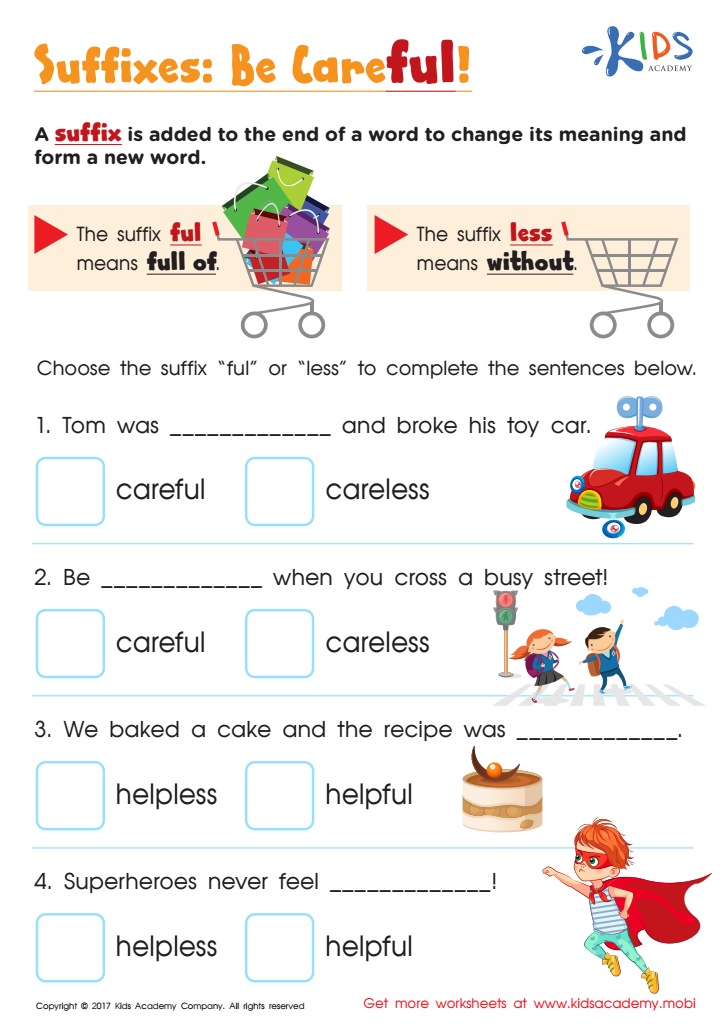
Suffixes Ful and Less Worksheet


.jpg)





Understanding suffixes and building vocabulary are crucial elements in early childhood education that parents and teachers should prioritize for several compelling reasons. Suffixes, the word endings that modify a word's meaning or grammatical function, are foundational to reading and language development. For 6-year-olds, who are typically in first grade, this understanding aids their ability to decode words, thus directly improving reading comprehension and fluency. When children recognize common suffixes like "-ed," "-ing," and "-ful," they can expand their vocabulary and make educated guesses about the meanings of unfamiliar words.
Furthermore, a robust vocabulary is critical to overall academic success. It enhances a child's ability to express themselves clearly and understand others, fostering better communication skills. A strong vocabulary also contributes to improved writing skills, as children can utilize a wider array of words to convey their thoughts and create more detailed narratives.
Teachers and parents who focus on building vocabulary and teaching suffixes provide children with the tools they need to succeed across all subjects. As a result, children become more confident readers and communicators, laying a solid foundation for future learning and intellectual development. This not only positively impacts academic performance but also boosts self-esteem and a love for learning.








