Attention to Detail Reading Worksheets for 6-Year-Olds
5 filtered results
-
From - To
Enhance your child's reading skills with our Attention to Detail Reading Worksheets designed specifically for 6-year-olds! These engaging worksheets focus on helping young readers develop critical skills such as observation, comprehension, and retention. Through fun activities, children learn to identify key details in stories and illustrations, fostering greater understanding and engagement with texts. Perfect for at-home learning or classroom use, our worksheets are formatted to captivate young minds while boosting their confidence. Explore our diverse activities today and watch your child’s reading ability blossom as they master the art of paying attention to detail. Start their learning journey now!
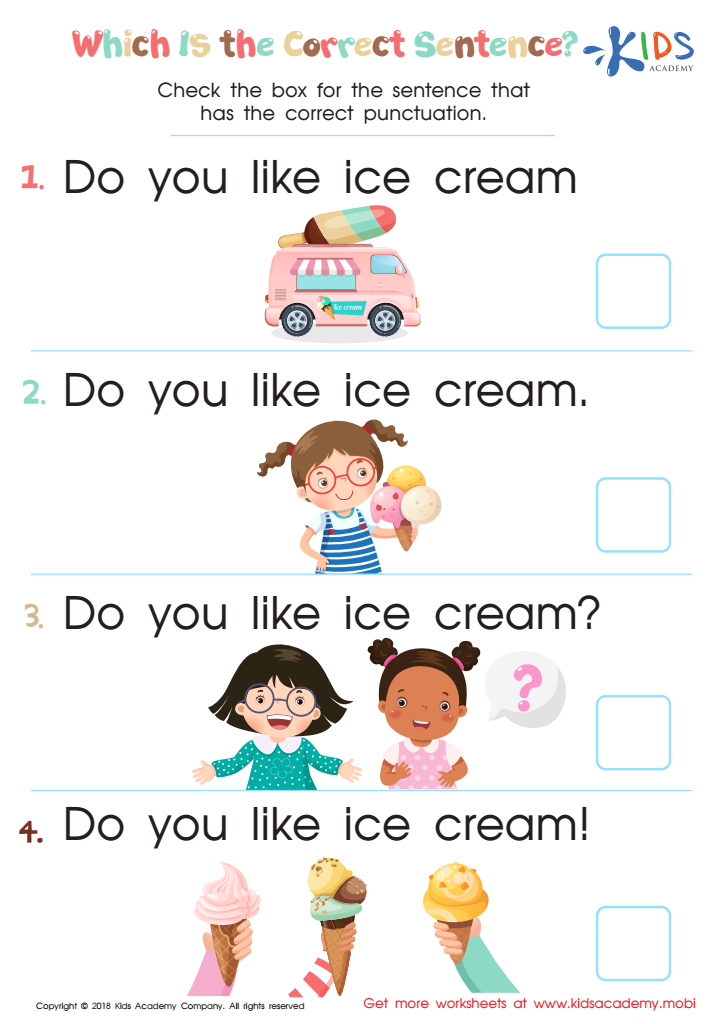
Which is the Correct Sentence? Worksheet
 Assign to My Students
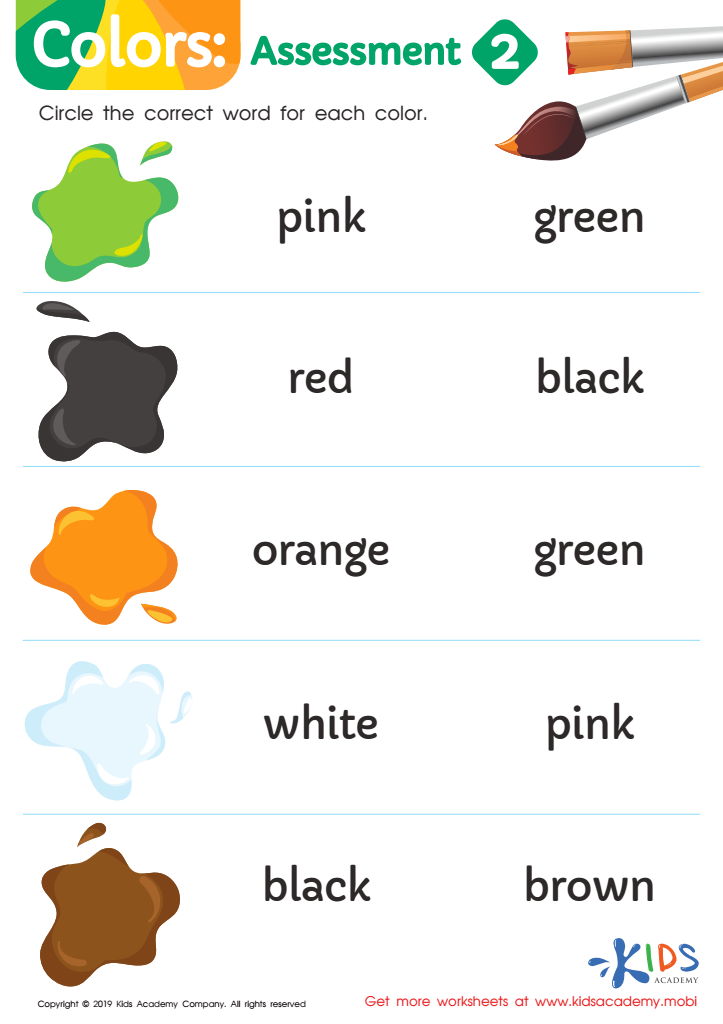
Colors: Assessment 2 Worksheet
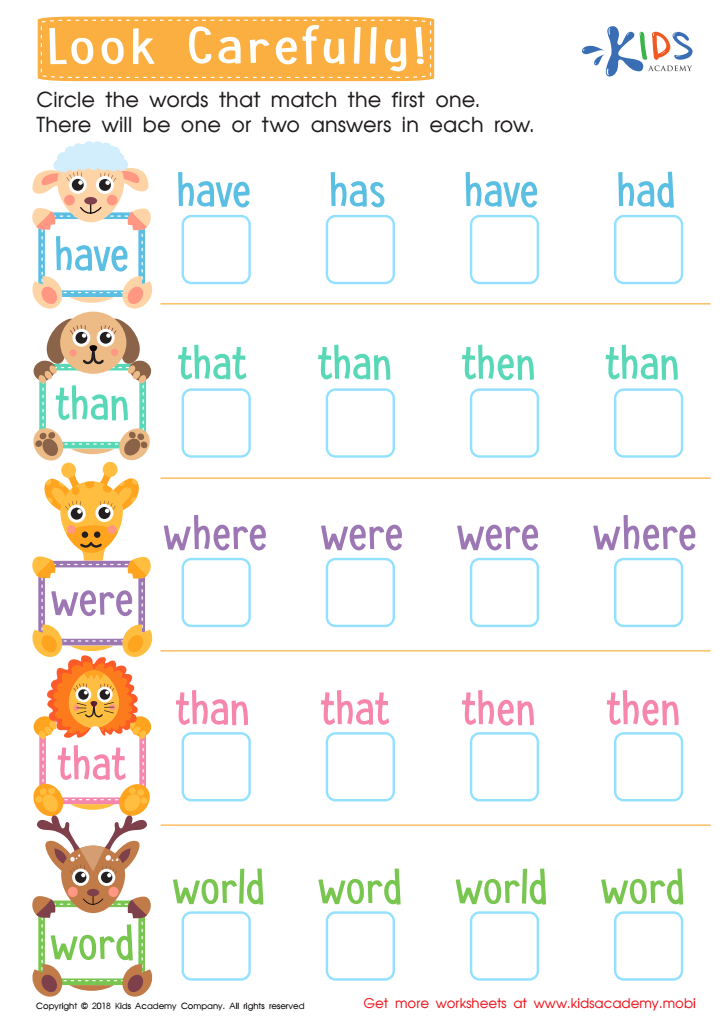
Look Carefully Worksheet
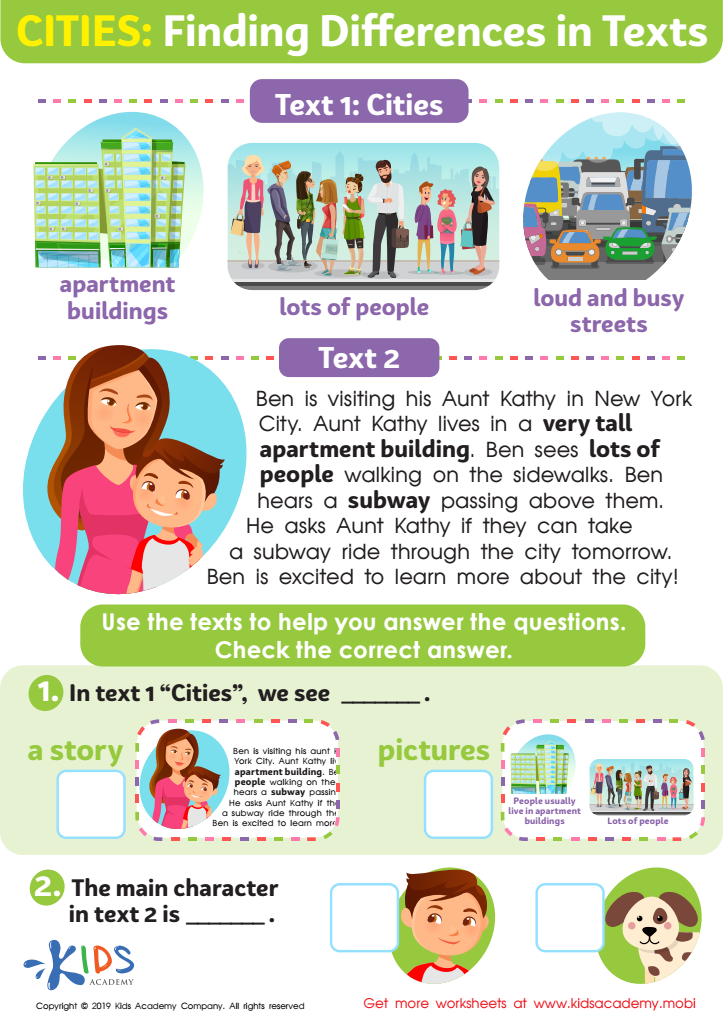
Cities: Finding Differences Worksheet
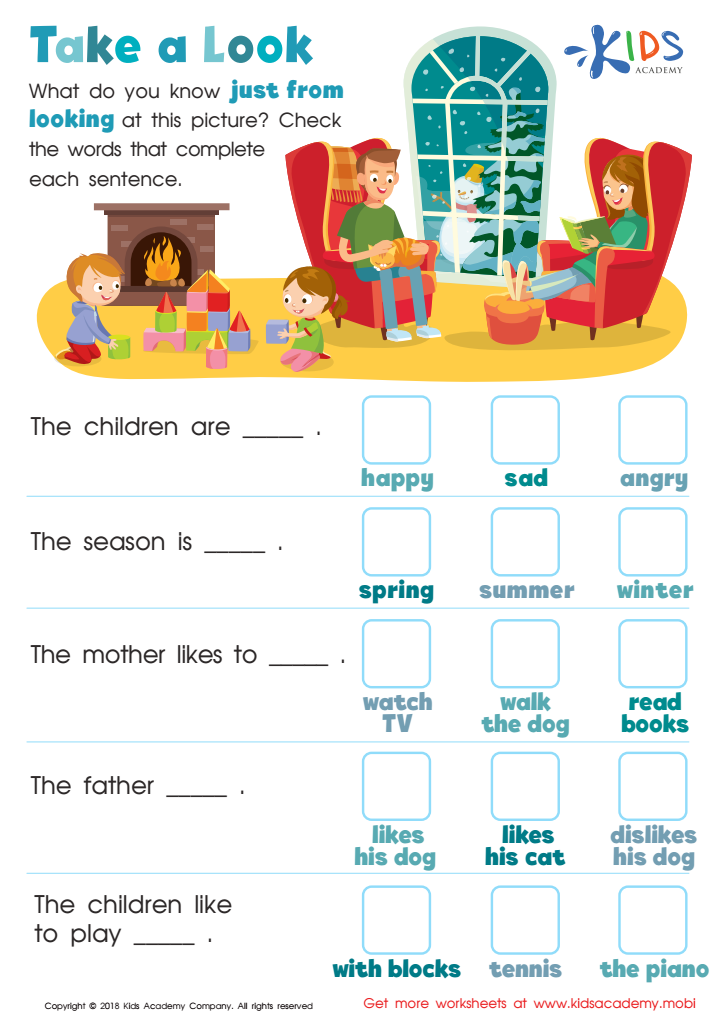
Take a Look - Part 1 Worksheet







Attention to Detail Reading is crucial for 6-year-olds as it significantly impacts their literacy skills and overall academic success. This age marks a pivotal moment in children's cognitive development, where they begin to decode words, make connections, and comprehend texts. When parents and teachers prioritize attention to detail in reading, they help children enhance their focus and observational skills, which are essential for understanding and retaining information.
By encouraging detailed reading, caregivers assist children in noticing specific elements within a story, such as characters’ emotions or the sequence of events, fostering empathy and critical thinking. Additionally, this skill can build a foundation for future academic tasks requiring in-depth analysis and comprehension, such as summarizing a text or answering questions about it.
Moreover, attention to detail reading cultivates a love for books and promotes active engagement with literature, sparking curiosity and imagination. As children learn to connect discussions in texts to their experiences, they develop deeper comprehension and communication skills.
Ultimately, emphasizing the importance of detail in reading sets the stage for lifelong learning, ensuring that children are not only proficient readers but also confident thinkers and communicators. This benefit is vital for their personal and educational growth.








