Cognitive Development Reading Fiction Worksheets for 6-Year-Olds
2 filtered results
-
From - To
Explore our engaging Cognitive Development Reading Fiction Worksheets designed specifically for 6-year-olds! These worksheets are perfect for fostering critical thinking and comprehension skills while immersing young learners in exciting stories. Each worksheet is thoughtfully crafted to encourage children to analyze characters, predict outcomes, and reflect on narratives, enhancing their cognitive abilities. Fun illustrations and relatable themes captivate their imagination, making learning enjoyable. Parents and educators will find these resources essential for supporting literacy development at home or in the classroom. Unlock your child’s full potential with our stimulating activities that turn reading into an adventure of thought and creativity. Start today!
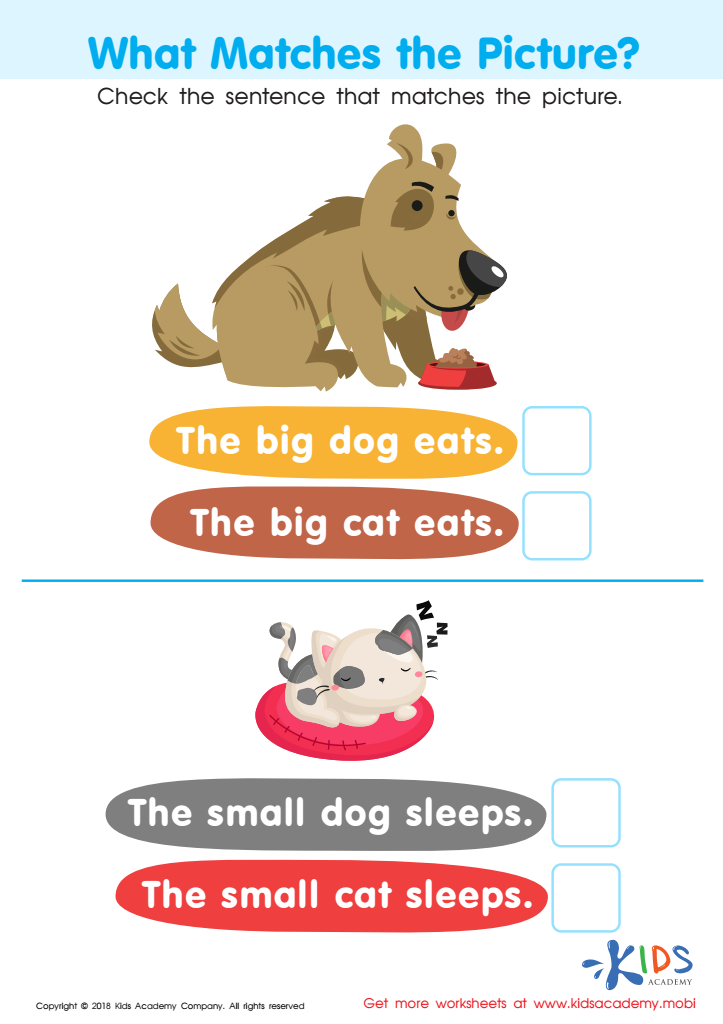
What Matches the Picture? Worksheet
 Assign to My Students
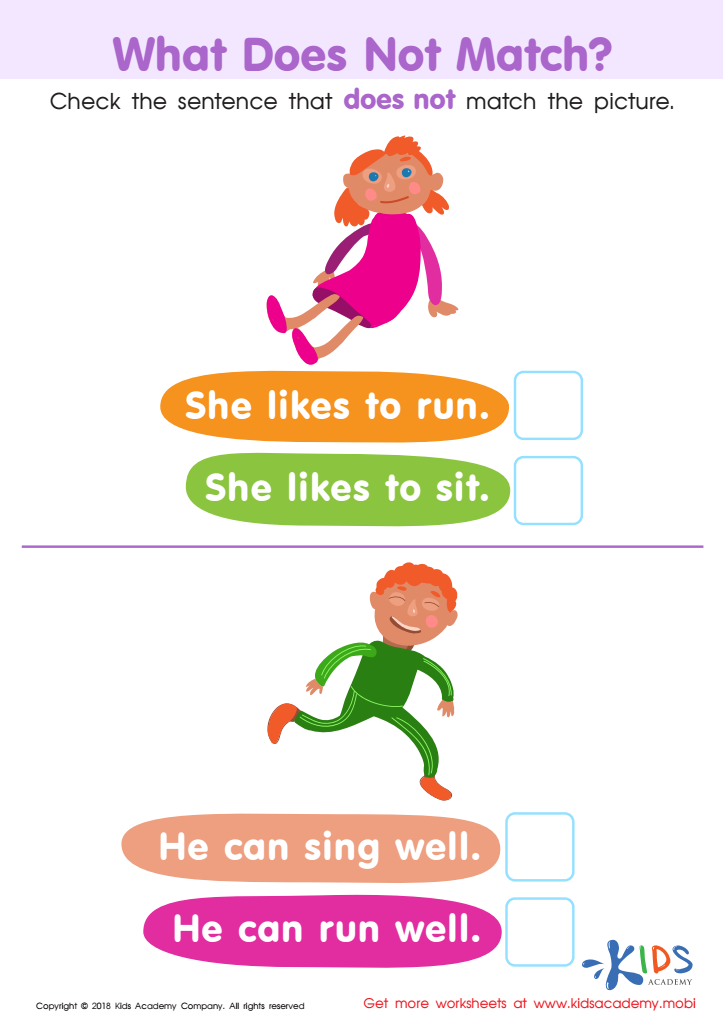
What Does Not Match? Worksheet








Cognitive development during childhood lays the foundation for future learning, and reading fiction plays a vital role in this process, especially for 6-year-olds. At this age, children are developing critical thinking, problem-solving skills, and emotional intelligence. Engaging with fictional stories helps them explore different perspectives, enhancing empathy and the ability to understand others' feelings.
Reading fiction stimulates imagination and creativity, allowing children to think beyond their immediate surroundings. This encourages them to ask questions, make predictions, and draw conclusions, fostering analytical skills. Moreover, stories often present complex themes and moral dilemmas, which help children navigate their own social situations and develop their reasoning abilities.
Additionally, reading fiction boosts vocabulary and language development. As children encounter new words in varied contexts, they build a more robust language toolkit, enabling better communication skills.
For parents and teachers, encouraging fiction reading is vital in cultivating a love for literature and supporting holistic development. By fostering a rich reading environment, we equip children with essential cognitive skills that will benefit their academic journey and shape their overall character as they grow. In essence, reading fiction is not just a pastime—it’s a crucial building block for cognitive growth and emotional well-being in early childhood.








