Critical Thinking Reading Fiction Worksheets for 6-Year-Olds - Page 2
25 filtered results
-
From - To
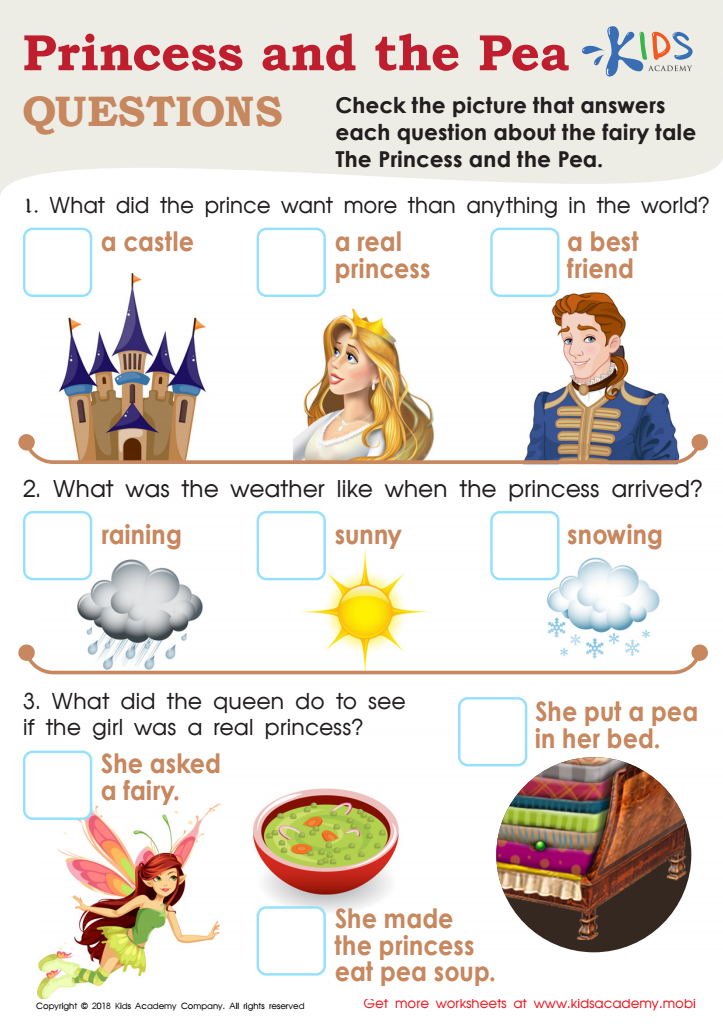
Princess and the Pea Questions Worksheet
 Assign to My Students







Parents and teachers should prioritize critical thinking in reading fiction for 6-year-olds because it lays the foundation for lifelong learning and cognitive development. Engaging with fictional stories encourages children to analyze characters, plot, and themes, fostering their ability to think deeply about various perspectives. This type of engagement helps develop crucial skills, such as empathy, problem-solving, and creativity.
At this age, children's minds are still developing, making it an ideal time to introduce them to the complexities of narrative. Critical thinking fosters not only comprehension but also encourages students to make connections between the text and their own experiences. When children learn to ask questions, predict outcomes, and hypothesize about characters' motivations, they become more active readers.
Additionally, cultivating critical thinking equips children with the tools to navigate challenges and obstacles in both academic and personal contexts. In an increasingly complex world, these skills allow them to assess information critically, distinguish between fact and opinion, and become informed decision-makers. By nurturing critical thinking through reading fiction, we prepare young learners to tackle the future academically, socially, and emotionally. Thus, supporting their growth as thoughtful, engaged, and compassionate individuals is essential.








