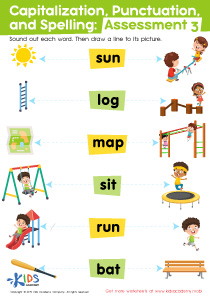
Sentence formation Grammar Worksheets for 6-Year-Olds
3 filtered results
-
From - To
Enhance your 6-year-old's writing skills with our engaging Sentence Formation Grammar Worksheets! Designed specifically for young learners, these worksheets make learning fun by helping children practice creating simple, compound, and complex sentences. Through interactive activities, kids will explore the components of sentences, including subjects, predicates, and punctuation, fostering their language skills and creativity. Our user-friendly format allows parents and teachers to easily guide children in mastering sentence structure, improving their reading comprehension and communication skills. Download these colorful and stimulating worksheets today to spark your child's interest in writing and nurture their budding grammar skills for a strong foundation!
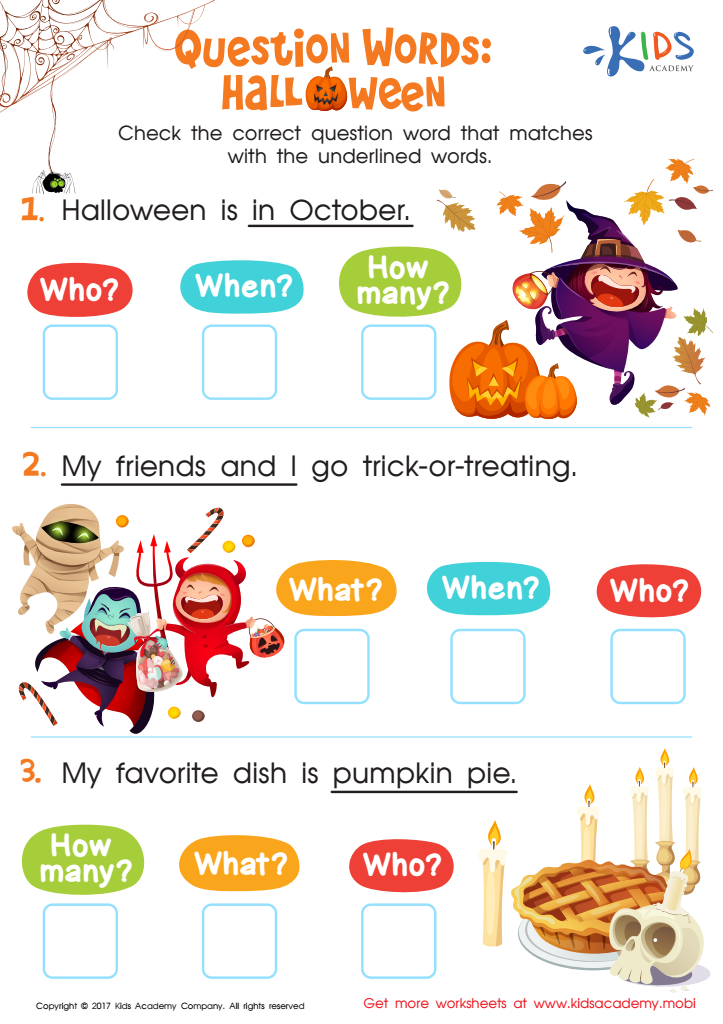
Question Words: Halloween Worksheet
 Assign to My Students
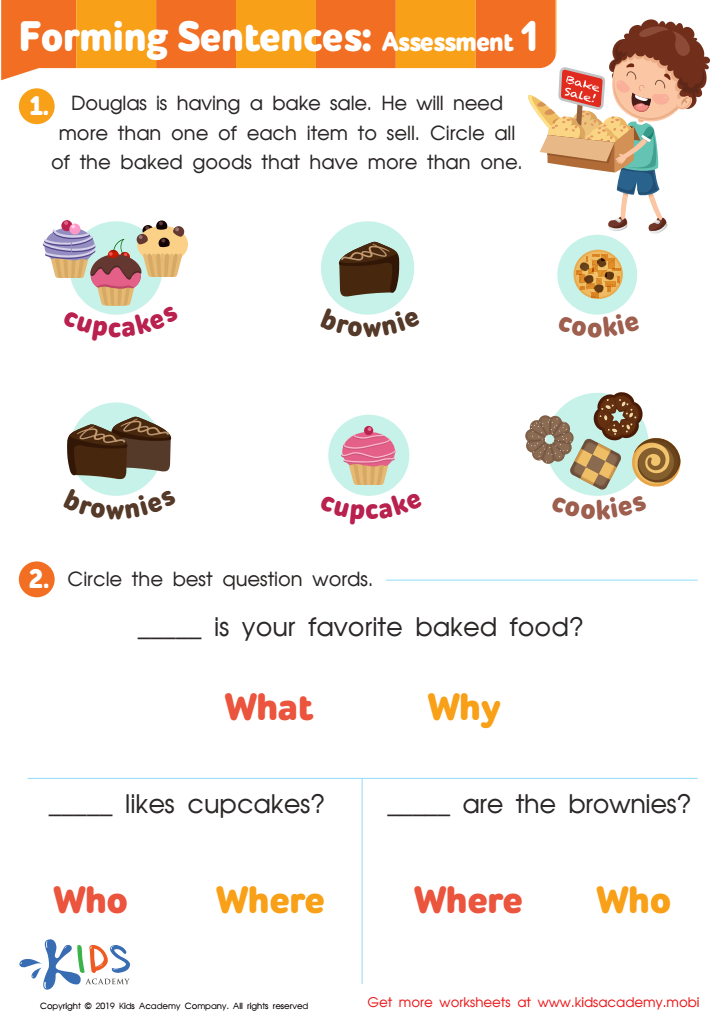
Forming Sentences: Assessment 1 Worksheet
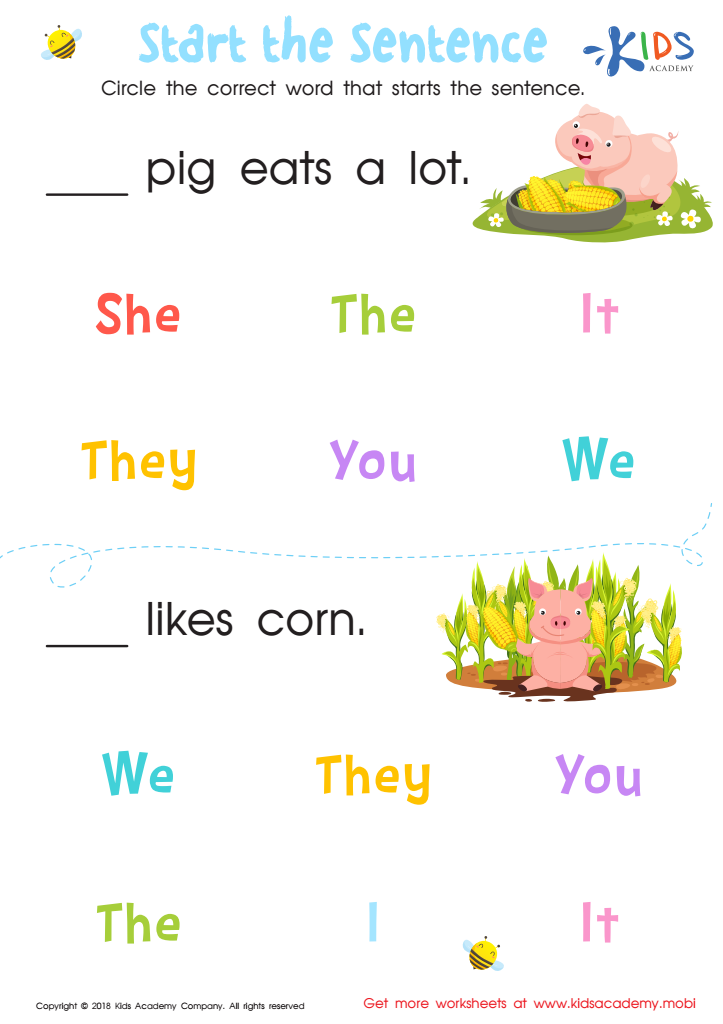
Start the Sentence Worksheet






Parents and teachers should care about sentence formation grammar for 6-year-olds because it lays the foundation for effective communication and literacy development. At this age, children are in a critical period for language acquisition, where they begin to understand how words combine to convey meaning. Mastering the basic structure of sentences involves learning subject-verb agreement, punctuation, and sentence types, which are essential skills for reading and writing.
Encouraging proper sentence formation fosters cognitive skills such as critical thinking and problem-solving. When children learn to construct complete sentences, they can express their thoughts and ideas clearly, enhancing their confidence and social skills. Additionally, these skills contribute to academic success later on, as strong writing and reading abilities are pivotal in all subjects.
Furthermore, comprehension increases when children understand how sentences are formed, allowing them to grasp more complex ideas in books and conversations. Engaging with grammar interactively—through games, storytelling, and writing exercises—can motivate children and make learning enjoyable. Ultimately, focusing on sentence formation at an early age prepares children not only for future literacy challenges but also equips them with the communication skills necessary for everyday interactions in life.