Verb identification Grammar Worksheets for 6-Year-Olds
3 filtered results
-
From - To
Introduce your 6-year-old to the world of action words with our engaging Verb Identification Grammar Worksheets! Designed specifically for young learners, these worksheets make learning fun and interactive. Packed with colorful illustrations and age-appropriate exercises, kids will practice recognizing and understanding verbs in various sentences. Each worksheet focuses on everyday activities, making it easier for children to relate and comprehend. Boost your child’s grammar skills, enhance their reading comprehension, and build a strong foundation in English with these excellently crafted worksheets from Kids Academy. Start the journey to mastery and watch your child’s confidence soar!
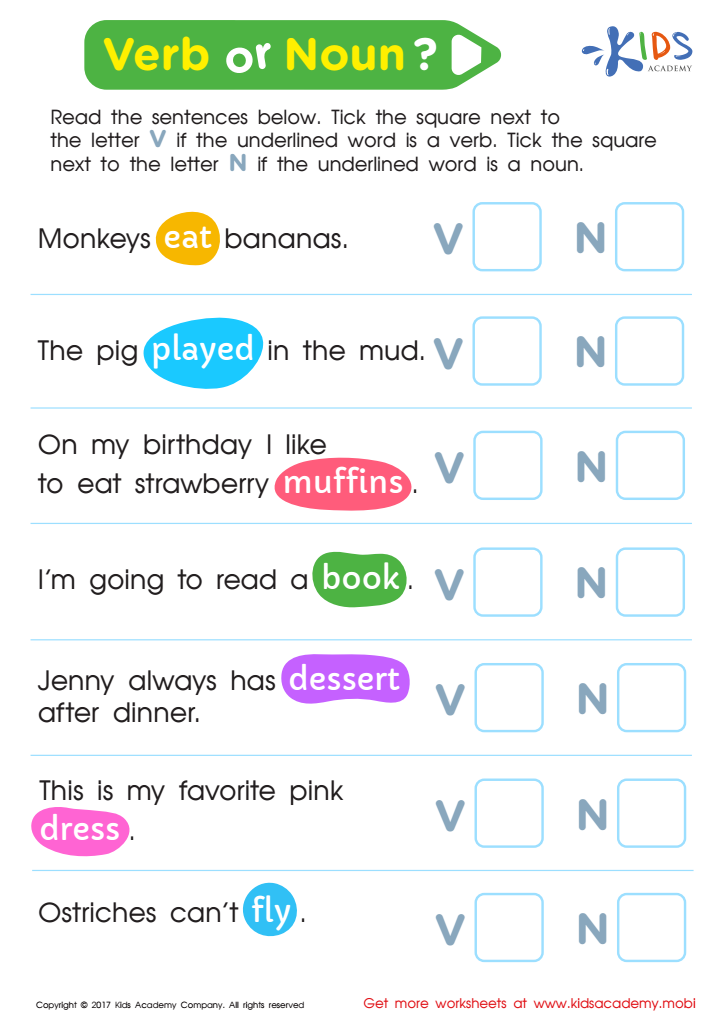
Verb or Noun Worksheet
 Assign to My Students
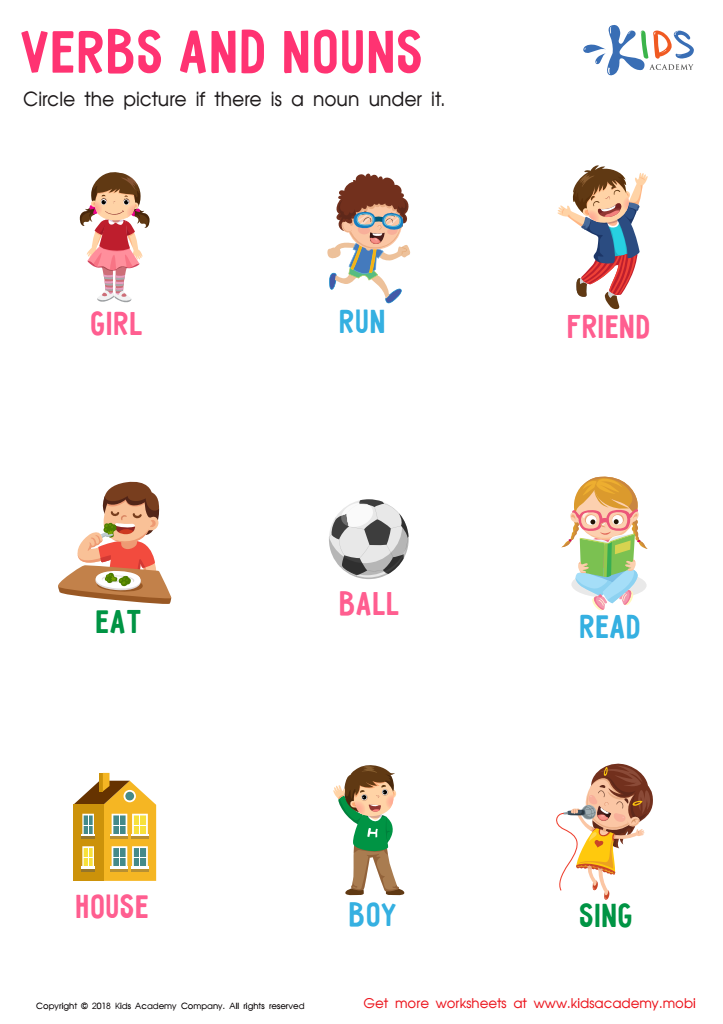
Verbs and Nouns Worksheet
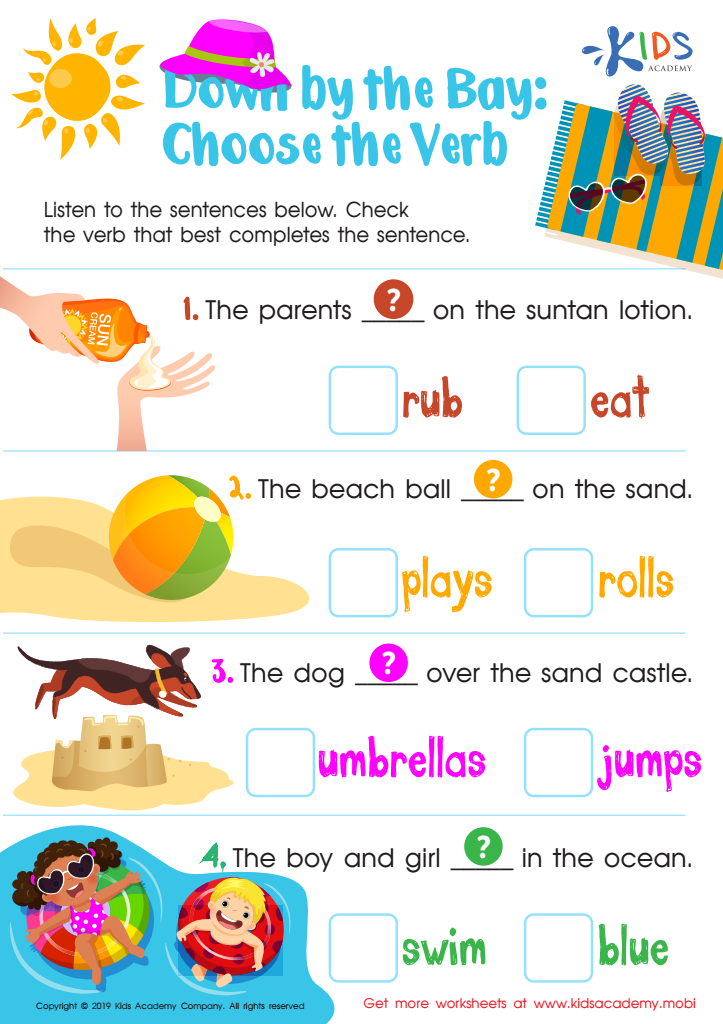
Down by the Bay: Choose the Verb Worksheet





.jpg)

Understanding verb identification is fundamental for 6-year-olds as it supports essential language development and effective communication. At this age, children are forming the foundation of their linguistic skills, and knowing verbs—the words that express actions, occurrences, or states—helps them construct meaningful sentences. When parents and teachers emphasize verb identification, they're enhancing a child's ability to describe actions clearly and producing grammatically correct sentences.
Mastering verbs also contributes significantly to reading comprehension. As children learn to recognize verbs within a text, they better understand the narrative's sequence of actions and events, making reading more enjoyable and educational. Furthermore, a strong grasp of verbs enhances children's writing skills, enabling them to convey their ideas with clarity and precision.
Verb identification supports cognitive development, too. It encourages children to observe patterns and contrasts in the language, fostering critical thinking and analytical skills. Plus, a solid language foundation gives children confidence in verbal interactions, benefiting their social-emotional growth.
In essence, focusing on verb identification for young learners equips them with the linguistic tools necessary for academic success and effective communication, enriching their educational journey and personal development.








