Letter recognition Tracing Words Worksheets for 6-Year-Olds
3 filtered results
-
From - To
Introduce your 6-year-old to the exciting world of reading with our Letter Recognition Tracing Words Worksheets! Specially designed to enhance early literacy skills, these worksheets offer a fun, engaging way for children to practice tracing and recognizing letters. They blend education with play, making learning effortless and enjoyable. Each worksheet, available at Kids Academy, guides young learners through letter formation and familiarization, reinforcing their writing abilities and boosting their confidence. Perfect for parents and educators, our printable tracing words activities are a valuable resource for any 6-year-old beginning their reading journey. Transform early literacy learning into an adventure today!
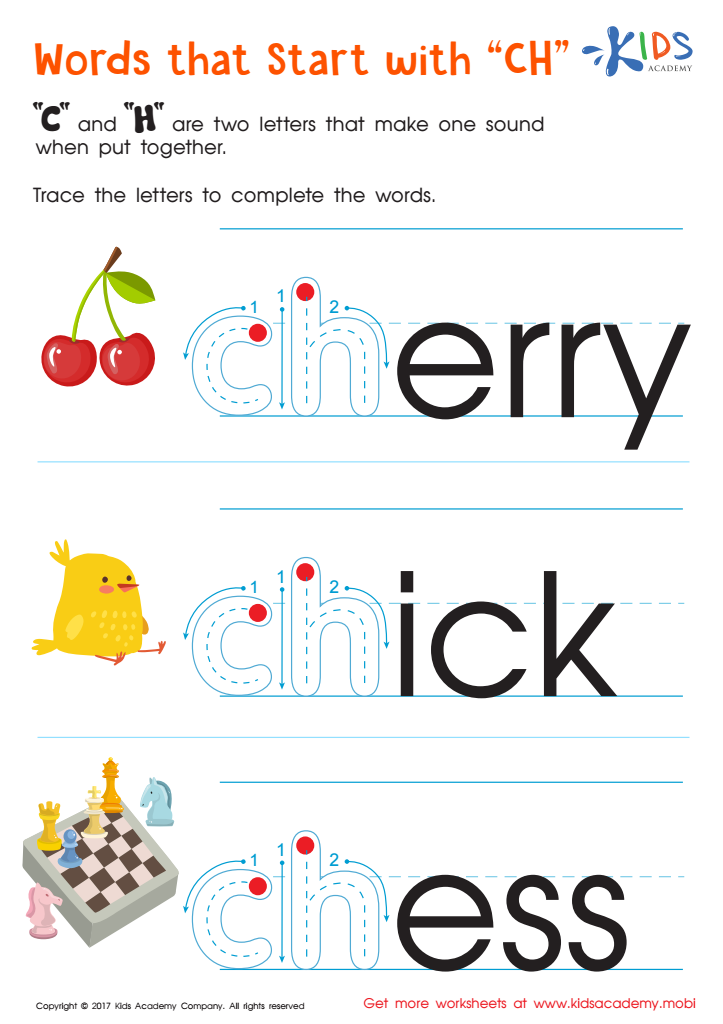
Words That Start with "ch" Spelling Worksheet
 Assign to My Students
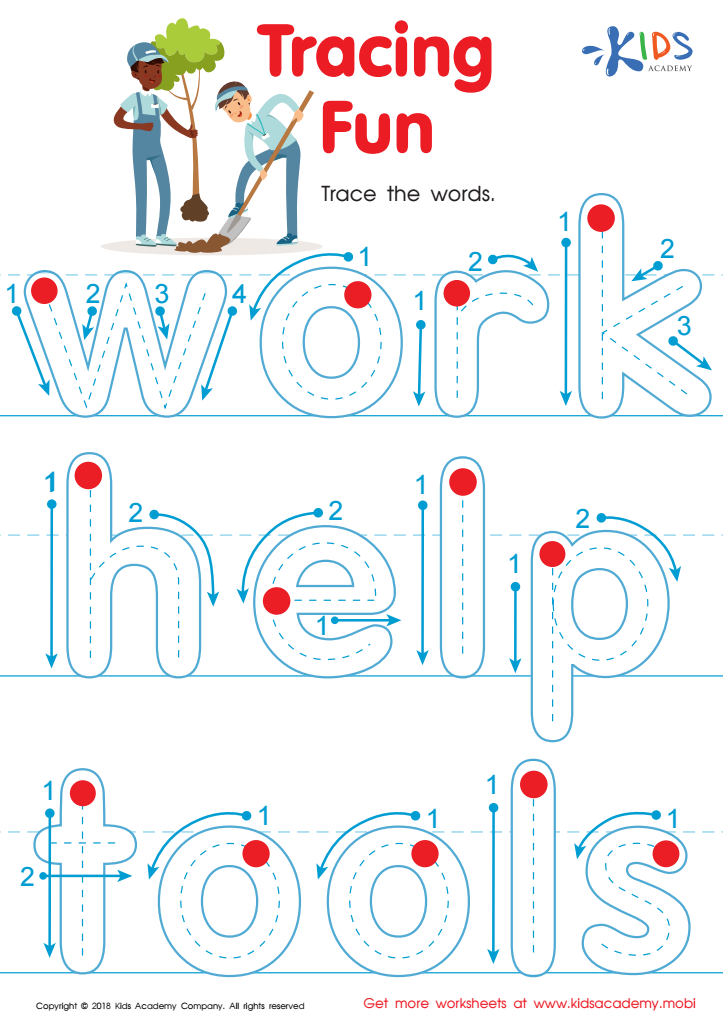
Tracing Fun Worksheet
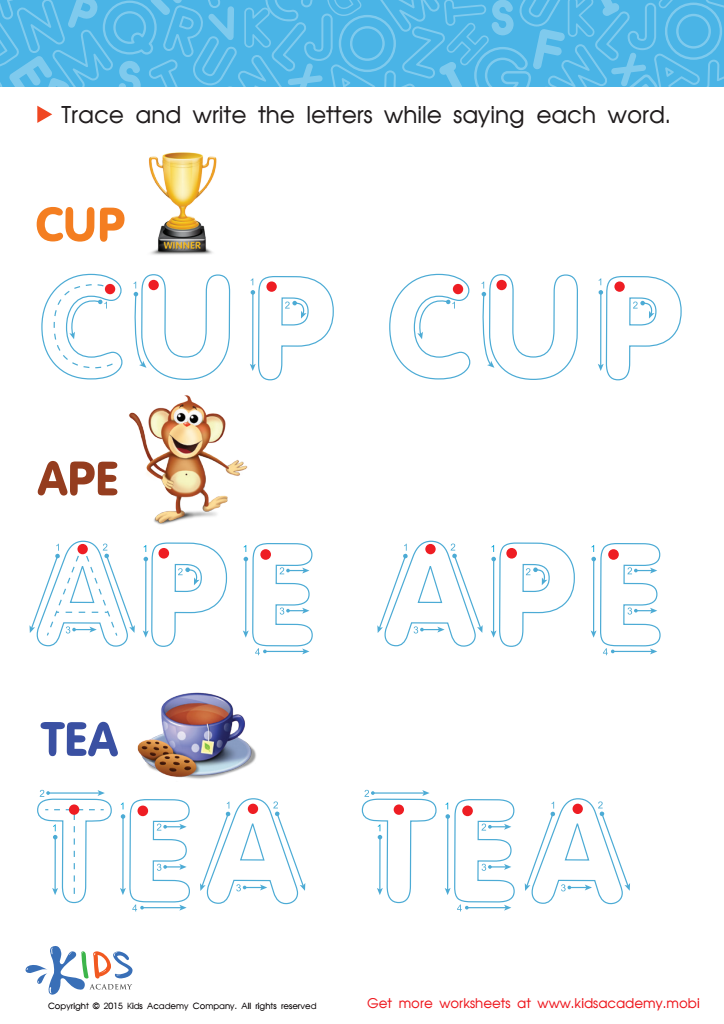
A Cup, an Ape and Tea Spelling Worksheet








Letter recognition and tracing words are critical foundational skills for 6-year-olds, setting the stage for literacy success. At this age, children are experiencing their first steps into formal education, often between Kindergarten and first grade.
Firstly, proficient letter recognition enables children to begin decoding words, an essential step in learning to read. It allows them to recognize the shapes and sounds of letters more efficiently, which lays the groundwork for phonics—understanding the relationship between sounds and their corresponding letters. Tracing words reinforce this because it provides a multisensory experience; children aren't just seeing the letters, but they are also feeling the motion of creating them.
Additionally, tracing helps improve fine motor skills, which are necessary for writing. By tracing letters and words, children develop the muscle memory needed for smoother, more controlled writing movements. This kinetic involvement can also aid in memory retention, making it easier for children to remember what they have learned.
Moreover, successful recognition and tracing can boost a child’s confidence and enthusiasm for learning. When they experience success early on, they are more likely to view learning as fun and are more motivated to tackle more challenging tasks. Hence, parents and teachers should prioritize these activities to ensure that foundations are strong, paving the way for consistent, long-term educational achievement.








