Rhyming skills development Alphabet Worksheets for Ages 7-8
4 filtered results
-
From - To
Enhance your child's literacy with our Rhyming Skills Development Alphabet Worksheets for ages 7-8! Designed to make learning fun and engaging, these worksheets help young learners discover patterns in language through rhymes. By practicing rhyming words, children improve their reading and speaking abilities while building vocabulary and phonemic awareness. Our easy-to-use worksheets provide a structured approach to mastering rhymes, featuring colorful graphics and interactive activities that captivate young minds. Perfect for homeschooling parents and educators, these resources will foster a love for language and set the foundation for successful reading skills. Start your child's rhyming journey today!
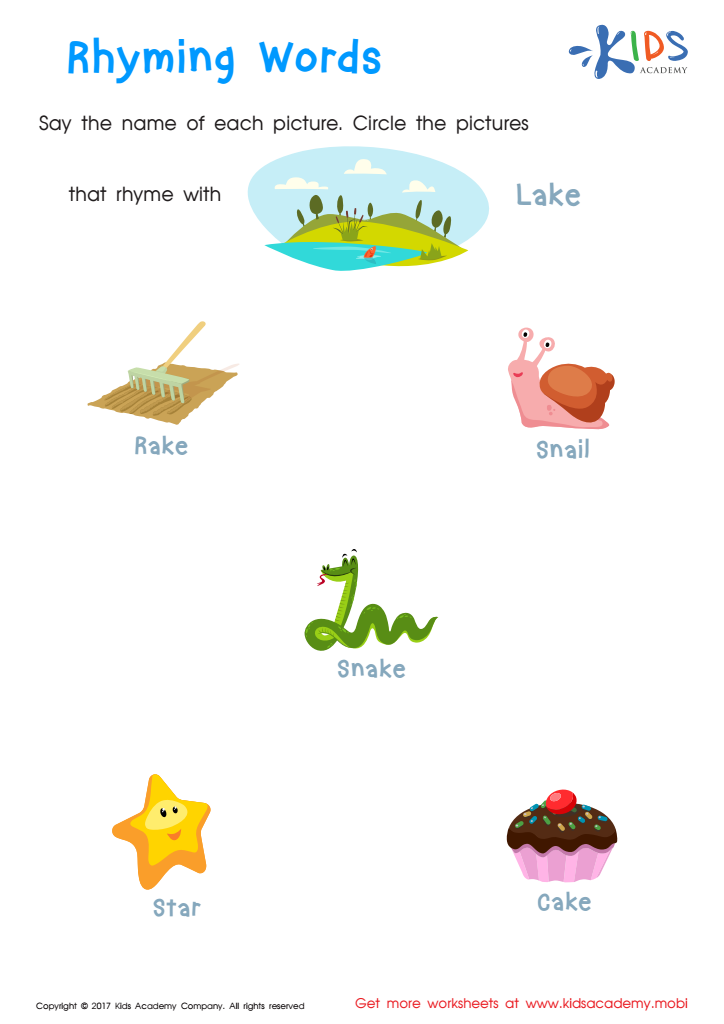
Rhyming Words Rhyming Worksheet
 Assign to My Students
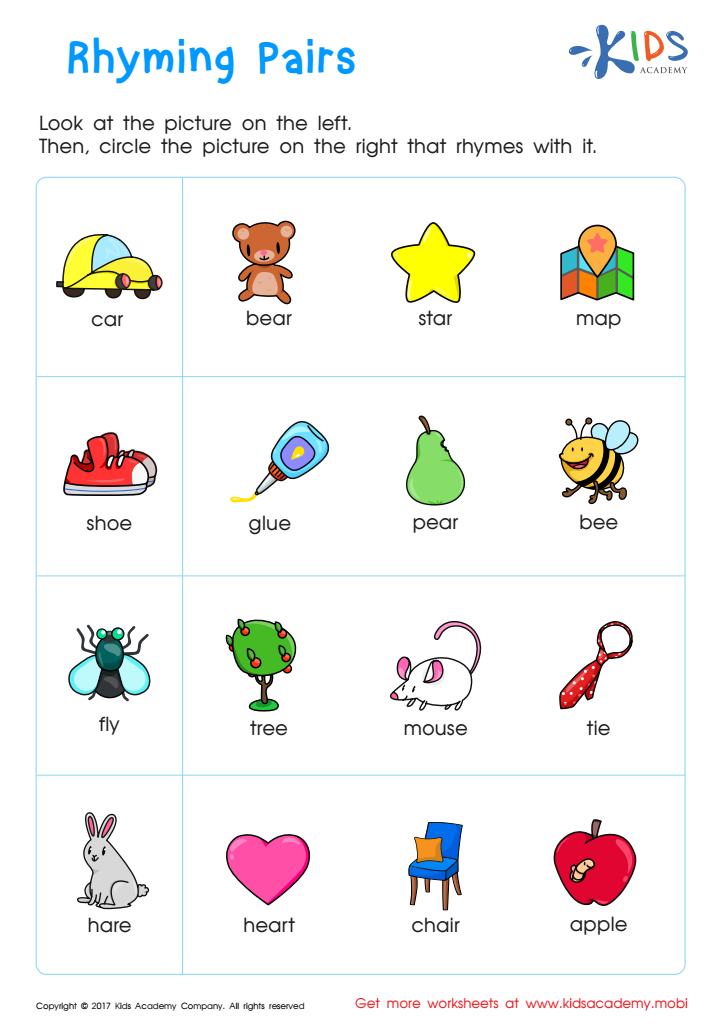
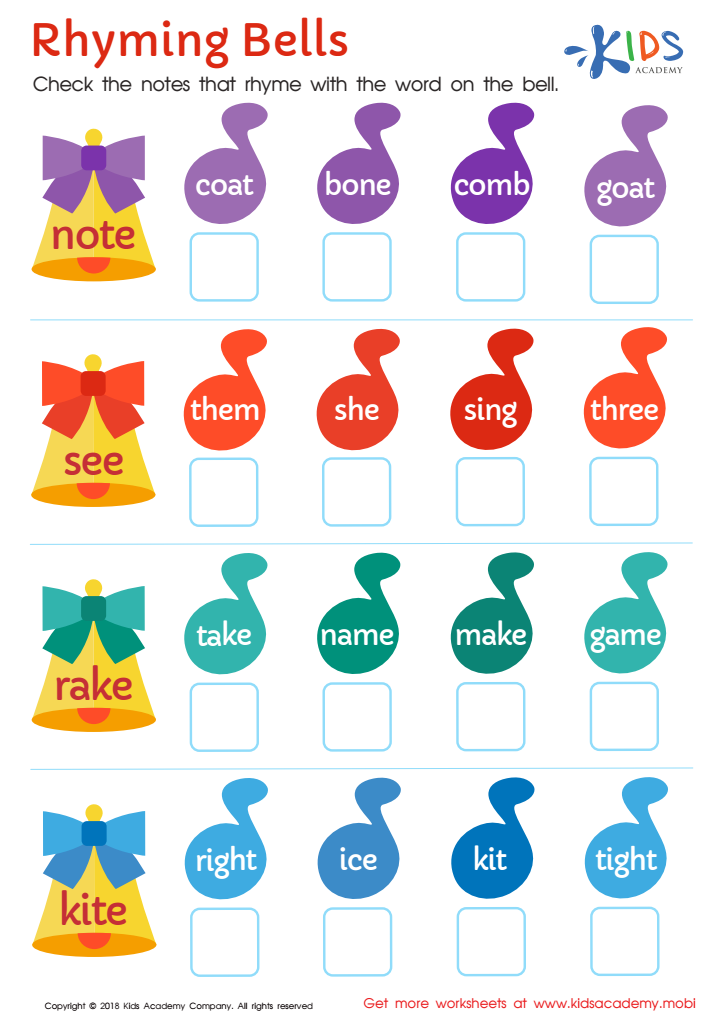
Rhyming Bells Worksheet
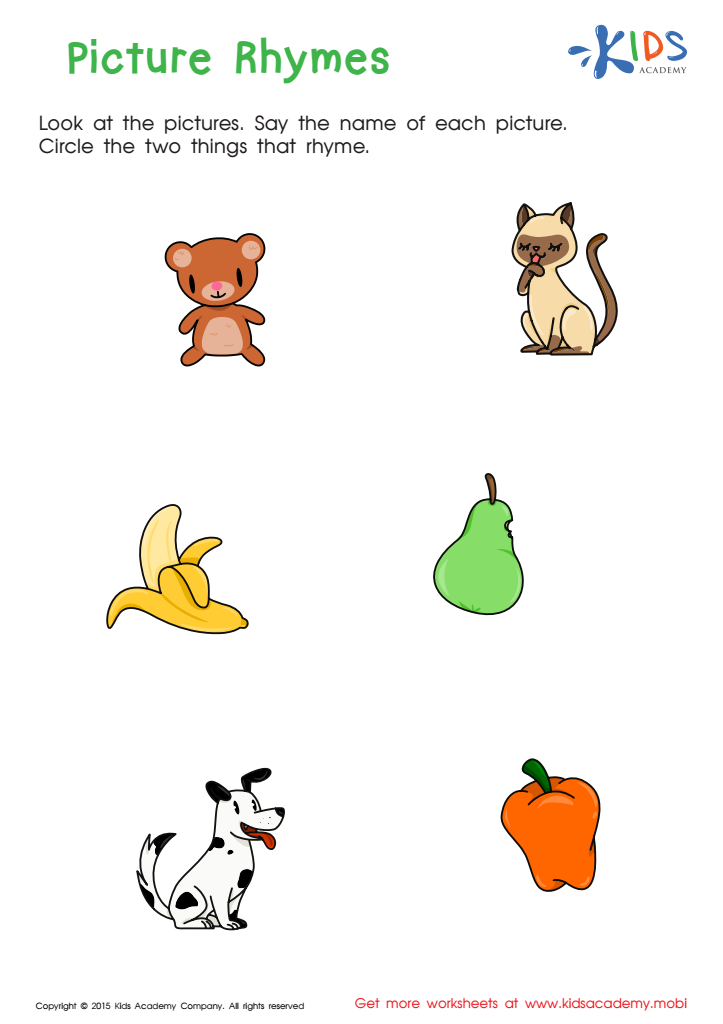
First Words: Picture Rhymes Worksheet







Rhyming skills are a crucial component of early literacy development, particularly for children aged 7-8. At this stage, children are refining their reading and writing abilities, and rhyming plays a significant role in building these skills. When parents and teachers prioritize rhyming, they enhance phonemic awareness—the ability to hear, identify, and manipulate sounds in spoken language. This skill is essential for decoding words, a vital aspect of reading fluency.
Moreover, rhyming fosters vocabulary growth and comprehension. Children who engage with rhyming activities are more likely to notice patterns in language, which can lead to enhanced reading strategies. Rhymes make learning enjoyable, encouraging a love for language and storytelling that can last a lifetime.
Additionally, rhyming can improve memory and cognitive development by allowing children to recall words and engage in wordplay. It supports social interaction through shared rhymes and singing, building communication skills. Overall, by focusing on rhyming skills, parents and teachers can create a strong foundation for literacy, empowering children to succeed academically and enjoyably explore the world around them through language. Investing in these skills ensures that children not only learn to read but develop a lifelong appreciation for reading, writing, and creativity.







