
Sound Association Phonics Worksheets for Ages 7-8
8 filtered results
Difficulty Level
Grade
Age
-
From - To
Subject
Activity
Standards
Enhance your child’s reading skills with our "Sound Association Phonics Worksheets for Ages 7-8". These engaging, educator-designed worksheets are tailored to help young learners connect letters with their corresponding sounds, improving their phonetic awareness and reading fluency. Each worksheet offers fun activities like matching sounds with pictures, filling in missing letters, and practicing word formation. Through consistent practice, children will develop a solid foundation in phonics that will support their continued literacy success. Perfect for both classroom settings and at-home practice, these worksheets make learning phonics an enjoyable and effective experience for children aged 7 to 8.
Favorites
With answer key
Interactive
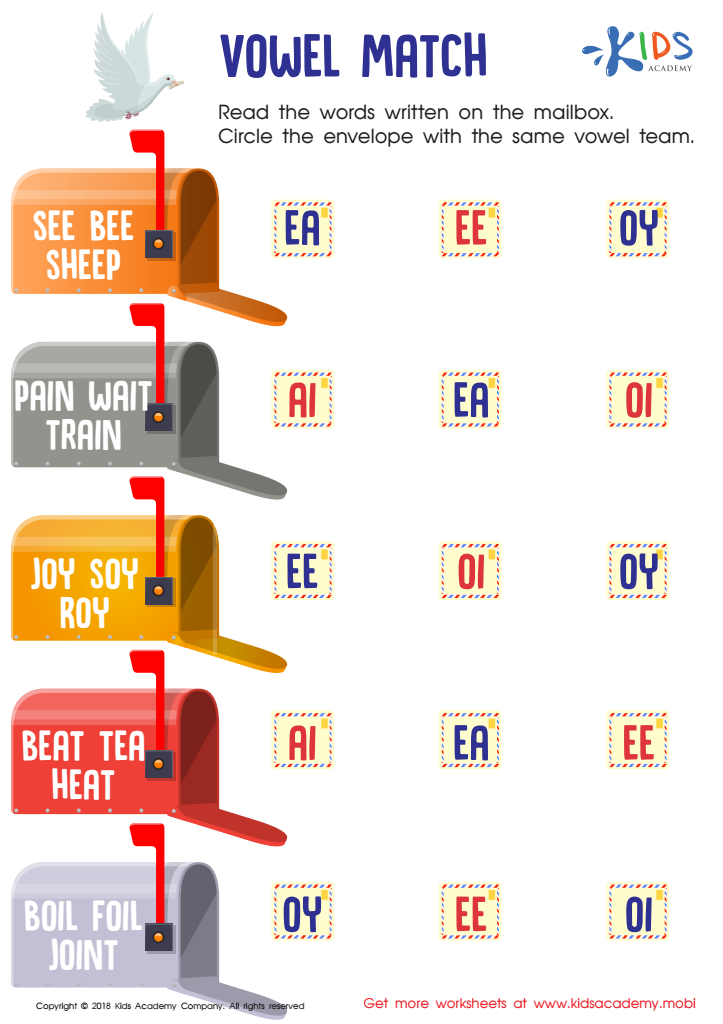
Vowel match Worksheet
Early readers can find vowel teams (digraphs) tricky. This simple worksheet helps kids match words with the right digraphs and learn to read! They'll practice reading words from different families, and linking the letters to their sounds. It's a fun way to get kids sending letters to the right addresses!
 Assign to My Students
Vowel match Worksheet
Worksheet
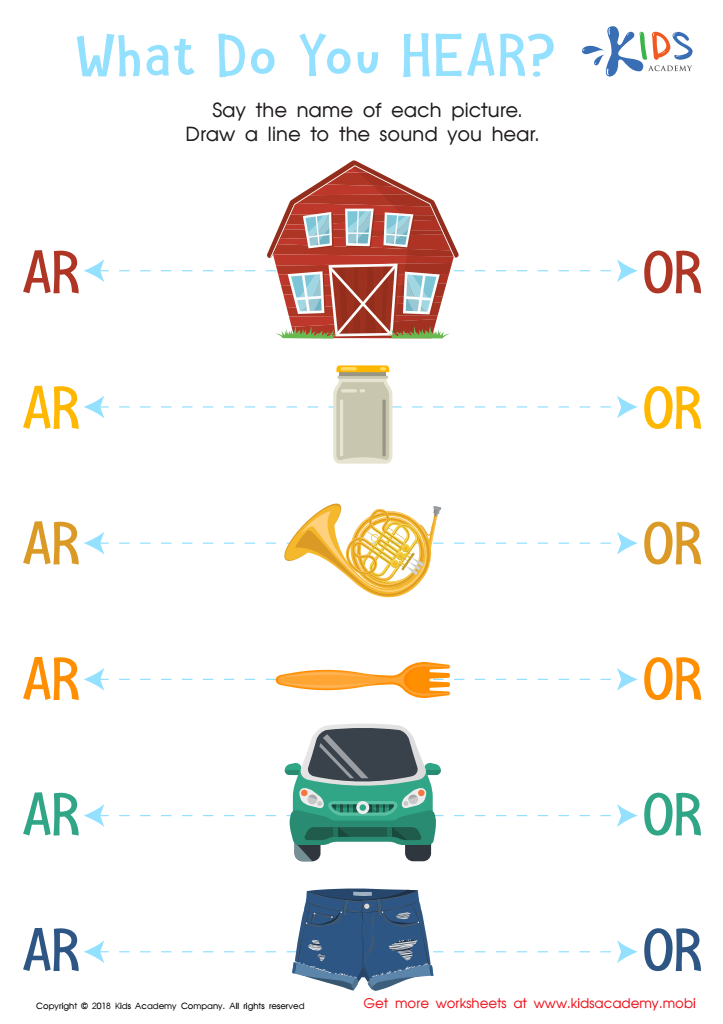
What do you hear Worksheet
Kids can practice distinguishing between r-controlled vowel teams /ar/ and /or/ with this worksheet. The pictures help identify the words and the sounds heard. Tracing a line to the correct sound supports fine motor skills development.
What do you hear Worksheet
Worksheet
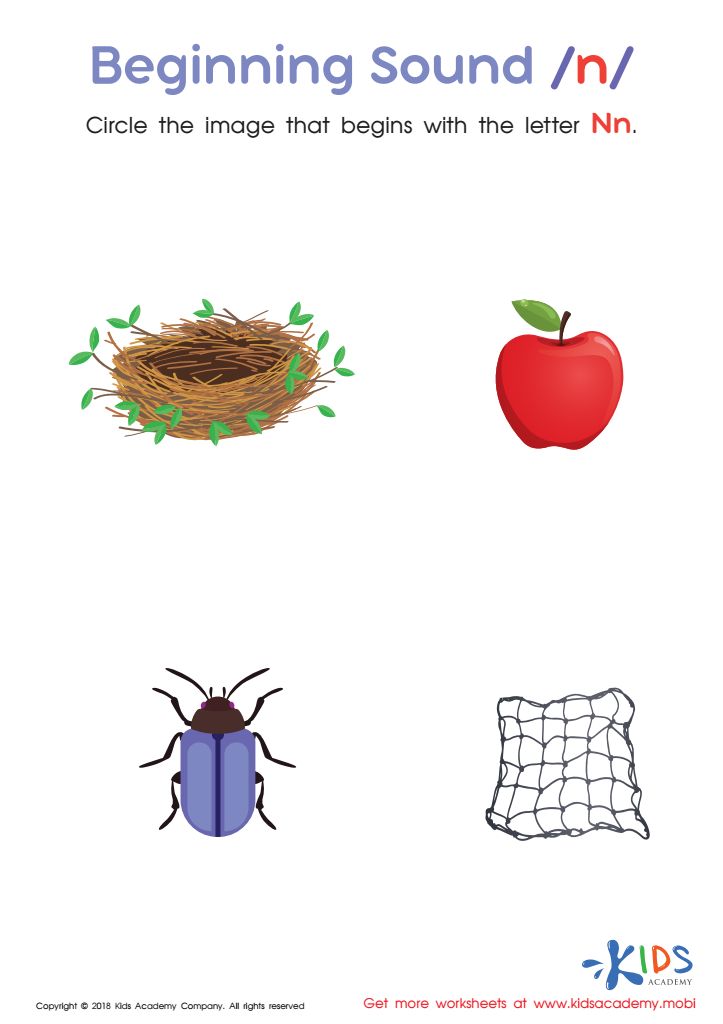
Beginning Sound «n» Worksheet
Help your emerging reader learn the initial «n» sound with this free PDF worksheet! Strengthen fine motor skills by tracing circles around words beginning with «n». Pictures are clear and engaging, giving beginning Phonics learners the right amount of practice and the confidence to succeed.
Beginning Sound «n» Worksheet
Worksheet
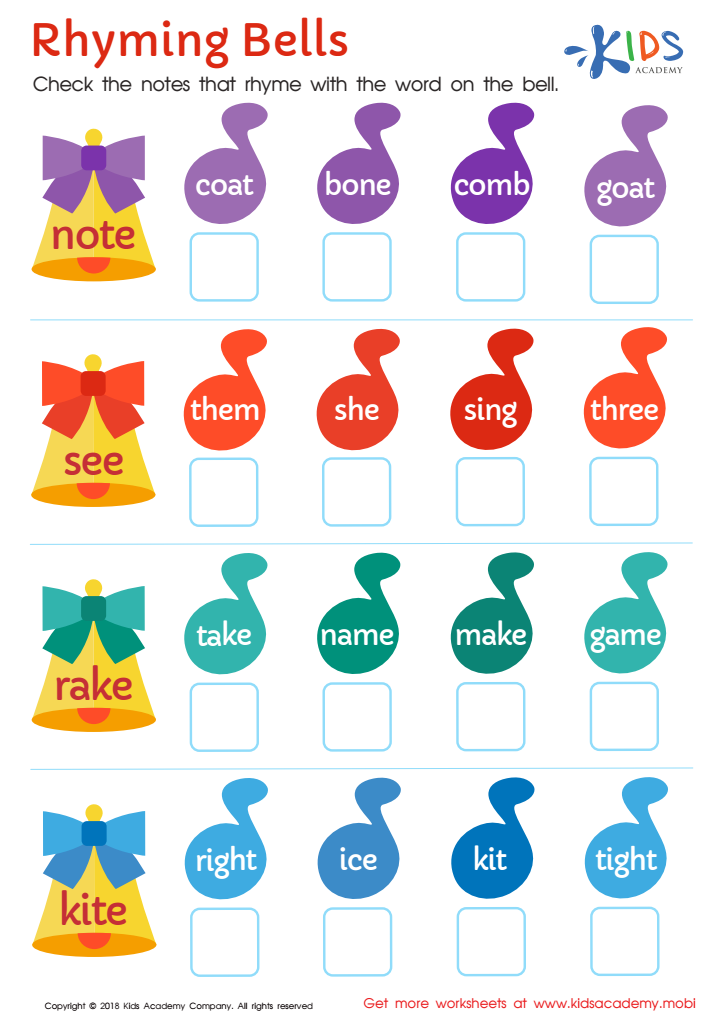
Rhyming Bells Worksheet
This printable worksheet helps students recognize rhyming words. Read a word, then pick the 4 words that rhyme. Look out for words with different spellings but same ending sound. It's a great exercise to improve understanding of rhyming words.
Rhyming Bells Worksheet
Worksheet
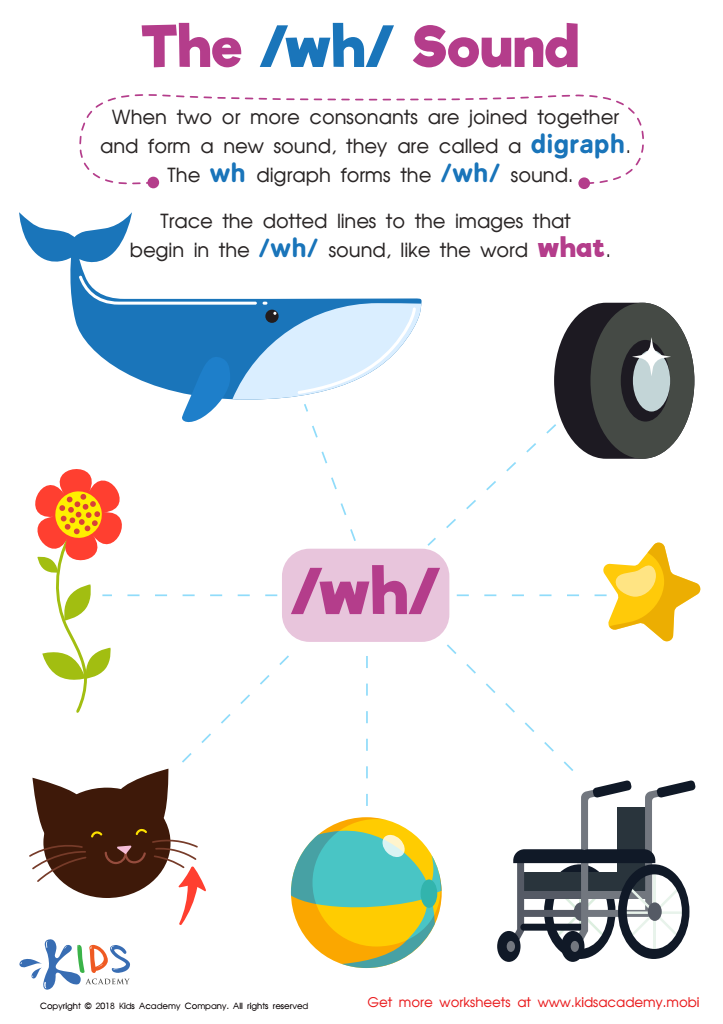
The /wh/ Sound Worksheet
Digraphs join two consonants to make a new sound, like /wh/. Give examples, like "whale", "when" and "why". Ask kids to name pictures in a worksheet and trace dotted lines to images beginning with the /wh/ sound; "what" is one example.
The /wh/ Sound Worksheet
Worksheet
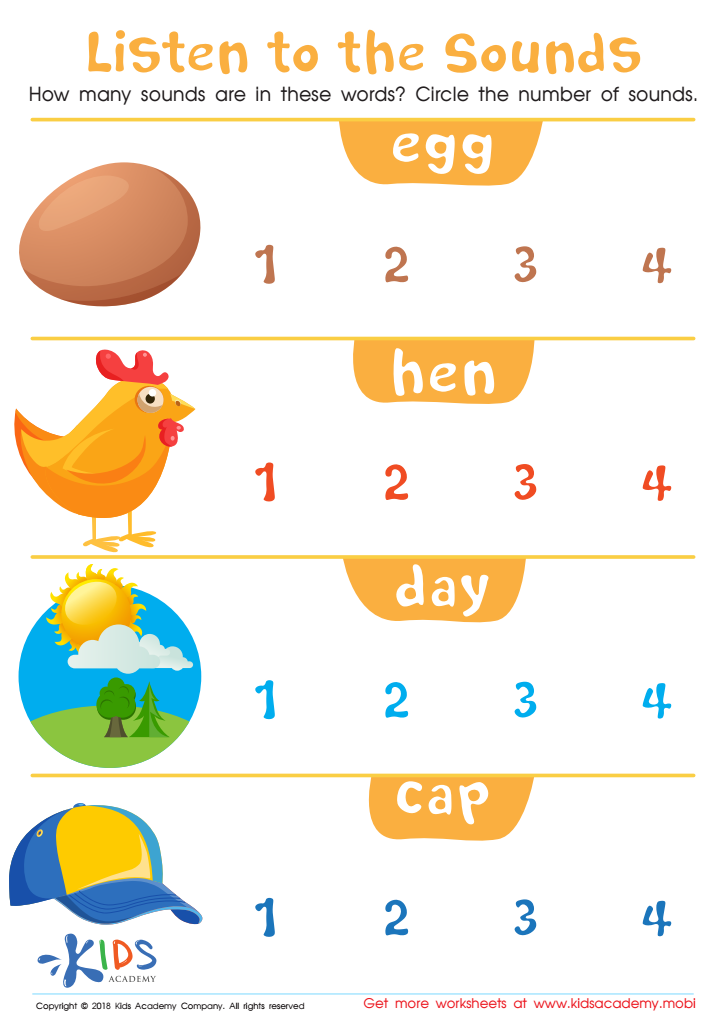
Listen to the Sounds Worksheet
This worksheet builds emerging readers' skills in using sounds for reading and spelling. It helps strengthen auditory processing by having them count the sounds in each word, then trace the corresponding number. Fun and cheerful!
Listen to the Sounds Worksheet
Worksheet
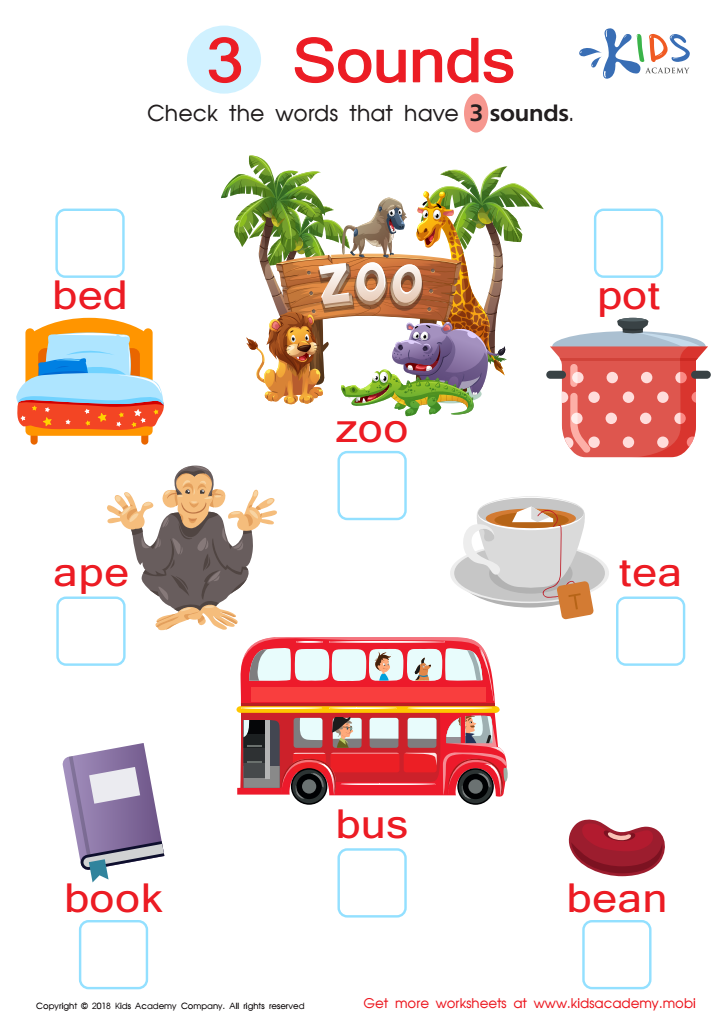
3 Sounds Worksheet
Kids will love learning with this free, colorful worksheet. It's full of familiar words they can name and sound out with three distinct sounds. This helps build decoding skills, plus they get to check off words they read. It's a fun way to teach children to identify and use sounds.
3 Sounds Worksheet
Worksheet
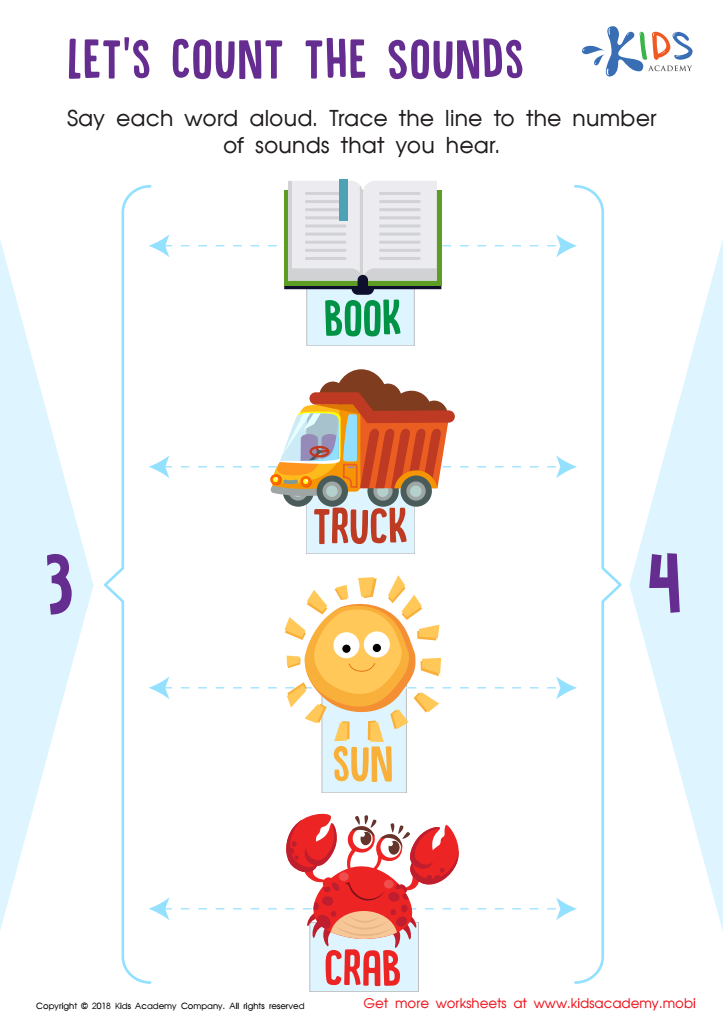
Let's Count the Sounds Worksheet
This bright and cheery traceable worksheet encourages children to practice auditory discrimination and phonological awareness. Using picture clues, they read each word and trace the line that represents the number of sounds heard. This builds decoding skills and helps them become successful readers.
Let's Count the Sounds Worksheet
Worksheet
Join Kids Academy for Free
Who is primarily going to use this learning content?








Sound Association Phonics is essential for children aged 7-8 because it lays the foundation for effective reading and writing skills. At this developmental stage, kids transition from recognizing individual letters to understanding the sounds that letter combinations make. This process, known as phonics, is critical for decoding words, which is the primary method of reading new and unfamiliar words.
Parents and teachers should care about Sound Association Phonics because it significantly impacts literacy outcomes. Students who excel in phonics are more likely to become fluent readers, which boosts their confidence and academic achievement. For instance, when children can effortlessly decode words, they can focus on comprehension rather than struggling with each word they encounter.
Additionally, strong phonics skills can help prevent future reading difficulties. Research shows that early intervention and robust phonics education are crucial for children who might be at risk of reading disorders like dyslexia. By ensuring that children aged 7-8 master sound association, parents, and educators provide them with lifelong advantages in reading, comprehension, and vocabulary.
In summary, Sound Association Phonics is more than just an academic requisite; it’s a critical tool that equips young learners with the skills they need to succeed in their educational journey and beyond.







