Vocabulary development Phonics Worksheets for Ages 7-8
6 filtered results
-
From - To
Enhance your child's vocabulary with our engaging Phonics Worksheets designed specifically for ages 7-8! Our resources focus on vocabulary development, helping young learners build essential language skills. Each printable worksheet offers interactive activities centered around phonics concepts, making learning enjoyable and effective. Students will explore word meanings, practice pronunciation, and strengthen their reading comprehension through various exercises. From fun word puzzles to structured fill-in-the-blank tasks, our worksheets cater to diverse learning styles, promoting confidence in language use. Empower your young scholars to expand their vocabulary and excel in literacy with our carefully crafted phonics resources today!
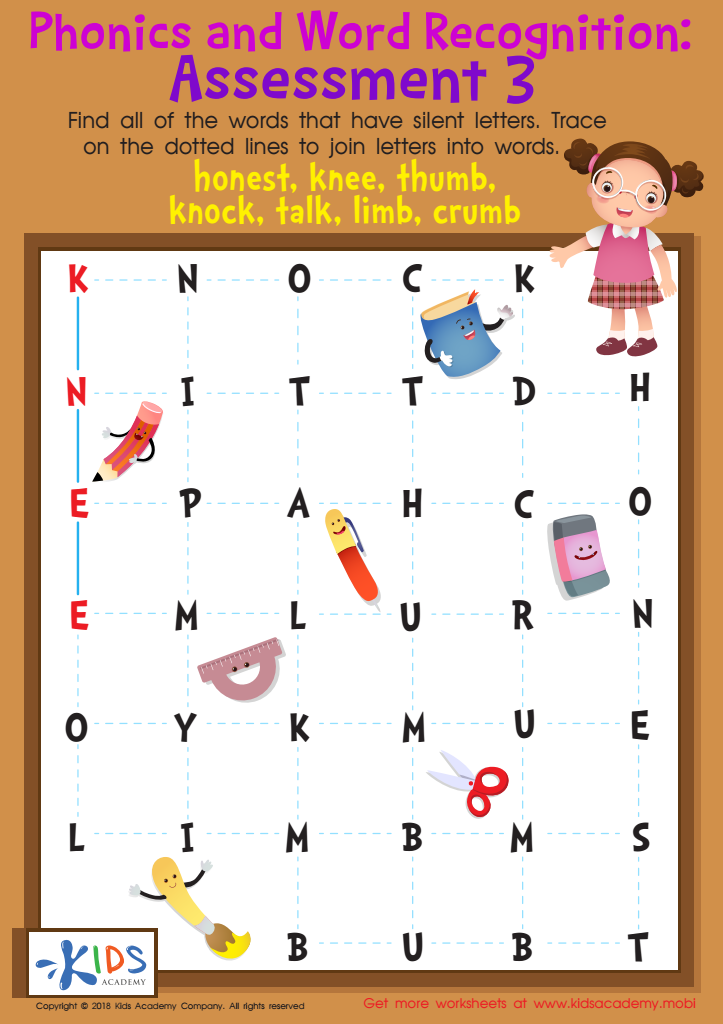
Phonics and Word Recognition: Assessment 3 Worksheet
 Assign to My Students
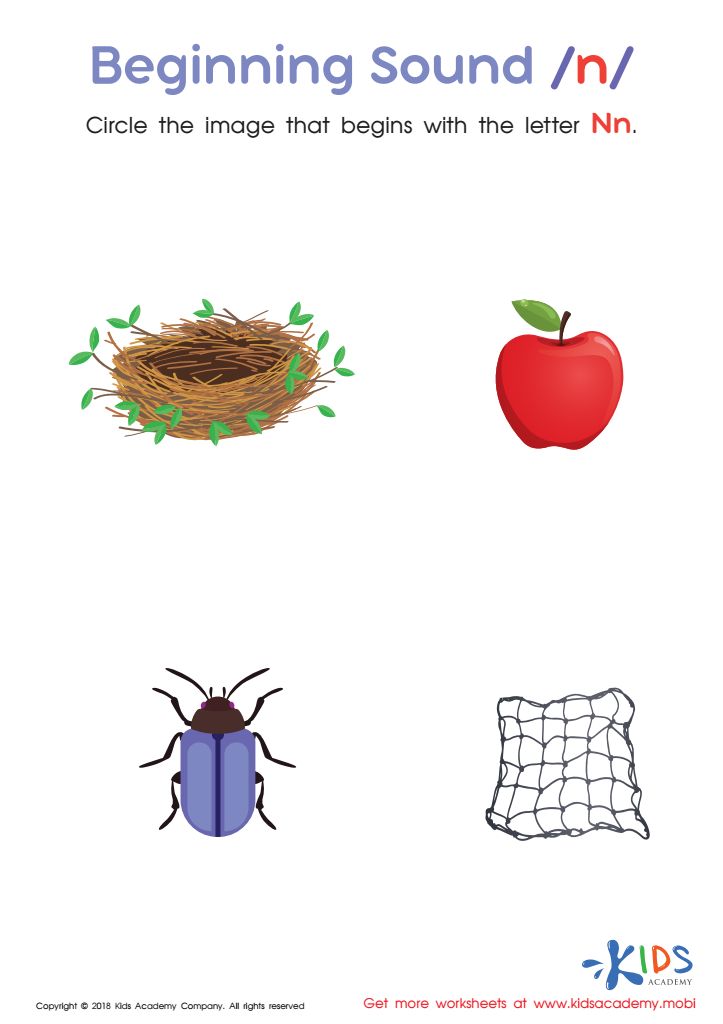
Beginning Sound «n» Worksheet
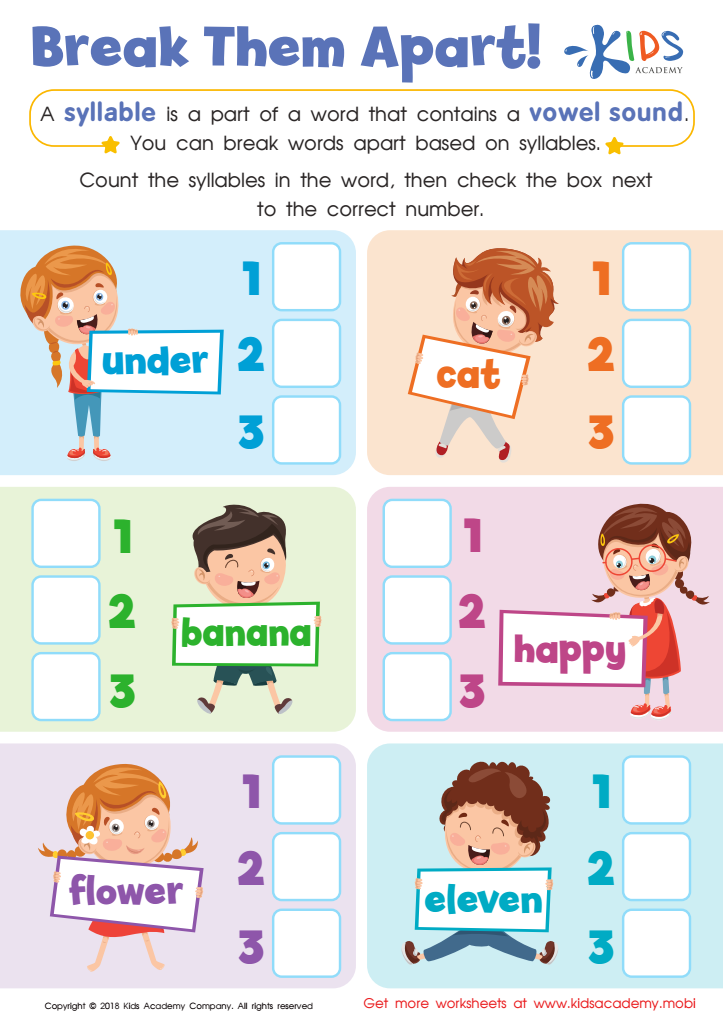
Reading: Break Them Apart Worksheet
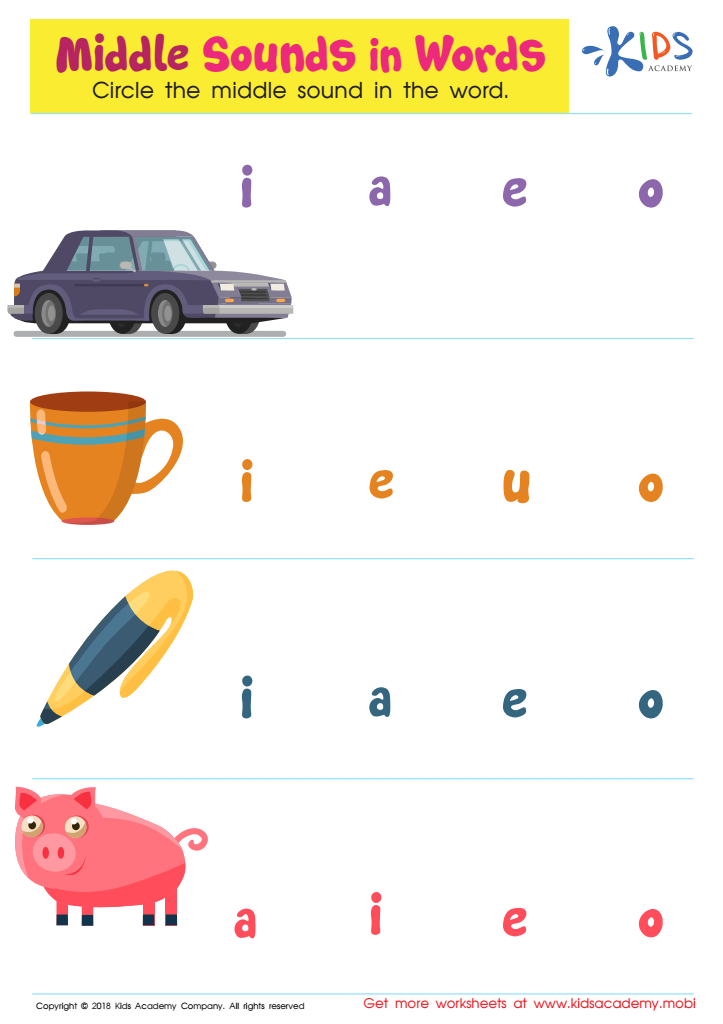
Middle Sounds in Words Worksheet
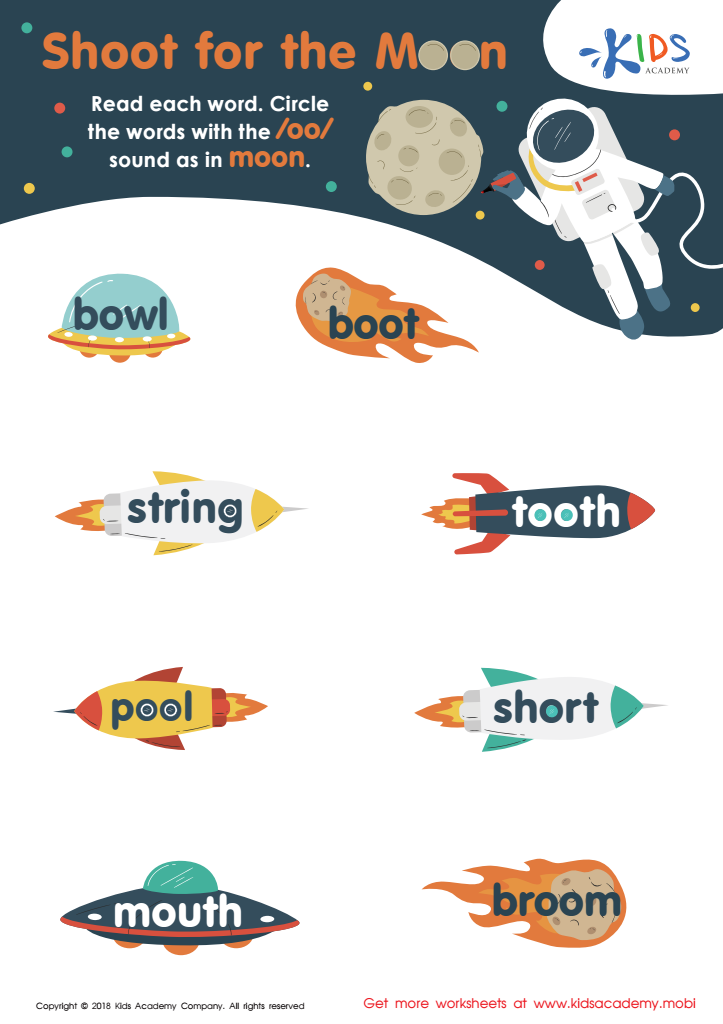
Reading: Shoot for the Moon Worksheet
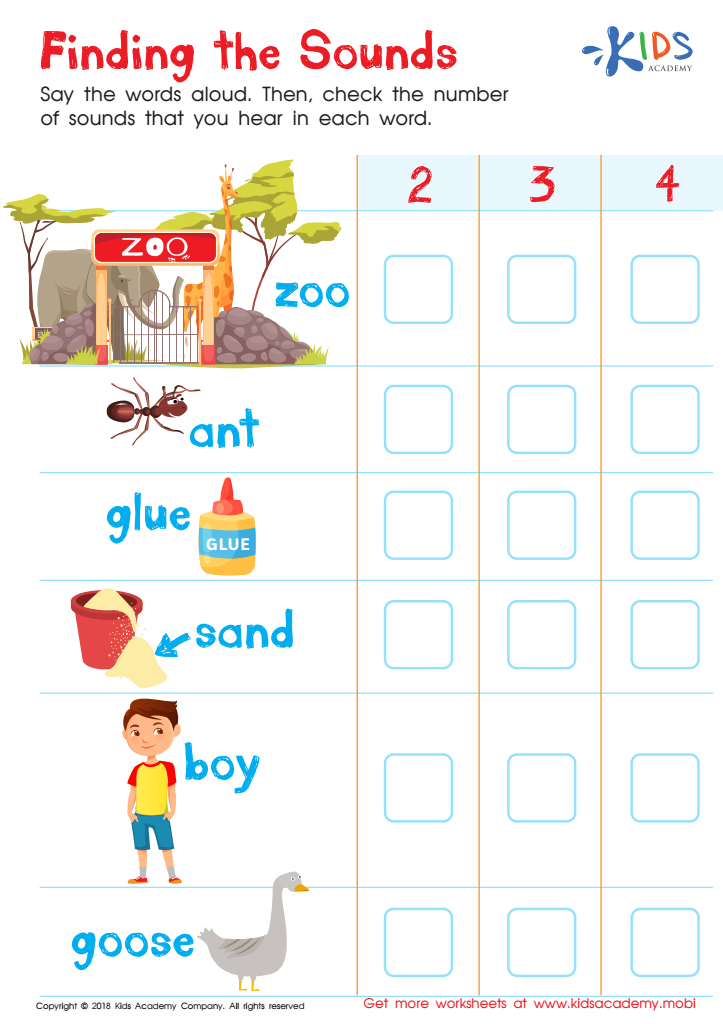
Finding the Sounds Worksheet








Vocabulary development and phonics are crucial components of literacy for children aged 7-8, and parents and teachers should prioritize them for several reasons. At this age, children transition from learning to read to reading to learn. Strong vocabulary skills enable them to comprehend texts more fully, facilitating academic success across subjects. When children have a rich vocabulary, they can express their thoughts and ideas more clearly, improving their writing and communication skills.
Phonics, the method of teaching reading by correlating sounds with letters or groups of letters, plays a vital role in helping children decode new words independently. Mastery of phonics lays the foundation for more advanced reading skills, enhancing fluency and comprehension. Without a solid grasp of phonics, children may struggle with unfamiliar words, limiting their reading experience and confidence.
Additionally, vocabulary development and phonics are linked to broader cognitive skills. Engaging with a diverse vocabulary helps improve critical thinking and problem-solving abilities, while phonics reinforces the connection between sounds and language, aiding overall language development. By cultivating these skills early, parents and teachers can help children become confident, capable readers and enthusiastic learners, setting them up for future academic and personal success.







