Vowel Recognition Short Vowels Worksheets for Ages 7-8
4 filtered results
Difficulty Level
Grade
Age
-
From - To
Subject
Activity
Standards
Enhance your child's literacy skills with our "Vowel Recognition Short Vowels Worksheets" designed for ages 7-8. These engaging worksheets provide focused practice on identifying and using short vowels – a critical early reading skill. Interactive and educational, each worksheet aims to reinforce vowel sounds through fun activities such as matching, coloring, and fill-in-the-blanks. Our expertly crafted exercises support independent learning and build a robust foundation for reading success. Ideal for classroom use or additional at-home practice, these worksheets make learning vowels enjoyable and effective. Cultivate a love for reading with our dynamic vowel recognition resources today!
Favorites
With answer key
Interactive
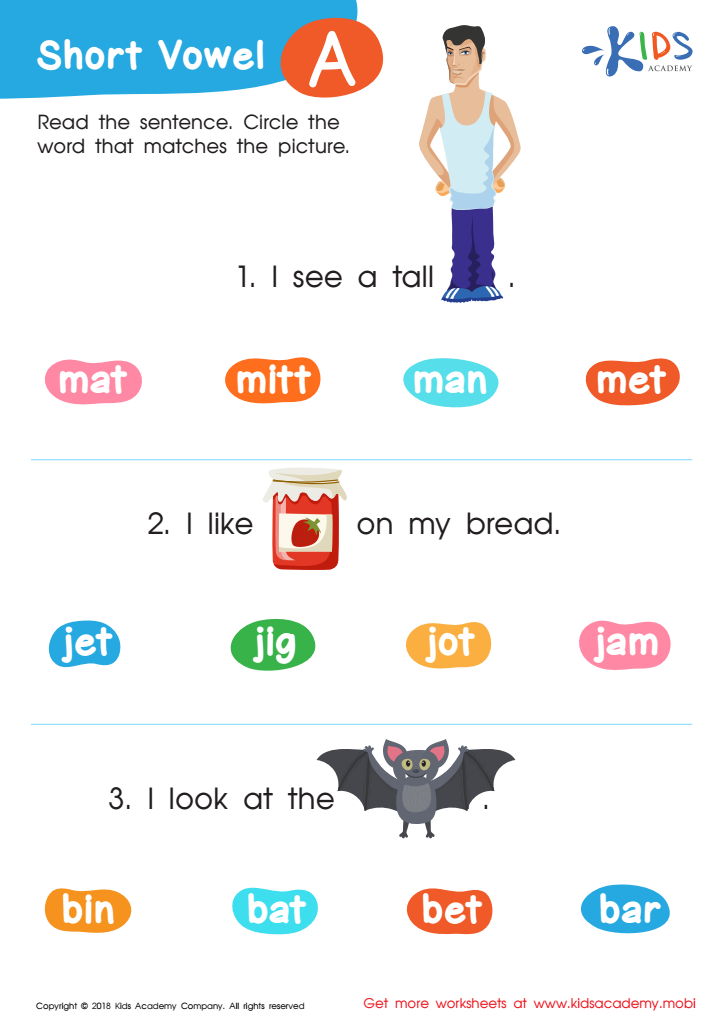
Short Vowel /a/ Worksheet
This free PDF helps new readers use sight words and pictures to read basic sentences. Then, they use accompanying word choices to find the correct word with the short a vowel sound. A key early reading skill, discriminating between short vowel sounds can be tricky in monosyllabic words, so use this PDF to help your reader reinforce it.
 Assign to My Students
Short Vowel /a/ Worksheet
Worksheet
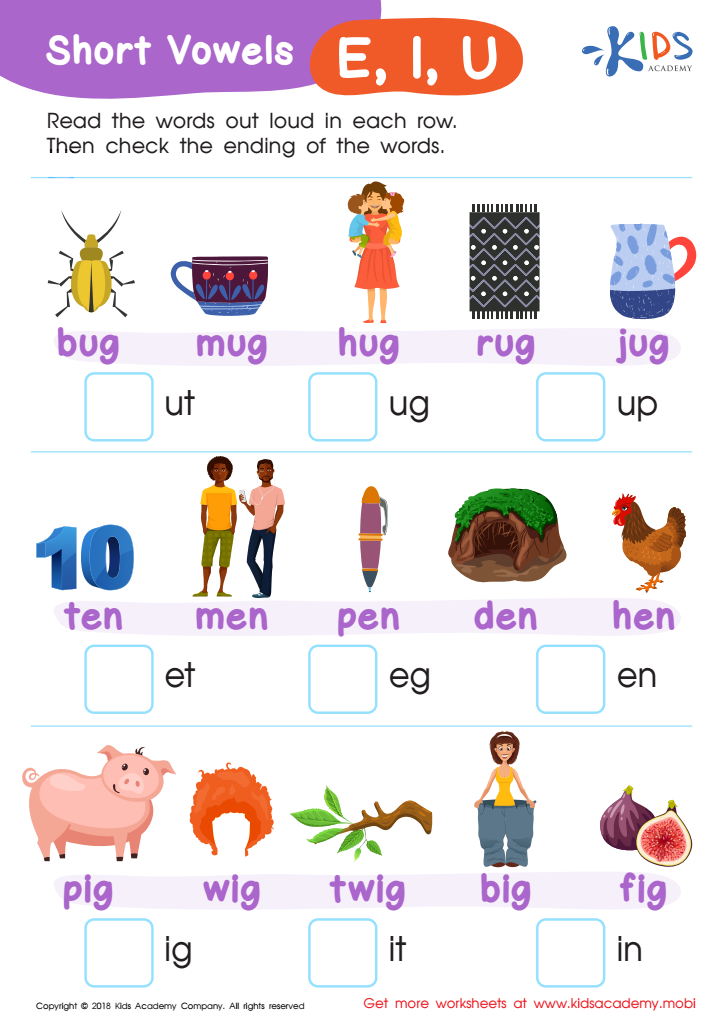
Short Vowels /e/, /i/, and /u/ Worksheet
Your emergent reader can have fun while practicing their short vowel sounds with this free, brightly colored worksheet. They'll identify one-syllable words by their pictures, then match the correct ending for each. They'll gain an understanding of how short vowel sounds vary in closed syllables with different endings, without even realizing it!
Short Vowels /e/, /i/, and /u/ Worksheet
Worksheet
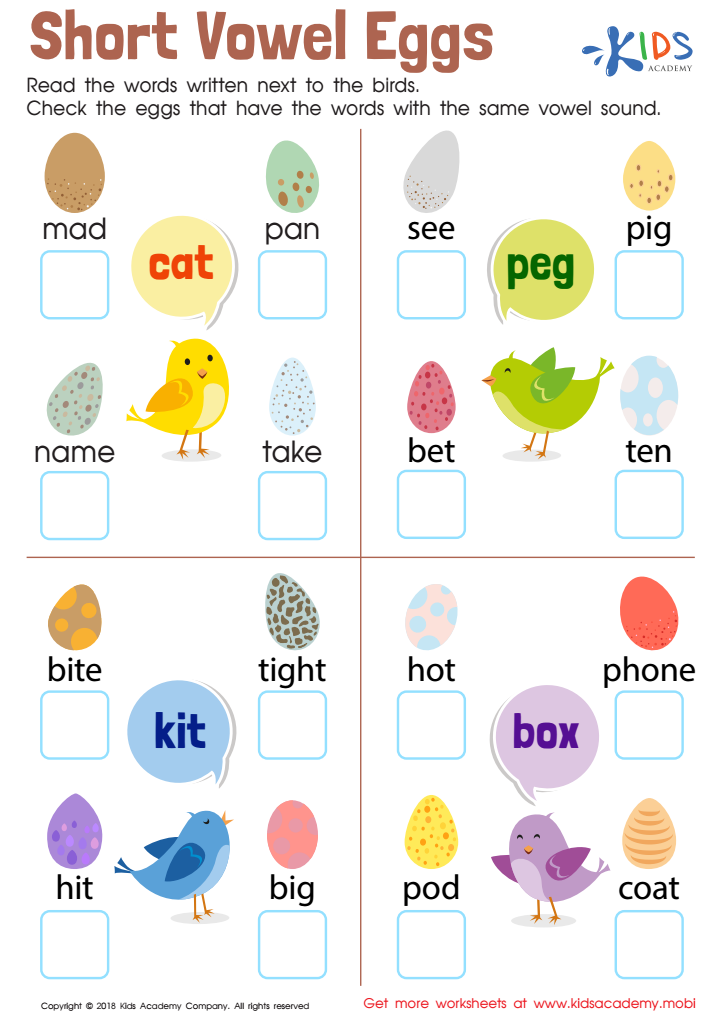
Short Vowel Eggs Worksheet
Your students will love helping these birdies pick the short vowel eggs! Have them read the words in the thought bubbles, then check off the boxes with the same short vowel sounds. The bright colors of this free Worksheet will draw them in and get them practicing their vowels!
Short Vowel Eggs Worksheet
Worksheet
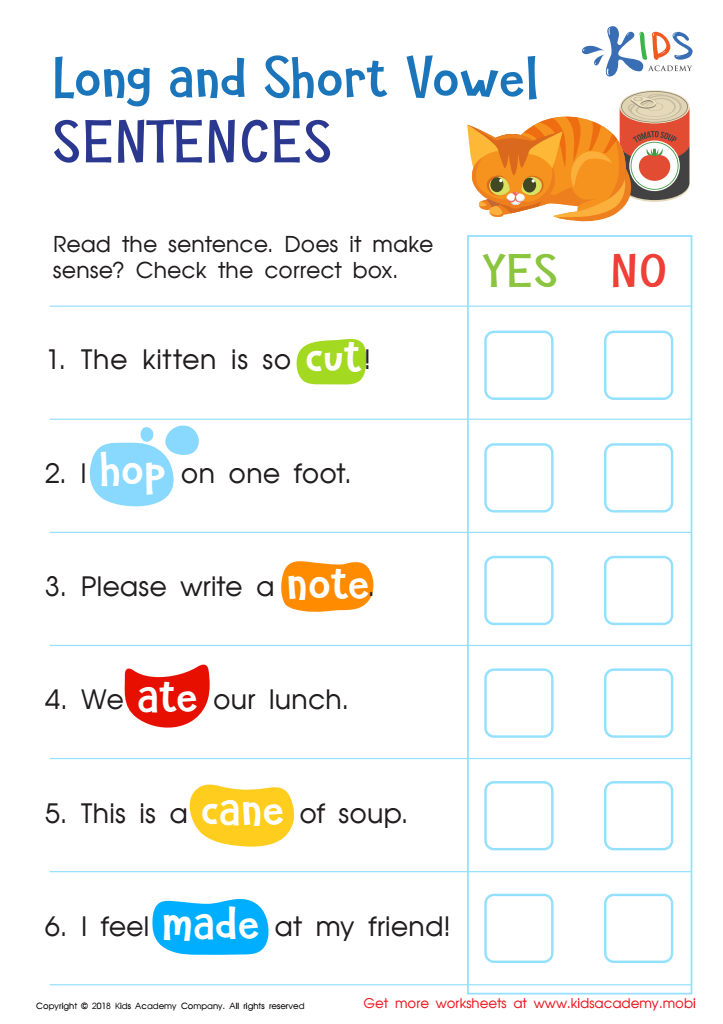
Long and Short Vowel Sentences: Assessment Worksheet
This printable worksheet helps kids practice differentiating between short and long vowel sounds. They'll use context clues to figure out which words make sense in simple sentences. A great way to build reading and writing skills!
Long and Short Vowel Sentences: Assessment Worksheet
Worksheet
Join Kids Academy for Free
Who is primarily going to use this learning content?



Vowel recognition, particularly short vowels, is fundamental for children ages 7-8 as they lay the groundwork for reading fluently and accurately. During these formative years, young readers begin to decode written language, and understanding vowel sounds is key to this process. Short vowels, which include 'a' in "cat," 'e' in "bed," 'i' in "sit," 'o' in "top," and 'u' in "tub," are among the first phonetic elements children encounter.
Proficiency in short vowel recognition enhances phonemic awareness, a critical skill where children learn to hear and manipulate the sounds in spoken words. This, in turn, impacts their ability to blend sounds together to form words and segment them into individual sounds. Both of these skills are directly related to spelling and reading proficiency.
Moreover, early mastery of short vowels paves the way for more complex phonetic skills. For example, distinguishing between similar-looking words (“slip” vs. “slap”) requires an understanding of short vowel sounds. This increases reading comprehension because students can focus on understanding the text rather than decoding each word.
Investing time and resources in vowel recognition sets a solid literacy foundation, fostering confidence and a love for learning. With strong reading skills, children are better equipped to explore wider educational opportunities, leading to overall academic success. Parents and teachers thus play essential roles in emphasizing vowel recognition at this critical developmental stage.