
Letter formation Tracing Letters Worksheets for Ages 7-8
3 filtered results
Difficulty Level
Grade
Age
-
From - To
Subject
Activity
Standards
Enhance your child's handwriting skills with our engaging Letter Formation Tracing Worksheets for ages 7-8! These interactive worksheets are designed to help children master the art of letter formation through fun activities. Each worksheet features both uppercase and lowercase letters, allowing kids to practice and improve their handwriting precision. With a variety of creative exercises, our resources not only make learning enjoyable but also build confidence in writing. Ideal for home or classroom use, these tracing worksheets support essential literacy skills and prepare young learners for advanced writing tasks. Download now and watch your child's writing flourish!
Favorites
With answer key
Interactive

Letter A Tracing Page
Trace and write the letter "A"! Start with the big red dot, then do the capital and lowercase versions. Then write it again with two words - apple and alligator. Download more tracing worksheets at Kids Academy.
 Assign to My Students
Letter A Tracing Page
Worksheet
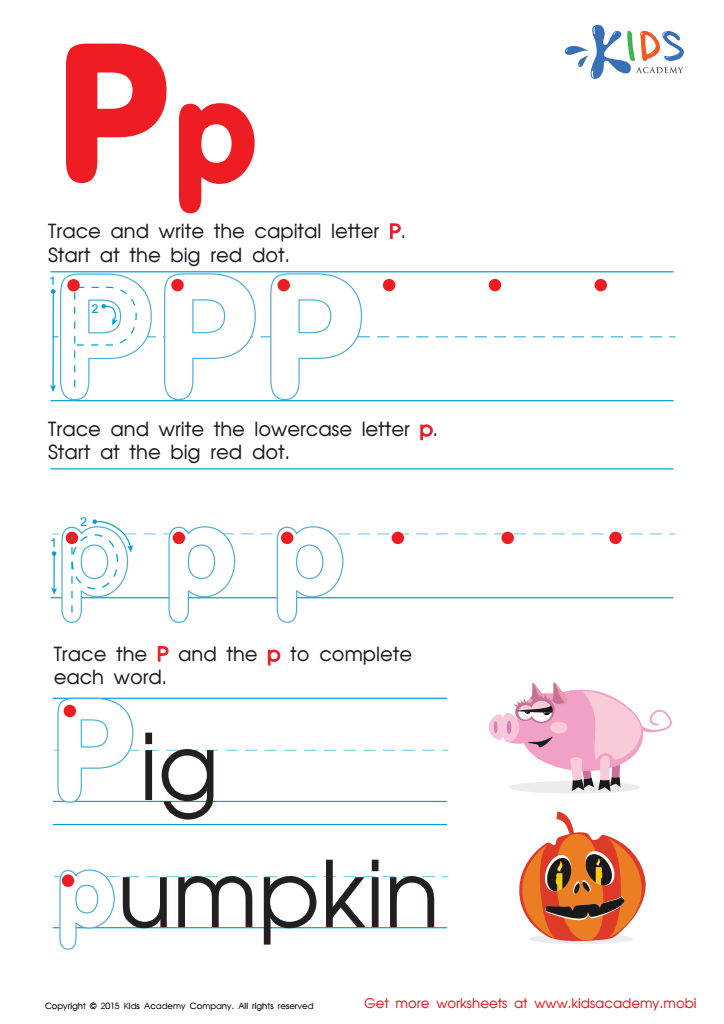
Letter P Tracing Page
Trace the lines from the red dot to learn to write "P"! Then practice this letter with the fun activities: complete the word "Pig" and "Pumpkin". Check out Kids Academy to get more free ABC worksheets.
Letter P Tracing Page
Worksheet
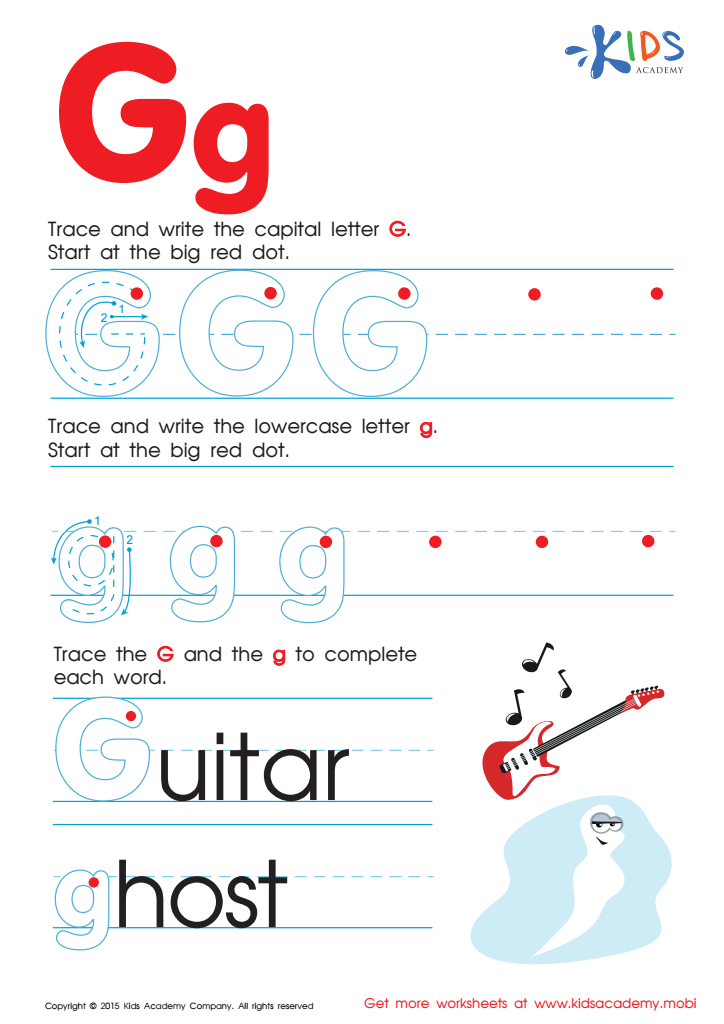
Letter G Tracing Page
Get ready to trace the letter "G" – with a big red spot as the starting point, trace the lines and watch the letter appear. Uppercase and lowercase letters are both easy and fun to write. Give it a go and finish the word "go". Play the guitar and say "hello" to a funny ghost!
Letter G Tracing Page
Worksheet
Join Kids Academy for Free
Who is primarily going to use this learning content?








Letter formation and tracing are crucial skills for children aged 7-8, as they are foundational for developing writing abilities. At this age, children are refining their motor skills, and practicing proper letter formation can enhance their fine motor coordination. Good handwriting fosters confidence, as children take pride in their ability to express thoughts legibly.
Additionally, letter formation sets the stage for effective communication. When children master how letters are shaped and spaced, it leads to clearer, more readable writing, which is essential for academic success. Understanding the nuances of letters also aids in spelling and reading; children can connect sounds to symbols more easily when they are familiar with proper letter construction.
Moreover, engaging in letter tracing provides a fun, interactive way for children to learn. This activity can also serve to reinforce other academic subjects by integrating themes from literacy or art into motor skill development.
Ultimately, parents and teachers who prioritize letter formation understand its long-term implications on a child's educational journey. They help nurture capable, confident writers who can articulate their ideas effectively, setting a positive foundation for future learning endeavors.








