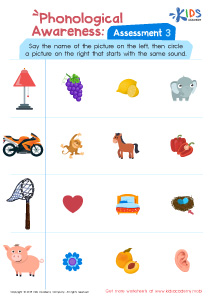
Word Recognition Vowels Worksheets for Ages 7-8
6 filtered results
-
From - To
Boost your child's literacy skills with our engaging Word Recognition Vowels Worksheets tailored for ages 7-8! These interactive activities are designed to help young learners identify and understand vowel sounds, an essential component of reading fluency. Each worksheet features a variety of exercises that promote word recognition through fun games, matching activities, and fill-in-the-blank scenarios. With colorful illustrations and age-appropriate language, these worksheets not only make learning enjoyable but also reinforce critical phonetic skills. Ideal for homeschooling or classroom use, our materials provide an excellent way for children to build confidence in their reading capabilities. Dive into a world of vowels today!
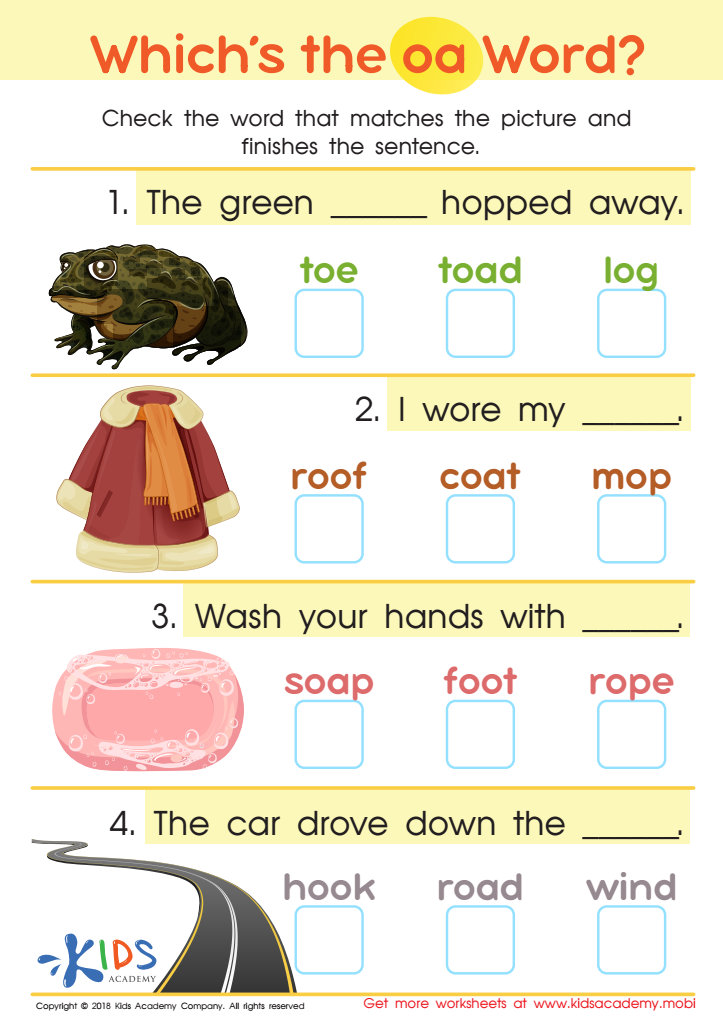
Which's the OA Word? Worksheet
 Assign to My Students
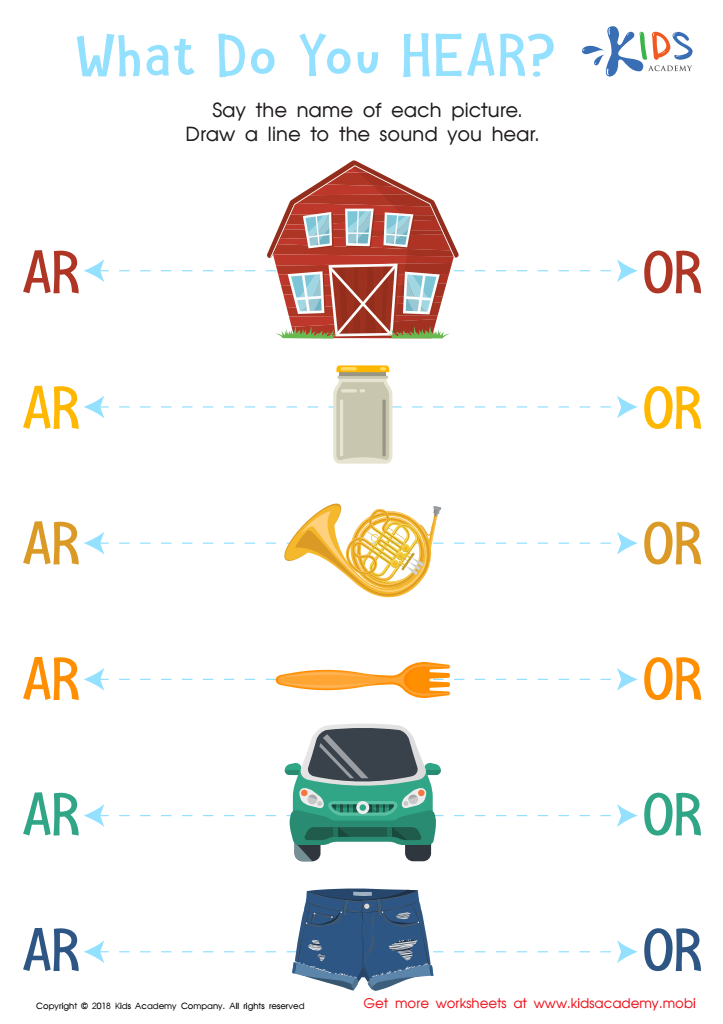
What do you hear Worksheet
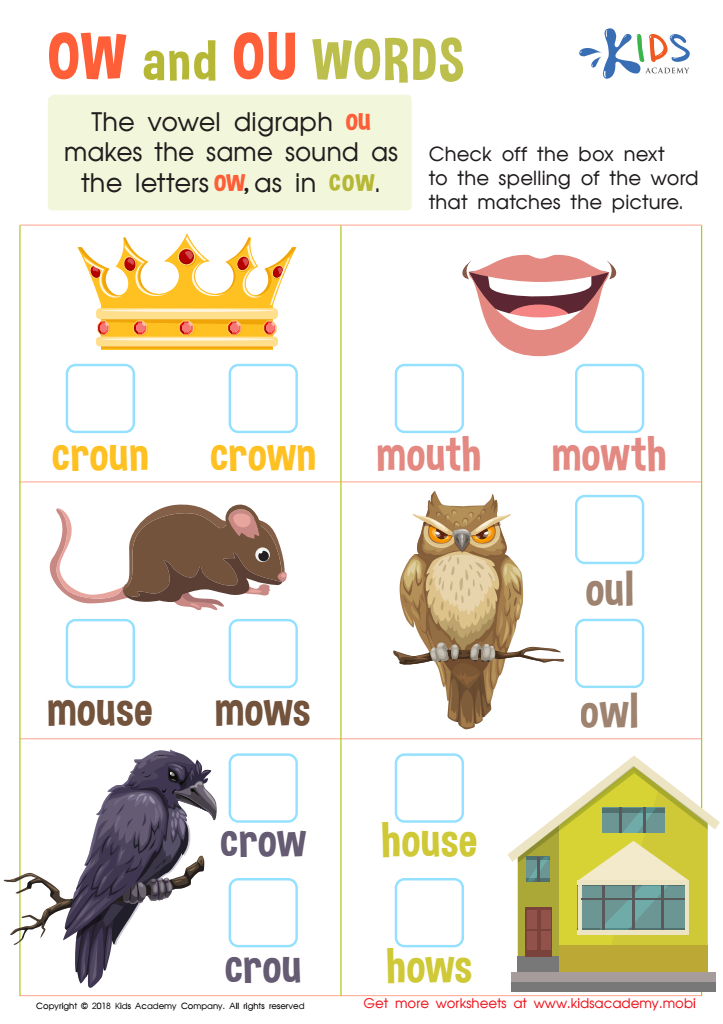
Reading: OW and OU Words Worksheet
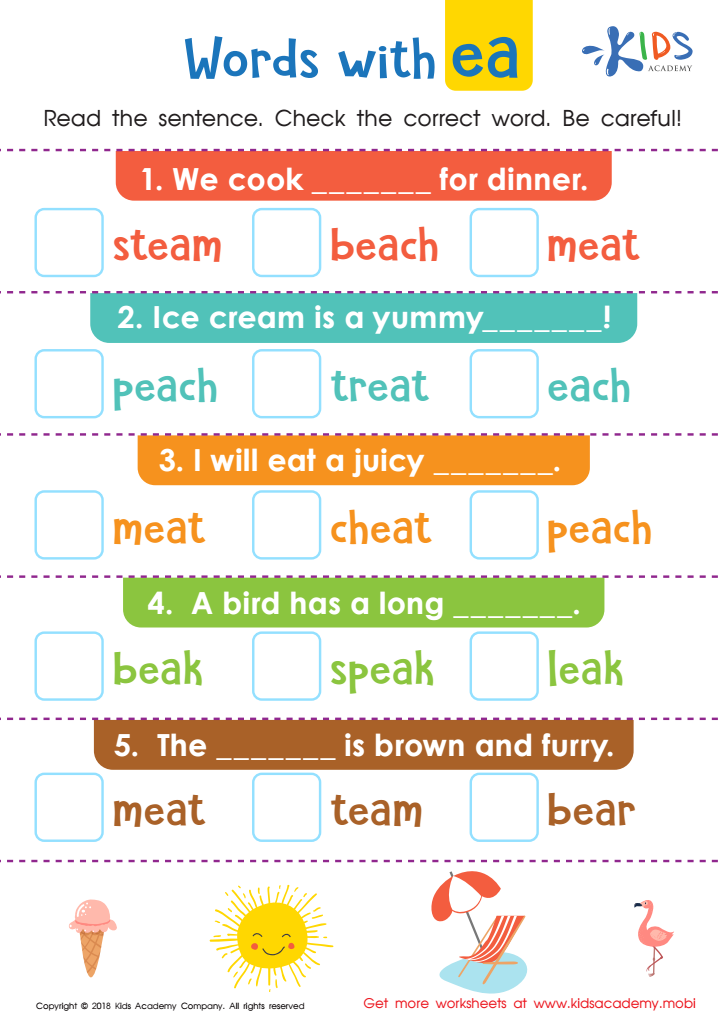
Words with ea Worksheet
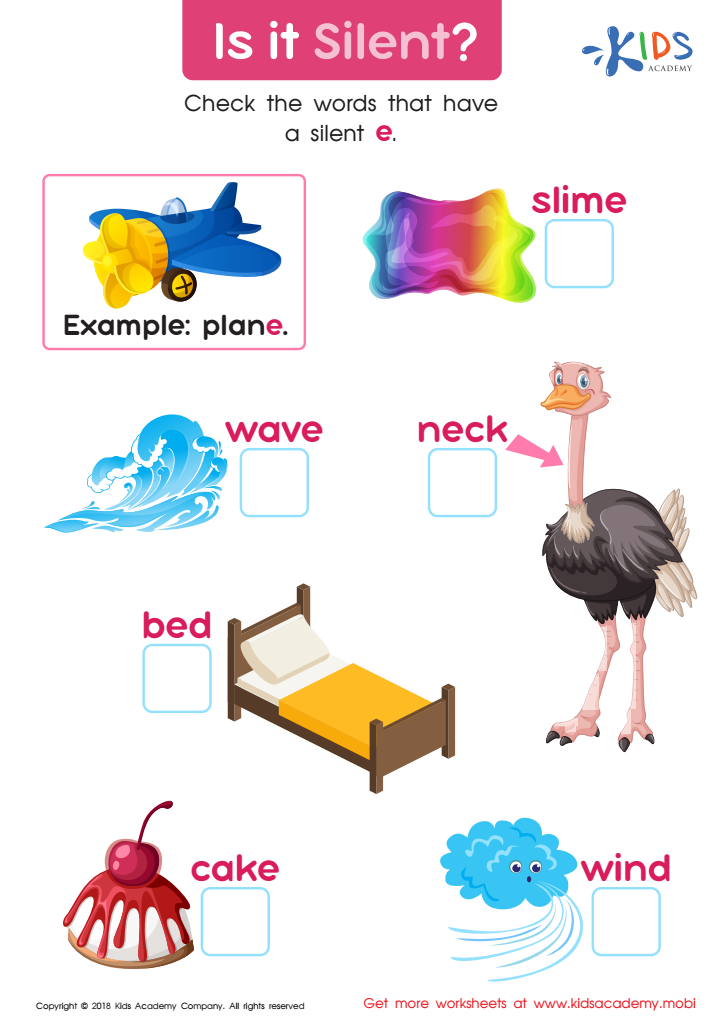
Is It Silent? Worksheet
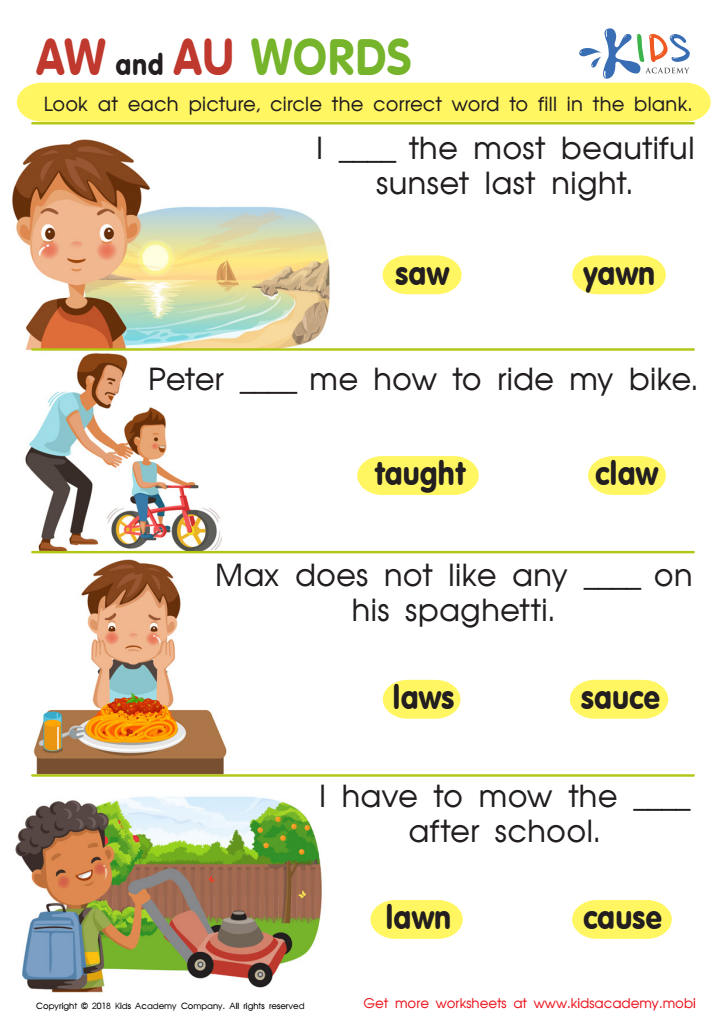
Reading: AW and AU Words Worksheet





Word recognition, particularly focusing on vowels, is crucial for children aged 7-8 as they continue to develop foundational reading skills. At this age, children are transitioning from learning to read to reading to learn. Recognizing vowels and understanding their sounds significantly impacts this transition. Vowels, being the cornerstone of most words, play a critical role in word formation and pronunciation.
Teachers and parents should care about vowel recognition because it enhances fluency and comprehension. When children can easily identify and articulate vowel sounds, they become more confident readers, which positively influences their overall literacy development. Activities that promote vowel recognition can also foster exciting phonemic awareness, where children learn how sounds form words, leading to advanced reading strategies in the future.
Furthermore, strong word recognition skills assist children in various subjects as reading is integral across the curriculum. By nurturing these skills, parents and teachers lay a robust foundation for children's educational journeys, ensuring they become proficient readers who can engage with texts critically.
Investing time and effort in vowel recognition training not only cultivates strong readers but also enriches vocabulary, which is essential for effective communication skills. Thus, focusing on word recognition vowels is vital for long-term academic success.