Chess knowledge Chess Worksheets for Ages 7-8
3 filtered results
-
From - To
Unlock the strategic mind of your 7-8-year-olds with our engaging Chess Knowledge Worksheets! Designed to make learning chess fun and accessible, these worksheets boost critical thinking, problem-solving, and concentration by turning complex chess concepts into simple and interactive activities. Step-by-step instructions, vibrant visuals, and age-appropriate exercises guide young learners through foundational rules, tactics, and strategies in chess. Perfect for both beginners and aspiring grandmasters, our worksheets help kids develop essential skills while enjoying the classic game of chess. Ignite your child's passion for chess and enhance their cognitive abilities with our Chess Knowledge Worksheets today!
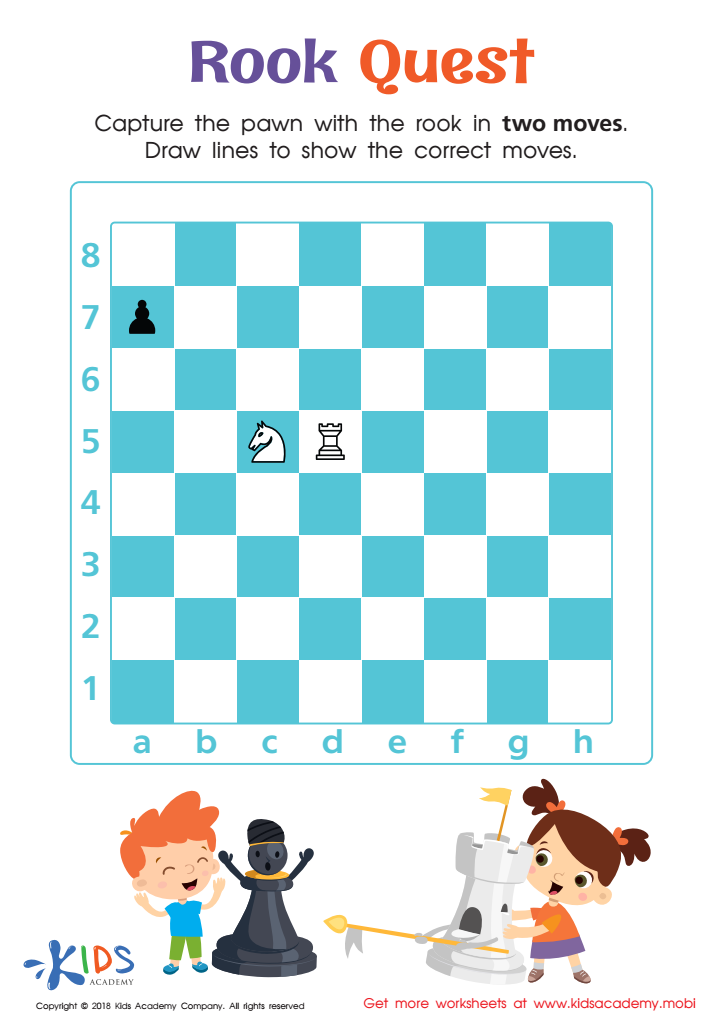
Rook Quest Worksheet
 Assign to My Students
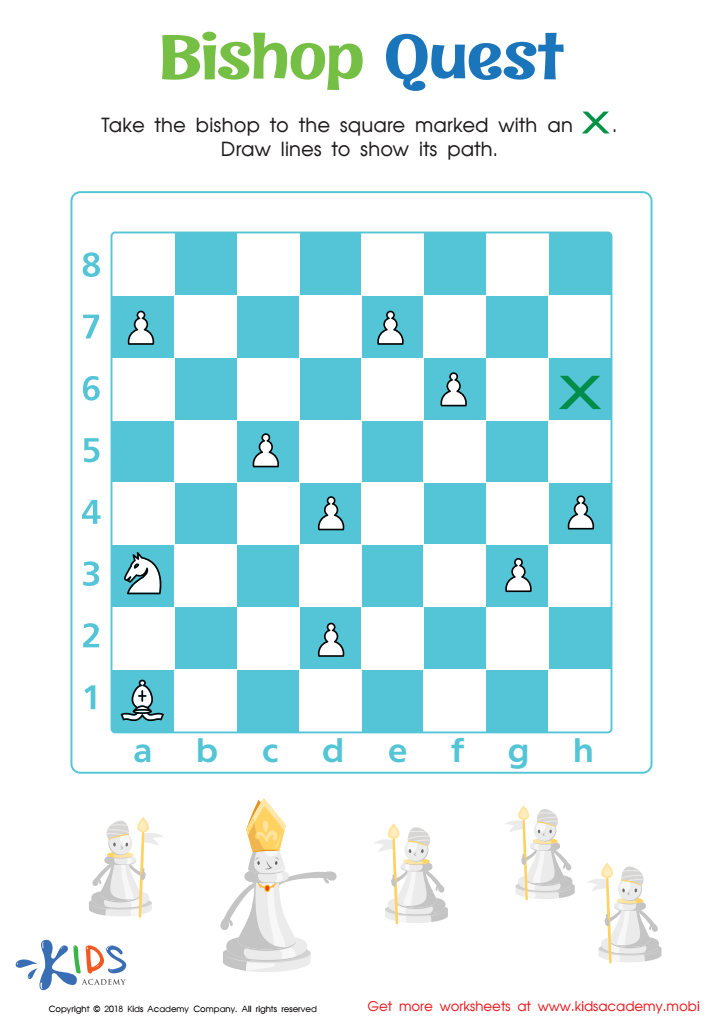
Bishop Quest Worksheet
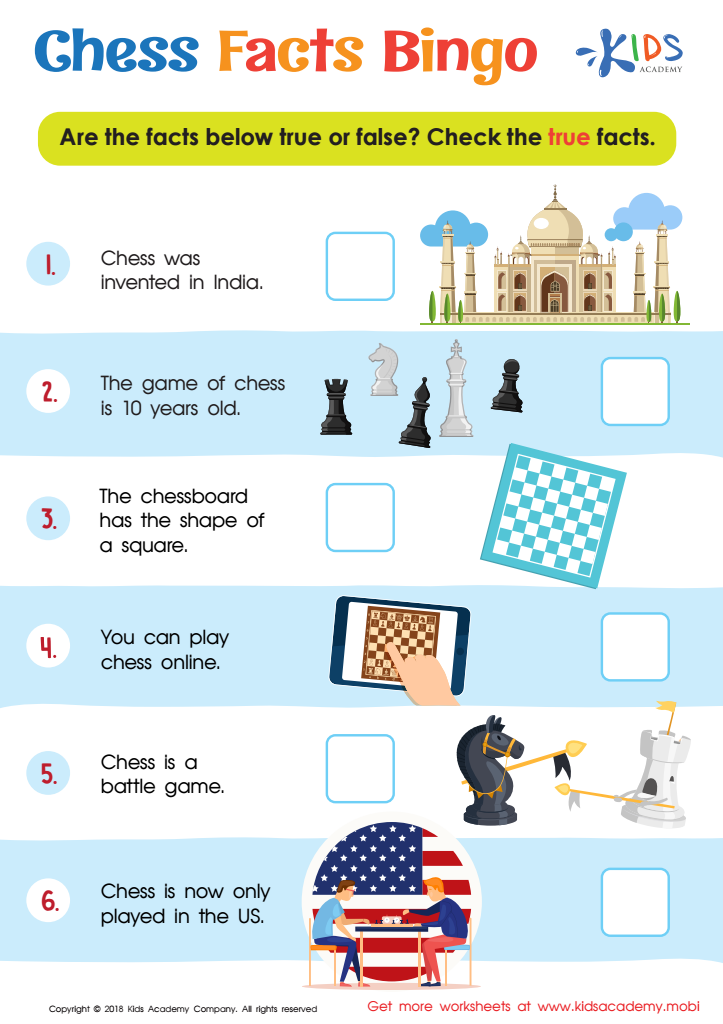
Chess Facts Bingo Worksheet








Chess is an incredible tool for developing young minds, particularly in children aged 7-8. Not only is it enjoyable, but it offers numerous cognitive and academic benefits. Learning chess fosters critical thinking and problem-solving skills as children have to anticipate their opponent's moves and formulate strategic responses. These skills extend beyond the chessboard and can improve performance in math and reading comprehension.
Moreover, chess enhances concentration and attention span. Because a single mistake can dramatically affect the outcome, children quickly learn the importance of focus and careful deliberation. This dedication is foundational for academic success and beyond.
Chess also cultivates patience and resilience. Games can often be long and intellectually demanding, teaching kids the value of perseverance and that failure can be just a step toward improvement and future success. These emotional skills are crucial for overall well-being and adaptability in various life situations.
Socially, chess encourages peer interaction. Kids often play with friends or join chess clubs, enriching their social experience by learning to communicate and cooperate in a structured setting. Parents and teachers who encourage chess are essentially providing children with a fun activity that builds essential life skills that last a lifetime.