Cognitive Development Chess Worksheets for Ages 7-8
5 filtered results
-
From - To
Enhance your child's cognitive development with our engaging Chess Worksheets designed specifically for ages 7-8! These unique resources promote critical thinking, problem-solving, and strategic reasoning skills through fun chess-themed activities. Our carefully curated worksheets encourage children to analyze situations, make decisions, and develop their personal strategies on and off the chessboard. Ideal for both classroom and home environments, these worksheets provide a combination of challenges that cater to various learning styles, ensuring an interactive experience. Explore the world of chess and watch your child's cognitive abilities flourish as they master this timeless game! Download and enrich their learning journey today!
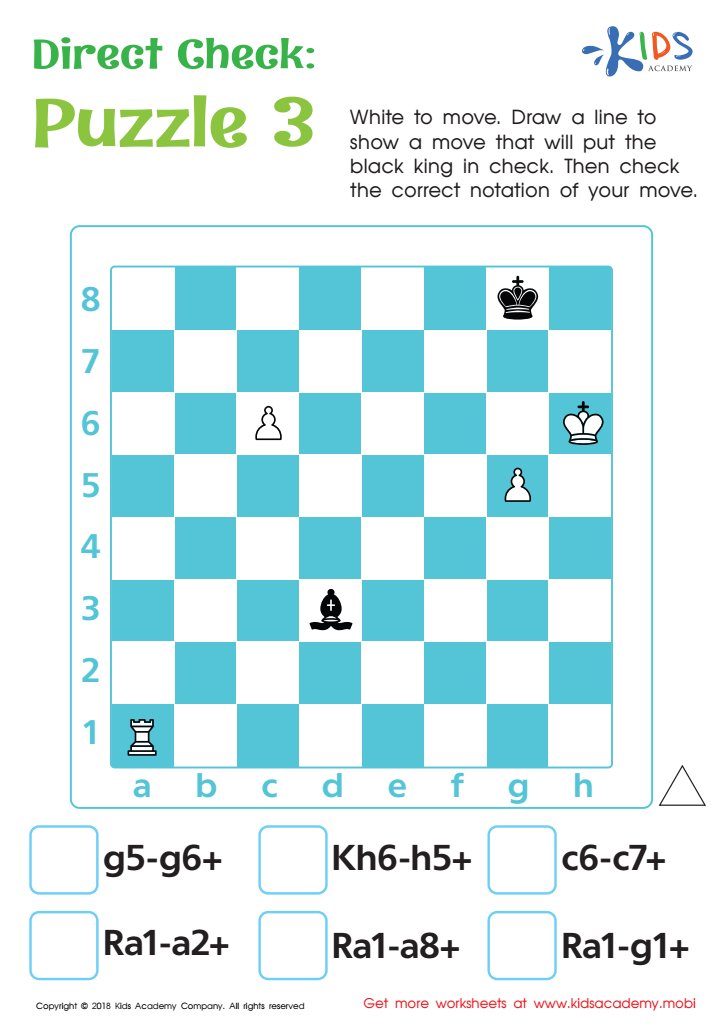
Direct Check: Puzzle 3 Worksheet
 Assign to My Students
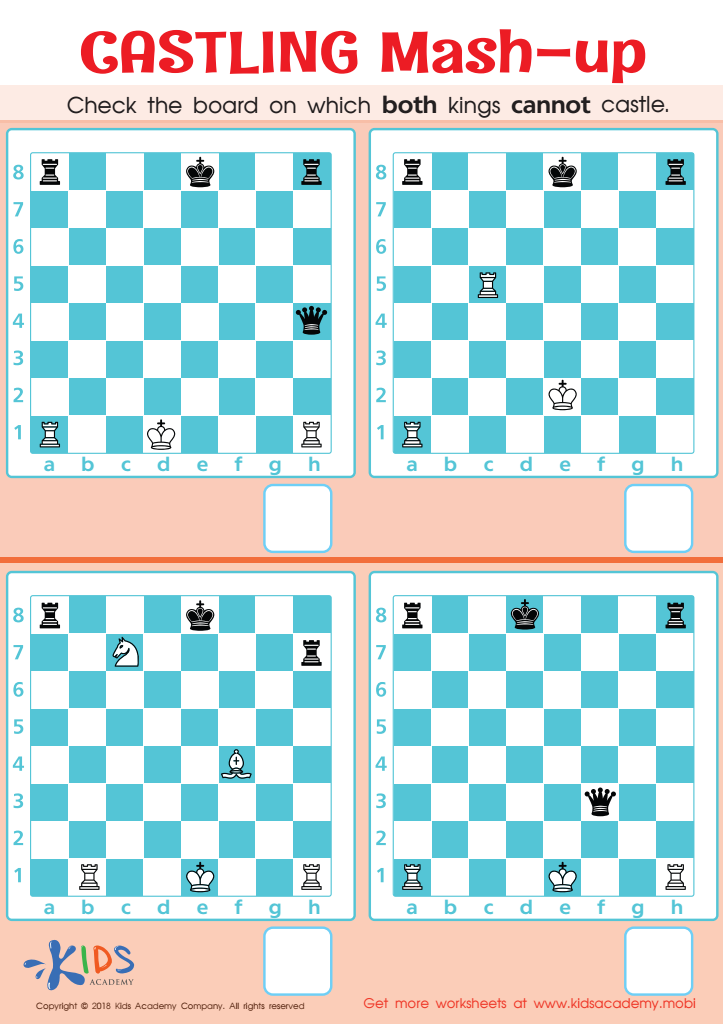
Castling Mash–up Worksheet
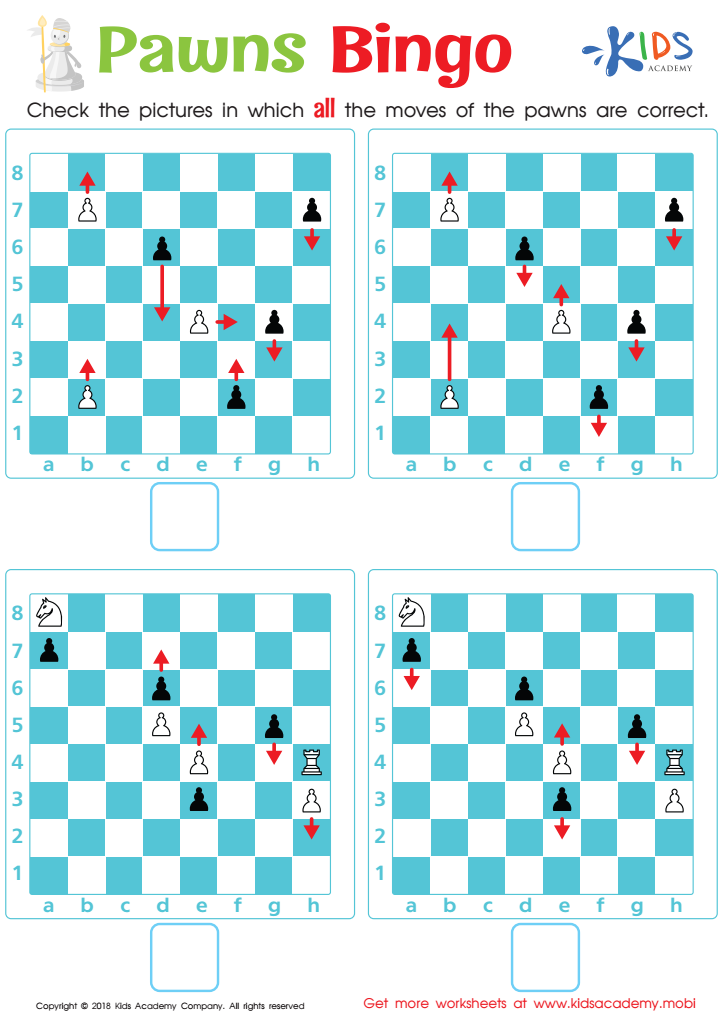
Pawns Bingo Worksheet
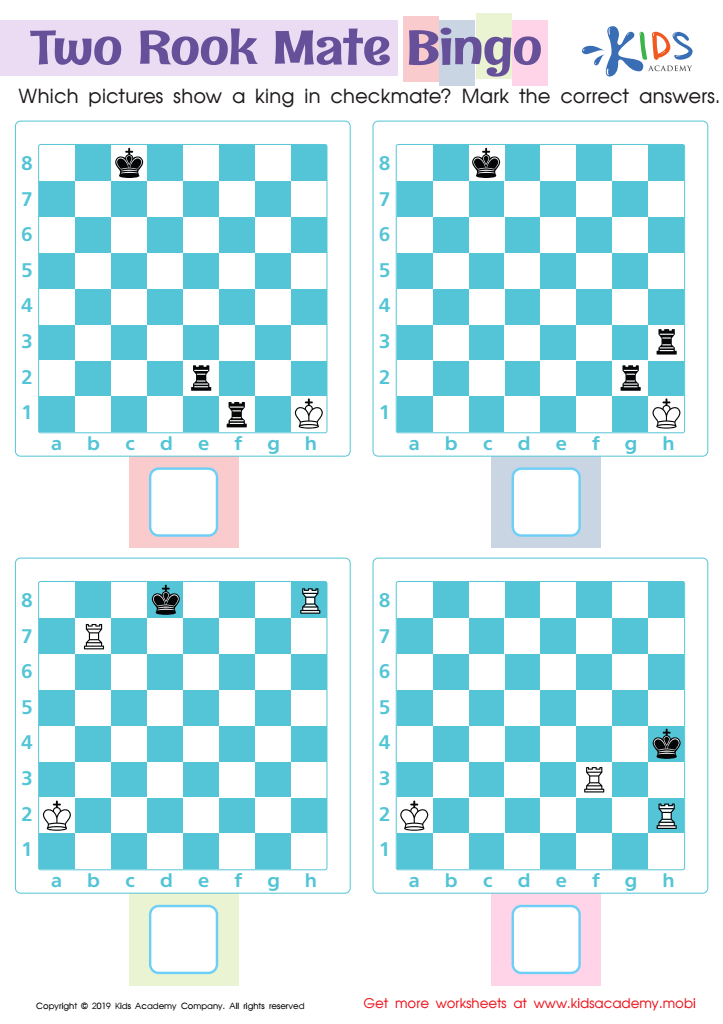
Two Rook Bingo Worksheet
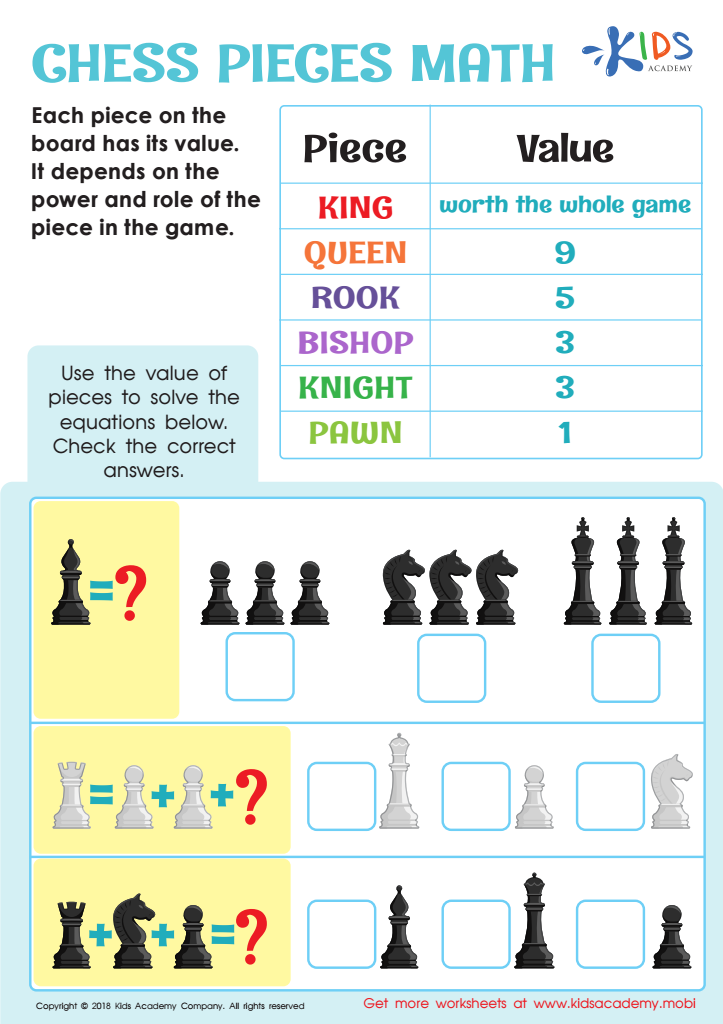
Chess Pieces Math Worksheet








Cognitive development is critical during the ages of 7-8, as children experience significant growth in their thinking and problem-solving skills. Introducing chess to this age group can be profoundly beneficial. Chess not only enhances cognitive skills like critical thinking, creativity, and spatial reasoning but also nurtures a sense of discipline and patience.
At this stage, children's brains are particularly plastic, making them highly receptive to new strategies and ideas. Playing chess can help them learn to anticipate and evaluate multiple outcomes, thereby improving decision-making abilities. As they engage in gameplay, children develop strategic thinking and learn to plan ahead, which can have positive implications for their academic pursuits.
Furthermore, chess fosters social skills, as it involves interaction with peers and teaches sportsmanship, encouraging an understanding of fair play and healthy competition. Learning to face both victories and defeats can help build resilience.
For educators and parents seeking to enrich their child’s learning experience, incorporating chess offers a fun and intellectually stimulating tool that can complement their overall cognitive and social development. Overall, the skills gained through chess can bolster not only academic performance but also overall life competencies.