Number Recognition Chess Worksheets for Ages 7-8
4 filtered results
-
From - To
Enhance your child's number recognition skills with our engaging Number Recognition Chess Worksheets for Ages 7-8! These thoughtfully designed printable worksheets merge the strategic world of chess with foundational math skills. Your child will practice identifying and writing numbers while exploring various chess pieces and their movements. These fun activities not only promote numerical understanding but also encourage critical thinking and problem-solving. Ideal for home or classroom use, our worksheets cater to different learning styles, making math enjoyable and interactive! Visit us today to help your young learners develop essential skills while enjoying the exciting game of chess!
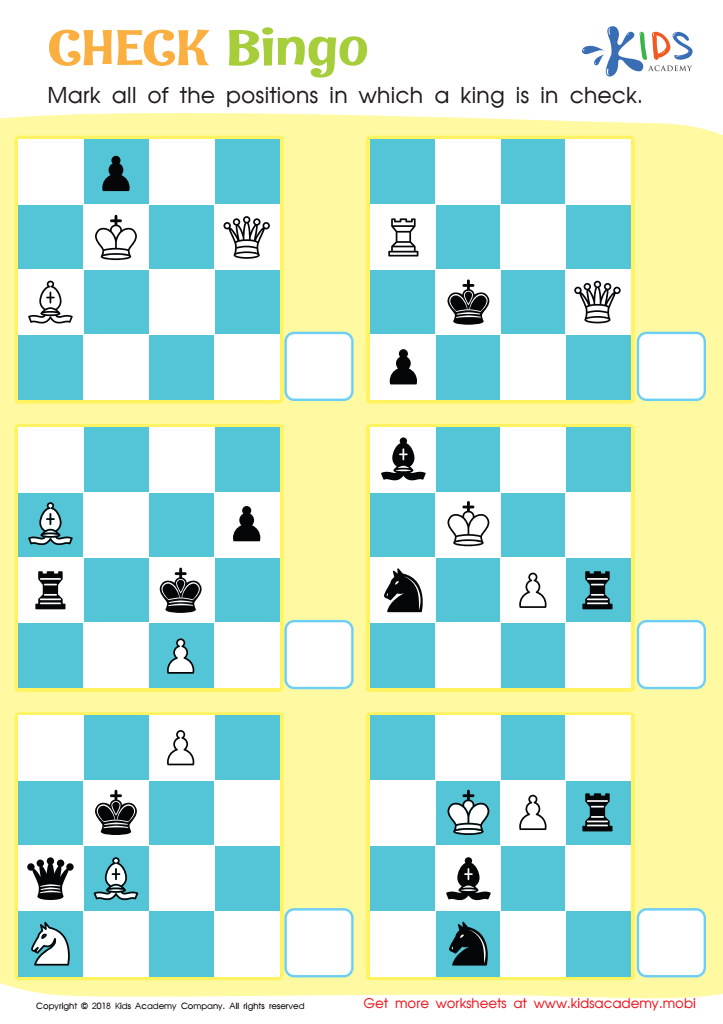
Check Bingo Worksheet
 Assign to My Students
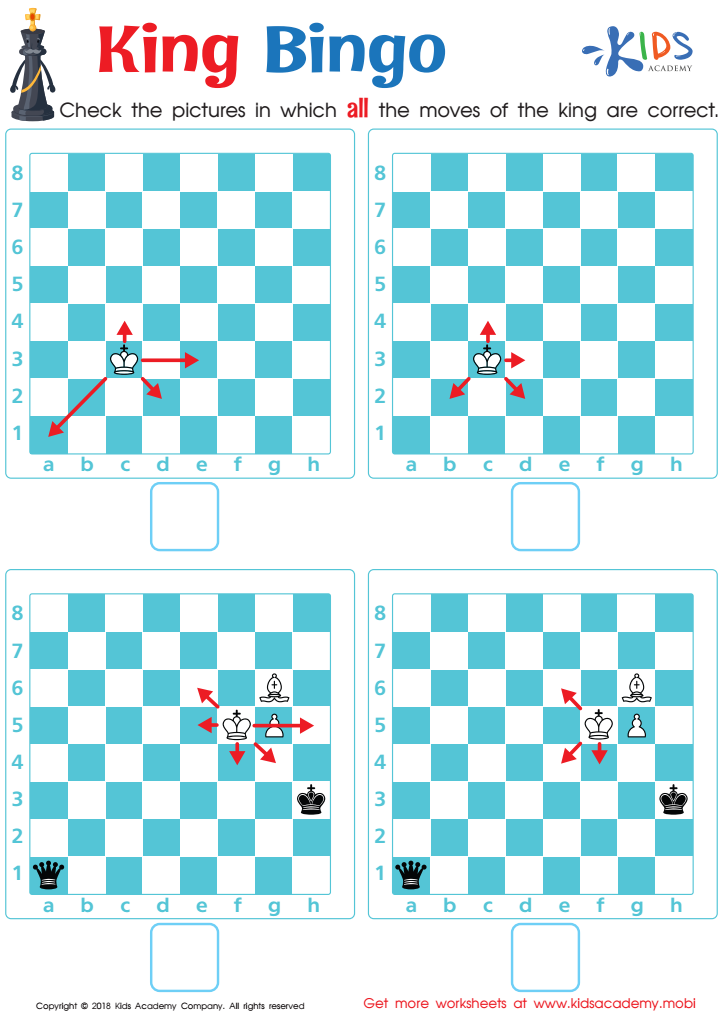
King Bingo Worksheet
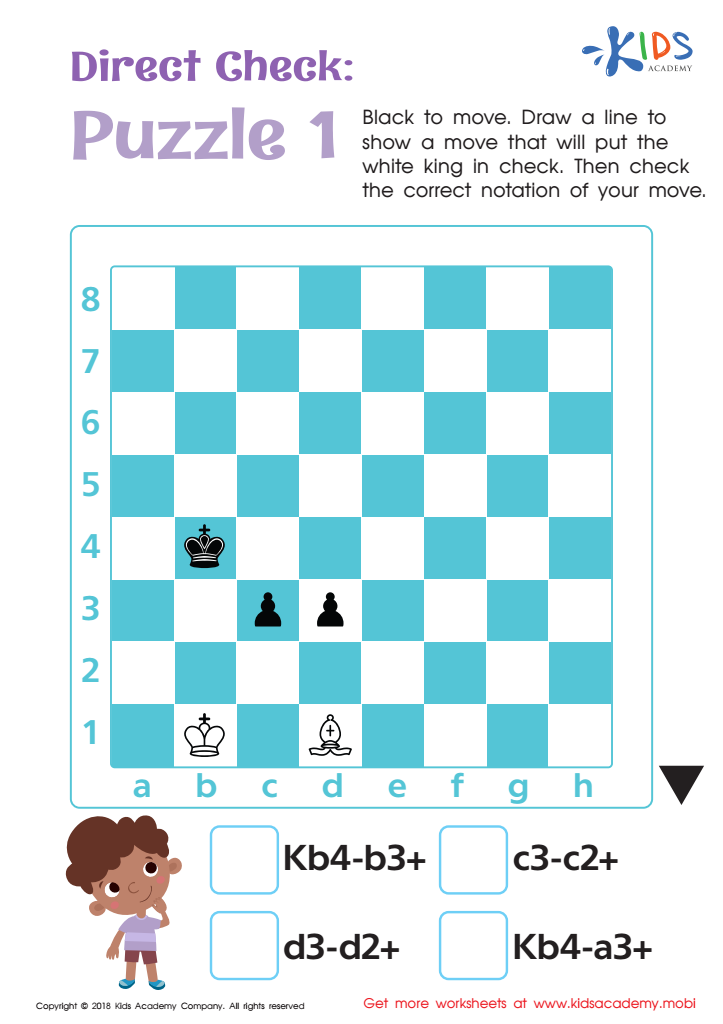
Direct Check: Puzzle 1 Worksheet
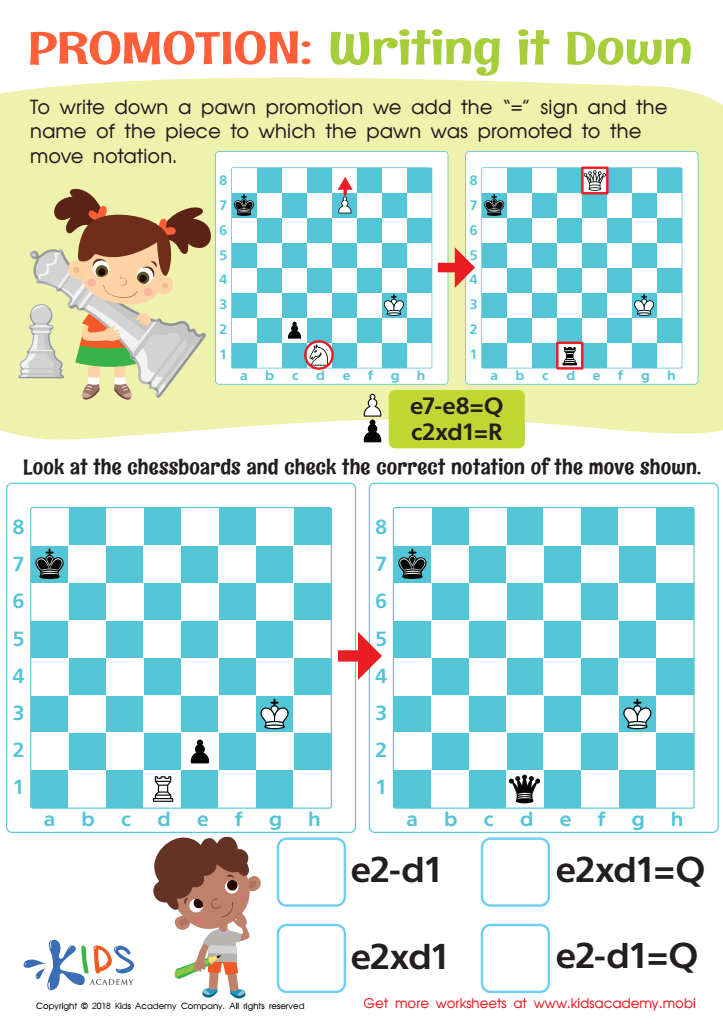
Writing it Down Worksheet







Number Recognition Chess for Ages 7-8 uniquely blends cognitive development with foundational math skills through the engaging medium of chess. At this age, children are eager to explore, making it the ideal time to instill a love for numbers and problem-solving. By connecting number recognition to chess, children learn to identify and understand numbers in a fun and interactive way, reinforcing essential math concepts.
This innovative approach helps students develop critical thinking and strategic planning skills as they learn to apply numerical values to chess pieces and moves. These skills are crucial not only in academic settings but also in everyday life. Moreover, by engaging with games, children are more likely to retain and understand the significance of numbers and their applications.
Additionally, playing Number Recognition Chess promotes teamwork, patience, and resilience as students face challenges and learn from their mistakes. Parents and educators should embrace this methodology as it provides a dynamic learning environment that keeps children motivated and focused. Ultimately, fostering number recognition in combination with strategy-based games like chess prepares young learners for future academic success while making learning enjoyable and interactive. Caring about initiatives like Number Recognition Chess ensures that children develop strong foundational skills for subjects they will encounter later in their education.