Analog Clock Understanding Worksheets for Ages 7-8
3 filtered results
-
From - To
Help your child master the concept of time with our engaging "Analog Clock Understanding Worksheets" designed specifically for ages 7-8. These worksheets introduce young learners to reading and understanding analog clocks through fun exercises and colorful illustrations. They will practice telling time to the nearest hour, half hour, and quarter hour while developing essential skills in time management. Each worksheet provides a variety of activities, ensuring children stay excited and motivated to learn. Make learning about time enjoyable and interactive with our resourceful worksheets that cater to different learning styles. Perfect for home or classroom use, they’re an essential tool for young learners!
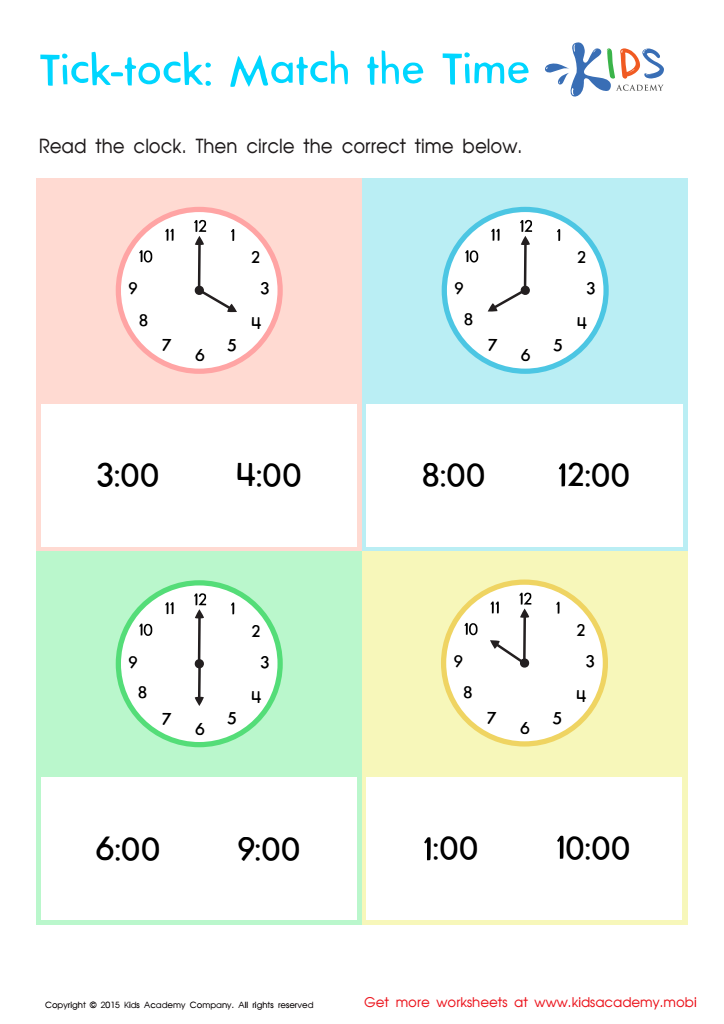
Telling The Time Worksheet: Part 4
 Assign to My Students
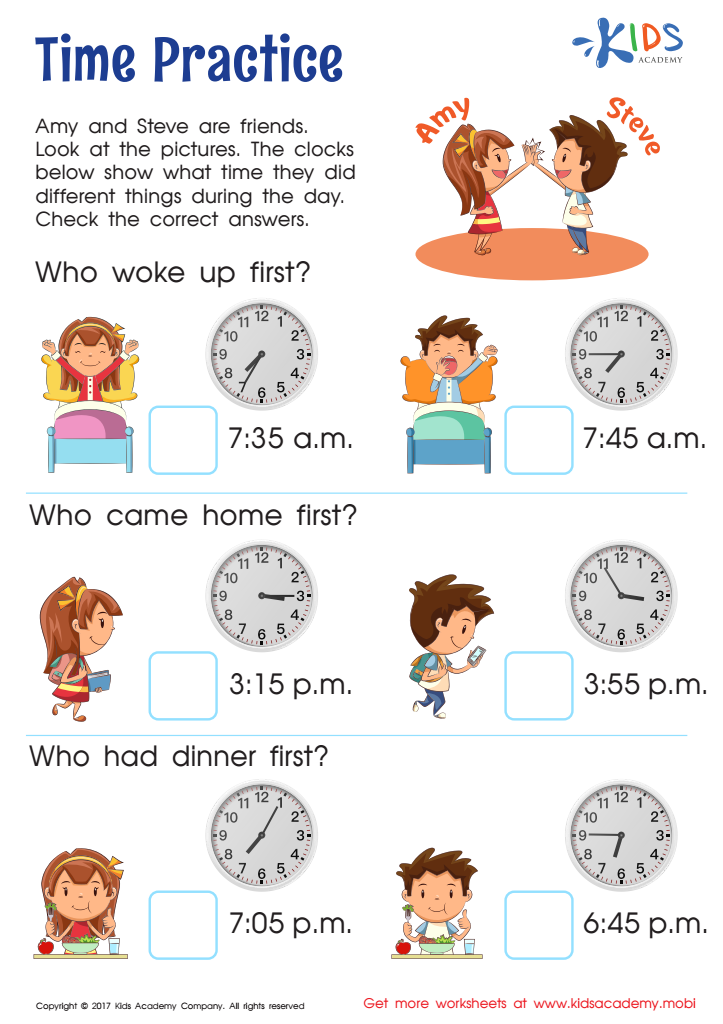
Time Practice Worksheet
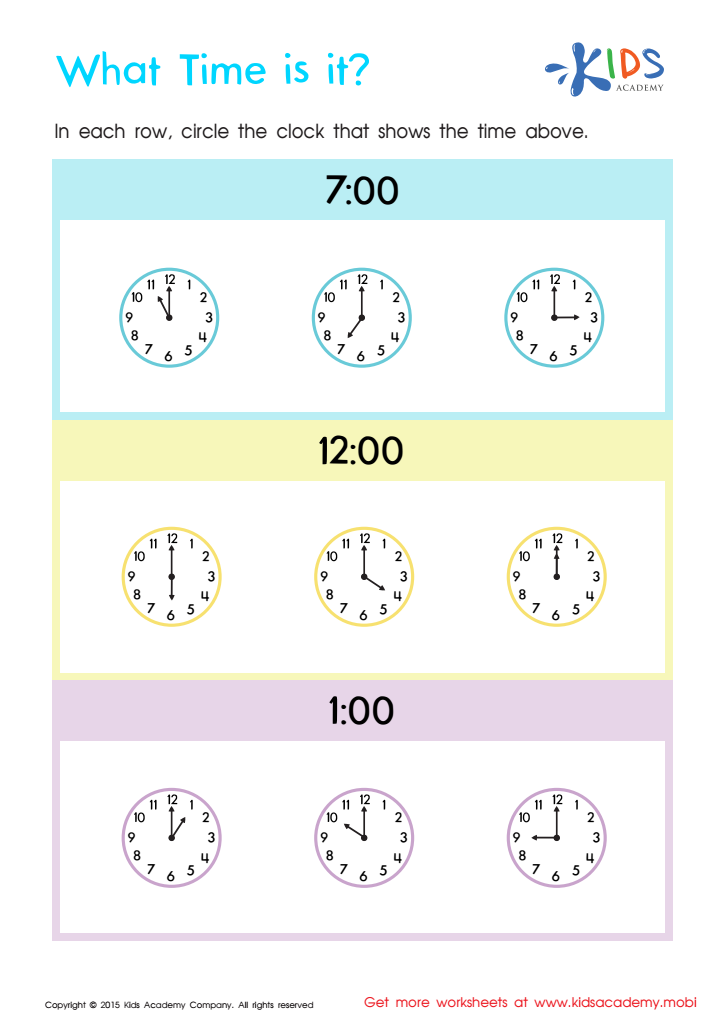
Telling The Time Worksheet: Part 3






Understanding analog clocks is vital for children aged 7-8 as it lays the groundwork for their mathematical skills, time management, and daily routines. In an increasingly digital world, where screen time often overshadows traditional learning, grasping the concept of how to read an analog clock cultivates critical thinking and problem-solving abilities.
Analog clocks help children develop spatial awareness and the ability to analyze and interpret visual information. Learning to tell time also strengthens their cognitive skills, such as counting by fives and understanding fractions, as they break down a full hour into segments. When children can tell time, they gain a sense of independence as they manage their own daily schedules, contributing to their overall responsibility.
Moreover, understanding clocks fosters better communication between parents, teachers, and children. For example, asking a child to be in bed by “9 o'clock” becomes clearer when they can visualize the time on the clock. Hence, familiarization with analog clocks not only prepares children to be more organized and punctual but also enriches their learning experience by connecting mathematics and real-life applications. This foundational skill benefits children emotionally and socially as they navigate their routines and responsibilities.








