Basic measurement skills Worksheets for Ages 7-8
3 filtered results
-
From - To
Develop essential measurement skills with our comprehensive worksheets designed specifically for ages 7-8. At Kids Academy, our engaging, printable activities focus on teaching young learners fundamental concepts like length, weight, and volume through fun and interactive tasks. Tailored to support grade-level standards, these worksheets aid in reinforcing classroom learning and simplifying complex ideas into easy-to-understand elements. This tool fosters confidence and competency in measurement, ensuring foundational understanding for future mathematical success. Empower your child’s abilities and prepare them to excel in math with our expertly-crafted resources, perfectly suited for young, curious minds. Download now and start learning!
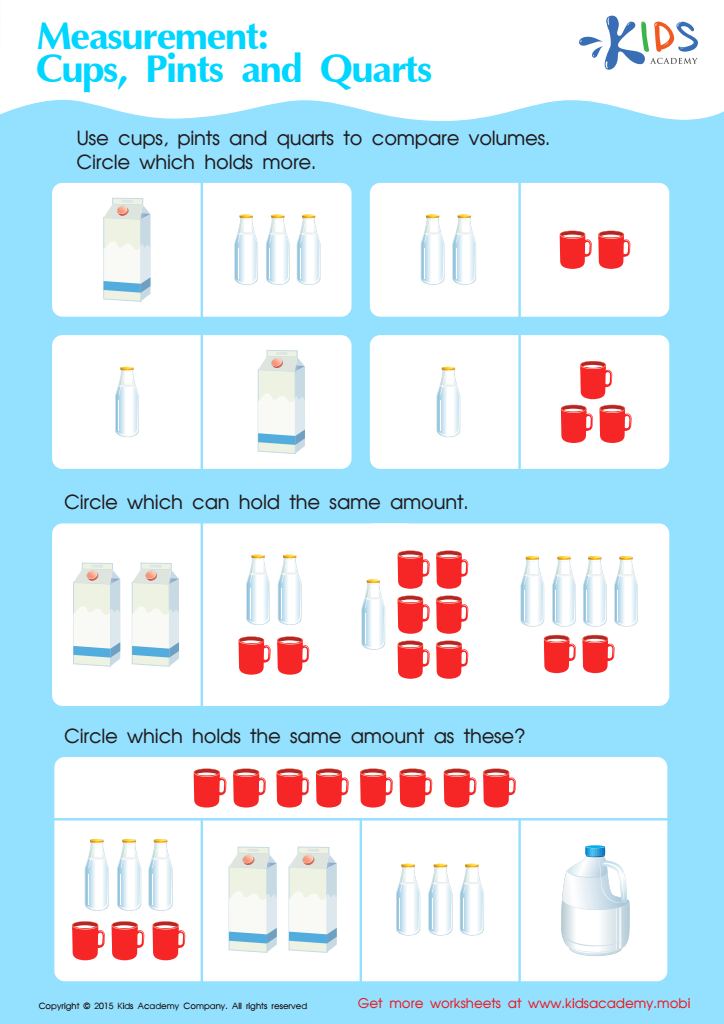
Measurement: Compare Volumes Worksheet
 Assign to My Students
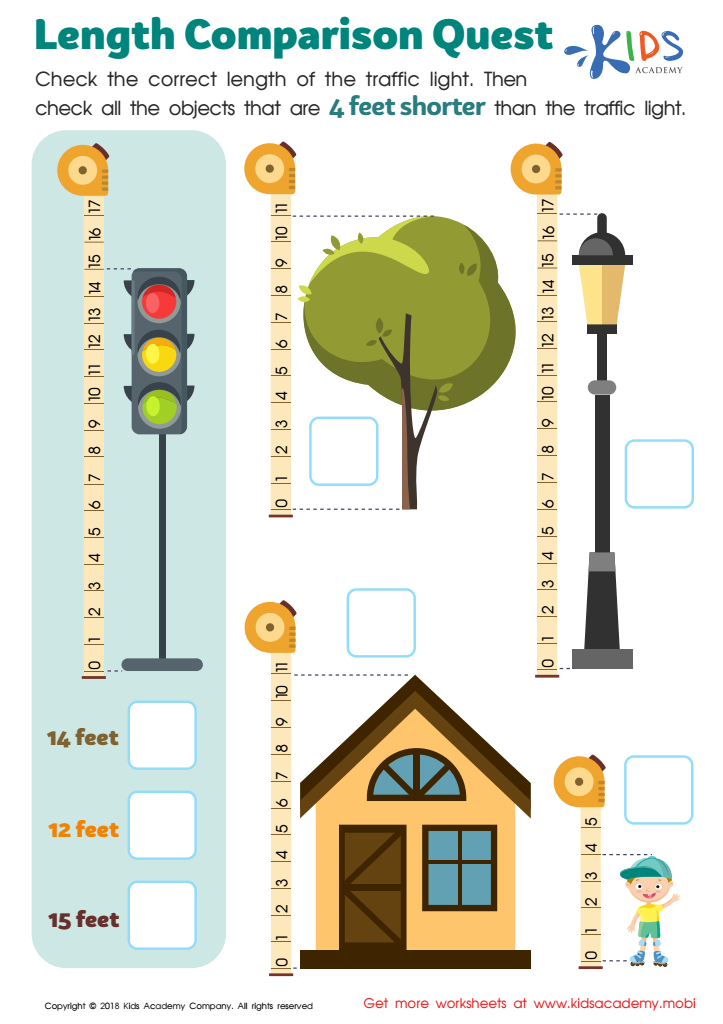
Length Comparison Quest Worksheet
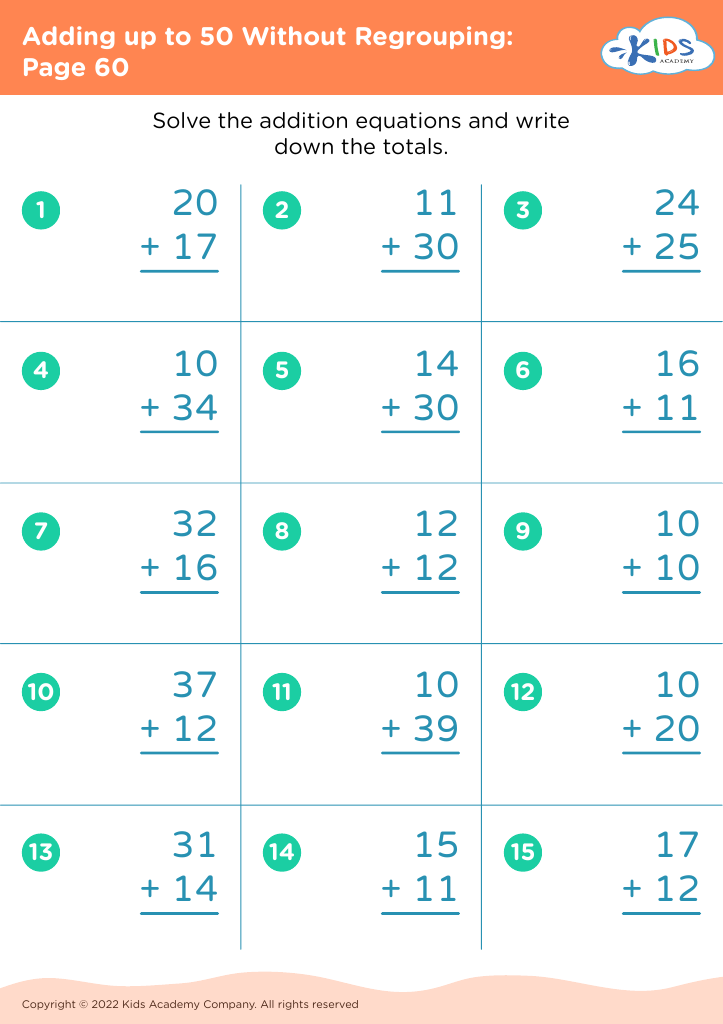






Basic measurement skills are essential for young children, particularly those aged 7-8, as they lay the groundwork for more complex mathematical and scientific concepts. This developmental stage is crucial for cognitive growth, and learning about measurement helps enhance their reasoning and problem-solving abilities.
Firstly, measurement is omnipresent in daily life. Whether it’s cooking, shopping, or deciding the time to wake up, understanding measurements helps children make sense of the world around them. It builds their numeracy and comprehension skills by engaging them in practical and relatable scenarios.
Moreover, measurement fosters critical thinking and analytical abilities. When children measure objects or quantities, they learn to compare, classify, and quantify, foundational skills for advanced mathematics and logical reasoning.
Engaging with measurement tasks, like using rulers or measuring cups, also improves motor skills and coordination. Learning to handle these tools accurately Practices their fine motor skills, attention to detail, and ability to follow instructions.
Additionally, early exposure to measurement concepts like length, weight, volume, and time, establishes a positive and confident attitude towards learning. It can inspire a lifelong curiosity and appreciation for STEM (Science, Technology, Engineering, and Mathematics).
Therefore, parents and teachers should focus on cultivating measurement skills in young children to support their overall academic and practical life success.








