Comparing objects Worksheets for Ages 7-8
5 filtered results
-
From - To
These engaging Comparing Objects Worksheets for Ages 7-8 from Kids Academy are perfect for young learners to develop critical thinking and math skills. Through fun, interactive exercises, children enhance their ability to compare sizes, lengths, weights, and other attributes of various objects. These high-quality, printable worksheets are designed to make learning enjoyable and effective, providing a solid foundation for future math concepts. Ideal for classroom or home use, these worksheets motivate children to learn by comparing everyday objects, encouraging hands-on discovery and practical application of their newfound knowledge. Boost your child’s comparison skills today with Kids Academy!
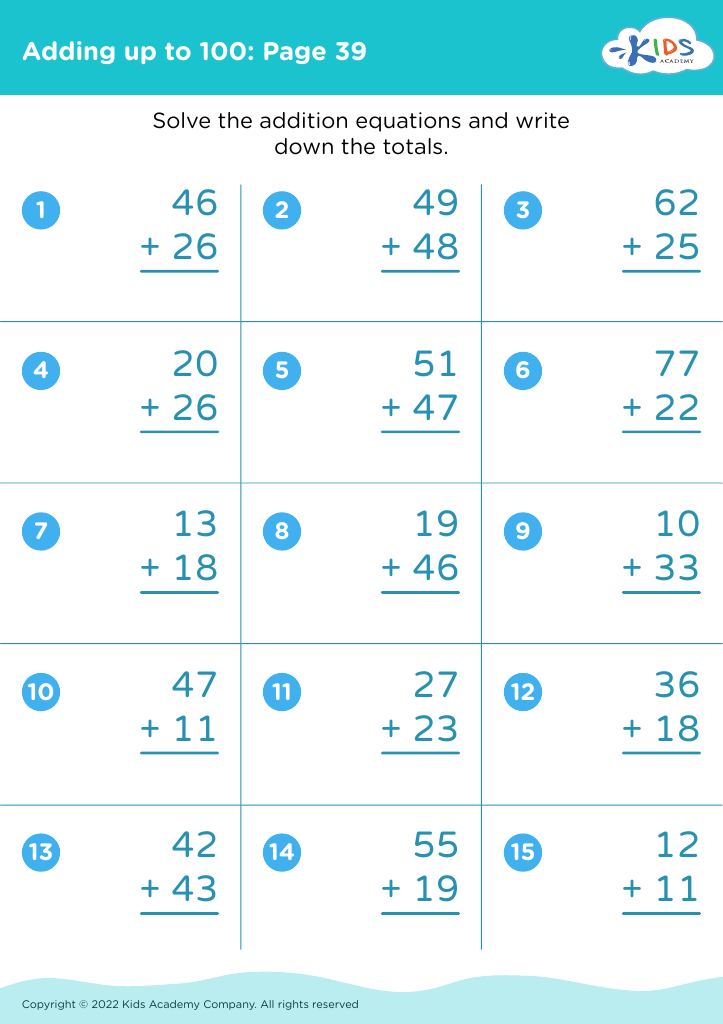
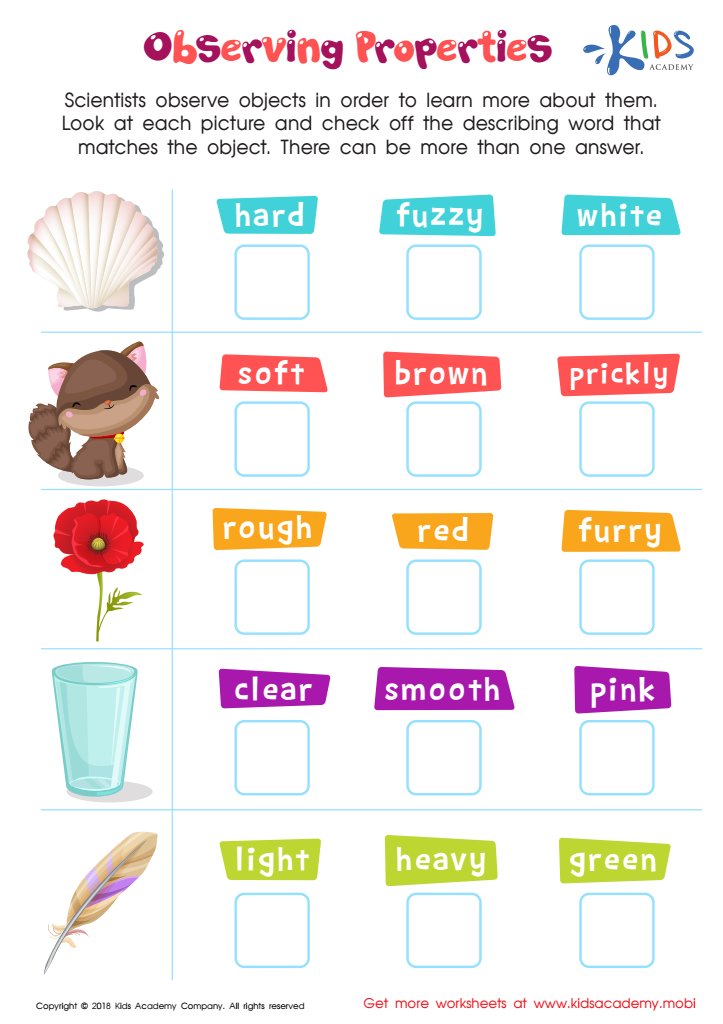
Observing Properties Worksheet
 Assign to My Students
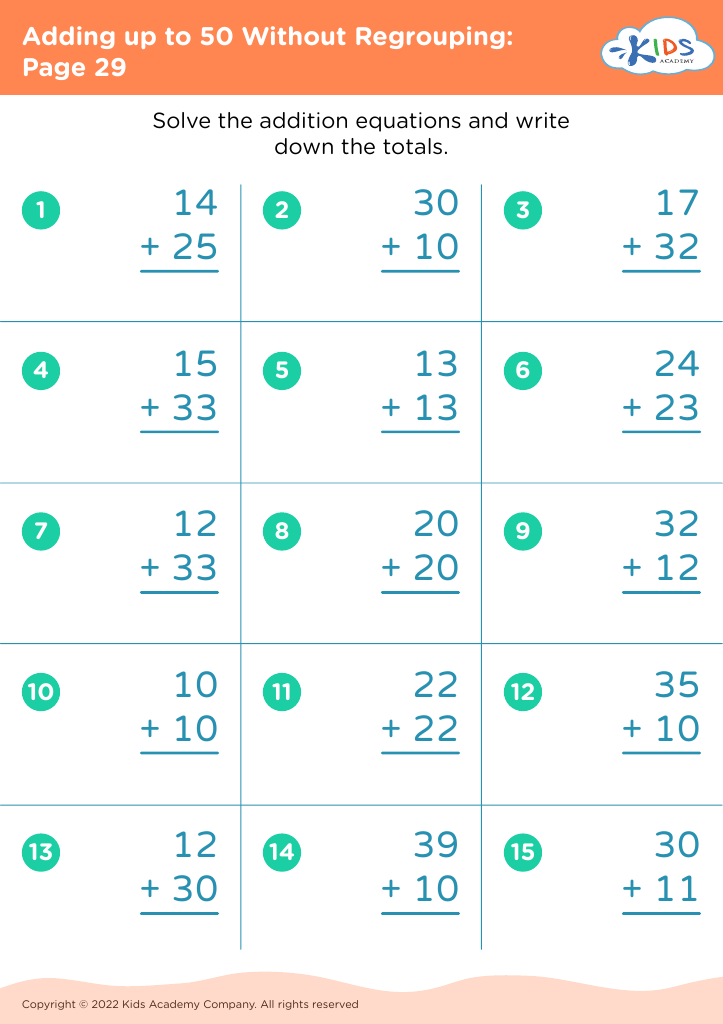
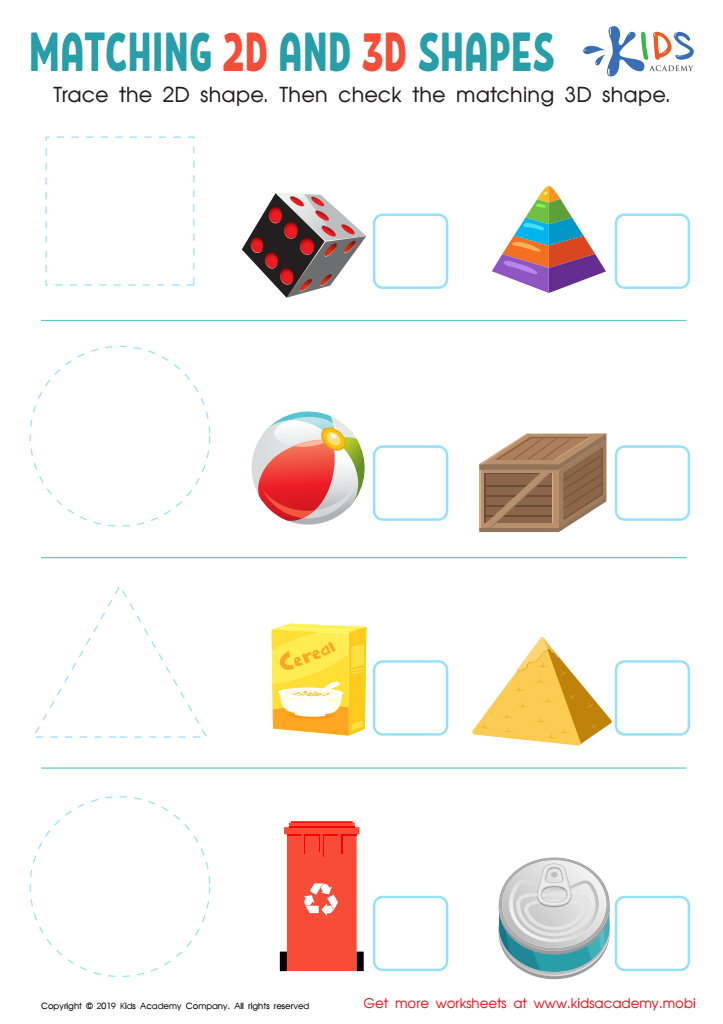
Matching 2D and 3D Shapes Worksheet
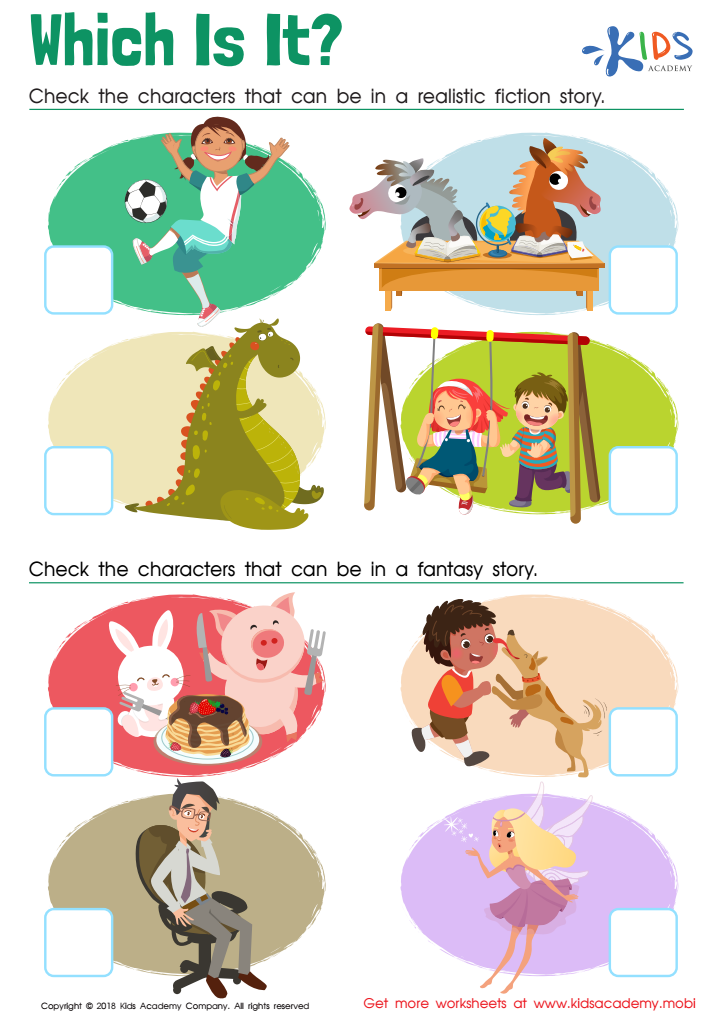
Which Is It? Worksheet







Comparing objects is a crucial activity for children aged 7-8 because it develops essential mathematical and cognitive skills. At this age, children are becoming more aware of similarities and differences, laying the groundwork for advanced problem-solving and reasoning. When children compare objects based on attributes such as size, length, weight, and volume, they not only learn to observe and describe but also begin to understand measurement concepts and relationships. These foundational skills are vital for later success in subjects like geometry and algebra.
Moreover, comparing objects helps in developing vocabulary and language skills. Describing objects using comparative terms such as "bigger," "shorter," "heavier," and "lighter" enhances children's ability to communicate their thoughts and ideas clearly. This articulation fosters better comprehension and expression in both academic and real-life contexts.
Socially, activities involving comparisons encourage cooperative learning and teamwork. Children often work together to assess and reach conclusions, fostering interpersonal skills like communication, negotiation, and empathy.
Overall, prioritizing the comparison of objects ensures that children grow not only mathematically competent but also linguistically adept and socially engaged, providing a well-rounded foundation for future educational endeavors.








