Comparing shapes Worksheets for Ages 7-8
5 filtered results
-
From - To
Explore our engaging "Comparing Shapes Worksheets" designed specifically for children aged 7-8! These worksheets help young learners develop essential geometry skills by introducing concepts such as characteristics, similarities, and differences among various shapes. With fun and interactive activities, students will practice identifying shapes, sorting them, and visualizing their properties creatively. Our resources empower children to enhance their critical thinking and problem-solving abilities while fostering a love for math. Perfect for classroom use or at-home learning, our worksheets make learning enjoyable and effective. Start your child's journey in mastering shapes today with our thoughtfully crafted materials!
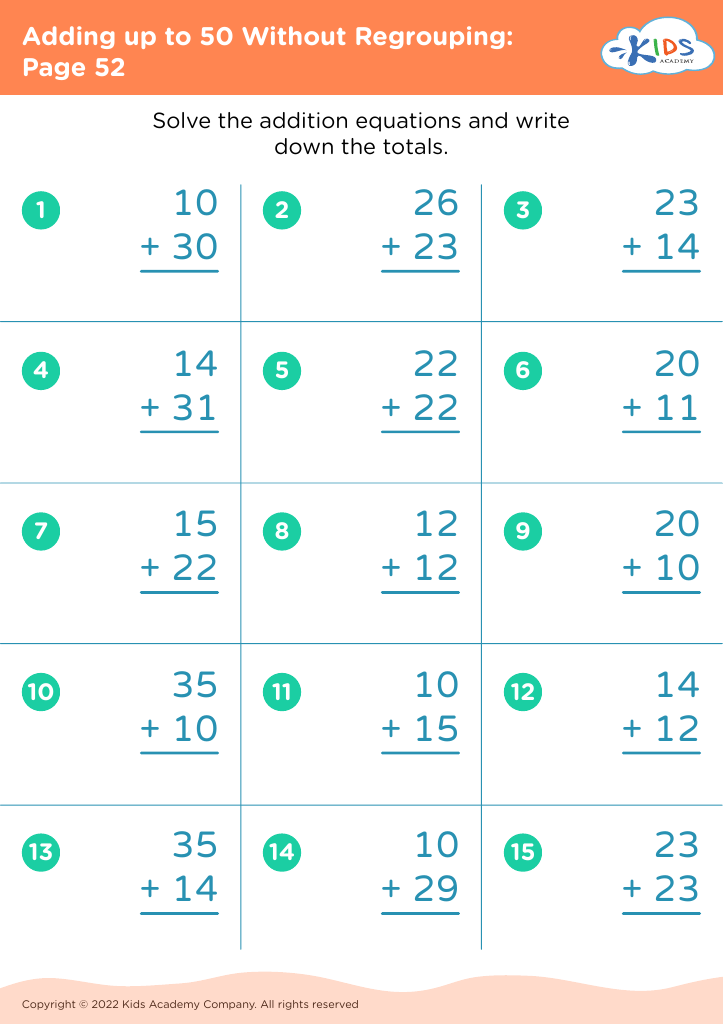
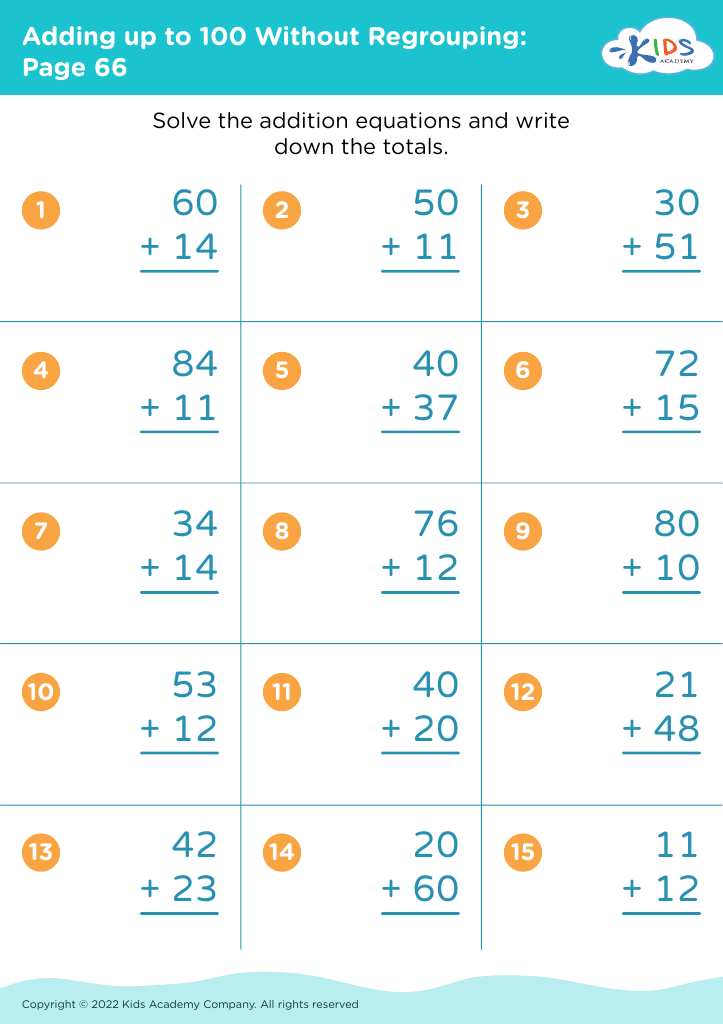
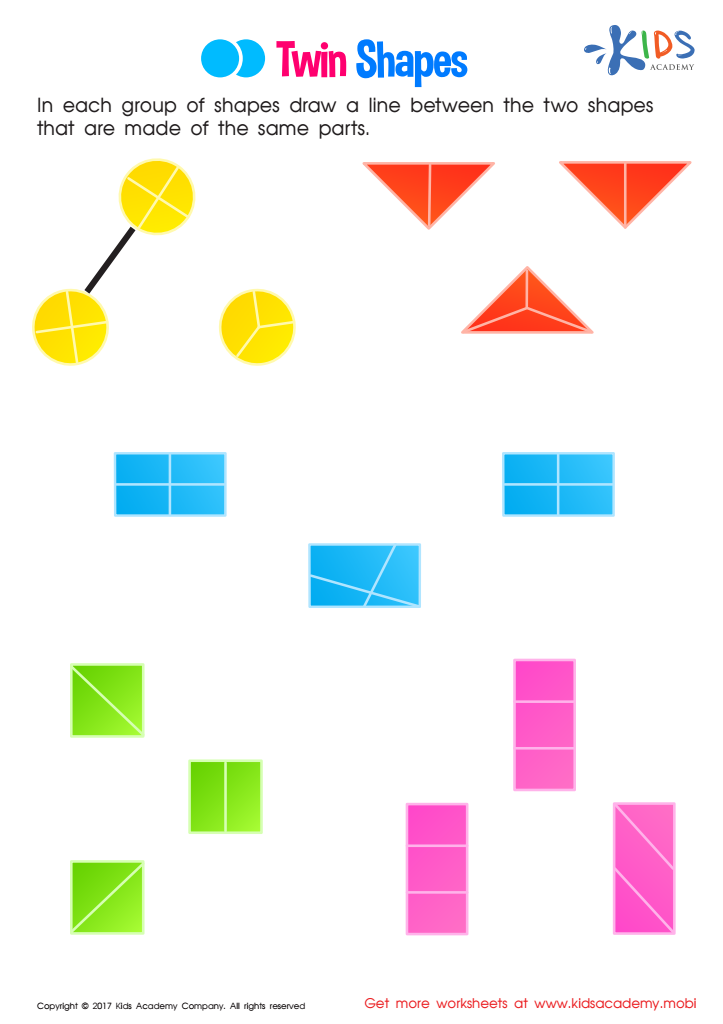
Twin Shapes Worksheet
 Assign to My Students
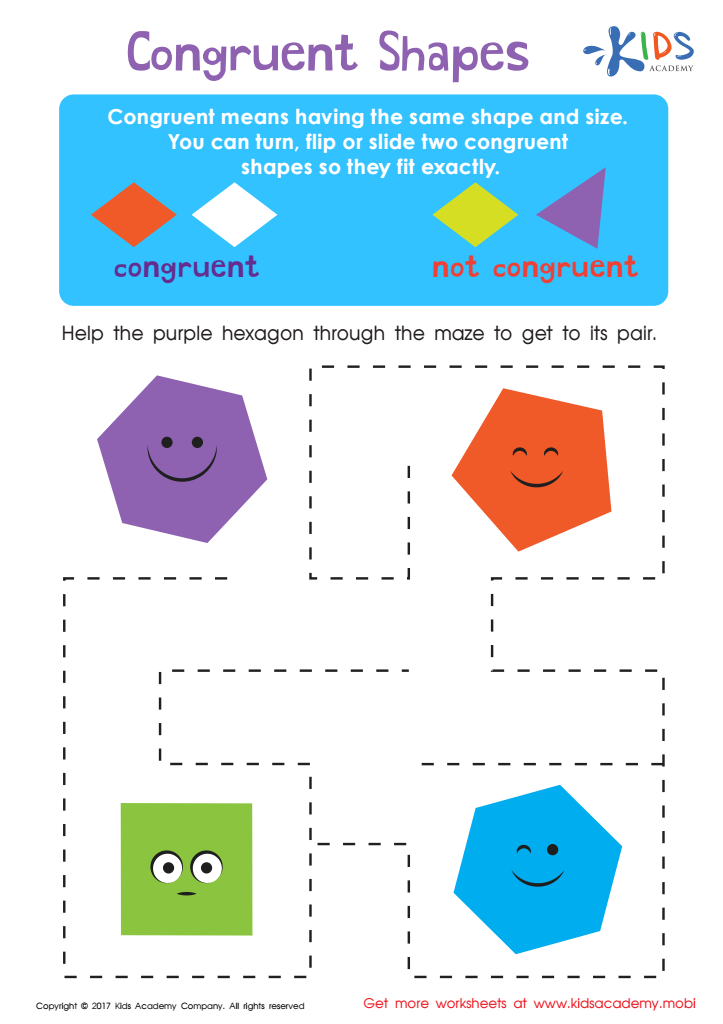
Congruent Shapes Worksheet
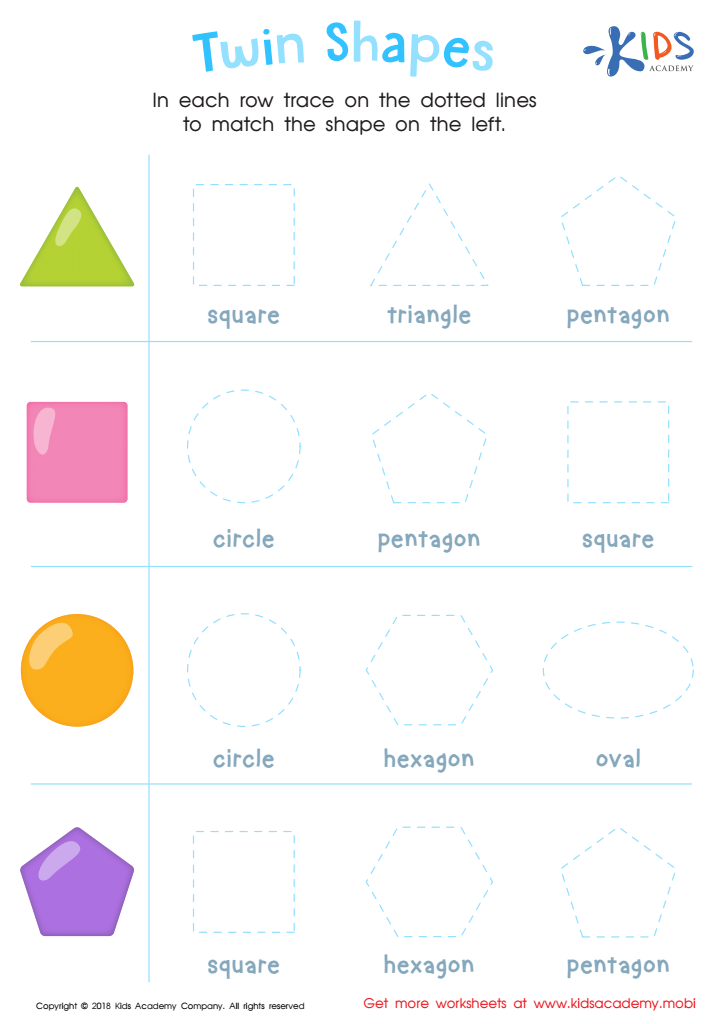
Twin Shapes Dot-to-Dot Worksheet






Comparing shapes is a foundational skill in early mathematics education that benefits children aged 7-8 in numerous ways. At this developmental stage, children are naturally curious and eager to explore their environments, making it an ideal time for them to engage in shape comparison. Understanding shapes lays the groundwork for essential concepts in geometry, spatial reasoning, and measurement, which are critical for future academic success.
Comparing shapes helps children to identify similarities and differences, fostering their analytical skills. This practice enhances their ability to categorize and organize information, valuable skills not just in math, but across various subjects. Furthermore, shape comparison promotes critical thinking as students begin to ask questions about relationships between different shapes, such as size, symmetry, and dimensions.
Moreover, engaging in hands-on activities involving shapes encourages collaboration among peers and nurtures communication skills. When parents are involved in shape comparison activities at home, it reinforces learning and creates a supportive environment that values education. Teachers can use shape comparisons to create interactive lessons that spark student interest and creativity. Thus, understanding shapes and their relationships can have lifelong benefits, making it essential for parents and teachers to emphasize this skill in early education.








