Comprehension skills improvement Worksheets for Ages 7-8
3 filtered results
-
From - To
Enhance your child's reading comprehension with our engaging worksheets designed specifically for ages 7-8! These interactive resources provide numerous activities that not only stimulate critical thinking but also foster a love for reading. Our worksheets focus on essential skills such as identifying main ideas, making inferences, and summarizing texts. Carefully crafted by educators, each printable is tailored to align with your child's learning needs, ensuring they build confidence and comprehension abilities. By integrating fun and learning, our worksheets make reading comprehension an enjoyable experience. Empower your young learner today and watch them excel in understanding and analyzing texts effortlessly!
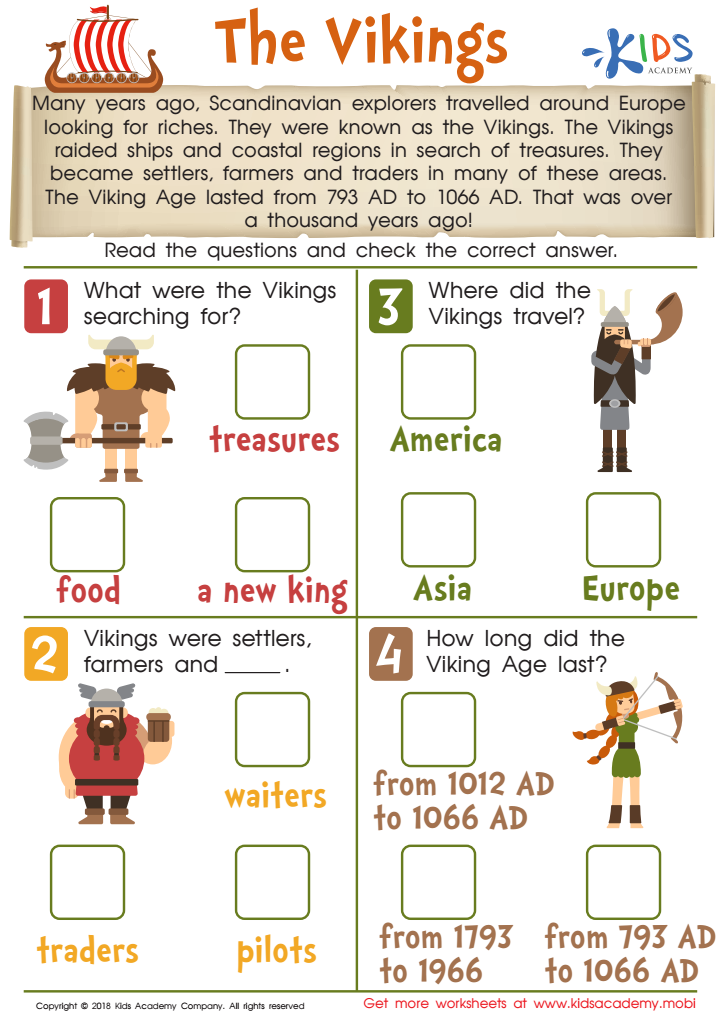
The Vikings Worksheet
 Assign to My Students
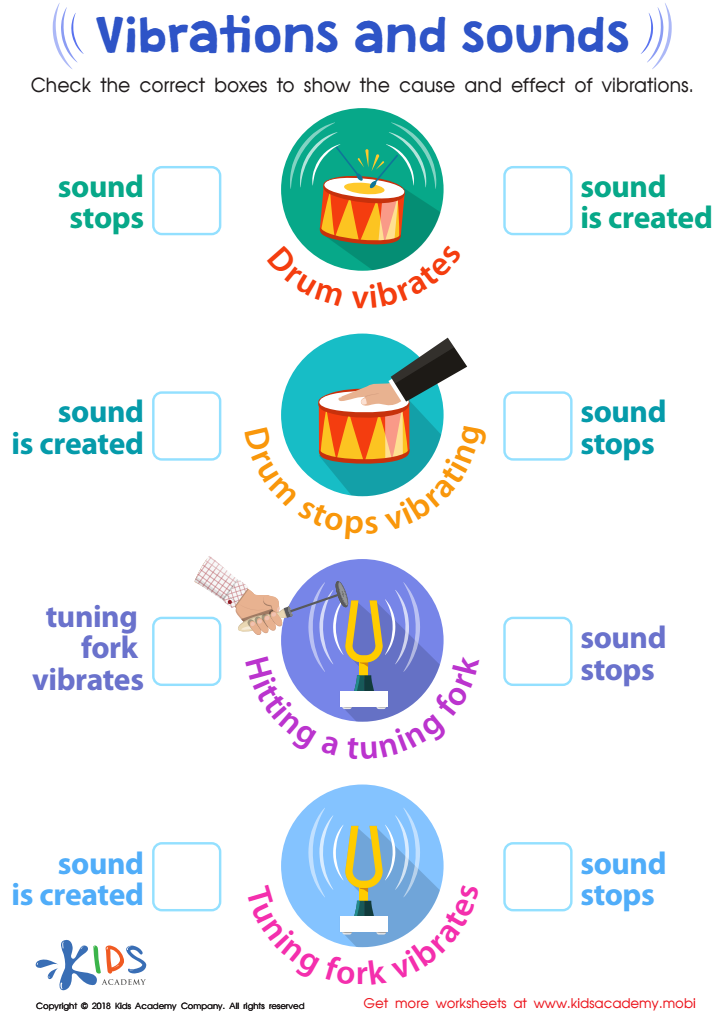
Vibrations and Sounds Worksheet
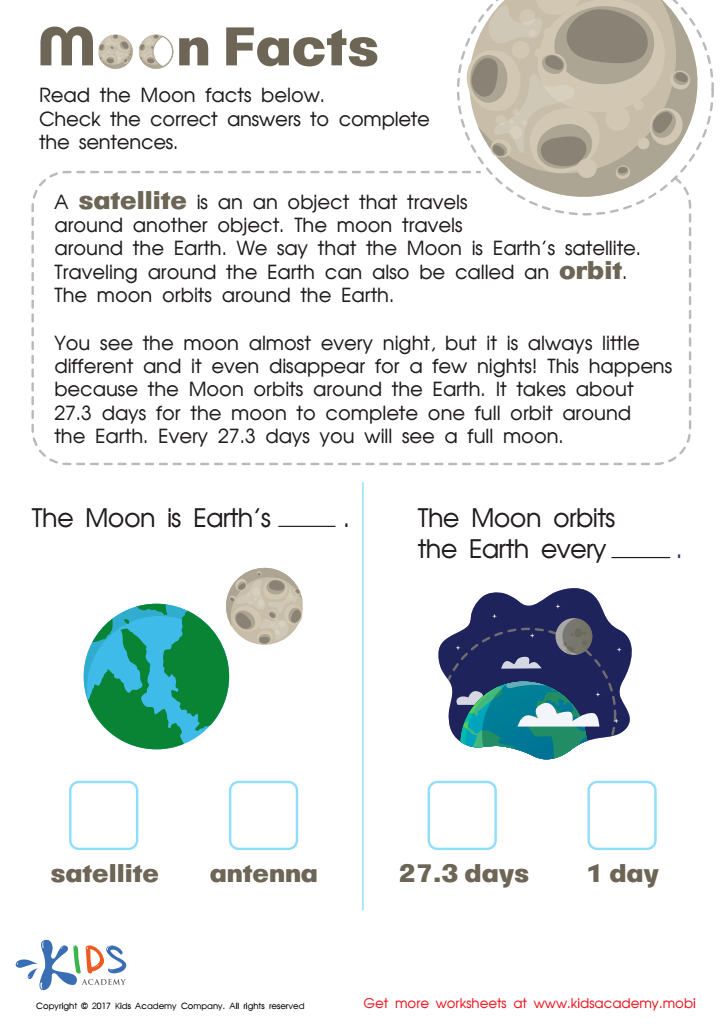
Moon Facts Worksheet








Comprehension skills are vital for children aged 7-8, as they lay the foundation for future academic success and lifelong learning. At this stage, children transitioned from learning to read to reading to learn, making it crucial for them to fully understand and engage with the texts. Improved comprehension enhances their ability to gather information, analyze content, and make connections to what they already know, fostering critical thinking skills.
Furthermore, strong comprehension skills directly correlate to academic performance across all subjects, as students need to interpret and understand instructions, story elements, and informational texts. It also boosts their confidence in classroom discussions and encourages a love for reading, which is essential for personal and intellectual growth.
Parents and teachers play a pivotal role in promoting these skills through active reading practices—like asking questions, discussing themes, and summarizing stories. Engaging in reading can support emotional and social development, as children connect with characters and understand diverse perspectives. Ultimately, cultivating good comprehension skills at this age can help children thrive both educationally and emotionally, shaping their attitudes towards learning and equipping them with the tools to face future challenges effectively.








