Detail identification Worksheets for Ages 7-8
4 filtered results
-
From - To
Enhance your child's observation skills with our "Detail Identification Worksheets for Ages 7-8"! Designed specifically for young learners, these engaging worksheets encourage close attention to detail while fostering critical thinking. Through fun and interactive activities, children will practice identifying similarities and differences, honing their ability to notice subtle details in images and text. Perfect for reinforcing key concepts in a variety of subjects, these worksheets not only boost learning outcomes but also promote self-confidence in young learners. You'll find a variety of exercises tailored to suit different learning styles, ensuring an enjoyable and effective educational experience. Start enhancing your child's skills today!
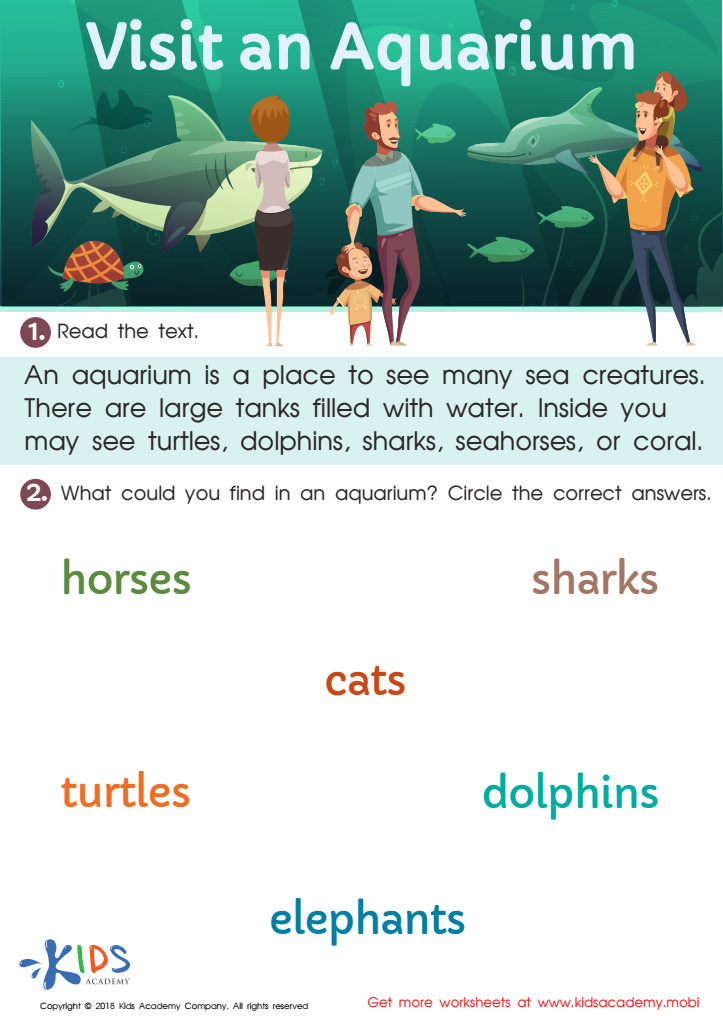
Visit an Aquarium Worksheet
 Assign to My Students
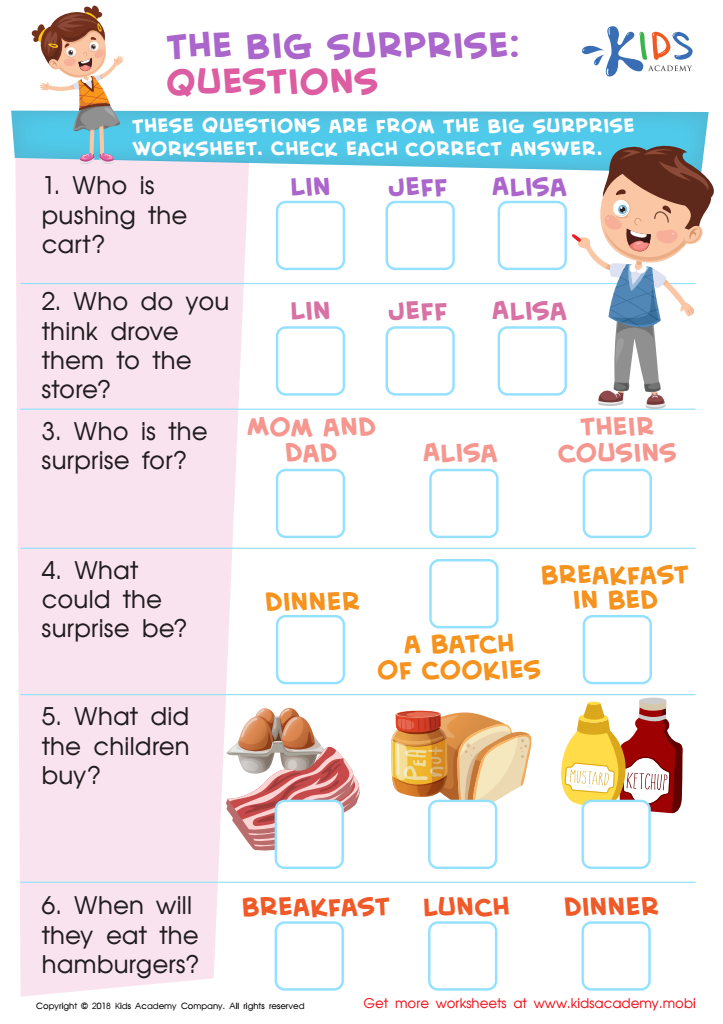
The Big Surprise: Questions Worksheet
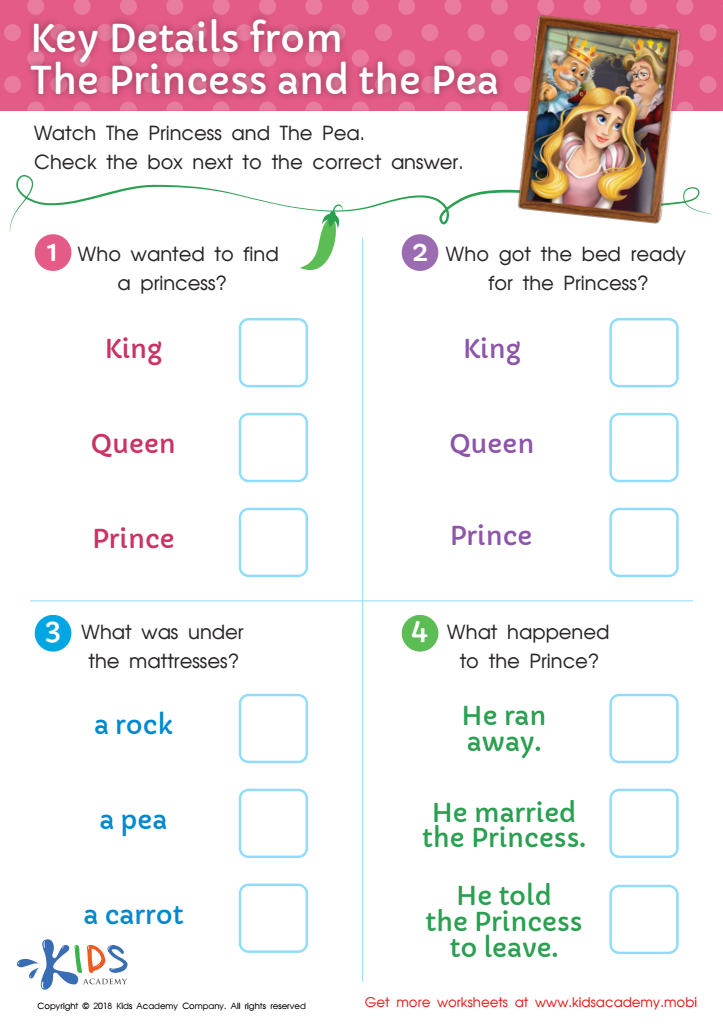
Key Details from the Princess and the Pea Worksheet
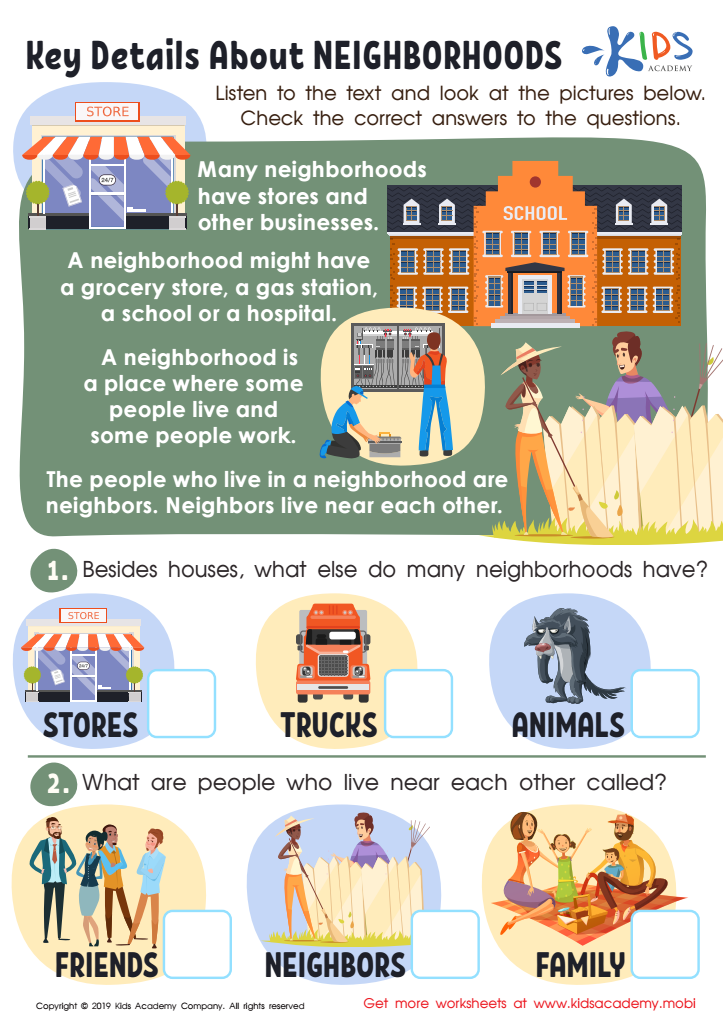
Key Details Neighborhoods Worksheet







Detail identification is crucial for children aged 7-8, as it lays a strong foundation for critical reading and comprehension skills. At this developmental stage, children enhance their ability to notice and interpret key details in texts, which helps them discern main ideas and themes. By closely examining details, students develop analytical skills and foster their imagination, allowing them to create connections between what they read and the world around them.
Parents and teachers should prioritize detail identification because it significantly enhances academic performance across subjects. Children who excel in identifying details are better equipped to summarize information, answer questions accurately, and engage in thoughtful discussions. This skill also aids in writing, as they learn to incorporate specific details that enrich their narratives.
Moreover, detail identification nurtures a child’s curiosity and motivates independent learning. As they become more observant readers, they may engage with literature on a deeper level, instilling a lifelong love of reading. Encouraging this skill promotes confidence and fosters a growth mindset—an essential component for future educational success. Therefore, investing time in detail identification advancements during this formative age benefits children significantly, nurturing both their academic journey and personal development.








