Fine motor skills development Worksheets for Ages 7-8
21 filtered results
-
From - To
Enhance your child's fine motor skills with our engaging worksheets designed specifically for ages 7-8! Our collection features a variety of printable activities that promote hand-eye coordination, dexterity, and control. Each worksheet is carefully crafted to offer fun challenges, such as tracing, cutting, and coloring, making learning both enjoyable and effective. These exercises support important skills necessary for writing, crafting, and everyday tasks, ensuring your child develops confidence and proficiency. Explore our fine motor skills development resources today and watch your child thrive as they gain essential life skills while having fun! Perfect for home or educational settings.
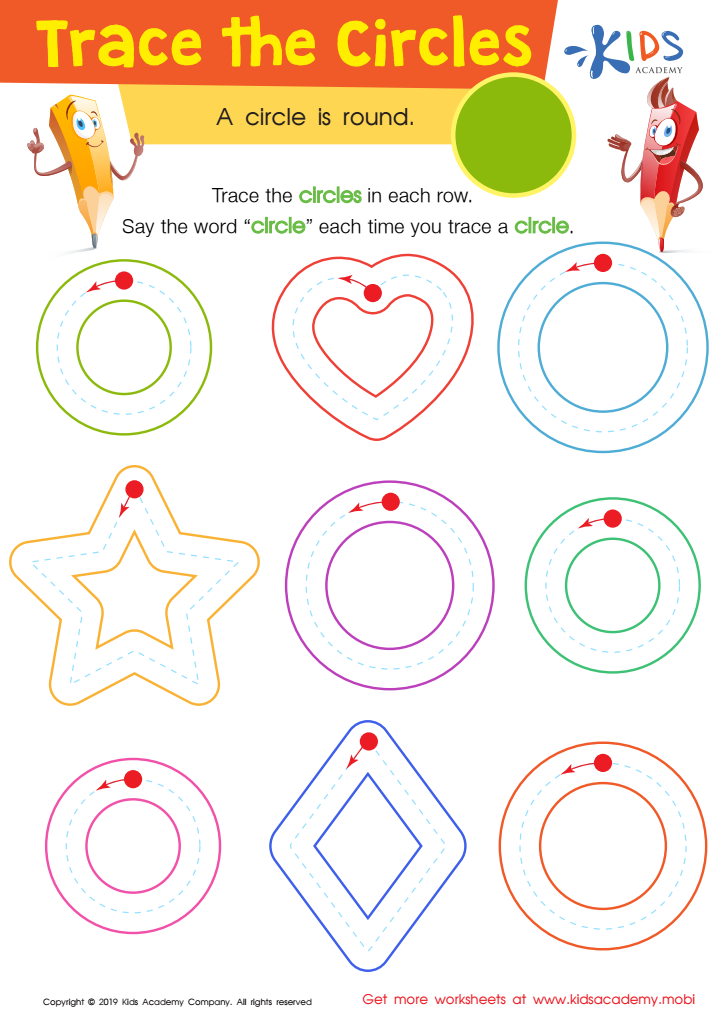
Trace The Circles Worksheet
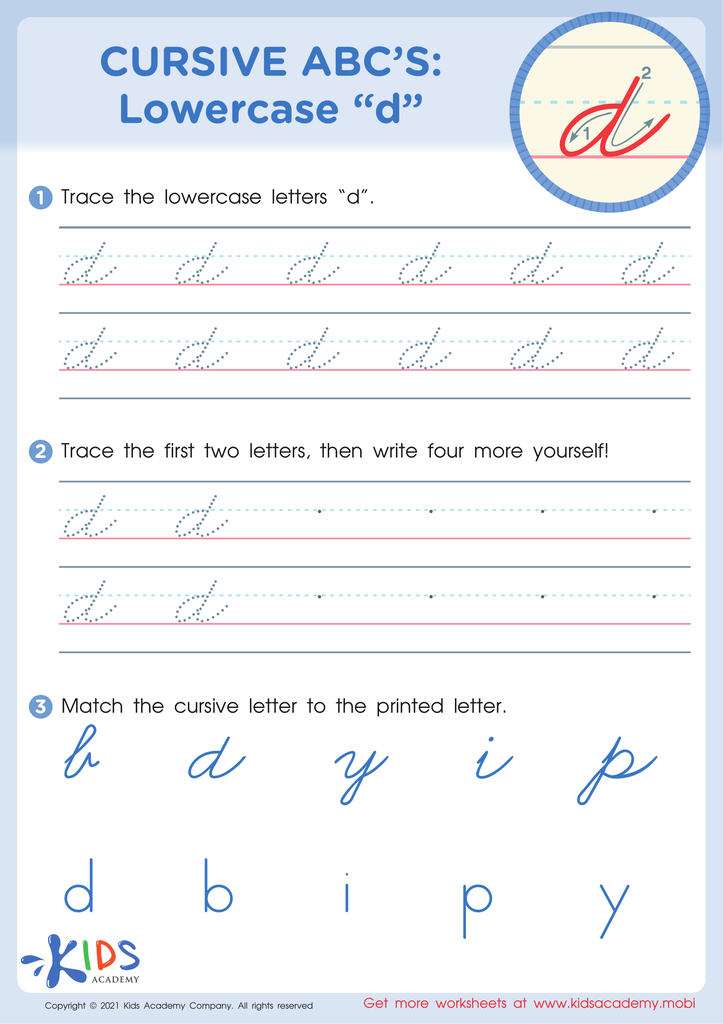
Cursive ABCs: Lowercase d
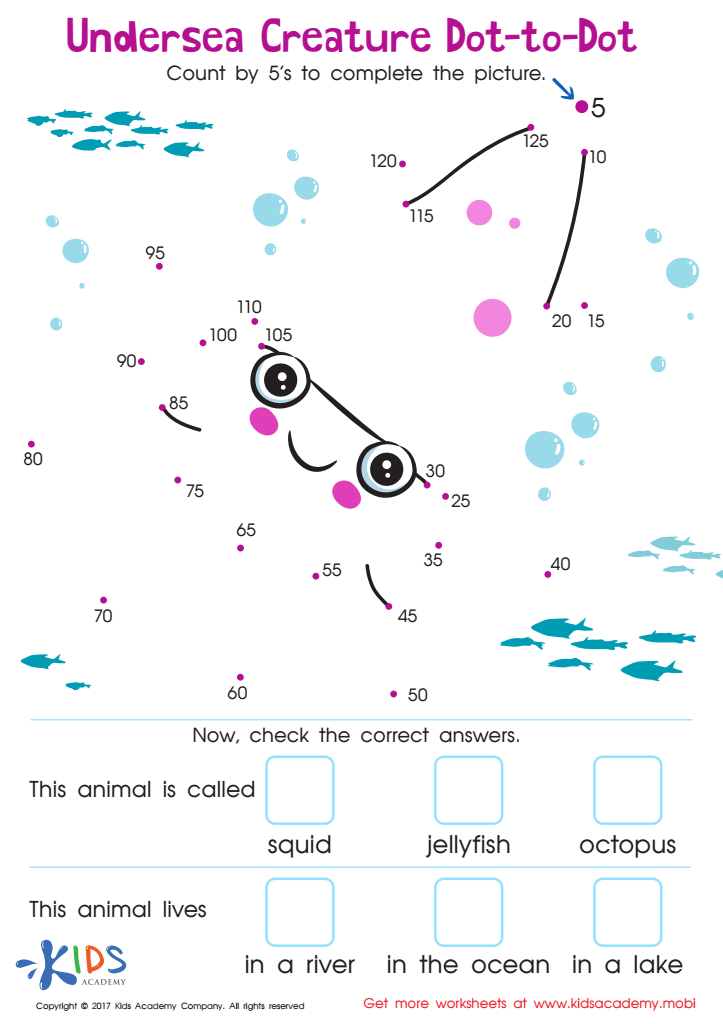
Undersea: Dot To Dot Worksheet
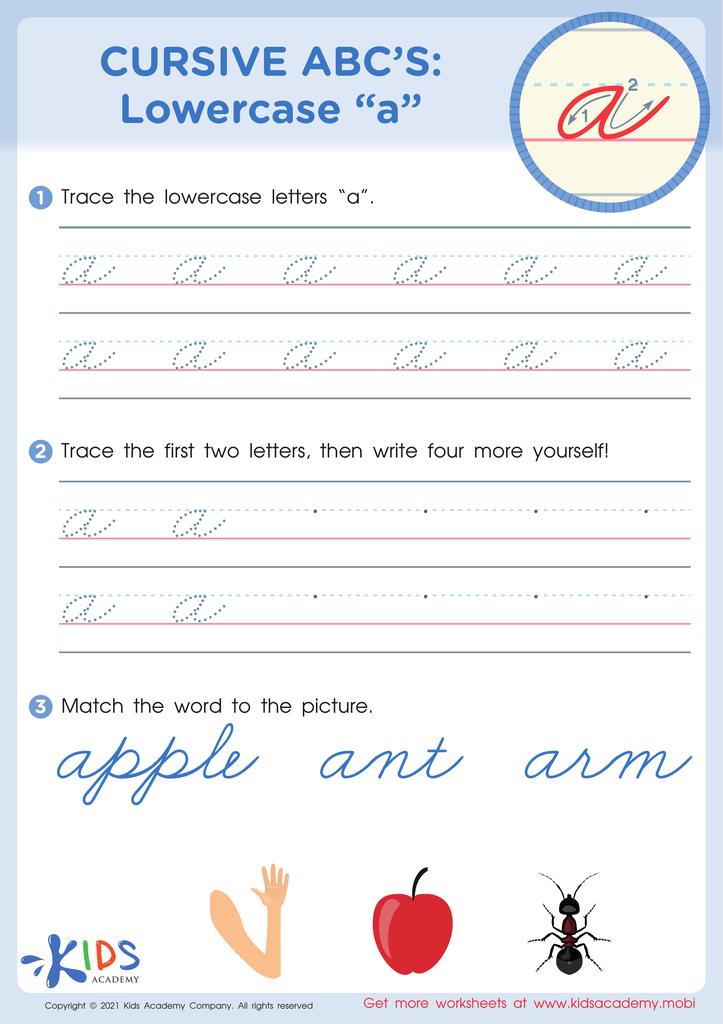
Cursive ABCs: Lowercase a
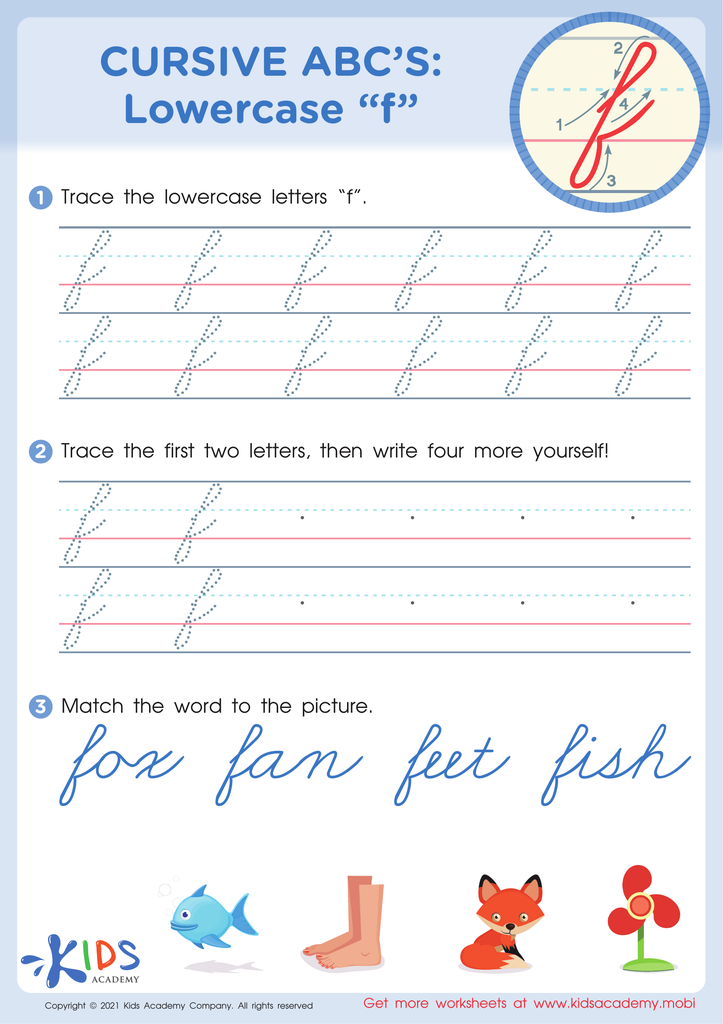
Cursive ABCs: Lowercase f
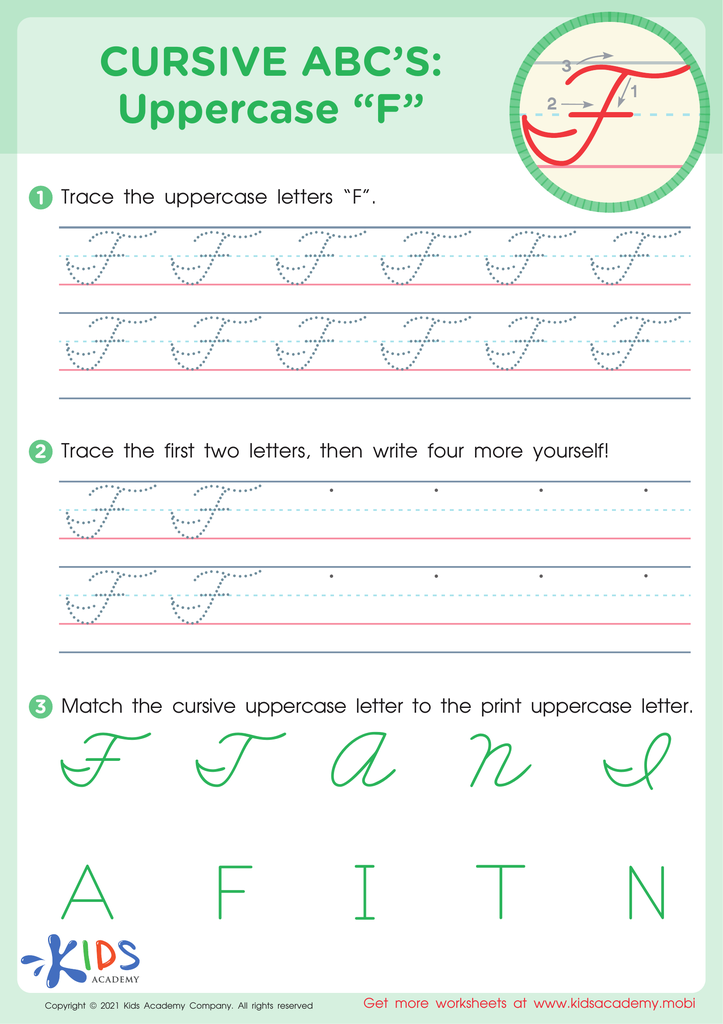
Cursive ABCs: Uppercase F
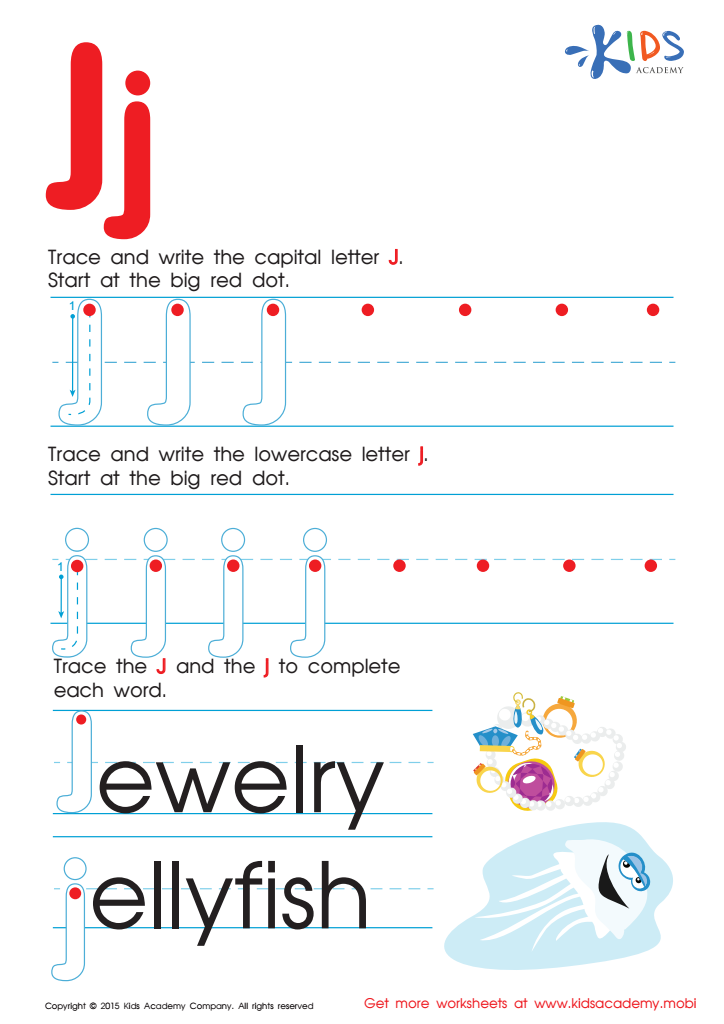
Letter J Tracing Page
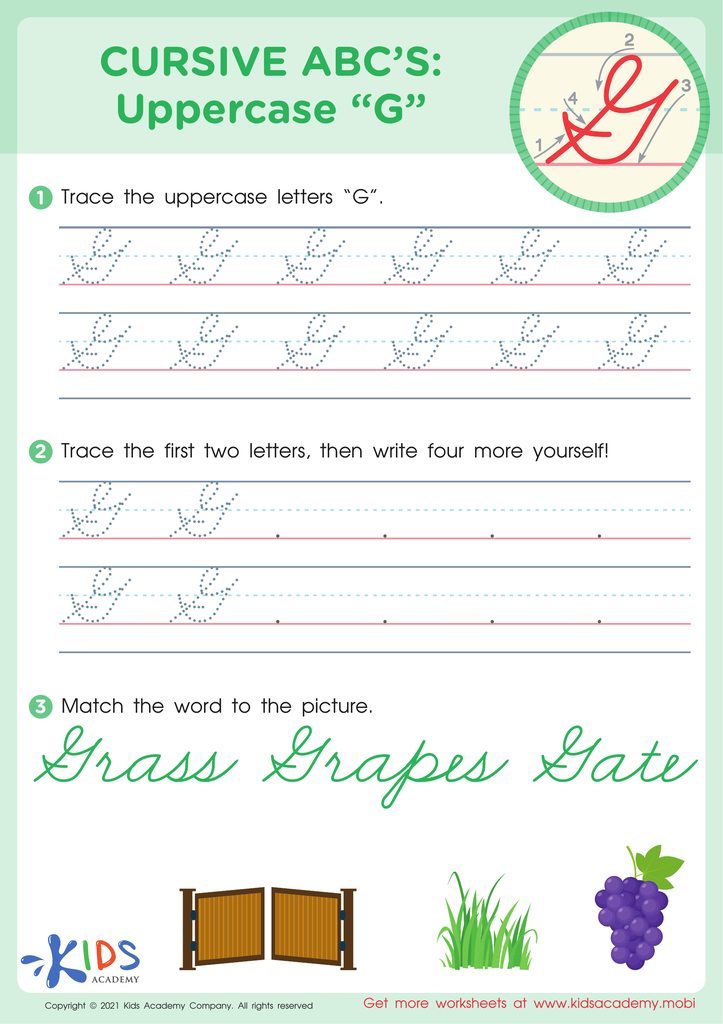
Cursive ABCs: Uppercase G
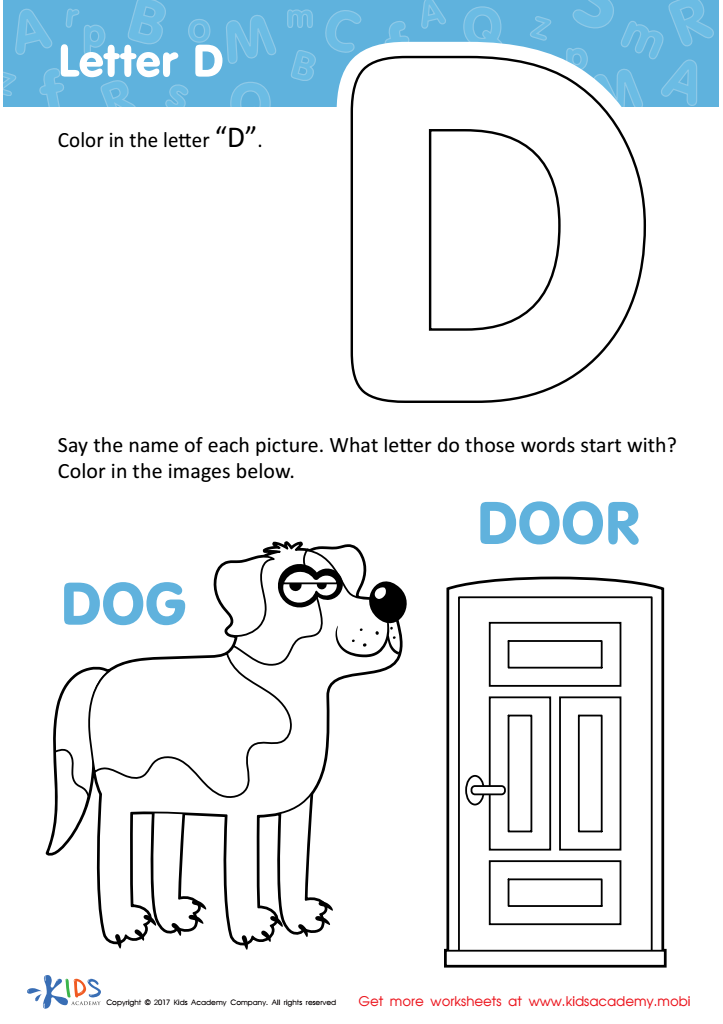
Letter D Coloring Sheet
 Assign to My Students

Night Sky Constellations: Aries Worksheet
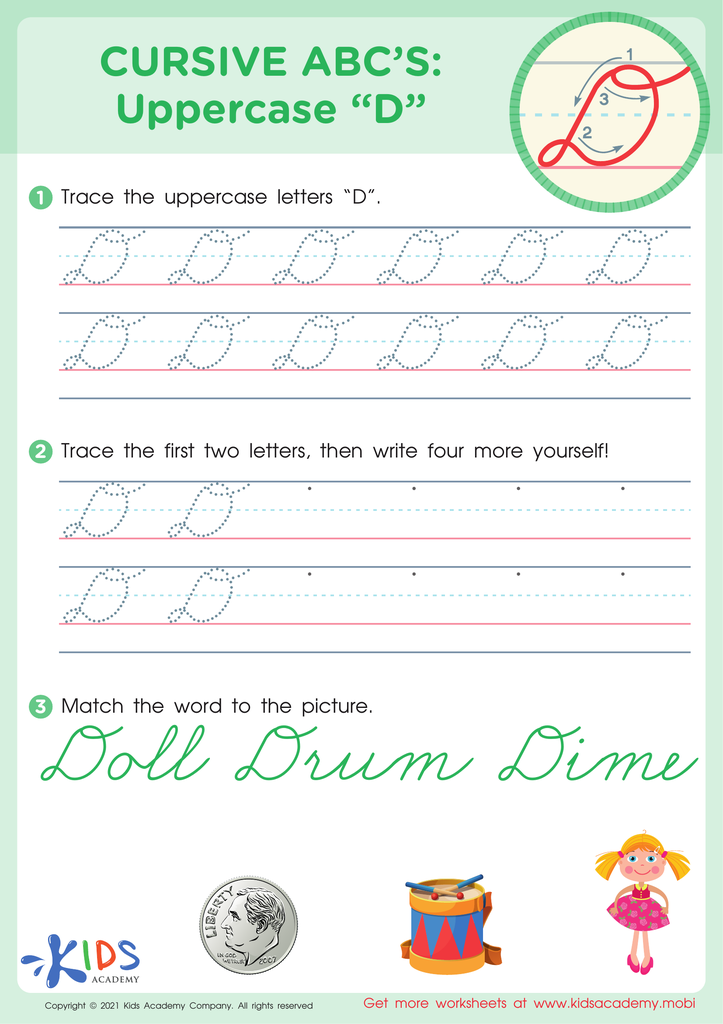
Cursive ABCs: Uppercase D
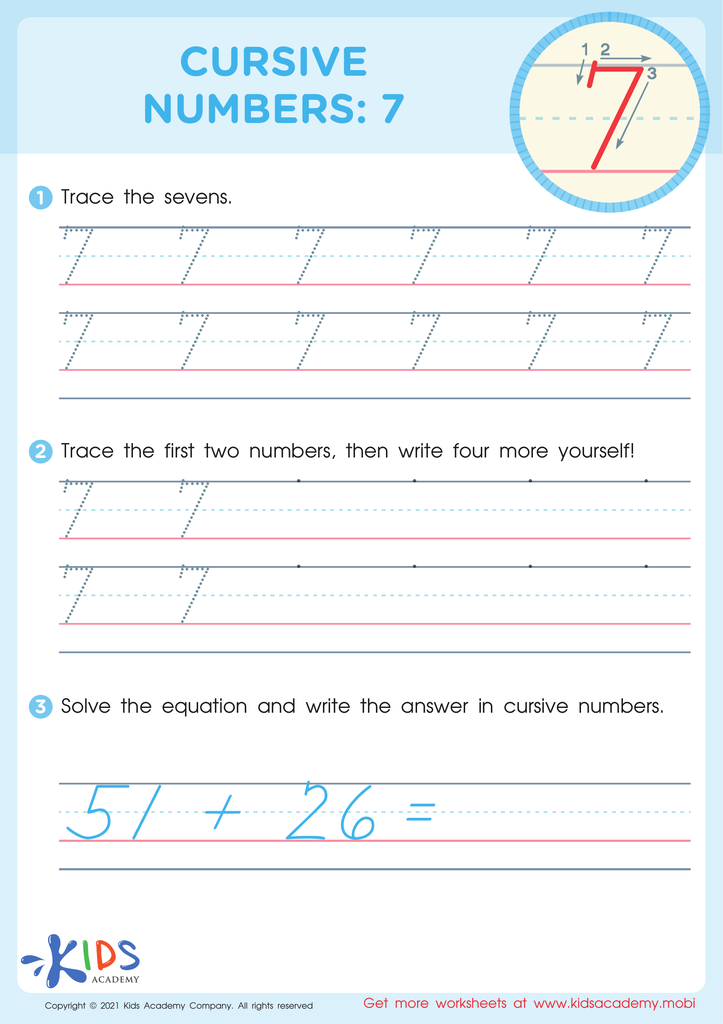
Cursive Numbers: 7 Worksheet
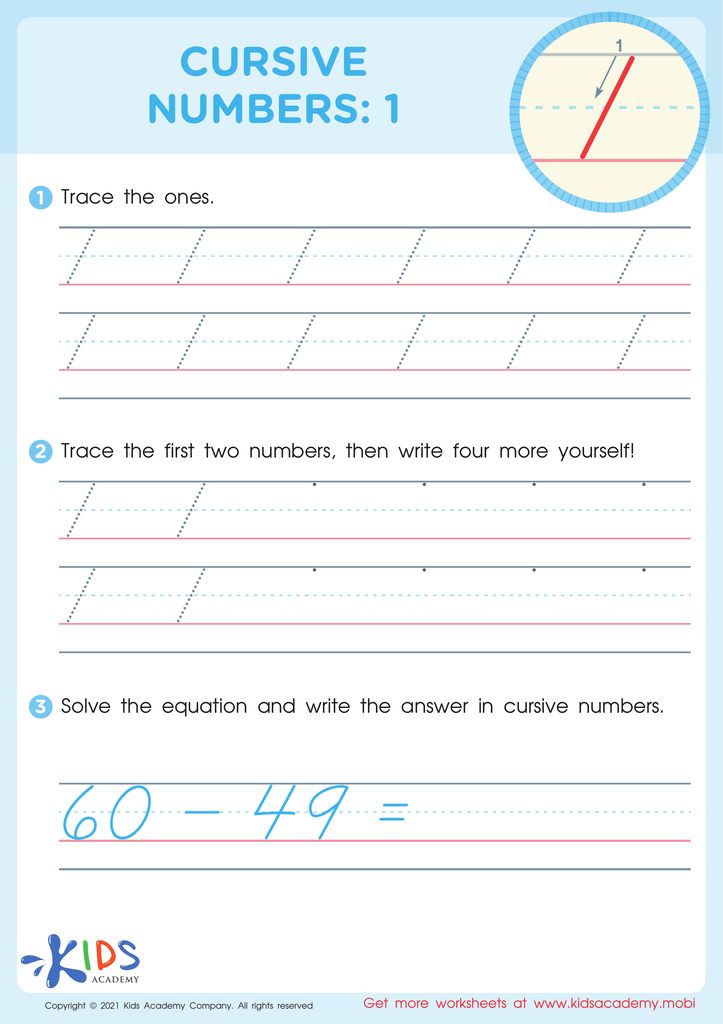
Cursive Numbers: 1 Worksheet
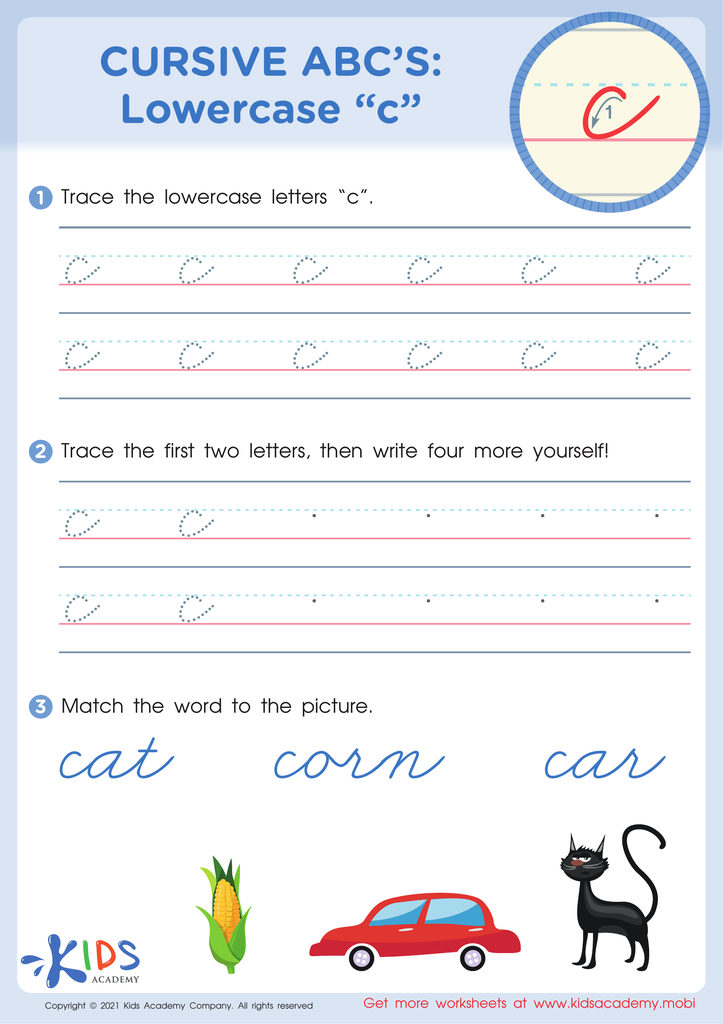
Cursive ABCs: Lowercase c
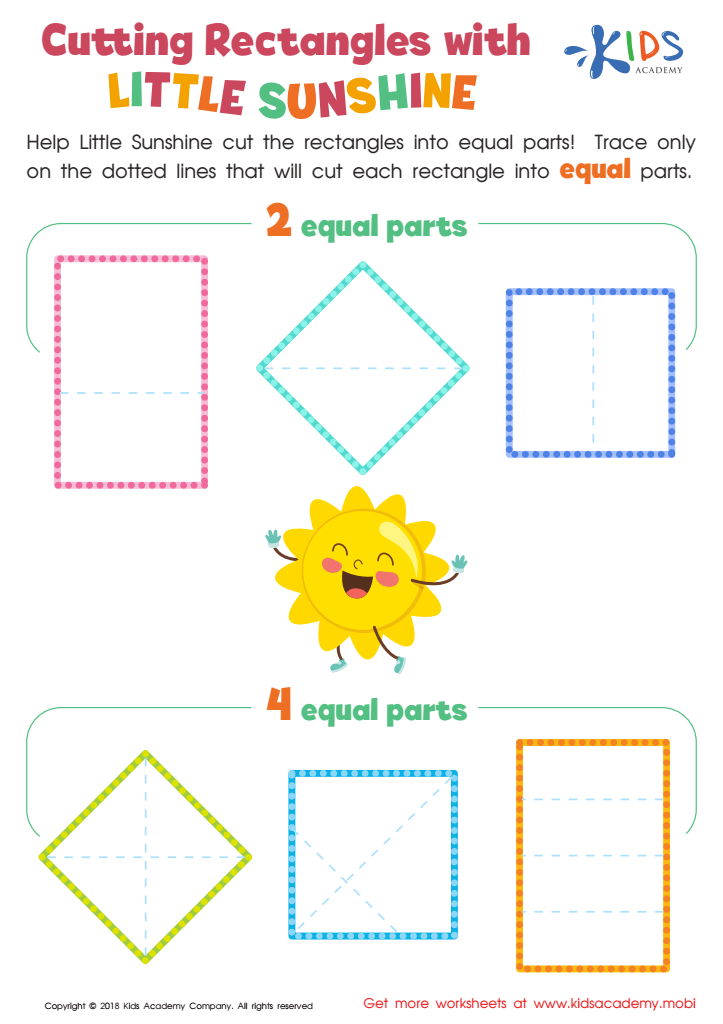
Cutting Rectangles with Little Sunshine Worksheet
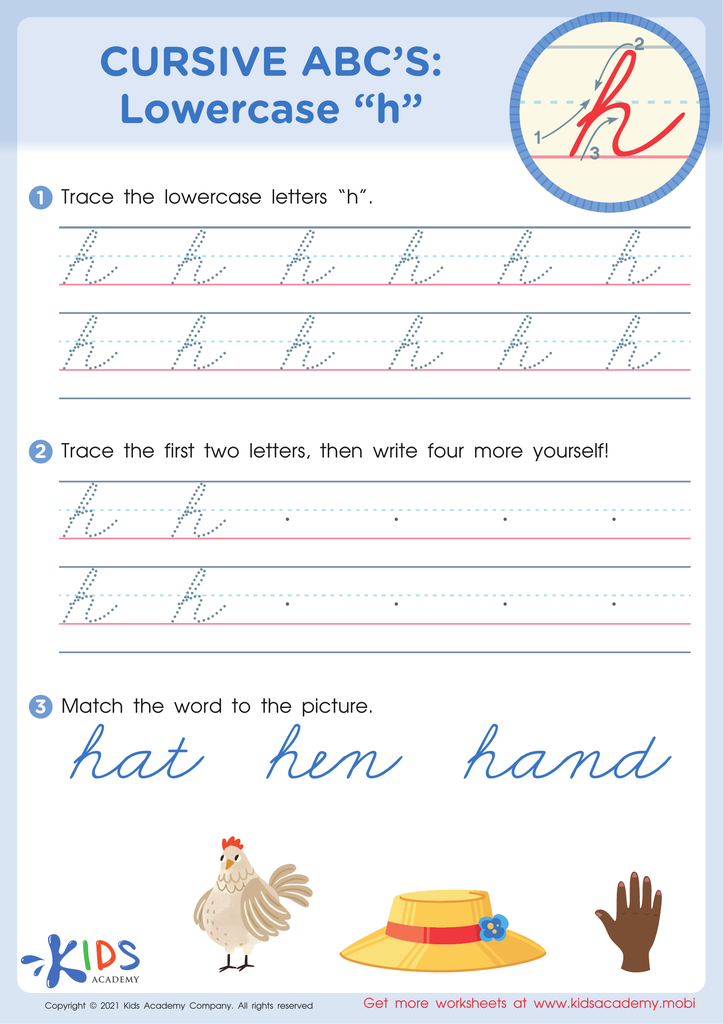
Cursive ABCs: Lowercase h
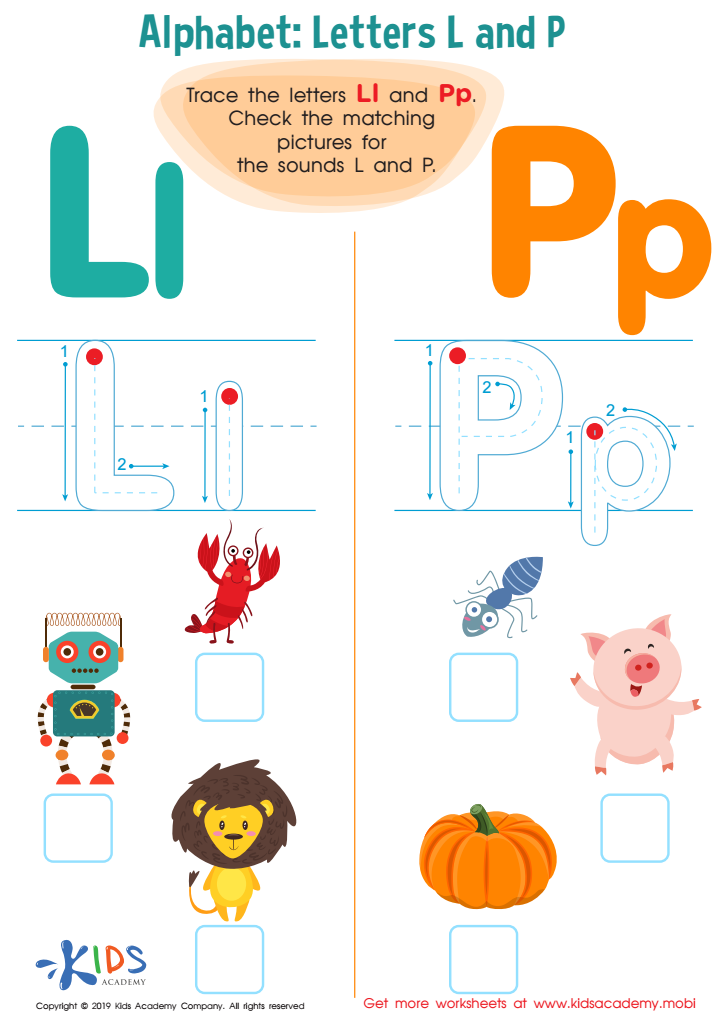
Letter L and P Tracing Worksheet
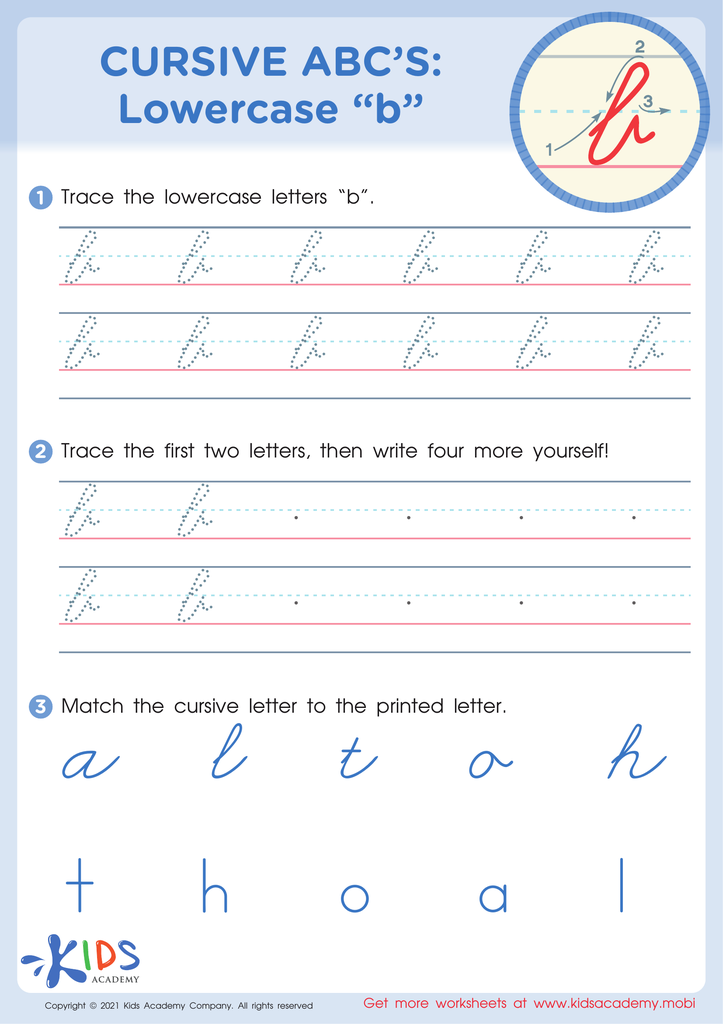
Cursive ABCs: Lowercase b
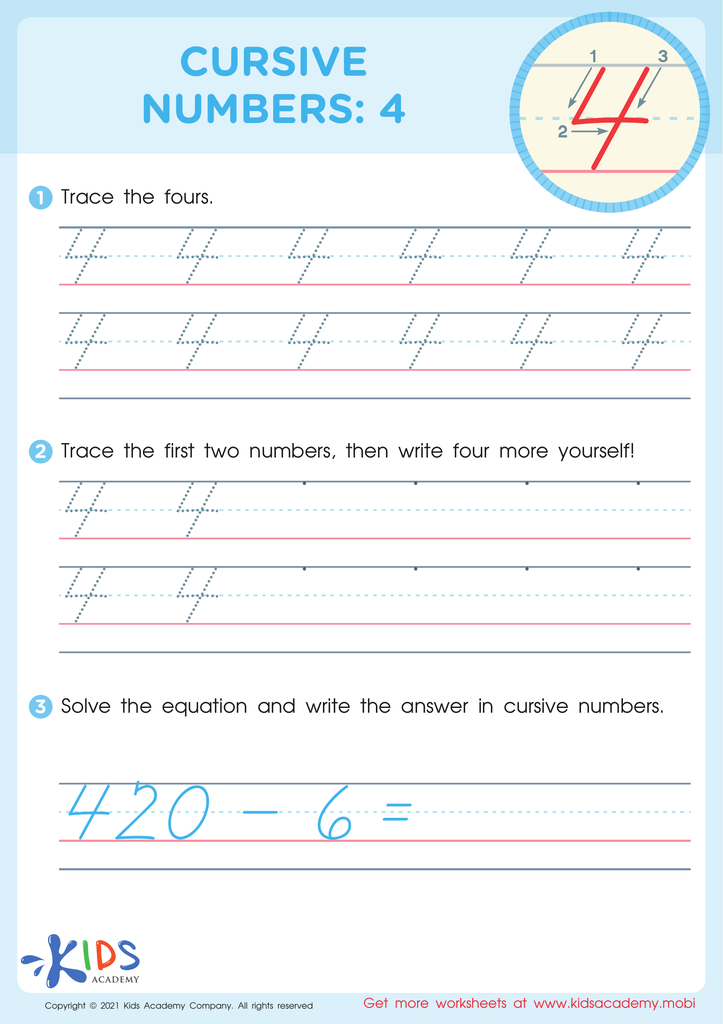
Cursive Numbers: 4 Worksheet







.jpg)
Fine motor skills, which involve the coordination of small muscles in hands and fingers, play a crucial role in the overall development of children aged 7-8. At this stage, children engage in activities that require increased dexterity, such as writing, drawing, and manipulating small objects. Developing fine motor skills enhances their ability to focus and complete tasks independently, promoting self-confidence and autonomy.
Parents and teachers should care about this development for several reasons. Firstly, strong fine motor skills are essential for academic success, as they directly influence a child’s writing ability and performance in subjects such as art and craft. Additionally, they are closely related to cognitive development, as children learn to problem-solve and think critically when engaging in tasks requiring precision.
Furthermore, fine motor skills can significantly impact a child's daily life, as they are necessary for basic self-care tasks like buttoning shirts, tying shoelaces, and using utensils. By encouraging activities that foster these skills—like arts and crafts, puzzles, and building with blocks—parents and teachers can provide vital support that prepares children for future challenges. Overall, nurturing fine motor development is essential for a child's physical, academic, and emotional growth.








