Identify colors Worksheets for Ages 7-8
3 filtered results
-
From - To
Enhance your child's color recognition skills with these engaging "Identify Colors Worksheets for Ages 7-8" from Kids Academy. Tailored for young learners, these printable worksheets make identifying colors fun and educational. Children will explore vibrant hues and shades through engaging activities, including coloring exercises, matching games, and color-by-number puzzles. Designed to support cognitive development, these worksheets help kids build a strong foundation in color theory while enhancing their creativity and attention to detail. Perfect for homeschooling or supplemental classroom practice, these worksheets are a valuable resource for parents and teachers alike. Boost color recognition with Kids Academy today!
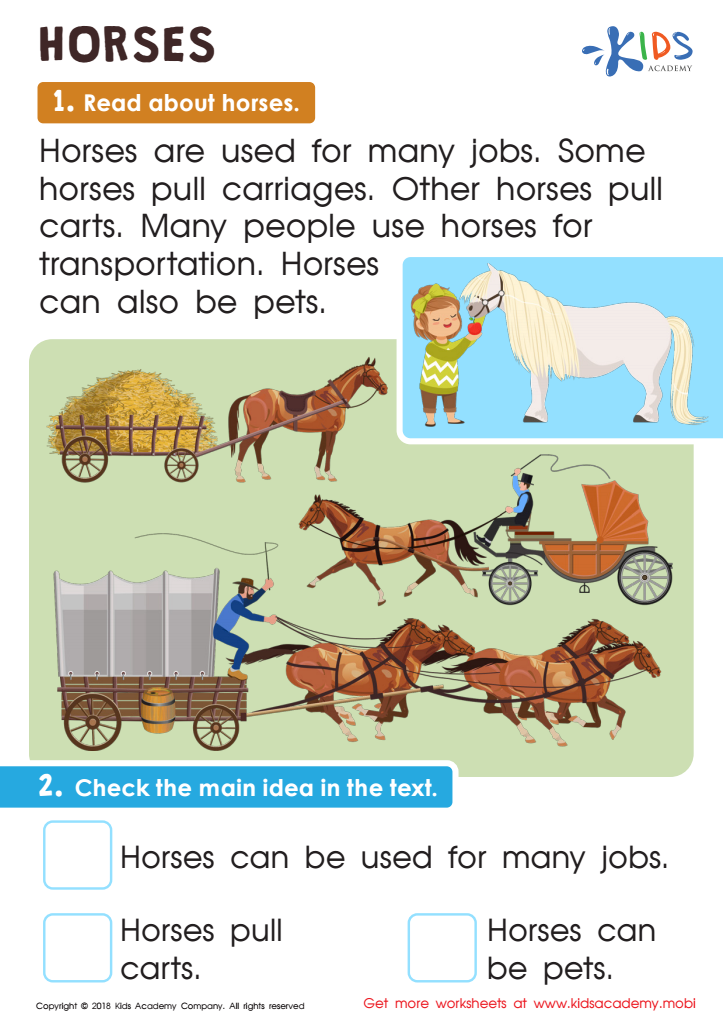
Horses Worksheet
 Assign to My Students







At ages 7-8, children are at a critical stage of cognitive and sensory development, and identifying colors plays a significant role in their growth. Firstly, recognizing and naming colors enhance perceptual skills, helping children make sense of the world around them. This skill lays the groundwork for future learning in areas like art, science, and math, where color differentiation is crucial.
Secondly, color identification is linked to language development. When children describe objects by their colors, they expand their vocabulary and improve their communication skills. This is essential for effective interaction with peers and adults and is a cornerstone for literacy.
Thirdly, learning about colors supports emotional development. Colors can evoke feelings and moods, and recognizing this can help children express their emotions better. For instance, they might associate blue with feeling calm or red with excitement.
Furthermore, engaging children in identifying colors fosters creativity and imagination. This can lead to improved problem-solving skills and innovative thinking, as children learn to observe and interpret the visual aspects of their environment.
Lastly, mastering color identification boosts confidence and independence, encouraging children to explore and engage with their surroundings more effectively. This foundational skill emphasizes the importance of hands-on learning and curiosity, both key aspects of a robust educational experience.








