Identifying colors Worksheets for Ages 7-8
3 filtered results
-
From - To
Explore our engaging "Identifying Colors Worksheets" designed specifically for children ages 7-8! These fun and interactive worksheets help young learners strengthen their color recognition skills, enhancing their cognitive development and artistic expression. Students will enjoy vibrant activities that encourage them to identify, sort, and match colors while developing their concentration and attention to detail. Ideal for classroom or at-home use, our worksheets promote both independent learning and collaborative play. Perfect for early grade teachers and parents alike, these resources provide a foundation for visual learning and creativity, making color identification a delightful experience for your child!
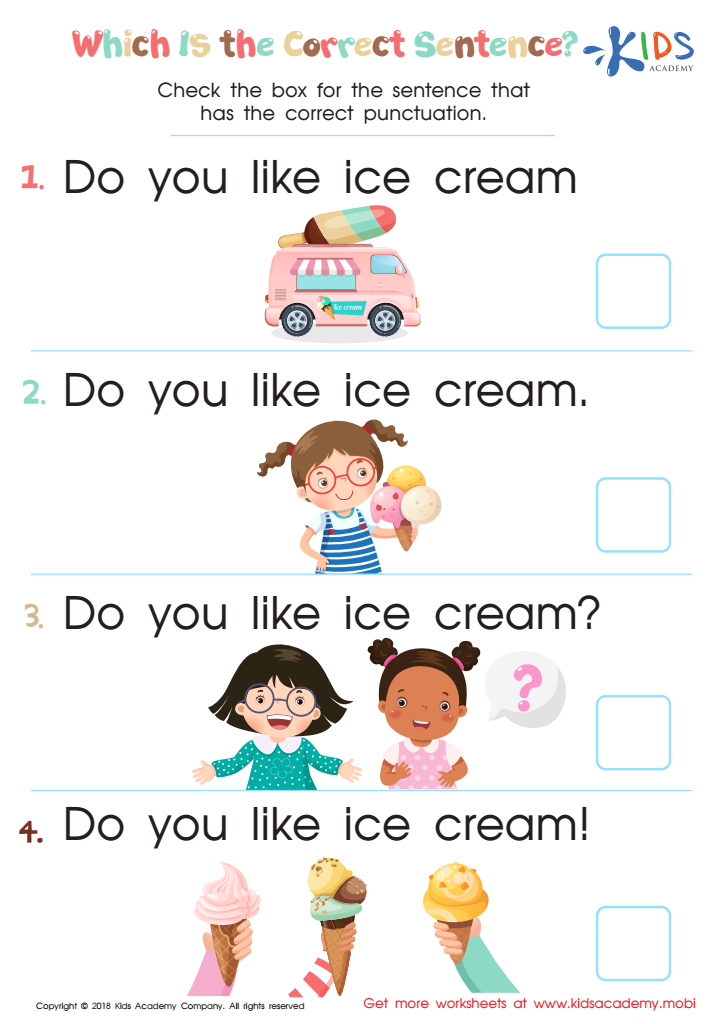
Which is the Correct Sentence? Worksheet
 Assign to My Students
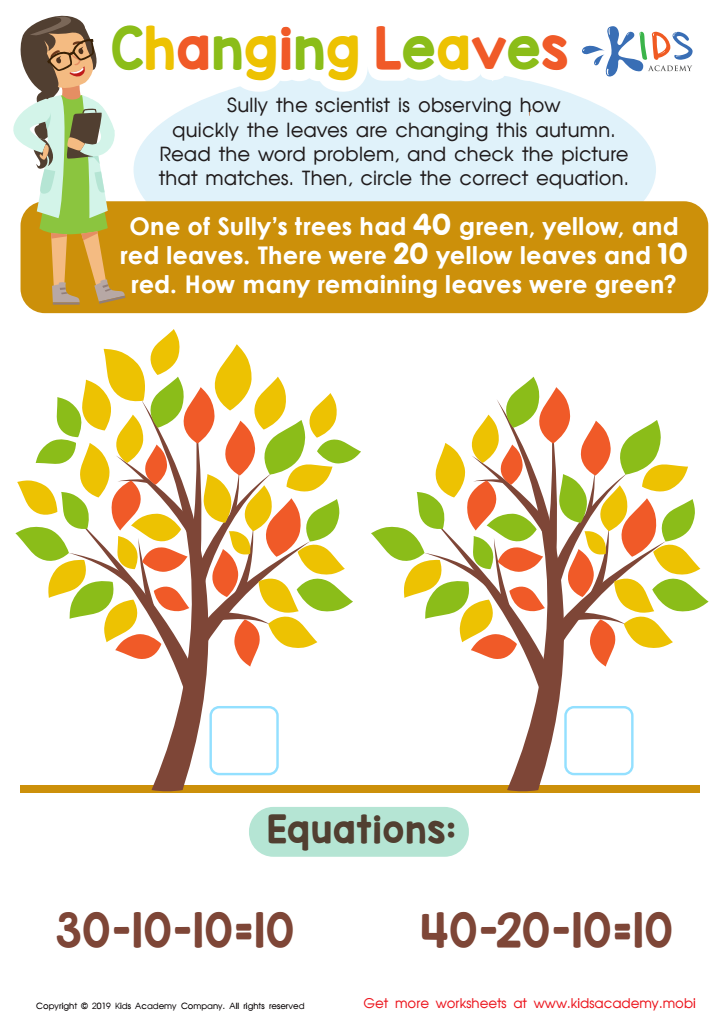
Changing Leaves Worksheet








Identifying colors is crucial for children aged 7-8, as it plays a foundational role in their cognitive and social development. During this age, children are refining their observation skills and beginning to understand the world around them. Recognizing colors enhances their ability to categorize objects, which is a fundamental cognitive skill. It lays the groundwork for more complex learning in subjects like math and science, where colors can help classify shapes and understand concepts such as temperature and data representation.
Moreover, color recognition is integral to communication. When children can articulate what they see, they improve their vocabulary and can express ideas more effectively. This skill boosts confidence in both academic and social settings. Furthermore, many learning materials use colors to engage students and to differentiate between concepts, making it easier for children to grasp new information.
In social settings, discussing colors can aid in social interactions, as children relate colors to emotions and preferences with their peers. Overall, fostering color identification in this age group supports cognitive growth, enhances communication, and fosters creativity, underscoring the importance for parents and teachers to prioritize this fundamental skill.








