Mental arithmetic Worksheets for Ages 7-8
3 filtered results
-
From - To
Boost your child's math skills with our engaging Mental Arithmetic Worksheets designed specifically for ages 7-8! Perfect for reinforcing mental math, these worksheets encourage children to solve problems quickly and efficiently, enhancing their confidence and problem-solving abilities. Featuring a variety of exercises that cover addition, subtraction, multiplication, and division, each worksheet is crafted to provide a fun learning experience. Suitable for both classroom and home use, our resources aim to foster a love for math while developing critical thinking skills. Help your child excel in mathematics today with our high-quality worksheets that make learning enjoyable and effective!
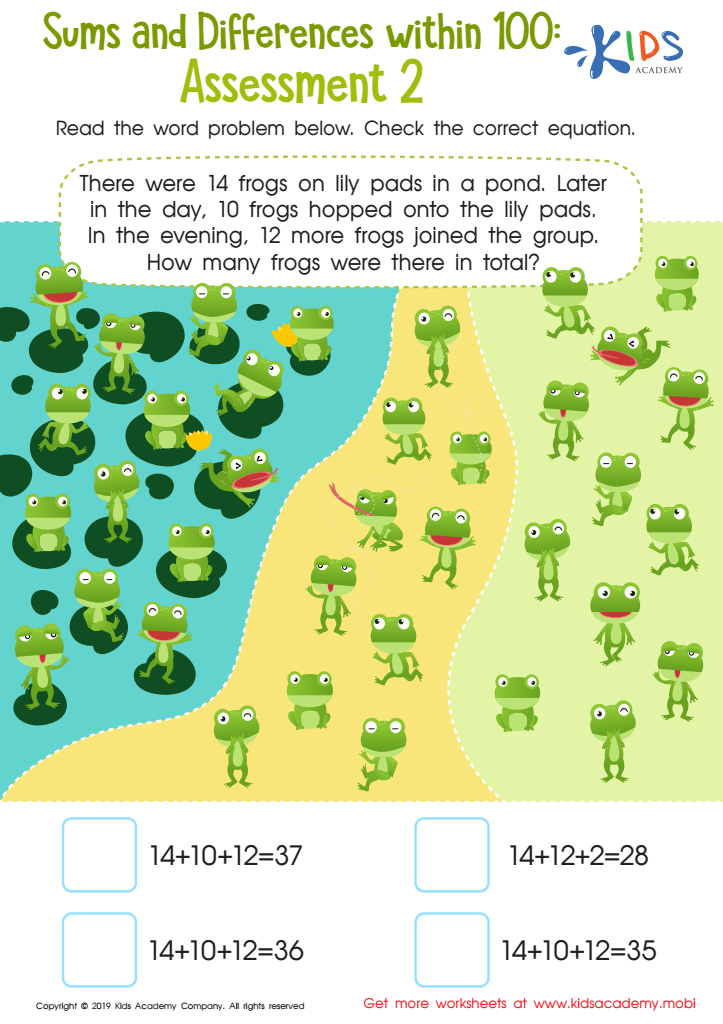
Sums and Differences Within 1 - Assessment 2 Worksheet
 Assign to My Students
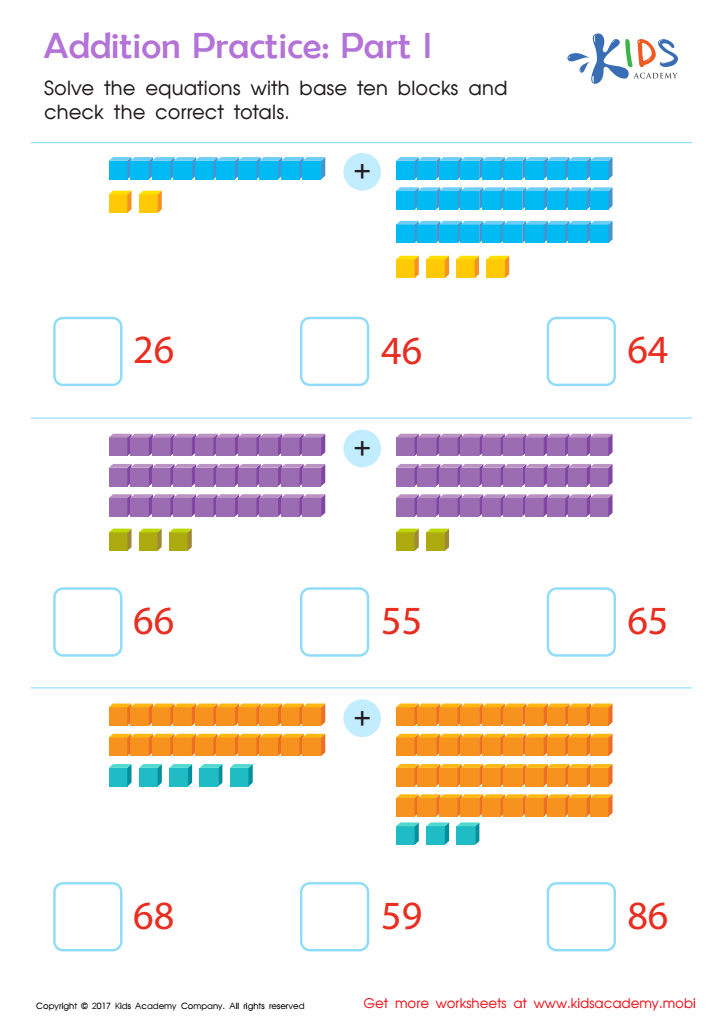
Addition Practice Sheet: Part 1
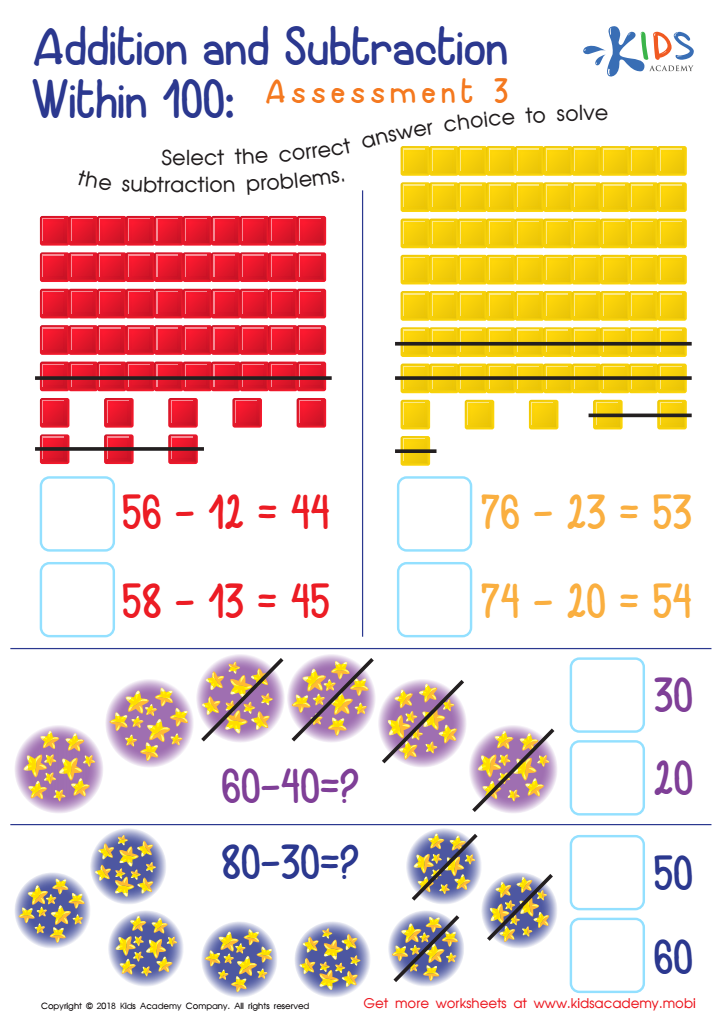
Addition and Subtraction Within 1: Assessment 3 Worksheet






.jpg)

Mental arithmetic is a fundamental skill for children aged 7-8, and it holds significant importance for both parents and teachers. At this developmental stage, children are beginning to form their mathematical foundations, and mental arithmetic enhances mathematical fluency. By practicing mental calculations, children can improve their number sense, which is crucial for more complex math concepts learned later.
Moreover, engaging in mental arithmetic encourages problem-solving and critical thinking skills. These skills not only foster math proficiency but also enhance cognitive abilities important for academic success across all subjects. It helps build confidence, as children experience the achievement of finding answers without reliance on calculators or other tools.
For parents, supporting mental arithmetic at home leads to positive reinforcement of classroom learning, creating a cohesive educational experience. It also promotes family interaction through games and activities centered around numbers. For teachers, integrating mental math into lessons keeps students engaged and provides insights into their understanding, allowing for tailored instruction.
In sum, nurturing mental arithmetic in children ages 7-8 establishes a strong foundation in mathematics, bolsters overall cognitive development, fosters confidence, and encourages constructive dialogues between parents and teachers—ultimately setting children on a path for academic resilience.








