
Number ordering Worksheets for Ages 7-8
3 filtered results
Difficulty Level
Grade
Age
-
From - To
Subject
Activity
Standards
Enhance your child's number ordering skills with our engaging worksheets designed specifically for ages 7-8. These comprehensive resources provide a variety of exercises that help students practice arranging numbers in ascending and descending order. Ideal for reinforcing essential math concepts, our worksheets feature colorful illustrations and fun themes to keep young learners motivated. Easy to print and perfect for classroom or home use, these activities promote critical thinking and number sense through interactive learning. Help your child gain confidence in their math abilities and master fundamental ordering skills with our expertly crafted number ordering worksheets today!
Favorites
With answer key
Interactive
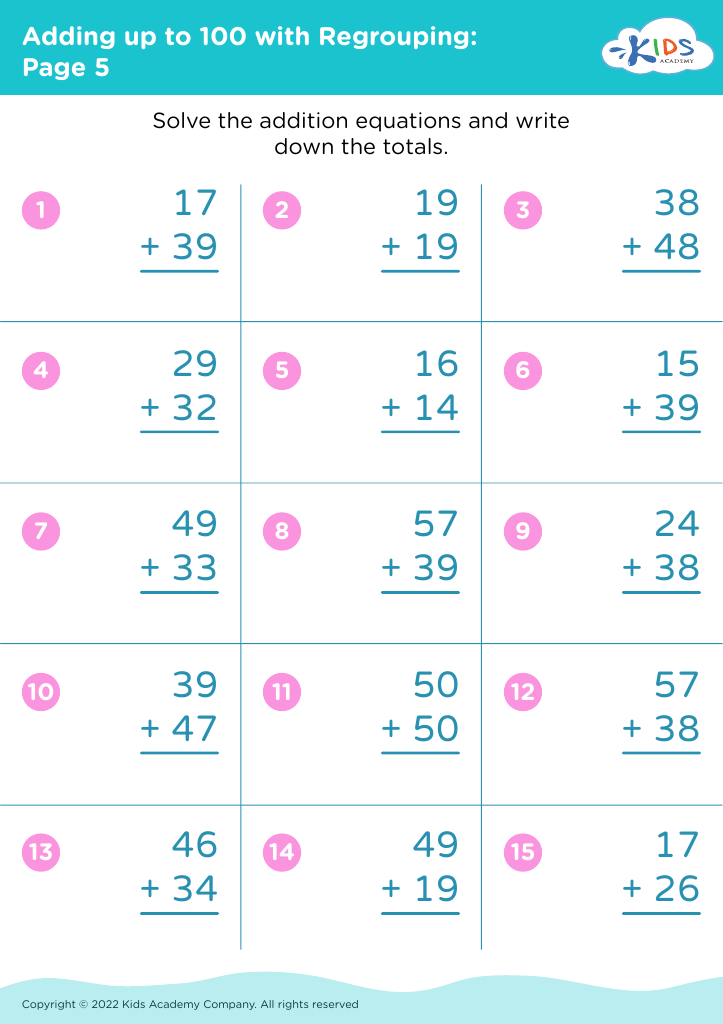
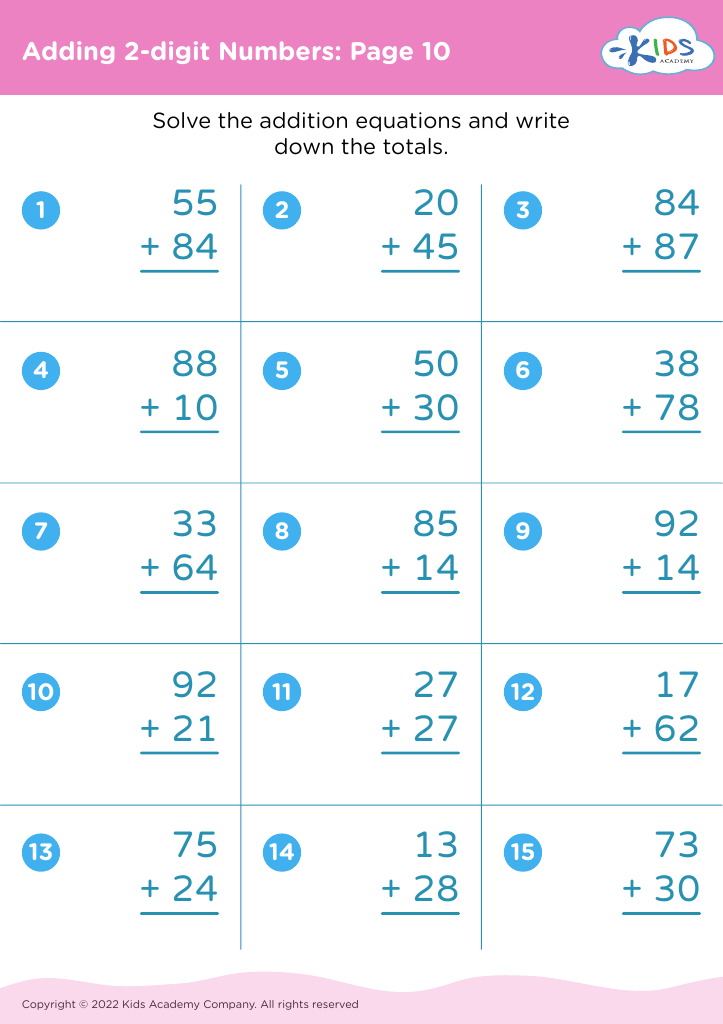
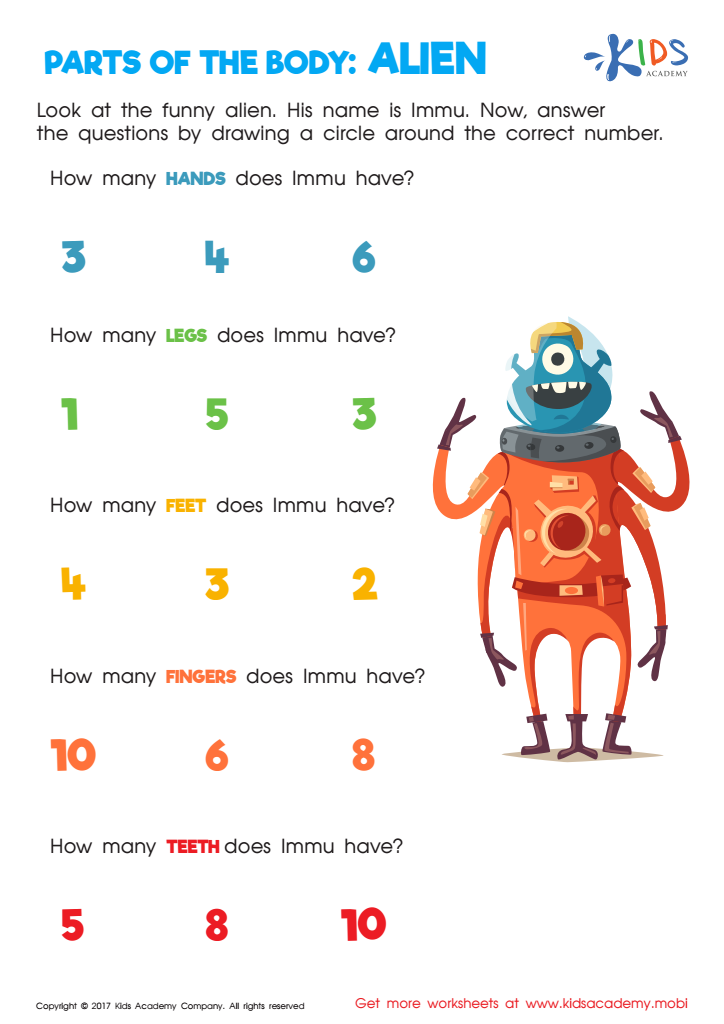
Alien Worksheet
Take your child on an out-of-this-world learning adventure with Immu, our friendly alien! This worksheet helps your child practice counting, recognize body parts and sharpen problem solving skills. Get started with this fun, educational activity today and watch as they learn and grow. Print it now and blast off to outer space!
 Assign to My Students
Alien Worksheet
Worksheet
Join Kids Academy for Free
Who is primarily going to use this learning content?







Number ordering is crucial for children ages 7-8 as it forms a foundational skill necessary for mathematical understanding and daily life applications. At this age, students are transitioning from basic arithmetic to more complex mathematical concepts. Mastery of number ordering helps them develop a sense of magnitude and the ability to compare and sequence numbers, which is essential when solving problems involving addition, subtraction, and even early multiplication and division.
Understanding the relationships between numbers also fosters critical thinking and enhances cognitive development. For example, children learn to recognize patterns, which lays the groundwork for grasping more advanced topics such as fractions and decimals. Additionally, number ordering plays a significant role in promoting numerical fluency, enabling students to become quicker and more efficient problem-solvers.
Moreover, this skill supports other areas of learning, such as data handling and measurement, where ordering becomes vital for interpreting information accurately. Therefore, parents and teachers should prioritize number ordering exercises through games, visual aids, and real-life applications. By emphasizing this skill, they are preparing children not only for future mathematics but also for making informed decisions in daily tasks, ultimately fostering confidence and a positive attitude toward learning.








