Observational skills development Worksheets for Ages 7-8
3 filtered results
-
From - To
Boost your child's observational prowess with our expertly crafted worksheets designed for ages 7-8. Perfect for young learners, these engaging activities enhance children’s attention to detail, critical thinking, and concentration skills. Our educational resources integrate fun visuals and interactive tasks, encouraging kids to notice patterns, differences, and intriguing details in everyday scenes. Each worksheet is aligned with educational standards, ensuring that learning is both enjoyable and relevant. Ideal for classroom use or at-home learning, our observational skills development worksheets assist in cultivating a keen eye and curious mind, laying a strong foundation for academic success.
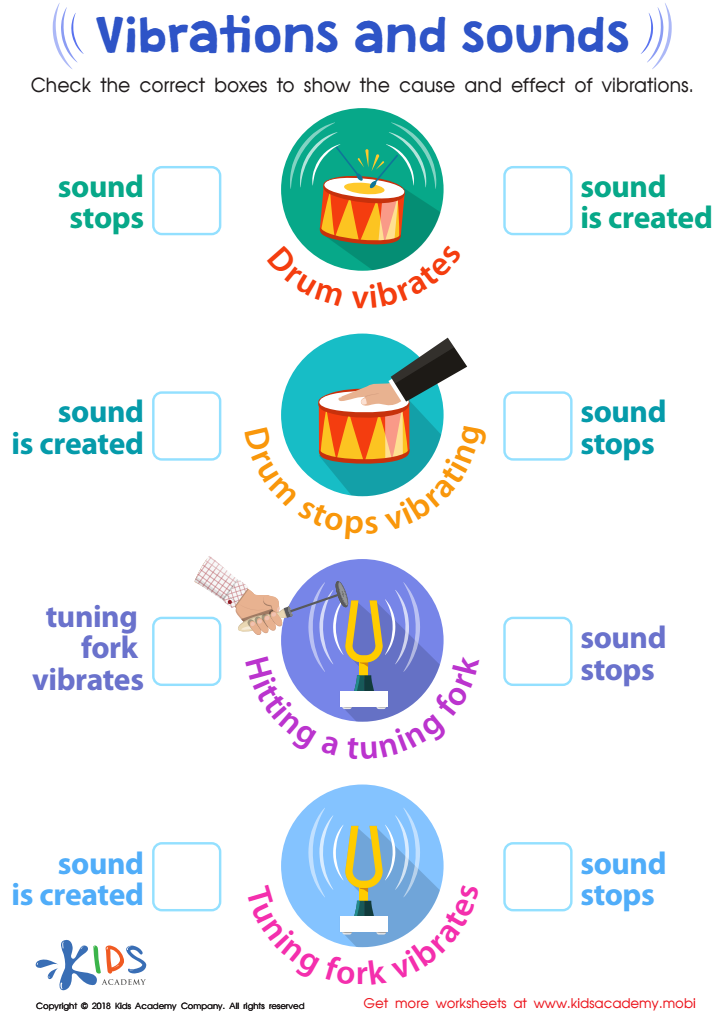
Vibrations and Sounds Worksheet
 Assign to My Students
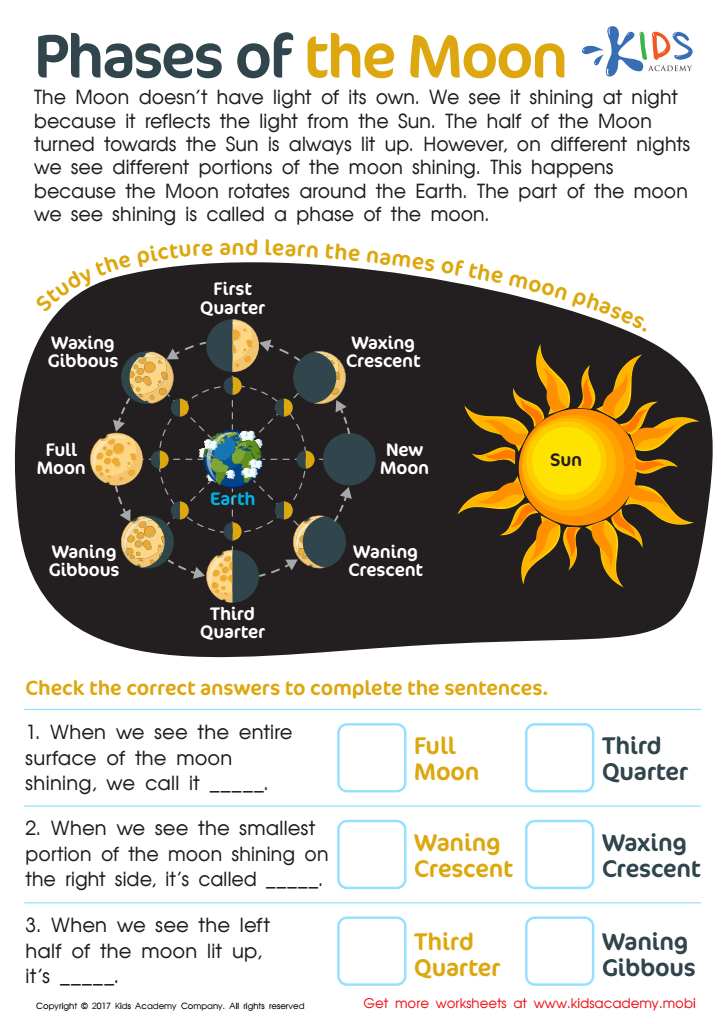
Phases of The Moon Worksheet
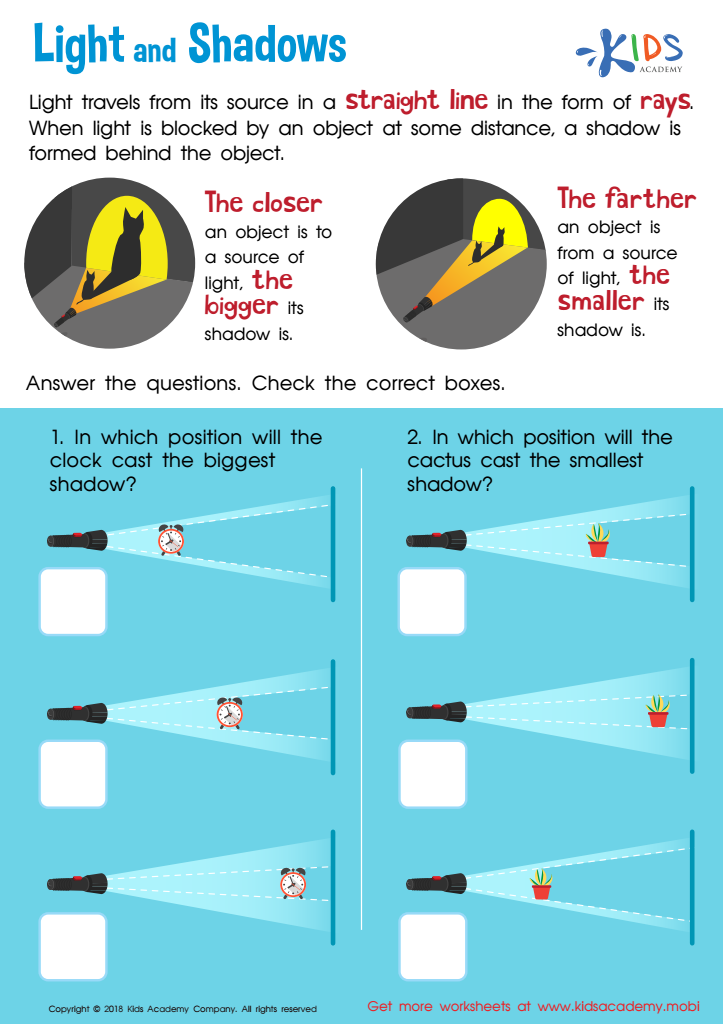
Light and Shadow Worksheet for Grade 3




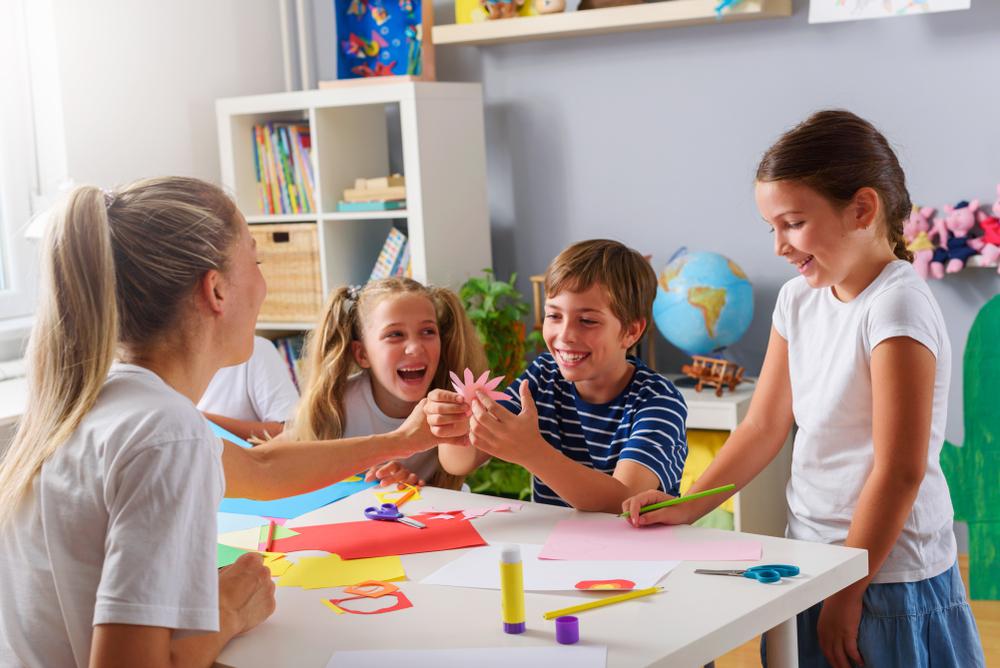


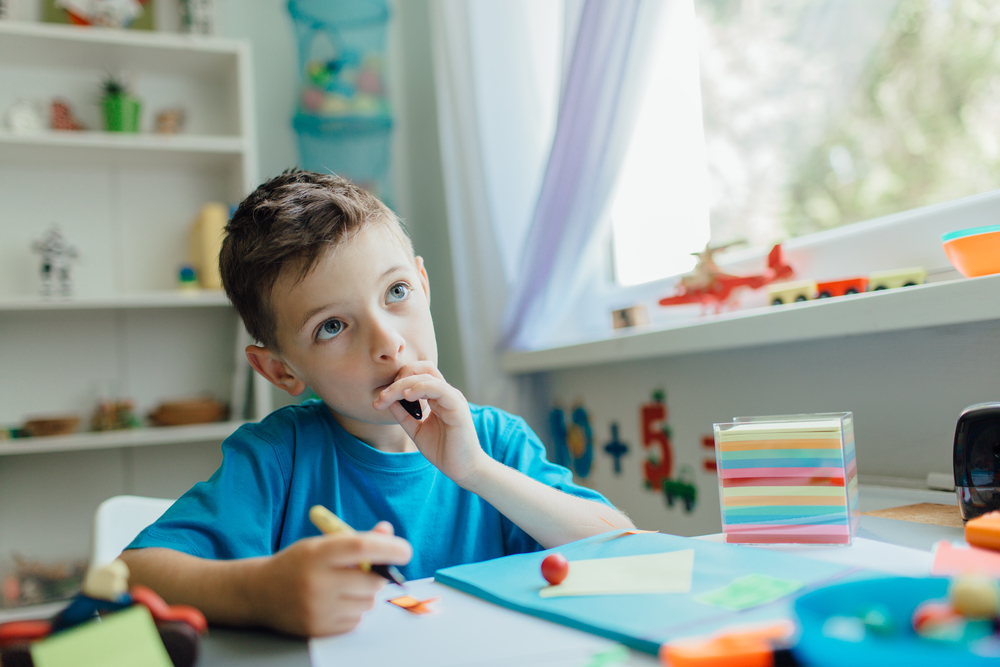
Developing observational skills in children aged 7-8 is essential for several critical reasons that impact their overall growth. At this stage, kids are transitioning from early childhood to more structured learning environments, making it a crucial period for cognitive, social, and emotional development.
Firstly, observational skills enhance cognitive development. By paying attention to details, children boost their memory, concentration, and pattern-recognition abilities. These skills are foundational for subjects like mathematics and science, where noticing patterns and details is crucial for problem-solving and understanding complex concepts.
Secondly, these skills foster creativity and curiosity. When children observe their surroundings closely, they start asking questions and think critically about the world around them, nurturing a lifelong love for learning. This paves the way for innovative thinking and exploration.
Thirdly, refined observational abilities improve social-emotional skills. Children who are observant are better at picking up on social cues, such as facial expressions and body language, which helps them navigate interpersonal relationships more effectively. This emotional intelligence is vital for forming meaningful friendships and working cooperatively in team settings.
Lastly, by developing these skills, children become more mindful and aware of their environment, including safety awareness, enabling them to make informed decisions and perceive potential dangers. Therefore, it is vital for both parents and teachers to foster and encourage observational skill development in children aged 7-8 for a well-rounded and holistic development.








