Practical application of fractions Worksheets for Ages 7-8
3 filtered results
-
From - To
Our practical application of fractions worksheets for ages 7-8 provide young learners with engaging, hands-on opportunities to explore and understand fractions daily. These worksheets are designed to simplify complex concepts, making learning fun and effective. They help students practice and apply their knowledge through real-life scenarios, while enhancing their problem-solving and critical thinking skills. From dividing shapes to sharing items equally, these functional exercises ensure students grasp the essence of fractions effortlessly. Aligned with educational standards, our worksheets are perfect for both classroom use and at-home practice, supporting children in building a strong mathematical foundation.
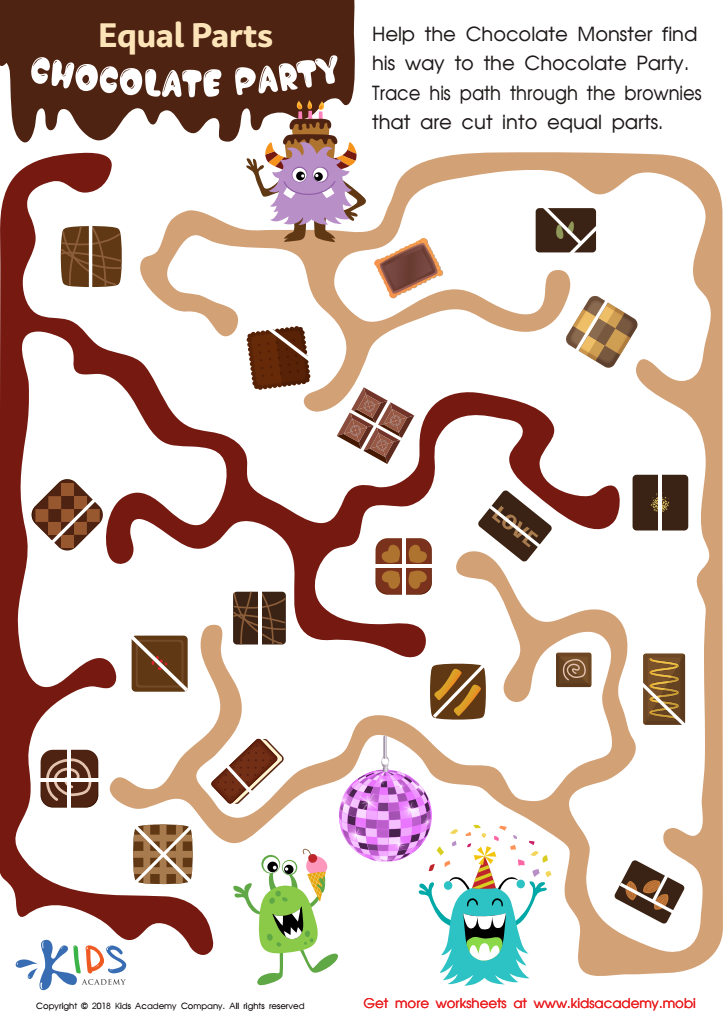
Equal Parts: Chocolate Party Worksheet
 Assign to My Students
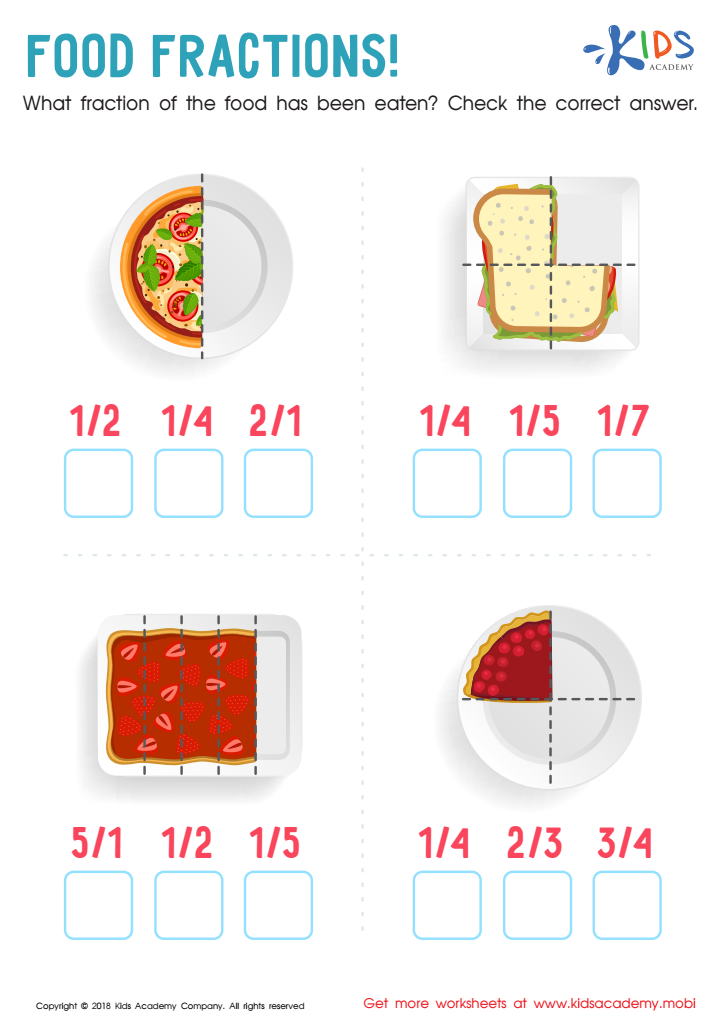
Food Fractions Worksheet






Understanding fractions at an early age is crucial as it forms a foundation for numerous mathematical concepts and everyday activities. For children ages 7-8, practical applications of fractions can foster a deeper, more intuitive understanding of relationships and proportions.
One primary reason why parents and teachers should care about teaching fractions practically is that it helps demystify math and improve confidence. When children see how fractions are used in real-life situations—such as cooking, dividing snacks, or sharing toys—they perceive math as a useful and accessible tool rather than an abstract subject.
Additionally, grasping fractions is essential for more advanced mathematical topics. Concepts like decimals, percentages, and ratios, which children encounter later, all build upon a solid understanding of fractions. Therefore, instilling a practical understanding early on ensures smoother progression in math education.
Moreover, practical applications of fractions cultivate critical thinking and problem-solving skills. Activities like measuring ingredients for a recipe or splitting a pizza encourage children to apply their knowledge to solve real-world problems, fostering analytical skills that extend beyond math alone.
In summary, practical exposure to fractions for young children empowers them with confidence, builds a solid mathematical foundation, and enhances their problem-solving abilities, making it a key element in their early education.








