Reading clocks Worksheets for Ages 7-8
9 filtered results
-
From - To
Help your 7-8-year-olds master the essential skill of reading clocks with our engaging worksheets! Designed to blend fun and learning, these printable activities boost time-telling proficiency by covering both analog and digital clocks. Each worksheet provides clear examples and interactive exercises to ensure kids understand telling time to the hour, half-hour, and minute increments. Puzzles and colorful graphics make the learning experience enjoyable and fulfilling. Watch as your child confidently navigates the world of time, enhancing their daily routine management and mathematical skills. Visit Kids Academy to download these comprehensive, age-appropriate worksheets today!
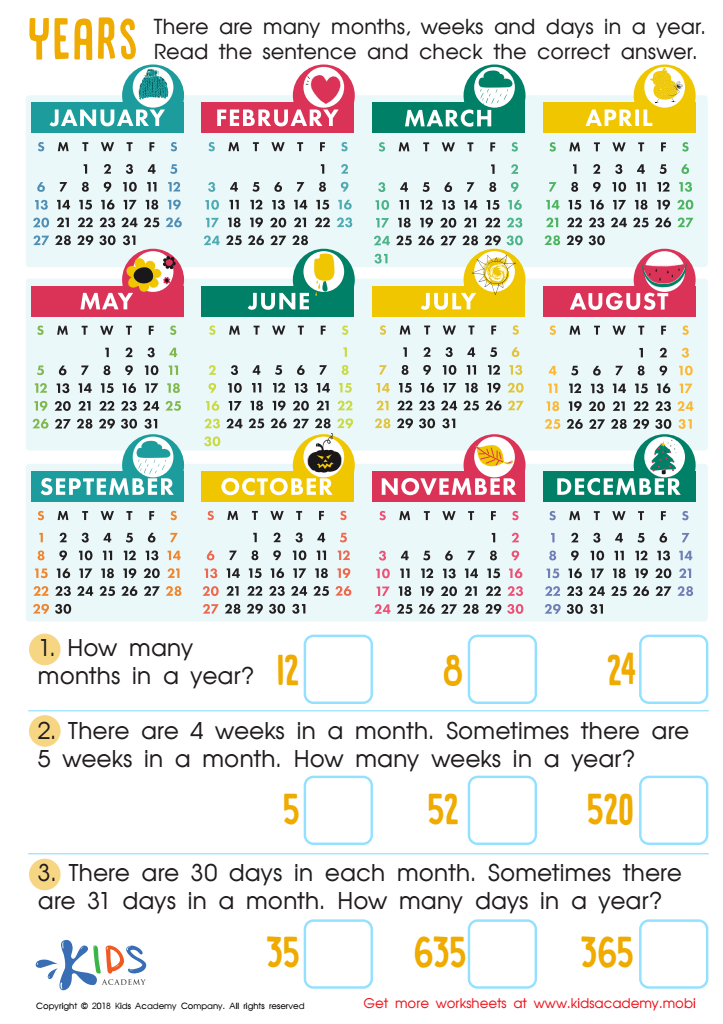
Years Worksheet
 Assign to My Students
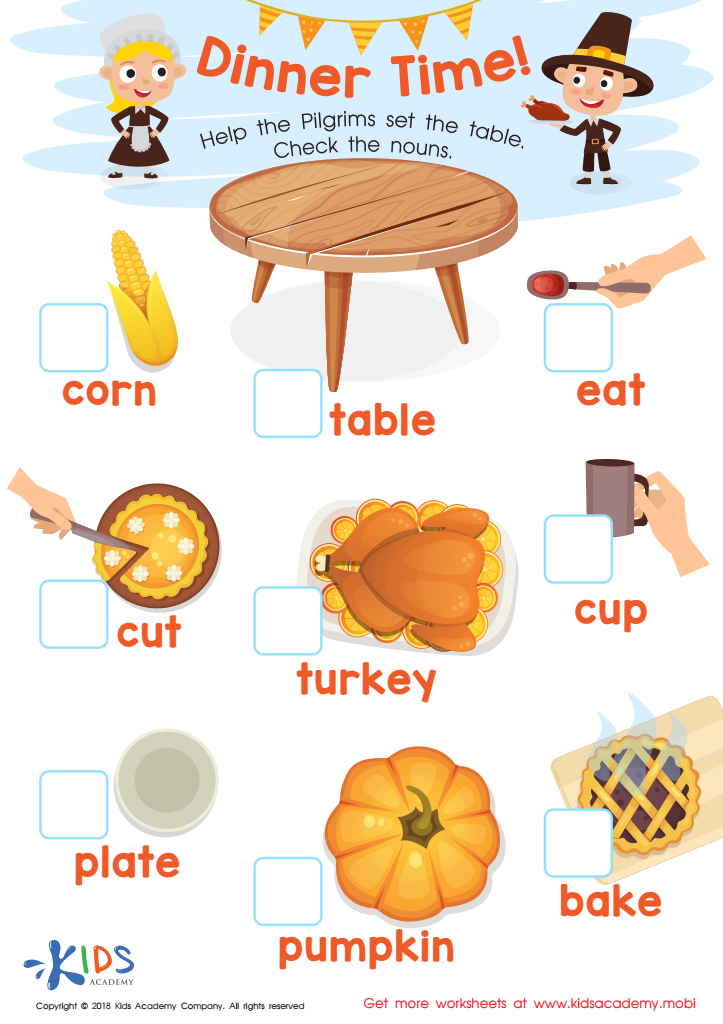
Dinner Time! Worksheet
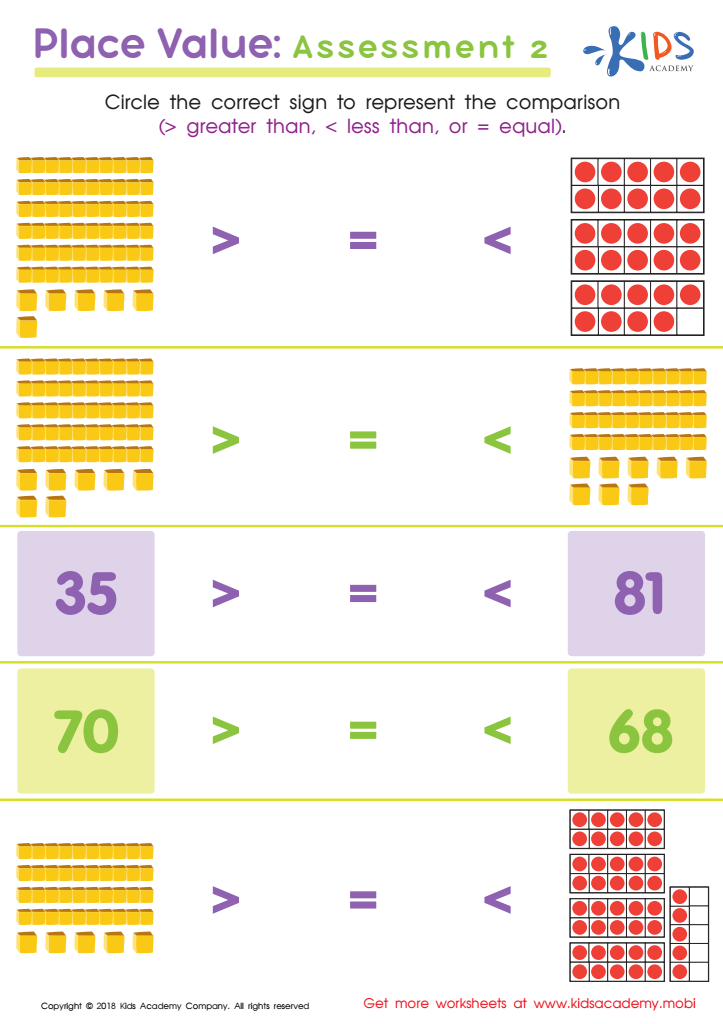
Place Value: Assessment 2 Worksheet
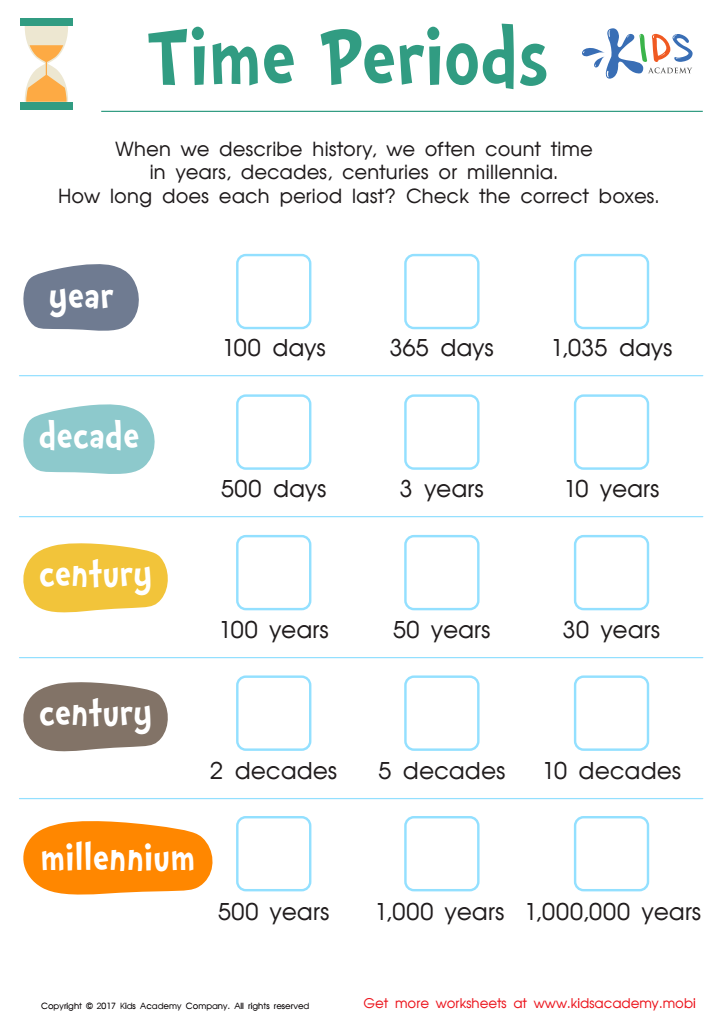
Time Periods Worksheet
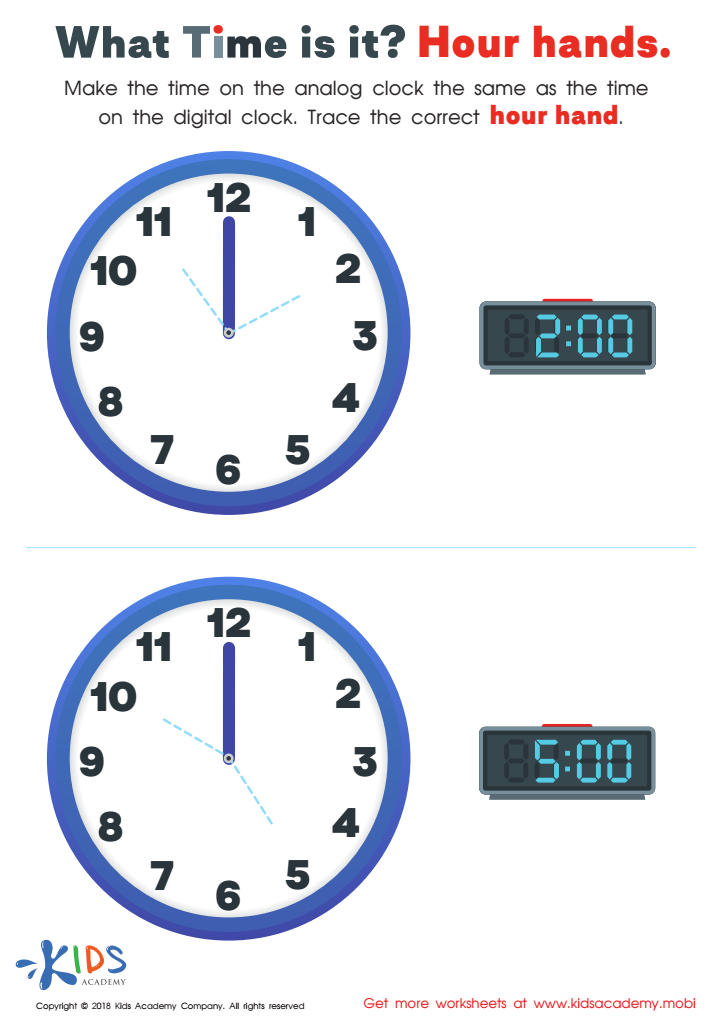
What Time Is it? Hour Hands Worksheet
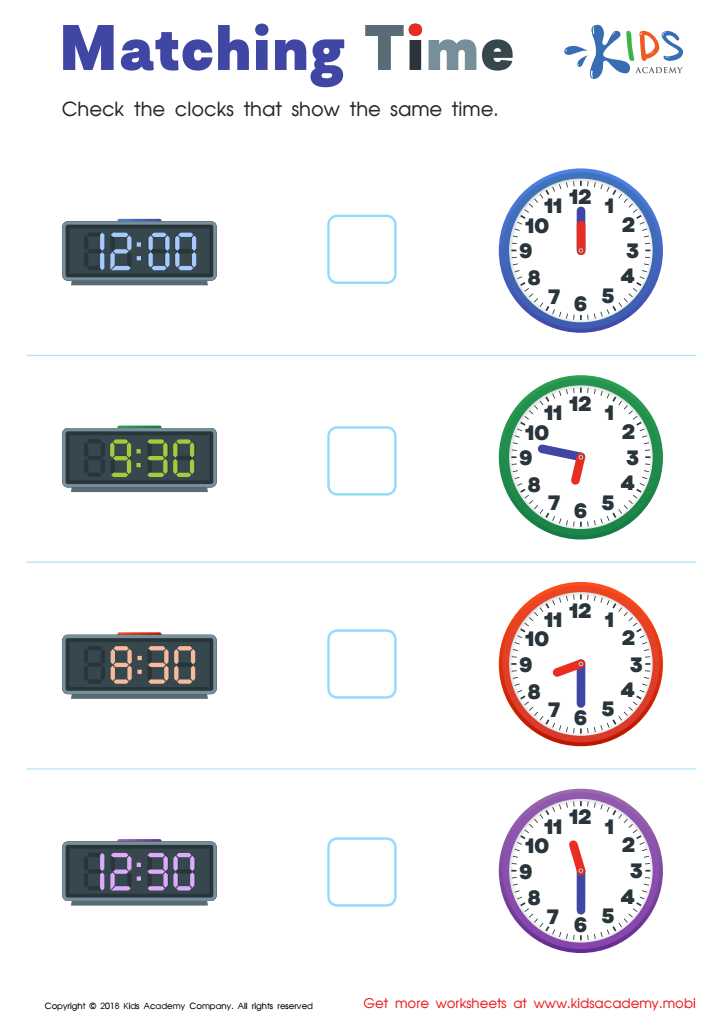
Matching Time Worksheet






.jpg)
Understanding how to read clocks is a crucial skill for children aged 7-8, and both parents and teachers should emphasize its importance. At this age, kids are developing a foundational understanding of time, which is vital for their daily routines and future academic success. Knowing how to read clocks helps children manage their time effectively, fostering a sense of responsibility and independence. They start to grasp the concept of schedules, deadlines, and the passage of time, which translates into better organizational skills.
Moreover, reading clocks enhances their math skills. They practice counting by fives, understanding fractions, and solving addition and subtraction problems related to time intervals. This hands-on application makes abstract math concepts more tangible and relatable.
For parents, ensuring their child knows how to read clocks can reduce daily chaos, as children become more self-sufficient in managing their activities, whether it's getting ready for school or knowing when it's time for bed. Teachers benefit because students who can read clocks are better prepared to follow classroom schedules, pay attention to designated periods for different subjects, and transition smoothly between activities.
In essence, mastering clock reading is a stepping stone to a multitude of essential life and academic skills, making it a valuable focus for both parents and teachers alike.








