
Recognizing numbers Worksheets for Ages 7-8
7 filtered results
Difficulty Level
Grade
Age
-
From - To
Subject
Activity
Standards
Boost your child's number literacy with our "Recognizing Numbers Worksheets for Ages 7-8." Designed to enhance numerical understanding and build confidence, these engaging worksheets offer a variety of exercises to help children identify and write numbers effortlessly. From counting and matching to sequencing and pattern recognition, our resources ensure that learning numbers becomes a fun and rewarding experience. Catered to second graders, each activity integrates vibrant visuals and interactive tasks to keep young learners motivated. Ideal for both classroom use and home practice, these worksheets set the foundation for math success. Explore now and support your child's educational journey!
Favorites
With answer key
Interactive
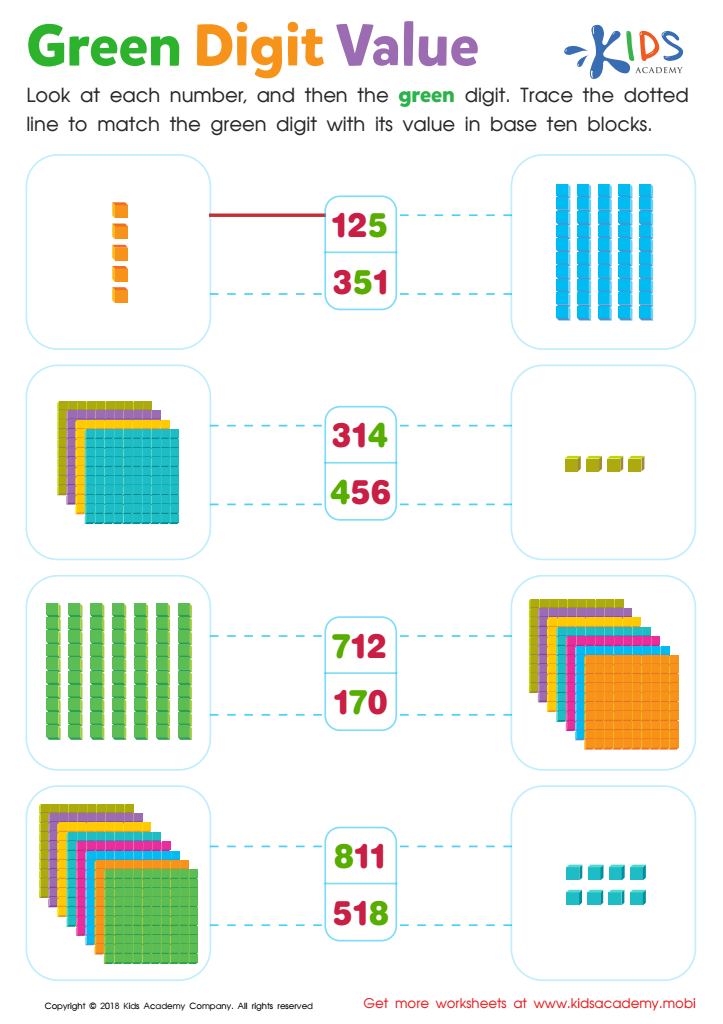
Green Digit Value Worksheet
Math can be stressful for kids. But you can help relieve their anxiety with this simple worksheet. It gives them practice to help them prepare for tougher tasks. Have your child look at the numbers and green digit, then trace the dotted lines to match the green digit with its value in base ten blocks. This will help make math more manageable.
 Assign to My Students
Green Digit Value Worksheet
Worksheet
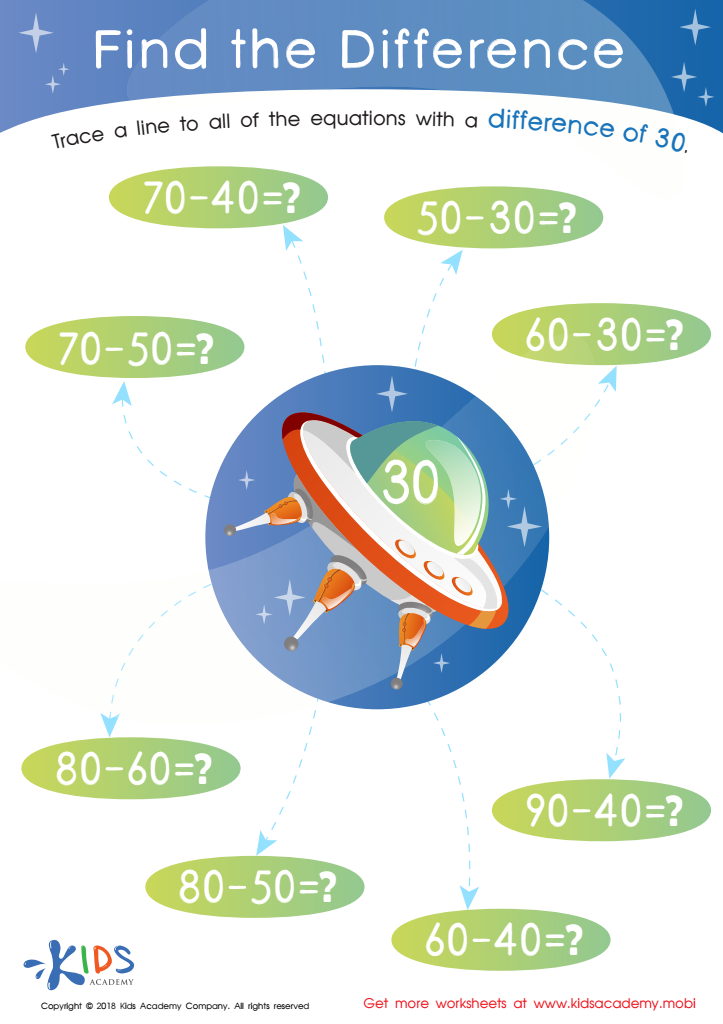
Find The Difference Worksheet
Kindergarteners need to work out subtraction problems and get the right answers. To help them, point to the alien ship with '30' in it on the worksheet. Get them to follow a line to the equations with a difference of 30. Solving these simple subtraction problems will give the answers.
Find The Difference Worksheet
Worksheet
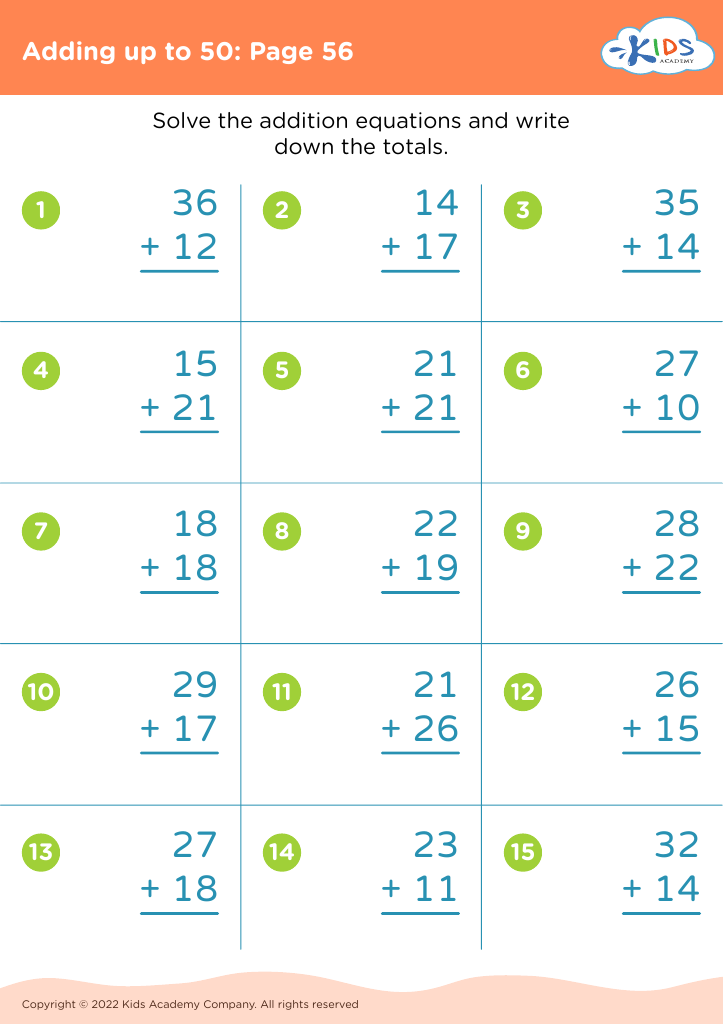
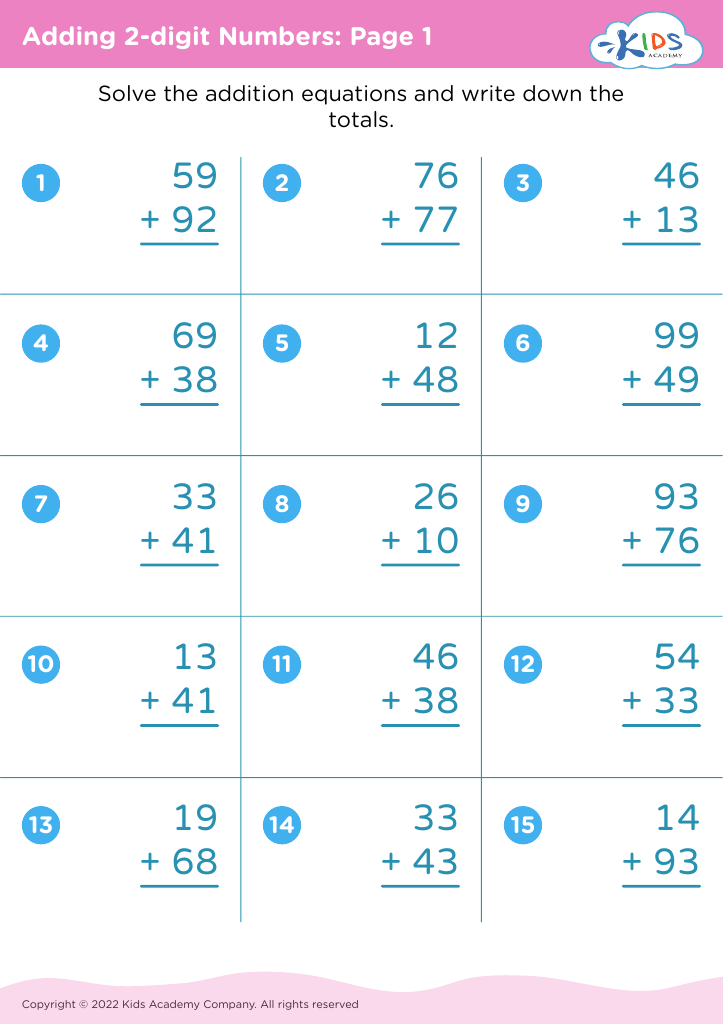
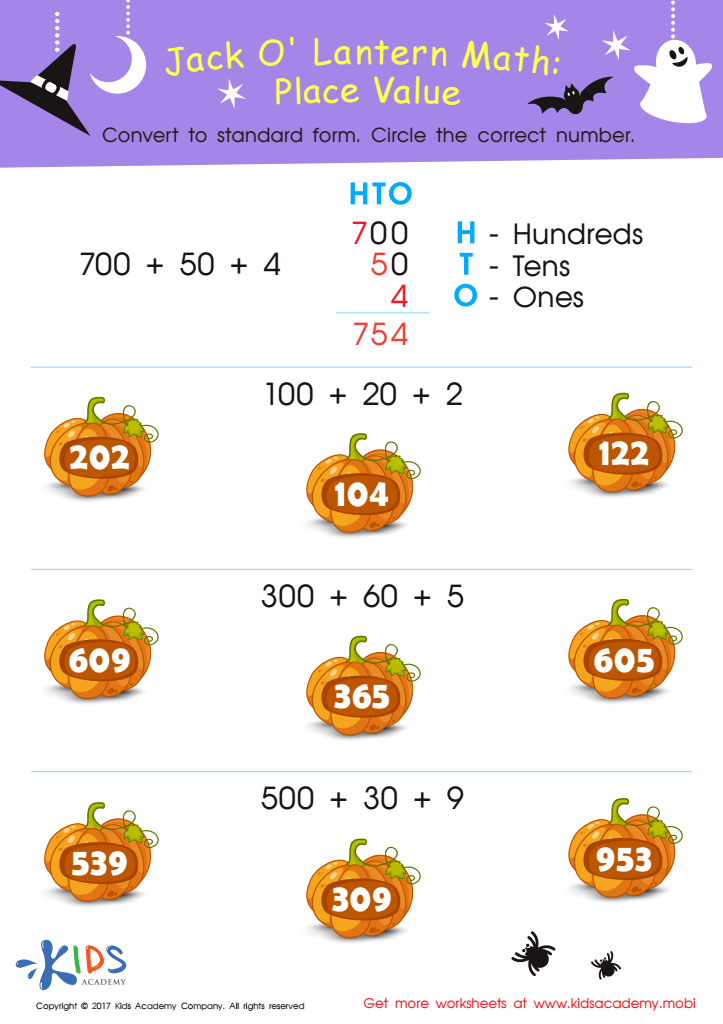
Free Place Value Worksheet
This Halloween-themed worksheet helps children practice converting equations to standard form and understand place value for better problem-solving. Download this free PDF for a fun way to do it!
Free Place Value Worksheet
Worksheet
Join Kids Academy for Free
Who is primarily going to use this learning content?




.jpg)



Recognizing numbers is a foundational skill crucial for 7 to 8-year-olds as it sets the stage for all future math learning. At this age, children transition from simple counting to understanding more complex mathematical concepts like addition, subtraction, multiplication, and division. Proficient number recognition aids this transition, allowing children to quickly identify numbers and perform calculations with greater ease and confidence.
Furthermore, strong number recognition skills enhance cognitive development by improving memory, concentration, and problem-solving abilities. These skills are useful not just in math, but across all subjects. For instance, in science, understanding measurements and quantities is vital, and in reading, being able to identify page numbers or count syllables is helpful.
In addition, proficiency in number recognition solidifies a child's ability to understand and interact with the world around them in practical ways. This includes reading clocks, interpreting calendars, managing money, and engaging with technology. Advanced numeracy prepares children for real-life tasks and future learning opportunities.
For these reasons, parents and teachers should prioritize and encourage activities that strengthen number recognition. Investing time and effort into this area of learning will provide a significant early advantage, fostering a positive attitude towards math and academic success in general.








